If $$Z = \frac{A^2 B^3}{C^4}$$, then the relative error in $$Z$$ will be

Join Our JEE Preparation Group
Prep with like-minded aspirants; Get access to free daily tests and study material.
Sign in
Please select an account to continue using cracku.in
↓ →
Join Our JEE Preparation Group
Prep with like-minded aspirants; Get access to free daily tests and study material.
If $$Z = \frac{A^2 B^3}{C^4}$$, then the relative error in $$Z$$ will be
Login to view the detailed solution.
$$\vec{A}$$ is a vector quantity such that $$|\vec{A}|$$ = non-zero constant. Which of the following expression is true for $$\vec{A}$$?
Loading solution...
Which of the following relations is true for two unit vectors $$\hat{A}$$ and $$\hat{B}$$ making an angle $$\theta$$ to each other?
Loading solution...
.webp)
If force $$\vec{F} = 3\hat{i} + 4\hat{j} - 2\hat{k}$$ acts on a particle having position vector $$2\hat{i} + \hat{j} + 2\hat{k}$$ then, the torque about the origin will be:
Loading solution...
The height of any point $$P$$ above the surface of earth is equal to diameter of earth. The value of acceleration due to gravity at point $$P$$ will be : (Given $$g$$ = acceleration due to gravity at the surface of earth).
Loading solution...
The terminal velocity $$v_t$$ of the spherical rain drop depends on the radius $$r$$ of the spherical rain drop as
Loading solution...
The relation between root mean square speed $$v_{rms}$$ and most probable speed $$v_p$$ for the molar mass $$M$$ of oxygen gas molecule at the temperature of $$300$$ K will be
Loading solution...
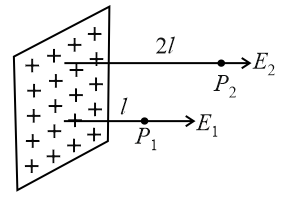
In the figure, a very large plane sheet of positive charge is shown. $$P_1$$ and $$P_2$$ are two points at distance $$l$$ and $$2l$$ from the charge distribution. If $$\sigma$$ is the surface charge density, then the magnitude of electric fields $$E_1$$ and $$E_2$$ at $$P_1$$ and $$P_2$$ respectively are
Loading solution...
A teacher in his physics laboratory allotted an experiment to determine the resistance $$G$$ a galvanometer. Students took the observations for $$\frac{1}{3}$$ deflection in the galvanometer. Which of the below is true for measuring value of $$G$$?
Loading solution...
A long straight wire with a circular cross-section having radius $$R$$, is carrying a steady current $$I$$. The current $$I$$ is uniformly distributed across this cross-section. Then the variation of magnetic field due to current $$I$$ with distance $$r$$ ($$r < R$$) from its centre will be
Loading solution...
Match List - I with List - II.
| List-I | List-II |
|---|---|
| (A) AC generator | (I) Detects the presence of current in the circuit |
| (B) Galvanometer | (II) Converts mechanical energy into electrical energy |
| (C) Transformer | (III) Works on the principle of resonance in AC circuit |
| (D) Metal detector | (IV) Changes an alternating voltage for smaller or greater value |
Loading solution...
If wattless current flows in the AC circuit, then the circuit is :
Loading solution...
The electric field in an electromagnetic wave is given by $$E = 56.5 \sin\omega\left(\frac{t - x}{c}\right)$$ NC$$^{-1}$$. Find the intensity of the wave if it is propagating along $$x$$-axis in the free space. (Given $$\varepsilon_0 = 8.85 \times 10^{-12}$$ C$$^2$$ N$$^{-1}$$ m$$^{-2}$$)
Loading solution...
A light wave travelling linearly in a medium of dielectric constant $$4$$, incidents on the horizontal interface separating medium with air. The angle of incidence for which the total intensity of incident wave will be reflected back into the same medium will be :
(Given : relative permeability of medium $$\mu_r = 1$$)
Loading solution...
The difference of speed of light in the two media $$A$$ and $$B$$ ($$v_A - v_B$$) is $$2.6 \times 10^7$$ m s$$^{-1}$$. If the refractive index of medium $$B$$ is $$1.47$$, then the ratio of refractive index of medium $$B$$ to medium $$A$$ is: (Given : speed of light in vacuum $$c = 3 \times 10^8$$ m s$$^{-1}$$)
Loading solution...
The two light beams having intensities $$I$$ and $$9I$$ interfere to produce a fringe pattern on a screen. The phase difference between the beams is $$\frac{\pi}{2}$$ at point $$P$$ and $$\pi$$ at point $$Q$$. Then the difference between the resultant intensities at $$P$$ and $$Q$$ will be :
Loading solution...
Given below are two statements :
Statement I : Davisson-Germer experiment establishes the wave nature of electrons.
Statement II : If electrons have wave nature, they can interfere and show diffraction.
In the light of the above statements choose the correct answer from the option given below :
Loading solution...
The ratio for the speed of the electron in the $$3^{rd}$$ orbit of $$He^+$$ to the speed of the electron in the $$3^{rd}$$ orbit of hydrogen atom will be :
Loading solution...
The photodiode is used to detect the optical signals. These diodes are preferably operated in reverse biased mode because
Loading solution...
A signal of $$100$$ THz frequency can be transmitted with maximum efficiency by
Loading solution...
A uniform chain of $$6$$ m length is placed on a table such that a part of its length is hanging over the edge of the table. The system is at rest. The co-efficient of static friction between the chain and the surface of the table is $$0.5$$, the maximum length of the chain hanging from the table is ______ m.
Loading solution...
A force on an object of mass $$100$$ g is $$(10\hat{i} + 5\hat{j})$$ N. The position of that object at $$t = 2$$ s is $$a\hat{i} + b\hat{j}$$ m after starting from rest. The value of $$\frac{a}{b}$$ will be ______.
Loading solution...
A $$0.5$$ kg block moving at a speed of $$12$$ ms$$^{-1}$$ compresses a spring through a distance $$30$$ cm when its speed is halved. The spring constant of the spring will be ______ Nm$$^{-1}$$
Loading solution...
The velocity of upper layer of water in a river is $$36$$ km h$$^{-1}$$. Shearing stress between horizontal layers of water is $$10^{-3}$$ N m$$^{-2}$$. Depth of the river is ______ m. (Co-efficient of viscosity of water is $$10^{-2}$$ Pa s)
Loading solution...
A steam engine intakes $$50$$ g of steam at $$100°$$C per minute and cools it down to $$20°$$C. If latent heat of vaporization of steam is $$540$$ cal g$$^{-1}$$, then the heat rejected by the steam engine per minute is ______ $$\times 10^3$$ cal
(Given : specific heat capacity of water : $$1$$ cal g$$^{-1}$$ °C$$^{-1}$$)
Loading solution...
The first overtone frequency of an open organ pipe is equal to the fundamental frequency of a closed organ pipe. If the length of the closed organ pipe is $$20$$ cm. The length of the open organ pipe is ______ cm
Loading solution...
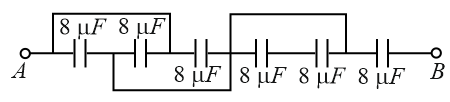
The equivalent capacitance between points $$A$$ and $$B$$ in below shown figure will be ______ $$\mu$$F.
Loading solution...
A resistor develops $$300$$ J of thermal energy in $$15$$ s, when a current of $$2$$ A is passed through it. If the current increases to $$3$$ A, the energy developed in $$10$$ s is ______ J.
Loading solution...
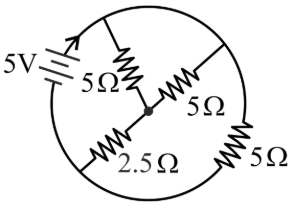
The total current supplied to the circuit as shown in the figure by the $$5$$ V battery is ______ A.
Loading solution...
The current in a coil of self inductance $$L = 2.0$$ H is increasing according to the law $$i = 2\sin t^2$$. Find the amount of energy spent (in J) during the period when the current changes from $$0$$ to $$2$$ A.
Loading solution...
The pair, in which ions are isoelectronic with $$Al^{3+}$$ is
Loading solution...
Bonding in which of the following diatomic molecule(s) become(s) stronger, on the basis of MO Theory, by removal of an electron?
(A) NO
(B) $$N_2$$
(C) $$O_2$$
(D) $$C_2$$
(E) $$B_2$$
Choose the most appropriate answer from the options given below :
Loading solution...
Number of electron deficient molecules among the following $$PH_3, B_2H_6, CCl_4, NH_3, LiH$$ and $$BCl_3$$ is
Loading solution...
Which one of the following alkaline earth metal ions has the highest ionic mobility in its aqueous solution?
Loading solution...
Phenol on reaction with dilute nitric acid, gives two products. Which method will be most efficient for large scale separation?
Loading solution...
In the following structures, which one is having staggered conformation with maximum dihedral angle?
Loading solution...
The IUPAC name of ethylidene chloride is
Loading solution...
The product formed in the following reaction.
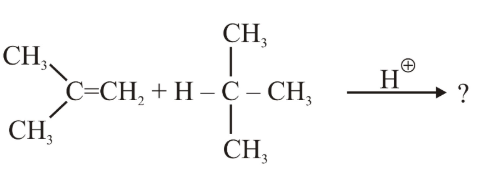
is:
Loading solution...
The eutrophication of water body results in
Loading solution...
Incorrect statement for Tyndall effect is
Loading solution...
Leaching of gold with dilute aqueous solution of NaCN in presence of oxygen gives complex A, which on reaction with zinc forms the elemental gold and another complex B. A and B, respectively are
Loading solution...
Cerium IV has a noble gas configuration. Which of the following is the correct statement about it?
Loading solution...
Among the following, which is the strongest oxidizing agent?
Loading solution...
White precipitate of AgCl dissolves in aqueous ammonia solution due to formation of
Loading solution...
The major product in the reaction
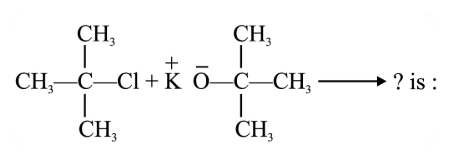
Loading solution...
The intermediate X, in the reaction
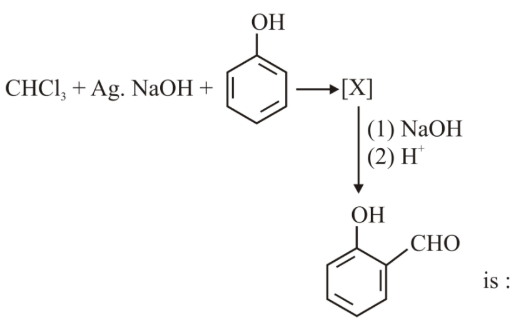
Loading solution...
In the following reaction :
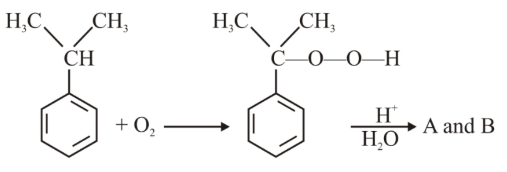
The compounds A and B respectively are
Loading solution...
The reaction of
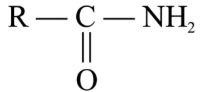
with bromine and KOH gives $$RNH_2$$ as the end product. Which one of the following is the intermediate product formed in this reaction?
Loading solution...
Using very little soap while washing clothes, does not serve the purpose of cleaning of clothes, because
Loading solution...
Which one of the following is an example of artificial sweetner?
Loading solution...
The number of N atoms in $$681$$ g of $$C_7H_5N_3O_6$$ is $$x \times 10^{21}$$. The value of $$x$$ is ______ (Nearest Integer)
$$N_A = 6.02 \times 10^{23}$$ mol$$^{-1}$$
Loading solution...
$$1$$ L aqueous solution of $$H_2SO_4$$ contains $$0.02$$ m mol $$H_2SO_4$$. $$50\%$$ of this solution is diluted with deionized water to give $$1$$ L solution A. In solution A, $$0.01$$ m mol of $$H_2SO_4$$ are added. Total m mols of $$H_2SO_4$$ in the final solution is ______ $$\times 10^{-3}$$ m moles.
Loading solution...
Number of grams of bromine that will completely react with $$5.0$$ g of pent-1-ene is ______ $$\times 10^{-2}$$ g. (Atomic mass of Br $$= 80$$ g/mol) [Nearest integer]
Loading solution...
The longest wavelength of light that can be used for the ionisation of lithium ion $$Li^{2+}$$ is $$x \times 10^{-8}$$ m. The value of $$x$$ is ______ (Nearest Integer)
(Given : Energy of the electron in the first shell of the hydrogen atom is $$-2.2 \times 10^{-18}$$ J; $$h = 6.63 \times 10^{-34}$$ Js and $$c = 3 \times 10^{8}$$ ms$$^{-1}$$)
Loading solution...
The standard entropy change for the reaction
$$4Fe(s) + 3O_2(g) \to 2Fe_2O_3(s)$$ is $$-550$$ J K$$^{-1}$$ at $$298$$ K
[Given : The standard enthalpy change for the reaction is $$-165$$ kJ mol$$^{-1}$$]. The temperature in K at which the reaction attains equilibrium is (Nearest Integer) ______
Loading solution...
The standard free energy change $$\Delta G°$$ for $$50\%$$ dissociation of $$N_2O_4$$ into $$NO_2$$ at $$27°$$C and $$1$$ atm pressure is $$-x$$ J mol$$^{-1}$$. The value of $$x$$ is ______ J. (Nearest Integer)
[Given : $$R = 8.31$$ J K$$^{-1}$$ mol$$^{-1}$$, $$\log 1.33 = 0.1239$$, $$\ln 10 = 2.3$$]
Loading solution...
The distance between $$Na^+$$ and $$Cl^-$$ ions in solid NaCl of density $$43.1$$ g cm$$^{-3}$$ is ______ $$\times 10^{-10}$$ m. (Nearest Integer)
(Given : $$N_A = 6.02 \times 10^{23}$$ mol$$^{-1}$$)
Loading solution...
In a cell, the following reactions take place
$$Fe^{2+} \to Fe^{3+} + e^-$$ $$E^\circ_{Fe^{3+}/Fe^{2+}} = 0.77$$ V
$$2I^- \to I_2 + 2e^-$$ $$E^\circ_{I_2/I^-} = 0.54$$ V
The standard electrode potential for the spontaneous reaction in the cell is $$x \times 10^{-2}$$ V at $$298$$ K. The value of $$x$$ is ______ (Nearest Integer)
Loading solution...
For a given chemical reaction $$\gamma_1 A + \gamma_2 B \to \gamma_3 C + \gamma_4 D$$. Concentration of C changes from $$10$$ mmol dm$$^{-3}$$ to $$20$$ mmol dm$$^{-3}$$ in $$10$$ s. Rate of appearance of D is $$1.5$$ times the rate of disappearance of B which is twice the rate of disappearance of A. The rate of appearance of D has been experimentally determined to be $$9$$ mmol dm$$^{-3}$$ s$$^{-1}$$. Therefore the rate of reaction is ______ mmol dm$$^{-3}$$ s$$^{-1}$$. (Nearest Integer)
Loading solution...
If $$[CuH_2O_4]^{2+}$$ absorbs a light of wavelength $$600$$ nm for d-d transition, then the value of octahedral crystal field splitting energy for $$[CuH_2O_6]^{2+}$$ will be ______ $$\times 10^{-21}$$ J [Nearest integer]
(Given : $$h = 6.63 \times 10^{-34}$$ Js and $$c = 3.08 \times 10^{8}$$ ms$$^{-1}$$)
Loading solution...
Let a circle $$C$$ in complex plane pass through the points $$z_1 = 3 + 4i, z_2 = 4 + 3i$$ and $$z_3 = 5i$$. If $$z \neq z_1$$ is a point on $$C$$ such that the line through $$z$$ and $$z_1$$ is perpendicular to the line through $$z_2$$ and $$z_3$$, then $$\arg z$$ is equal to
Loading solution...
If $$\frac{1}{2 \cdot 3^{10}} + \frac{1}{2^2 \cdot 3^9} + \cdots + \frac{1}{2^{10} \cdot 3} = \frac{K}{2^{10} \cdot 3^{10}}$$, then the remainder when $$K$$ is divided by $$6$$ is
Loading solution...
Let a circle $$C$$ touch the lines $$L_1: 4x - 3y + K_1 = 0$$ and $$L_2: 4x - 3y + K_2 = 0$$, $$K_1, K_2 \in R$$. If a line passing through the centre of the circle $$C$$ intersects $$L_1$$ at $$(-1, 2)$$ and $$L_2$$ at $$(3, -6)$$, then the equation of the circle $$C$$ is
Loading solution...
If $$y = m_1 x + c_1$$ and $$y = m_2 x + c_2$$, $$m_1 \neq m_2$$ are two common tangents of circle $$x^2 + y^2 = 2$$ and parabola $$y^2 = x$$, then the value of $$8|m_1 m_2|$$ is equal to
Loading solution...
Let $$x = 2t, y = \frac{t^2}{3}$$ be a conic. Let $$S$$ be the focus and $$B$$ be the point on the axis of the conic such that $$SA \perp BA$$, where $$A$$ is any point on the conic. If $$k$$ is the ordinate of the centroid of the $$\triangle SAB$$, then $$\lim_{t \to 1} k$$ is equal to
Loading solution...
Let $$f(x)$$ be a polynomial function such that $$f(x) + f'(x) + f''(x) = x^5 + 64$$. Then, the value of $$\lim_{x \to 1} \frac{f(x)}{x - 1}$$ is equal to
Loading solution...
Consider the following two propositions :
$$P_1:\sim(p\to\sim q)$$
$$P_2:(p\land\sim q)\land(\sim p\lor q)$$
If the proposition $$p\to(\sim p\lor q) $$ is evaluated as FALSE, then
Loading solution...
Let $$a, b$$ and $$c$$ be the length of sides of a triangle $$ABC$$ such that $$\frac{a+b}{7} = \frac{b+c}{8} = \frac{c+a}{9}$$. If $$r$$ and $$R$$ are the radius of incircle and radius of circumcircle of the triangle $$ABC$$, respectively, then the value of $$\frac{R}{r}$$ is equal to
Loading solution...
Let $$A = \begin{pmatrix} 0 & -2 \\ 2 & 0 \end{pmatrix}$$. If $$M$$ and $$N$$ are two matrices given by $$M = \sum_{k=1}^{10} A^{2k}$$ and $$N = \sum_{k=1}^{10} A^{2k-1}$$ then $$MN^2$$ is
Loading solution...
Let $$A$$ be a $$3\times 3$$ real matrix such that
$$A\begin{pmatrix}1\\1\\0\end{pmatrix}=\begin{pmatrix}1\\1\\0\end{pmatrix},\qquad A\begin{pmatrix}1\\0\\1\end{pmatrix}=\begin{pmatrix}-1\\0\\1\end{pmatrix},\qquad A\begin{pmatrix}0\\0\\1\end{pmatrix}=\begin{pmatrix}1\\1\\2\end{pmatrix}.$$
If $$X=(x_1,x_2,x_3)^T$$ and $$I$$ is an identity matrix of order $$3$$, then the system
$$(A-2I)X=\begin{pmatrix}4\\1\\1\end{pmatrix}$$
has ____________.
Loading solution...
Let $$f : N \to R$$ be a function such that $$f(x + y) = 2f(x)f(y)$$ for natural numbers $$x$$ and $$y$$. If $$f(1) = 2$$, then the value of $$\alpha$$ for which $$\sum_{k=1}^{10} f(\alpha + k) = \frac{512}{3}2^{20} - 1$$ holds, is
Loading solution...
Let $$f : R \to R$$ be defined as $$f(x) = x^3 + x - 5$$. If $$g(x)$$ is a function such that $$f(g(x)) = x, \forall x \in R$$, then $$g'(63)$$ is equal to
Loading solution...
Let $$f : R \to R$$ and $$g : R \to R$$ be two functions defined by $$f(x) = \log_e(x^2 + 1) - e^{-x} + 1$$ and $$g(x) = \frac{1 - 2e^{2x}}{e^x}$$. Then, for which of the following range of $$\alpha$$, the inequality $$f\left(g\left(\frac{\left(\alpha-1\right)^2}{3}\right)\right)>f\left(g\left(\alpha-\frac{5}{3}\right)\right)$$ holds?
Loading solution...
Let $$g : (0, \infty) \to R$$ be a differentiable function such that $$\int (\frac{x(\cos x - \sin x)}{e^x + 1} + \frac{g(x)(e^x + 1 - xe^x)}{(e^x + 1)^2} )dx = \frac{xg(x)}{e^x + 1} + C$$, for all $$x > 0$$, where $$C$$ is an arbitrary constant. Then
Loading solution...
Evaluate
$$I=\int_0^{\pi}\frac{e^{\cos x}\sin x}{(1+\cos^2x)e^{\cos x}+e^{-\cos x}}\,dx.$$
Loading solution...
Let $$y = y(x)$$ be the solution of the differential equation $$(x + 1)y' - y = e^{3x}(x + 1)^2$$, with $$y(0) = \frac{1}{3}$$. Then, the point $$x = -\frac{4}{3}$$ for the curve $$y = y(x)$$ is
Loading solution...
If the solution curve $$y = y(x)$$ of the differential equation $$y^2 dx + (x^2 - xy + y^2)dy = 0$$, which passes through the point $$(1, 1)$$ and intersects the line $$y = \sqrt{3}x$$ at the point $$(\alpha, \sqrt{3}\alpha)$$, then value of $$\log_e \sqrt{3}\alpha$$ is equal to
Loading solution...
Let $$\vec{a} = a_1\hat{i} + a_2\hat{j} + a_3\hat{k}, a_i > 0, i = 1, 2, 3$$ be a vector which makes equal angles with the coordinate axes $$OX, OY$$ and $$OZ$$. Also, let the projection of $$\vec{a}$$ on the vector $$3\hat{i} + 4\hat{j}$$ be $$7$$. Let $$\vec{b}$$ be a vector obtained by rotating $$\vec{a}$$ with $$90°$$. If $$\vec{a}, \vec{b}$$ and x-axis are coplanar, then projection of a vector $$\vec{b}$$ on $$3\hat{i} + 4\hat{j}$$ is equal to
Loading solution...
Let $$Q$$ be the mirror image of the point $$P(1, 0, 1)$$ with respect to the plane $$S : x + y + z = 5$$. If a line $$L$$ passing through $$(1, -1, -1)$$, parallel to the line $$PQ$$ meets the plane $$S$$ at $$R$$, then $$QR^2$$ is equal to
Loading solution...
Let $$E_1$$ and $$E_2$$ be two events such that the conditional probabilities $$P(E_1 | E_2) = \frac{1}{2}$$, $$P(E_2 | E_1) = \frac{3}{4}$$ and $$P(E_1 \cap E_2) = \frac{1}{8}$$. Then
Loading solution...
For a natural number $$n$$, let $$\alpha_n = 19^n - 12^n$$. Then, the value of $$\frac{31\alpha_9 - \alpha_{10}}{57\alpha_8}$$ is ______.
Loading solution...
The number of 3-digit odd numbers, whose sum of digits is a multiple of $$7$$, is ______.
Loading solution...
The greatest integer less than or equal to the sum of first $$100$$ terms of the sequence $$\frac{1}{3}, \frac{5}{9}, \frac{19}{27}, \frac{65}{81}, \ldots$$ is equal to ______.
Loading solution...
Let $$C_r$$ denote the binomial coefficient of $$x^r$$ in the expansion of $$(1 + x)^{10}$$. If for $$\alpha, \beta \in R$$,
$$C_{1} + 3 \cdot 2C_{2} + 5 \cdot 3C_{3} + \ldots $$ upto 10 terms $$= \frac{\alpha \times 2^{11}}{2^{\beta} - 1}(C_{0} + \frac{C_{1}}{2} + \frac{C_{2}}{3} + \ldots $$ upto 10 terms ) then the value of $$\alpha + \beta $$ is equal to ______.
Loading solution...
The number of values of $$x$$ in the interval $$\left[\frac{\pi}{4}, \frac{7\pi}{4}\right]$$ for which $$14\cosec^2 x - 2\sin^2 x = 21 - 4\cos^2 x$$ holds, is ______.
Loading solution...
Let the abscissae of the two points $$P$$ and $$Q$$ be the roots of $$2x^2 - rx + p = 0$$ and the ordinates of $$P$$ and $$Q$$ be the roots of $$x^2 - sx - q = 0$$. If the equation of the circle described on $$PQ$$ as diameter is $$2(x^2 + y^2) - 11x - 14y - 22 = 0$$, then $$2r + s - 2q + p$$ is equal to ______.
Loading solution...
Let $$A$$ be a $$3 \times 3$$ matrix having entries from the set $$\{-1, 0, 1\}$$. The number of all such matrices $$A$$ having sum of all the entries equal to $$5$$, is ______.
Loading solution...
Let $$f:\mathbb{R}\to\mathbb{R}$$ be a function defined by $$f(x)=\left(2\left(1-\frac{x^{25}}{2}\right)(2+x^{25})\right)^{\frac{1}{50}}.$$ If the function $$g(x)=f(f(f(x)))+f(f(x)),$$ then the greatest integer less than or equal to $$g(1)$$ is ____________.
Loading solution...
Let $$\theta$$ be the angle between the vectors $$\vec{a}$$ and $$\vec{b}$$, where $$|\vec{a}| = 4, |\vec{b}| = 3$$ and $$\theta \in \left[\frac{\pi}{4}, \frac{\pi}{3}\right]$$. Then $$|\vec{a} - \vec{b} \times \vec{a} + \vec{b}|^2 + 4|\vec{a} \cdot \vec{b}|^2$$ is equal to ______.
Loading solution...
Let the lines $$L_1 : \vec{r} = \lambda(\hat{i} + 2\hat{j} + 3\hat{k}), \lambda \in R$$ and $$L_2 : \vec{r} = \hat{i} + 3\hat{j} + \hat{k} + \mu(\hat{i} + \hat{j} + 5\hat{k}); \mu \in R$$, intersect at the point $$S$$. If a plane $$ax + by - z + d = 0$$ passes through $$S$$ and is parallel to the lines $$L_1$$ and $$L_2$$, then the value of $$a + b + d$$ is equal to ______.
Loading solution...
Educational materials for JEE preparation
 Share
Share