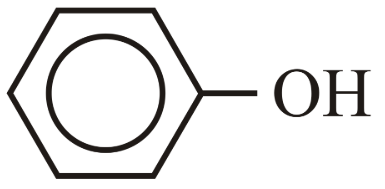
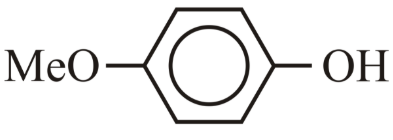
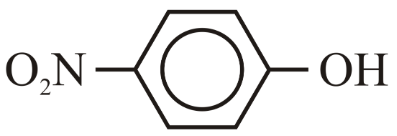
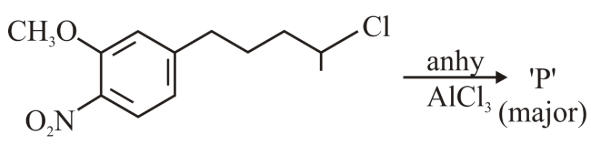
For the following questions answer them individually
A person travels $$x$$ distance with velocity $$v_1$$ and then $$x$$ distance with velocity $$v_2$$ in the same direction. The average velocity of the person is $$v$$, then the relation between $$v$$, $$v_1$$ and $$v_2$$ will be
Two projectiles are projected at 30$$^\circ$$ and 60$$^\circ$$ with the horizontal with the same speed. The ratio of the maximum height attained by the two projectiles respectively is:
Given below are two statements: one is labelled as Assertion A and the other is labelled as Reason R
Assertion A: An electric fan continues to rotate for some time after the current is switched off.
Reason R: Fan continues to rotate due to inertia of motion.
In the light of above statements, choose the most appropriate answer from the options given below.
Given below are two statements:
Statement I: Rotation of the earth shows effect on the value of acceleration due to gravity $$(g)$$.
Statement II: The effect of rotation of the earth on the value of $$g$$ at the equator is minimum and that at the pole is maximum.
In the light of the above statements, choose the correct answer from the options given below
The time period of a satellite, revolving above earth's surface at a height equal to R will be (Given $$g = \pi^2$$ m s$$^{-2}$$, $$R$$ = radius of earth)
Young's moduli of the material of wires $$A$$ and $$B$$ are in the ratio of 1 : 4, while its area of cross sections are in the ratio of 1 : 3. If the same amount of load is applied to both the wires, the amount of elongation produced in the wires A and B will be in the ratio of [Assume length of wires A and B are same]
A gas is compressed adiabatically, which one of the following statement is NOT true?
A gas mixture consists of 2 moles of oxygen and 4 moles of neon at temperature $$T$$. Neglecting all vibrational modes, the total internal energy of the system will be:
For a periodic motion represented by the equation $$y = \sin\omega t + \cos\omega t$$ the amplitude of the motion is
The distance between two plates of a capacitor is $$d$$ and its capacitance is $$C_1$$, when air is the medium between the plates. If a metal sheet of thickness $$\frac{2d}{3}$$ and of the same area as plate is introduced between the plates, the capacitance of the capacitor becomes $$C_2$$. The ratio $$\frac{C_2}{C_1}$$ is