Group
Group
 Group
Group


 Preferred Source

 Google Discover
JEE Main Chemistry Preparation Strategy 2027
A well-planned JEE Mains Chemistry preparation strategy can significantly improve your overall JEE Main score, as Chemistry is often considered one of the most scoring sections of the exam. To excel, students should focus on building strong conceptual clarity in Physical Chemistry, mastering reaction mechanisms in Organic Chemistry, and thoroughly studying NCERT for Inorganic Chemistry.
Along with completing the syllabus on time, solving JEE Main Previous Papers is crucial to understanding the latest exam pattern, identifying high-weightage chapters, and improving speed and accuracy.
For JEE Main 2027, aim to complete the Chemistry syllabus by October 2026, leaving the remaining months for revision. Check out the article to know more about JEE Main chemistry preparation strategy for 2027.
JEE Main Chemistry Chapter-Wise Preparation Strategy
Preparing Chemistry month by month is an essential part of an effective JEE Main Preparation Strategy 2027. A structured monthly plan helps students complete the JEE Mains Chemistry syllabus systematically while leaving sufficient time for revision and mock tests. Check out the table to understand the chapter-wise preparation strategy
| Chapter | What to Focus On | Daily Practice Target | Revision Frequency |
|---|---|---|---|
| Mole Concept | Stoichiometry, mole calculations | 20 questions | Weekly |
| Atomic Structure | Quantum numbers, electronic configuration | 20 questions | Weekly |
| Chemical Bonding | Hybridisation, VSEPR, MOT | 25 questions | Weekly |
| States of Matter | Gas laws, kinetic theory | 15 questions | Every 2 weeks |
| Thermodynamics | Enthalpy, entropy, Gibbs energy | 20 questions | Every 10 days |
| Equilibrium | Ionic and chemical equilibrium | 20 questions | Weekly |
| Redox Reactions | Oxidation number, balancing reactions | 15 questions | Every 2 weeks |
| Electrochemistry | Cells, Nernst equation | 20 questions | Weekly |
| Chemical Kinetics | Rate laws, order of reaction | 20 questions | Weekly |
| Solutions | Concentration terms, colligative properties | 20 questions | Every 10 days |
| Organic Chemistry (GOC) | Inductive effect, resonance, acidity/basicity | 25 questions | Weekly |
| Hydrocarbons | Alkanes, alkenes, alkynes | 20 questions | Weekly |
| Haloalkanes & Haloarenes | Reaction mechanisms | 20 questions | Weekly |
| Alcohols, Phenols & Ethers | Important reactions | 20 questions | Weekly |
| Aldehydes, Ketones & Carboxylic Acids | Named reactions | 20 questions | Weekly |
| Amines | Preparation and reactions | 15 questions | Every 2 weeks |
| Biomolecules, Polymers & Chemistry in Everyday Life | NCERT facts | 15 questions | Weekly |
| Coordination Compounds | Isomerism, bonding | 20 questions | Weekly |
| d- and f-Block Elements | Trends and properties | 20 questions | Weekly |
| p-Block Elements | Important compounds and reactions | 20 questions | Every 10 days |
JEE Main Chemistry Most Important Chapters 2027
The following table lists the JEE Main Chemistry Most Important Chapters 2027 based on their consistent weightage and importance in recent JEE Main exams. Prioritising these chapters can help you maximise your Chemistry score while ensuring comprehensive coverage of the syllabus.
| Chemistry Branch | Most Important Chapters | Importance |
|---|---|---|
| Physical Chemistry | Some Basic Concepts of Chemistry | High |
| Physical Chemistry | Atomic Structure | High |
| Physical Chemistry | States of Matter | Medium |
| Physical Chemistry | Thermodynamics | High |
| Physical Chemistry | Equilibrium | High |
| Physical Chemistry | Redox Reactions | Medium |
| Physical Chemistry | Solutions | Medium |
| Physical Chemistry | Electrochemistry | High |
| Physical Chemistry | Chemical Kinetics | High |
| Physical Chemistry | Surface Chemistry | Medium |
| Organic Chemistry | General Organic Chemistry (GOC) | Very High |
| Organic Chemistry | Hydrocarbons | High |
| Organic Chemistry | Haloalkanes & Haloarenes | High |
| Organic Chemistry | Alcohols, Phenols & Ethers | High |
| Organic Chemistry | Aldehydes, Ketones & Carboxylic Acids | Very High |
| Organic Chemistry | Amines | High |
| Organic Chemistry | Biomolecules | Medium |
| Organic Chemistry | Polymers | Medium |
| Organic Chemistry | Chemistry in Everyday Life | Medium |
| Inorganic Chemistry | Periodic Classification of Elements | High |
| Inorganic Chemistry | Chemical Bonding and Molecular Structure | Very High |
| Inorganic Chemistry | Coordination Compounds | Very High |
| Inorganic Chemistry | p-Block Elements | High |
| Inorganic Chemistry | d- and f-Block Elements | High |
| Inorganic Chemistry | Metallurgy | Medium |
| Inorganic Chemistry | Hydrogen | Medium |
| Inorganic Chemistry | Environmental Chemistry | Medium |
Also Read: JEE Mains Chemistry Chapter-Wise Weightage 2027
Month- Wise JEE Main Chemistry Preparation Plan
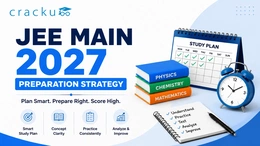
With JEE Main 2027 Session 1 expected in January 2027 and Session 2 in April 2027, students should aim to complete the Chemistry syllabus by October 2026, dedicate November and December to revision and mock tests, and use the final weeks before the exam for intensive practice with JEE Main Previous Papers and full-length mocks.
| Month | Topics to Cover | Preparation Strategy |
|---|---|---|
| July 2026 | Some Basic Concepts of Chemistry, Atomic Structure, Periodic Classification | Build strong fundamentals, prepare concise notes, and solve chapter-wise PYQs. |
| August 2026 | Chemical Bonding, States of Matter, Thermodynamics | Focus on conceptual clarity and numerical practice. Revise previous chapters weekly. |
| September 2026 | Equilibrium, Redox Reactions, Solutions, Electrochemistry | Practise formula-based JEE questions, revise regularly, and solve previous year questions after each chapter. |
| October 2026 | Chemical Kinetics, Surface Chemistry, General Organic Chemistry (GOC), Hydrocarbons | Strengthen Organic Chemistry fundamentals and complete the entire syllabus by the end of the month. |
| November 2026 | Haloalkanes & Haloarenes, Alcohols, Phenols & Ethers, Aldehydes & Ketones, Carboxylic Acids, Amines, Biomolecules, Polymers, Chemistry in Everyday Life, Coordination Compounds, d- & f-Block Elements | Complete the remaining Organic and Inorganic chapters. Begin full-syllabus revision and solve sectional tests. |
| December 2026 | Complete Chemistry Revision | Revise NCERT thoroughly, memorise important reactions, formulas, and exceptions. Solve 10–15 previous year papers along with 2–3 mock tests every week. |
| January 2027 (Before Session 1) | Final Revision | Focus on weak chapters, maintain an error notebook, revise NCERT and JEE Main Chemistry formula sheets, and attempt full-length mock tests under exam conditions. |
Also Read: JEE Mains Physics Preparation Strategy 2027
Best Books for JEE Main Chemistry Preparation
Start with NCERT as your primary resource, especially for Inorganic Chemistry, and complement it with standard reference books for Physical and Organic Chemistry. Along with these books, regularly solving JEE Mains Previous Papers and taking JEE Mains Mock Test will help improve accuracy, speed, and exam readiness. The following books are highly recommended by experts and JEE toppers for JEE Main Chemistry Preparation.
| Book | Author | Best For |
|---|---|---|
| NCERT Chemistry (Class 11 & 12) | NCERT | Essential for covering the complete JEE Main Chemistry syllabus, especially Inorganic Chemistry and NCERT-based questions. |
| Physical Chemistry | O.P. Tandon | Strengthening concepts, numerical problem-solving, and formula-based practice in Physical Chemistry. |
| Physical Chemistry | P. Bahadur | Extensive numerical practice and concept-based questions for JEE Main. |
| Organic Chemistry | Morrison & Boyd | Building conceptual understanding of reaction mechanisms and Organic Chemistry fundamentals. |
| Organic Chemistry | M.S. Chouhan | Practising objective and advanced-level Organic Chemistry questions. |
| Concise Inorganic Chemistry | J.D. Lee (Adapted by Sudarshan Guha) | Understanding concepts, periodic trends, and chemical properties in Inorganic Chemistry. |
| Problems Plus in IIT Chemistry | A. Das Gupta | Advanced practice questions across Physical, Organic, and Inorganic Chemistry. |
| Chapter-wise Previous Year Papers | Disha Publications / MTG | Solving chapter-wise JEE Main Previous Year Papers to understand exam trends and frequently asked questions. |
Also Read: JEE Mains Maths Preparation Strategy 2027, Important PYQ PDF
Common Mistakes Students Make While Preparing for Chemistry
Many students find Chemistry to be a scoring subject but lose valuable marks due to poor preparation strategies. Avoiding these common mistakes can help you improve conceptual understanding, boost accuracy, and maximise your JEE Main Chemistry score.
| Common Mistake | Why It’s a Problem | How to Avoid It |
|---|---|---|
| Ignoring the NCERT Textbook | Many direct and concept-based questions, especially in Inorganic Chemistry, are based on NCERT. | Read NCERT thoroughly and revise it multiple times. |
| Memorising Without Understanding Concepts | Rote learning makes it difficult to solve application-based and numerical questions. | Focus on understanding concepts before memorising formulas or reactions. |
| Neglecting Physical Chemistry Numericals | Lack of practice leads to calculation errors and poor speed. | Solve numerical problems daily and revise important formulas regularly. |
| Skipping General Organic Chemistry (GOC) | GOC forms the foundation of the entire Organic Chemistry syllabus. | Master GOC, reaction mechanisms, and basic concepts before studying advanced Organic Chemistry. |
| Not Revising Named Reactions Regularly | Students often forget reaction conditions and products before the exam. | Prepare short notes and revise named reactions every week. |
| Ignoring Inorganic Chemistry Revision | Inorganic Chemistry is memory-intensive and requires frequent revision. | Revise NCERT notes, periodic trends, and important exceptions regularly. |
| Practising Too Few Previous Year Questions (PYQs) | Students fail to understand the actual exam pattern and frequently tested concepts. | Solve chapter-wise PYQs after every topic and full-length papers during revision. |
| Not Maintaining Formula and Reaction Notes | Important formulas and reactions are easily forgotten without regular revision. | Prepare a concise notebook for formulas, reactions, and exceptions. |
| Focusing Only on Strong Topics | Weak chapters remain underprepared and reduce the overall Chemistry score. | Allocate extra time to difficult chapters while regularly revising strong areas. |
Also Read: JEE Mains 2027 Sample Paper, Based on Latest Exam Pattern
JEE Main Chemistry Preparation Strategy 2027: conclusion
A successful JEE Main Chemistry Preparation Strategy 2027 should balance conceptual learning, regular practice, and frequent revision. Students should strengthen numerical skills in Physical Chemistry, understand reaction mechanisms in Organic Chemistry, and study NCERT thoroughly for Inorganic Chemistry. Completing the syllabus by October 2026 will provide sufficient time for revision, PYQs, sectional tests, and full-length mock tests.
Chemistry can become one of the most scoring sections of JEE Main when preparation is consistent and well organised. Maintain separate notes for formulas, reactions, exceptions, and errors, while revising important chapters at regular intervals. By combining NCERT study, recommended books, JEE Main Previous Year Papers, and timed mock tests, students can improve their speed, accuracy, confidence, and overall JEE Main 2027 score.
.webp)