
 Group
Group
 Group
Group
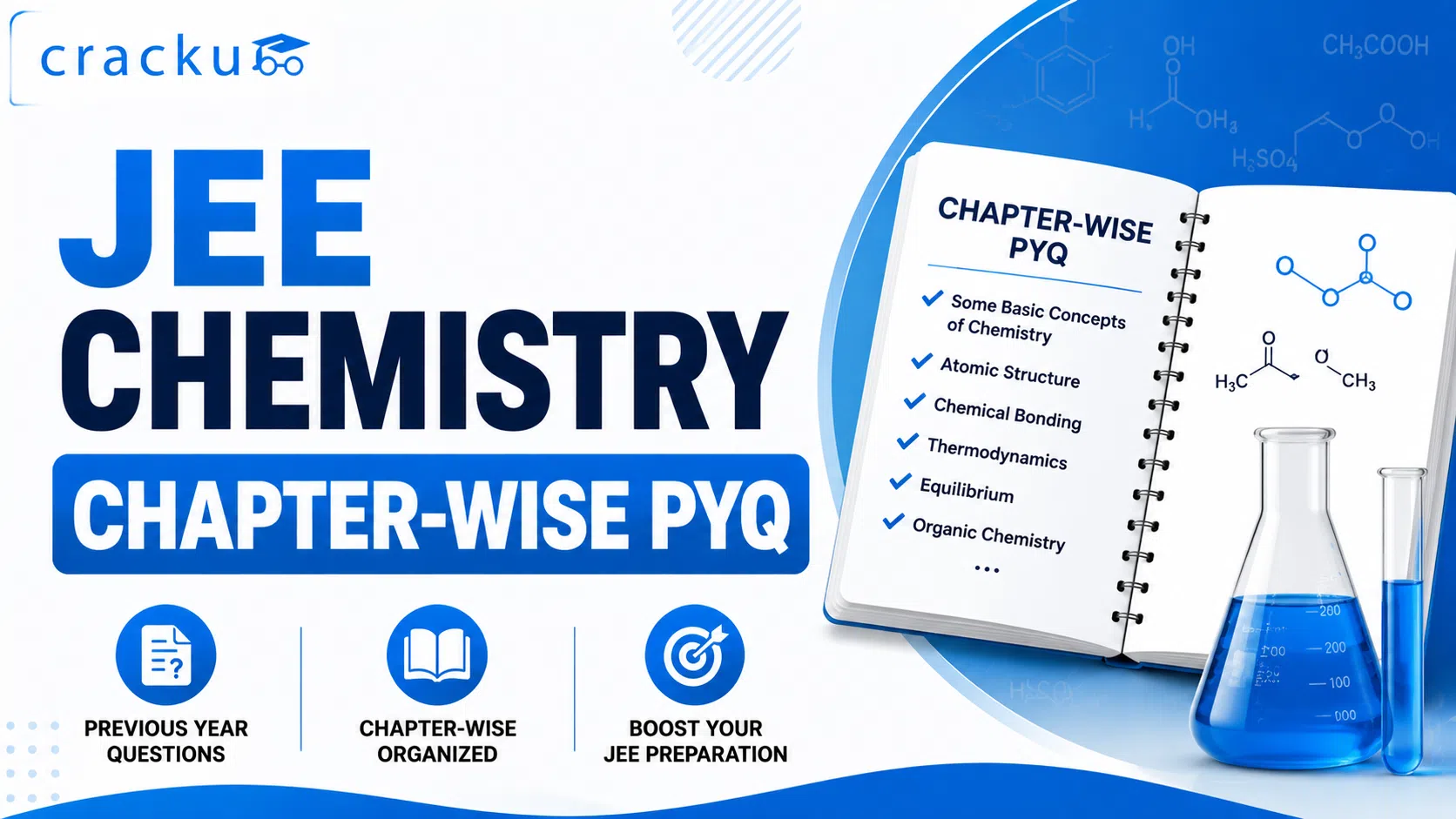
JEE Chemistry Chapter-Wise PYQs
JEE Chemistry Chapter-Wise PYQs with Solutions PDF are one of the best resources for students preparing for JEE Mains and JEE Advanced. Solving previous year questions chapter by chapter helps students understand the actual exam pattern, important concepts, repeated question types, and difficulty level of Physical, Organic, and Inorganic Chemistry.
Instead of solving random questions, students should first complete the theory, revise formulas and reactions, and then attempt chapter-wise PYQs. This method improves accuracy, speed, revision quality, and confidence before mock tests. In this blog, you can check JEE Chemistry chapter-wise PYQ PDFs, chapter weightage, important Chemistry chapters, and the best way to use PYQs for JEE preparation.
JEE Chemistry Chapter Wise PYQs PDF
JEE Chemistry Chapter-Wise PYQs are an essential resource for JEE Main and JEE Advanced aspirants, as they compile important questions from Physical, Organic, and Inorganic Chemistry in one place. Regular practice with these JEE Chemistry Chapter-Wise PYQs PDFs helps master high-weightage topics, improve problem-solving speed, and build confidence for the final exam.
Chapter Name | PYQ Link |
|---|---|
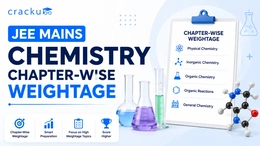
JEE Chemistry Chapter-Wise Weightage
The following weightage is based on previous-year JEE Main Chemistry question trends. The exact number of questions may vary by shift, but these chapters have appeared regularly in recent papers.
Unit | Chapter | Expected Questions | Priority |
Inorganic Chemistry | Chemical Bonding | 1–2 | Very High |
Inorganic Chemistry | Coordination Compounds | 2–3 | Very High |
Organic Chemistry | GOC | 1–2 | Very High |
Physical Chemistry | Thermodynamics | 1–2 | High |
Physical Chemistry | Electrochemistry | 1–2 | High |
Organic Chemistry | Carbonyl Compounds | 1–2 | High |
Inorganic Chemistry | p-Block Elements | 1–2 | High |
Physical Chemistry | Mole Concept | 1–2 | High |
Physical Chemistry | Chemical Kinetics | 1 | Medium |
Physical Chemistry | Atomic Structure | 1 | Medium |
Organic Chemistry | Biomolecules & Polymers | 1 | Medium |
Most Important Chemistry Chapters Based on PYQs
Based on PYQ trends, some Chemistry chapters appear more frequently and should be revised with extra focus. However, students should not completely skip low-weightage chapters because even one easy Chemistry question can improve rank.
However, for better preparation, you can always refer to the Cracku JEE Daily Target to stay regular and improve accuracy
Priority Level | Chapter | Why It’s Important (PYQ Trend) |
Very High | Chemical Bonding | Repeated in almost every exam; core concept for Inorganic Chemistry |
Very High | Coordination Compounds | High frequency numericals + theory-based questions |
Very High | GOC (General Organic Chemistry) | Foundation of Organic Chemistry; reaction mechanisms often tested |
Very High | Thermodynamics | Regular numerical-based questions in Physical Chemistry |
Very High | Electrochemistry | Frequently asked with calculation-based PYQs |
High | p-Block Elements | Conceptual + memory-based repeated questions |
High | Carbonyl Compounds | Important reaction-based Organic Chemistry chapter |
High | Chemical Equilibrium | Common numerical and concept questions |
High | Hydrocarbons | Basic Organic reactions frequently tested |
Medium | Atomic Structure | Direct concept-based questions |
Medium | Biomolecules & Polymers | Repeated but usually easier questions |
Medium | Chemical Kinetics | Moderate frequency, mostly numerical |
Also Read: JEE Mains Previous year papers
How to Use JEE Chemistry Chapter-Wise PYQs for Best Results
Instead of solving them randomly, using a structured approach helps improve understanding, accuracy, and revision efficiency. PYQs also help identify important topics, question patterns, and frequently repeated concepts across Physical, Organic, and Inorganic Chemistry.
Step 1: Complete NCERT and Basic Concepts
For Inorganic Chemistry, the NCERT Solutions are very important. For Physical Chemistry, revise formulas. For Organic Chemistry, understand reactions and mechanisms.
Step 2: Revise Formulas and Reactions
Before solving PYQs, revise important formulas, named reactions, reagents, exceptions, and trends.
Step 3: Start with Easy and Moderate PYQs
Begin with easier questions to build confidence, then move to tougher JEE Advanced-level questions.
Step 4: Attempt Without Solutions
Solve questions without looking at the answer key first. This improves actual problem-solving ability.
Step 5: Analyse Mistakes Properly
Classify mistakes into concept errors, formula errors, reaction errors, calculation errors, and silly mistakes.
Step 6: Reattempt Wrong Questions After 7 Days
Reattempt wrong and skipped questions after a week to improve retention.
Also Read: JEE Mains Chemistry Formula PDF
Common Mistakes Students Make While Solving JEE Chemistry PYQs
Solving JEE Chemistry previous year questions is very important for exam preparation, but many students do not use them effectively. Instead of improving their performance, they repeat avoidable errors that reduce accuracy and confidence. Understanding these common mistakes can help students use PYQs in a more productive and exam-oriented way.
Mistake | Why It Is a Problem | What to Do Instead |
Skipping concept building | PYQs become confusing | Complete NCERT and notes first |
Memorising solutions | Does not improve logic | Understand the process behind the answer |
Ignoring mistake analysis | Same errors repeat in mocks | Maintain an error notebook |
Random practice order | Weak basics remain weak | Start with easy and moderate PYQs |
Not reattempting questions | Retention becomes poor | Reattempt wrong PYQs after 7 days |
Ignoring Inorganic revision | Facts and exceptions are forgotten | Revise NCERT regularly |
Also Read: JEE Advanced Previous year papers
JEE Chemistry Chapter-Wise PYQs: Conclusion
JEE Chemistry Chapter-wise PYQs are an essential resource for aspirants aiming to excel in both JEE Main and Advanced. Practising questions chapter by chapter helps students identify important concepts, master numerical problems, and understand repeated question patterns, ensuring thorough revision of Physical, Organic, and Inorganic Chemistry.
Using chapter-wise PYQs also helps track progress, strengthen weak areas, and improve accuracy and speed. Combined with NCERT theory and formula revision, this approach enhances conceptual clarity, boosts confidence, and prepares students effectively for high-weightage chapters and challenging questions in JEE 2027.