
 Group
Group
 Group
Group


 Preferred Source

 Google Discover
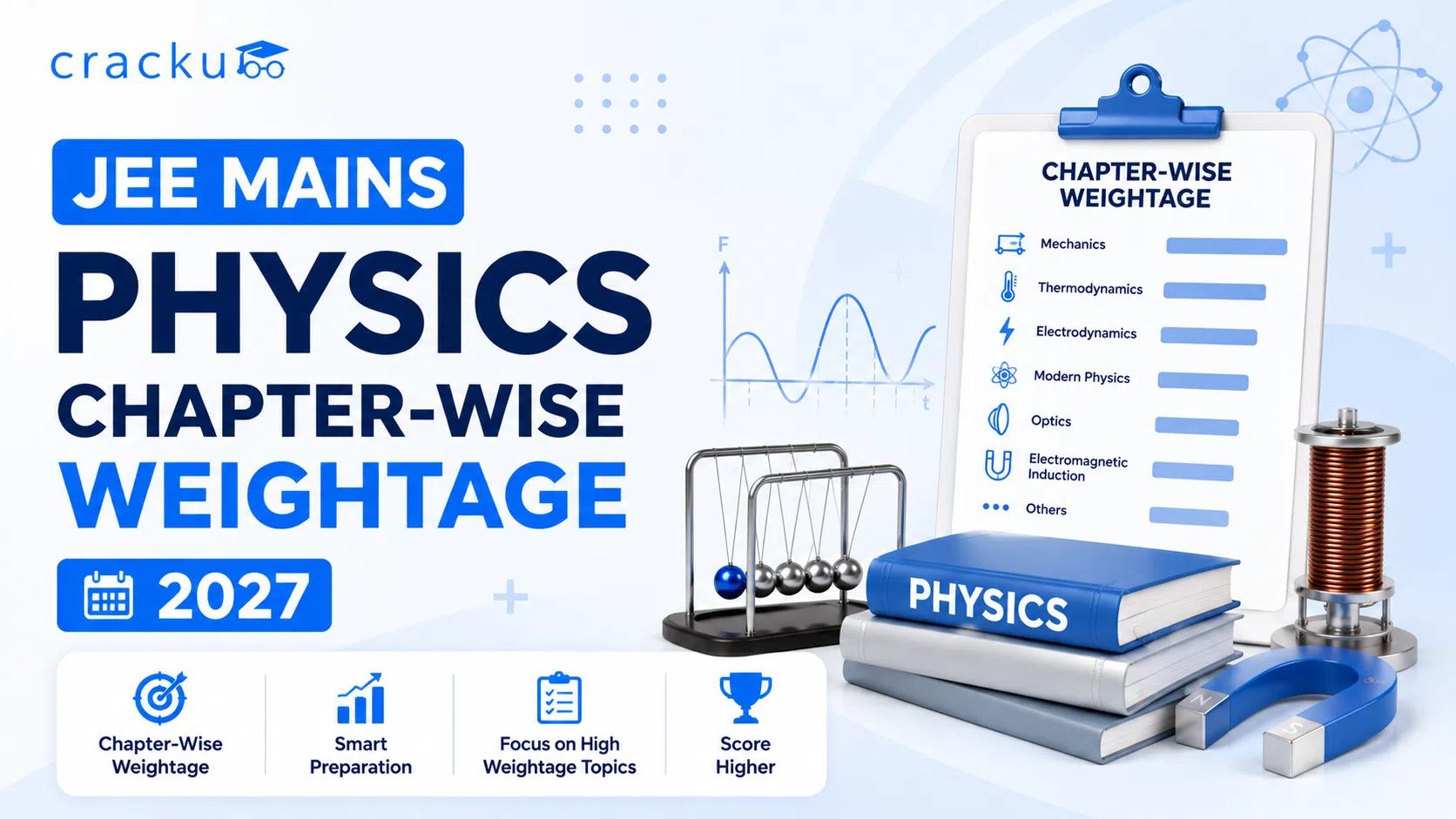
JEE Mains Physics Chapter-Wise Weightage 2027
Physics is often considered the most challenging subject in JEE Main, but it is also one of the most scoring if prepared strategically. Understanding the chapter-wise weightage of JEE Mains Physics helps students focus their efforts on topics that are most likely to appear in the exam and carry the highest marks.
JEE Main Physics syllabus covers two years of Class 11 and Class 12 content. With 25 questions in the Physics section carrying 100 marks, each topic's contribution to the paper is significant. The section is split into 20 MCQs (Section A) and 5 compulsory Numerical Value Questions (Section B), both carrying negative marking. This detailed guide provides all the information you need about Physics weightage, important chapters, and preparation tips.
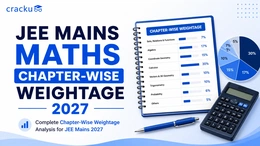
Physics Chapter-Wise Weightage
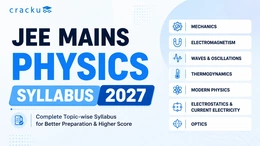
Physics has 25 questions in JEE Main, with Mechanics and Electromagnetism collectively dominating more than half the section. Mastering these two areas first gives aspirants the strongest possible foundation before moving to the remaining chapters.
| Chapter | Expected Questions | Chapter Share (%) | Priority |
|---|---|---|---|
| Mechanics (Kinematics, Laws of Motion, Work-Energy, Rotational Motion) | 6–7 | 24–28% | High |
| Electrostatics and Current Electricity | 4–5 | 16–20% | High |
| Modern Physics (Atoms, Nuclei, Dual Nature) | 3–4 | 12–16% | High |
| Magnetic Effects and Electromagnetic Induction | 2–3 | 8–12% | Medium |
| Optics (Ray and Wave) | 2–3 | 8–12% | Medium |
| Thermodynamics and Kinetic Theory | 2–3 | 8–12% | Medium |
| Experimental Skills (Practical-Based Questions) | 2–3 | 8–12% | Medium |
| Oscillations, Waves, Gravitation, and Properties of Matter | 1–2 | 4–8% | Low–Medium |
JEE Mains Physics Important Chapters
Certain Physics chapters consistently appear in JEE Main with higher frequency and weightage. Mastering these chapters first ensures a solid foundation and improves your score significantly.
| Chapter | Class | Approximate Weightage | Priority Level |
|---|---|---|---|
| Mechanics (Kinematics, Laws of Motion, Work-Energy) | XI | 25–30% | High |
| Electrostatics and Current Electricity | XII | 20–25% | High |
| Modern Physics (Atoms, Nuclei, Dual Nature) | XII | 10–15% | High |
| Experimental Skills (Practical-Based Questions) | XI/XII | 8–10% | High |
| Optics (Ray and Wave) | XII | 8–10% | Medium |
| Thermodynamics and Kinetic Theory | XI | 6–8% | Medium |
| Magnetic Effects and Electromagnetic Induction | XII | 6–8% | Medium |
| Oscillations and Waves | XI | 5–7% | Medium |
| Properties of Matter, Gravitation, and Rotational Motion | XI | 4–6% | Low–Medium |
JEE Mains Physics Topic-Wise Weightage
Breaking down the major chapters into specific topics gives a clearer picture of what to focus on within each chapter. The following analysis is based on JEE Main papers from 2019 to 2024.
| Topic | Chapter | Expected Questions (per Session) | Difficulty |
|---|---|---|---|
| Newton's Laws and Applications | Mechanics | 2–3 | Moderate |
| Energy Conservation and Collisions | Work, Energy and Power | 1–2 | Moderate |
| Electric Field and Potential | Electrostatics | 2–3 | Hard |
| Kirchhoff's Laws and Circuits | Current Electricity | 1–2 | Moderate |
| Electromagnetic Induction | EMI and AC | 1–2 | Hard |
| Photoelectric Effect and de Broglie | Dual Nature | 1–2 | Moderate |
| Nuclear Reactions and Radioactivity | Atoms and Nuclei | 1–2 | Moderate |
| Lens and Mirror Formulae | Optics | 1–2 | Easy–Moderate |
| Lab-Based Practical Questions | Experimental Skills | 1–2 | Easy–Moderate |
| Semiconductor Devices | Electronic Devices | 1 | Easy |
Electrostatics and Current Electricity together often contribute 4-5 questions per session within the 25-question format. Students who master these two chapters significantly improve their Physics score.
Also Read: JEE Mains Chapter-wise Weightage 2027, Topic-wise Analysis
JEE Mains Physics Trends and Weightage Analysis
Analyzing Physics trends from recent years reveals important patterns. Numerical problems in Physics have increased in difficulty, requiring stronger mathematical ability. Mechanics remains the backbone of the Physics section, and questions from this area test both concepts and application skills.
From 2022 onwards, the JEE Main Physics section has seen more multi-concept questions, where two or more chapters are combined in a single problem. This has particularly been noticed in questions involving Mechanics with Thermodynamics and Electrostatics with Magnetic Effects. Experimental Skills questions have also grown in frequency and are now a category that serious aspirants cannot afford to ignore.
| Chapter Group | 2022 Questions | 2023 Questions | 2024 Questions | 2027 Expected |
|---|---|---|---|---|
| Mechanics (All Chapters) | 7–8 | 7–8 | 7–8 | 7–8 |
| Electromagnetism | 5–6 | 5–7 | 5–6 | 5–7 |
| Modern Physics | 3–4 | 3–4 | 3–4 | 3–4 |
| Experimental Skills | 1–2 | 1–2 | 2–3 | 2–3 |
| Optics | 2–3 | 2–3 | 2–3 | 2–3 |
| Heat and Thermodynamics | 2–3 | 2–3 | 2–3 | 2–3 |
Also Read: JEE Mains Physics Formulas 2027, Download Topic-wise PDF
JEE Mains Physics Chapter-Wise Weightage 2027: Conclusion
The JEE Mains Physics Chapter-Wise Weightage 2027 helps students identify the chapters that are expected to contribute the most questions in the examination. Mechanics, Electrostatics, Current Electricity, Electromagnetism and Modern Physics are among the most important areas. Experimental Skills, Optics and Thermodynamics should also receive proper attention because questions from these chapters have appeared consistently in recent papers.