
 Group
Group
 Group
Group
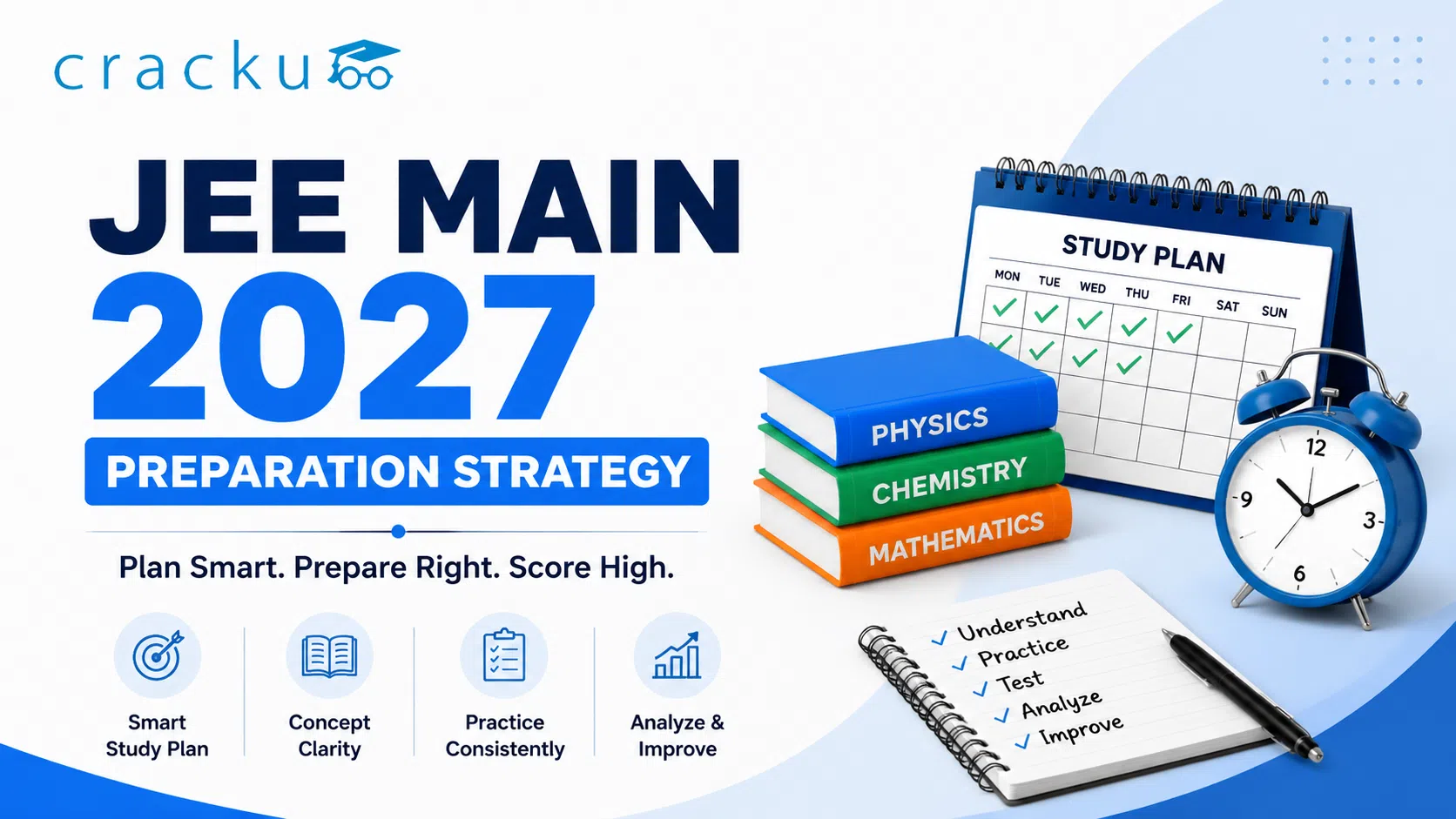
JEE Main 2027 Preparation Strategy
The JEE Main 2027 Preparation Strategy is the foundation for achieving a high percentile and securing admission to top engineering institutes such as NITs, IIITs, and GFTIs. With increasing competition every year, aspirants need a well-planned study schedule, thorough understanding of the latest exam pattern and syllabus, consistent revision, and regular mock test practice.
A successful JEE Main 2027 Preparation Strategy should focus on building strong conceptual clarity in Physics, Chemistry, and Mathematics while improving speed, accuracy, and time management. Students should begin with NCERT textbooks, solve JEE Mains Previous Year Questions (PYQs), and gradually move to advanced practice. Following a disciplined preparation plan and analysing mock test performance regularly can significantly improve overall scores and boost confidence for the examination.
JEE Main 2027 Exam Pattern & Latest Syllabus
As of now, aspirants should prepare according to the latest official NTA syllabus based on the Class 11 and Class 12 NCERT curriculum, unless any changes are announced for JEE Main 2027. Familiarity with the JEE Main 2027 Exam Pattern & Latest Syllabus will help students create a structured study plan and focus on high-weightage topics from each subject.
| Particular | Details |
|---|---|
| Exam Mode | Computer-Based Test (CBT) |
| Duration | 3 Hours |
| Subjects | Physics, Chemistry, Mathematics |
| Total Questions | 75 (25 per subject) |
| MCQs | 20 per subject |
| Numerical Value Questions | 5 per subject |
| Total Marks | 300 |
| Correct Answer | +4 Marks |
| Wrong Answer | -1 Mark |
| Unattempted | 0 Marks |
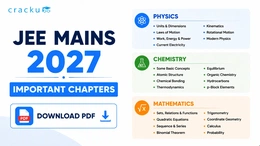
The table below summarises the major topics covered in the JEE Main 2027 Syllabus. The syllabus is primarily based on the NCERT Class 11 and Class 12 curriculum and includes Physics, Chemistry, and Mathematics. Candidates should regularly check the official NTA website for any syllabus updates or revisions before the examination.
| Subject | Category | Major Topics |
|---|---|---|
| Physics | — | Mechanics, Thermodynamics, Waves & Oscillations, Electrostatics, Current Electricity, Magnetism, Optics, Modern Physics |
| Chemistry | Physical Chemistry | Mole Concept, Atomic Structure, Chemical Kinetics, Electrochemistry, Thermodynamics |
| Chemistry | Organic Chemistry | Hydrocarbons, Alcohols, Aldehydes & Ketones, Amines, Biomolecules |
| Chemistry | Inorganic Chemistry | Chemical Bonding, Coordination Compounds, p-Block Elements, d & f Block Elements, Periodic Table |
| Mathematics | — | Algebra, Coordinate Geometry, Calculus, Vectors, 3D Geometry, Trigonometry, Probability, Statistics |
Also Read: How to Score 99+ Percentile in JEE Mains 2027?
JEE Main 2027 Preparation Timeline
A JEE Main 2027 Preparation Strategy timeline helps aspirants complete the syllabus on time while ensuring enough room for revision, mock tests, and performance analysis. Dividing your preparation into monthly goals allows you to stay consistent, strengthen weak areas, and gradually improve speed and accuracy. Experts recommend following a balanced schedule that includes concept revision, Previous Year Questions (PYQs), and regular mock tests throughout the preparation year to maximise your JEE Main score.
The table below provides a structured preparation roadmap from the start of your preparation until the expected JEE Main 2027 Session 1 examination.
Timeline | Focus Area | Preparation Strategy |
July – September 2025 | Build Fundamentals | Start with NCERT and strengthen Class 11 concepts in Physics, Chemistry, and Mathematics. Focus on conceptual understanding, make short notes, and solve basic JEE Questions after every chapter. |
October – December 2025 | Complete Class 11 Syllabus | Finish the remaining Class 11 topics, revise regularly, and practise chapter-wise questions. Start maintaining a JEE Mains Formula Sheet for Physics and Mathematics. |
January – March 2026 | Begin Class 12 Preparation | Start Class 12 chapters while revising Class 11 topics weekly. Use reliable JEE Study Material and solve mixed-level practice questions. |
April – June 2026 | Complete Major Portion of Class 12 | Focus on JEE Mains high-weightage chapters, strengthen weak concepts, and increase problem-solving practice. Begin solving selected JEE Mains Previous Papers chapter-wise. |
July – September 2026 | Finish the Syllabus | Complete the remaining JEE Mains 2027 Syllabus, revise completed chapters, and solve mixed-topic question sets to improve conceptual application. |
October – November 2026 | Revision & Mock Tests | Begin full-length revision of all three subjects. Attempt one or two JEE Mains Mock Test papers every week and analyse mistakes thoroughly. |
December 2026 | Intensive Practice | Solve JEE Mains Previous Papers in exam-like conditions, revise formulas and short notes daily, and improve speed, accuracy, and time management. |
January 2027 (Before the Exam) | Final Revision | Focus only on revision, important formulas, frequently asked concepts, and error analysis. Avoid starting new topics and maintain a healthy study routine before the examination. |
Also Read: JEE Mains Important Chapters 2027, Subject-Wise Weightage
JEE Main 2027 Subject-Wise Preparation Strategy
A subject-wise preparation strategy helps candidates balance all three subjects while focusing on conceptual understanding, regular practice, and revision. Physics requires strong analytical skills, Chemistry demands consistent revision of NCERT concepts, and Mathematics needs continuous problem-solving practice. Experts also recommend solving previous years' questions and analyzing mock tests to improve speed and accuracy.
Subject-wise Preparation Strategy |
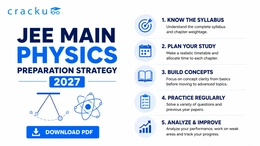
| JEE Mains Physics Preparation Strategy 2027 |
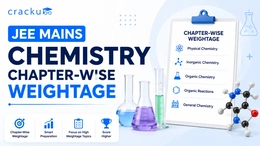
| JEE Mains Chemistry Preparation Strategy 2027 |
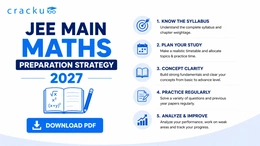
| JEE Mains Maths Preparation Strategy 2027 |
| Subject | Preparation Strategy | High-Weightage Topics |
|---|---|---|
| Physics | Build strong conceptual clarity before solving numerical problems. Study theory from NCERT Solutions and standard reference books, maintain a formula notebook, practice numerical questions daily, and solve Previous Year Questions (PYQs). Revise formulas regularly and take sectional mock tests. | Mechanics, Electrostatics, Current Electricity, Magnetism, Optics, Modern Physics, Thermodynamics |
| Chemistry | Divide preparation into Physical, Organic, and Inorganic Chemistry. Read NCERT thoroughly, especially for Inorganic Chemistry. Practice numerical problems in Physical Chemistry and understand reaction mechanisms in Organic Chemistry. Revise reactions and exceptions frequently. | Chemical Bonding, Coordination Compounds, Thermodynamics, Electrochemistry, Organic Reactions, Biomolecules, p-Block & d-f Block Elements |
| Mathematics | Practice consistently every day to improve speed and accuracy. Focus on concept application rather than memorization. Solve mixed-level problems, revise formulas weekly, learn shortcut techniques, and attempt timed practice sessions to enhance time management. | Calculus, Algebra, Coordinate Geometry, Vectors & 3D Geometry, Trigonometry, Probability, Matrices & Determinants |
Also Read: JEE Mains 2027 6-Months Roadmap, Subject-Wise Preparation
Best Books for JEE Main 2027 Preparation
Choosing the right JEE study material is essential for effective JEE Main preparation. Experts recommend starting with NCERT Class 11 and 12 textbooks to build a strong conceptual foundation and then referring to one or two standard reference books for each subject. Avoid using too many books, as it can lead to confusion and reduce revision time.
| Subject | Recommended Books | Author/Publisher |
|---|---|---|
| Physics | NCERT Physics (Class 11 & 12) | NCERT |
| Physics | Concepts of Physics (Vol. 1 & 2) | H.C. Verma |
| Physics | Fundamentals of Physics | Halliday, Resnick & Walker |
| Physics | Understanding Physics Series | D.C. Pandey |
| Physical Chemistry | NCERT Chemistry | NCERT |
| Physical Chemistry | Concepts of Physical Chemistry | P. Bahadur |
| Physical Chemistry | Modern Approach to Chemical Calculations | R.C. Mukherjee |
| Organic Chemistry | NCERT Chemistry | NCERT |
| Organic Chemistry | Organic Chemistry | Morrison & Boyd |
| Organic Chemistry | Organic Chemistry | M.S. Chauhan |
| Inorganic Chemistry | NCERT Chemistry | NCERT |
| Inorganic Chemistry | Concise Inorganic Chemistry | J.D. Lee (Adapted Edition) |
| Mathematics | NCERT Mathematics (Class 11 & 12) | NCERT |
| Mathematics | Objective Mathematics | R.D. Sharma |
| Mathematics | Mathematics for JEE Main | Cengage Learning |
| Mathematics | Skills in Mathematics Series | Arihant Publications |
Also Read: How Many Mock Tests Should You Take Before JEE Main 2027?
Common Mistakes JEE Main Aspirants Should Avoid
Preparing for JEE Main requires discipline, consistency, and a smart study plan. While hard work is essential, avoiding common mistakes is equally important. Many aspirants lose marks due to poor time management, lack of revision, or ineffective preparation strategies. Staying focused and following a structured approach can significantly improve your chances of achieving a high percentile.
| Mistake to Avoid | Why It Matters |
|---|---|
| Ignoring NCERT textbooks | NCERT is the foundation of the JEE Main syllabus, especially for Chemistry. |
| Studying without a timetable | A proper study plan ensures balanced preparation and timely completion of the syllabus. |
| Using too many reference books | Referring to multiple books can create confusion and reduce revision time. |
| Skipping Previous Year Questions (PYQs) | PYQs help you understand the exam pattern, important topics, and question trends. |
| Avoiding mock tests | Regular mock tests improve speed, accuracy, and time management. |
| Ignoring weak subjects or topics | Strengthening weak areas helps improve your overall score. |
| Lack of regular revision | Frequent revision helps retain formulas, concepts, and reactions. |
| Memorising instead of understanding concepts | JEE Main focuses on conceptual understanding and application-based questions. |
| Starting new topics before the exam | Learning new concepts at the last minute can increase stress and confusion. |
| Not analyzing mock test mistakes | Reviewing errors helps identify weak areas and prevents repeating mistakes. |
| Poor time management during preparation | Effective planning ensures adequate time for study, revision, and practice. |
| Neglecting health and sleep | Proper sleep, nutrition, and exercise improve concentration and productivity. |
Also Read: How to Prepare for JEE Mains 2027, The Ultimate Strategy
JEE Main 2027 Preparation Strategy: Conclusion
A well-planned JEE Main 2027 Preparation Strategy can help students achieve a strong percentile and secure admission to top engineering institutes. Starting with NCERT textbooks, developing conceptual clarity in Physics, Chemistry, and Mathematics, and following a structured study schedule are essential steps for effective preparation. Regular practice through PYQs, mock tests, and revision sessions helps students improve accuracy and confidence.
Success in JEE Main 2027 depends not only on hard work but also on smart preparation, consistency, and proper analysis of performance. Students should avoid common mistakes such as skipping revision, using too many resources, and ignoring weak topics. Following a disciplined approach with regular practice, subject-wise planning, and timely revision can significantly improve performance in the examination.
.webp)