Algebra is one of the important topic in Quant Section of the CAT Exam. We've compiled a list of the top Algebra Questions with video solutions, tailored to match the difficulty level of the actual CAT exam. Each question comes with both video and text explanations provided by Maruti Sir, ensuring comprehensive understanding. Download them as PDF and start your practice. You can check out these Algebra CATPrevious questions. Practice a good amount of questions in the CAT Algebra, along with Arithmetic and Geometry, forms a crucial part of the Quant section. These are good sources for practice the Algebra questions, Algebra sections is combine of Linear Equation, Quadratic Equation, Inequalities, Functions/Progressions, Logarithms questions with its intricate equations and formulas, is a cornerstone of the CAT. For CAT aspirants, mastering algebra is not just a choice; it's a necessity. If you're embarking on your CAT preparation journey and looking to conquer the realm of algebra, you've landed in the right place.
Remember, practice is key to mastery. The more you practice, the more confident you'll become. Utilize these exclusive free resources to enhance your skills. Additionally, solving questions from previous CAT papers and takingCAT mock tests regularly will familiarize you with the exam pattern and boost your confidence. These questions aren't mere exercises; they are actual CAT questions, carefully selected to give you a taste of what to expect on the big day. Check out here for Detailed video solutionsfor CompleteAlgebra CAT Previous year Questions. Keep practicing and stay consistent!
$$9^{x^{2}+2x-3}-4(3^{x^{2}+2x-2})+27=0$$ can be written as $$9^t-4(3^{t+1})+27=0$$
$$3^{2t}-12(3^t)+27=0$$
Let's assume that $$3^t = y$$
$$y^2-12y+27=0$$
$$(y-9)(y-3)=0$$
y = 3 or 9 $$\Rightarrow$$ t = 1 or 2
Let's solve when t = 1
$$x^{2}+2x-3 = 1 \Rightarrow x^{2}+2x-4 = 0$$
$$b^2-4ac\ =\ 4+16\ =\ 20$$
Positive, so the equation has real roots.
Product of possible value of x = -4
Let's solve for t = 2
$$x^{2}+2x-3 = 2 \Rightarrow x^{2}+2x-5 = 0$$
$$b^2-4ac\ =\ 4+20\ =\ 24$$
Positive, so the equation has real roots.
Product of possible value of x = -5
The product of all values = 20
Question 3
The average number of copies of a book sold per day by a shopkeeper is 60 in the initial seven days and 63 in the initial eight days, after the book launch. On the ninth day, she sells 11 copies less than the eighth day, and the average number of copies sold per day from second day to ninth day becomes 66. The number of copies sold on the first day of the book launch is
In a school with 1500 students, each student chooses any one of the streams out of science, arts, and commerce, by paying a fee of Rs 1100, Rs 1000, and Rs 800, respectively. The total fee paid by all the students is Rs 15,50,000. If the number of science students is not more than the number of arts students, then the maximum possible number of science students in the school is
The quadratic $$x^2 + 2x + 9$$ has discriminant (4-36=-32 <0), so always positive. But in this case (x<-9), so inequality is satisfied. Thus (x < -9) also works.
$$x < -3 \text{or} x>3$$
So the solution set is $${(-\infty,-3) \cup (3,\infty)}$$
Question 6
In an arithmetic progression, if the sum of fourth, seventh and tenth terms is 99, and the sum of the first fourteen terms is 497, then the sum of first five terms is
We are also told that the sum of the first fourteen terms is $$497$$,
$$\dfrac{14}{2}(2a + (14-1)d) = 497$$
$$\Rightarrow (2a+13d) = \dfrac{497}{7}$$
$$\Rightarrow 2a+13d = 71$$ .....(2)
Solving equations (1) and (2), we get;
$$a= 3$$ and $$d=5$$
The first five terms would therefore be: $$3, 8, 13, 18, 23$$, and their sum would be $$3+8+13+18+23 = 65$$.
Question 7
Let $$3\leq x\leq6$$ and $$\left[x^{2}\right] =\left[x\right]^{2}$$ , where $$[x]$$ is the greatest integer not exceeding $$x$$ . If set $$S$$ represents all feasible values of $$x$$, then a possible subset of $$S$$ is
Sure! We can solve it without explicitly introducing new variables for substitution.
We are given $$(m+2n)(2m+n) = 27$$ and we want to maximize $$2m-3n$$
Because m and n are integers, both (m+2n) and (2m+n) are going to be integers.
Factor pairs of 27 (including negatives) are: $$(1,27),(3,9),(9,3),(27,1),(-1,-27),(-3,-9),(-9,-3),(-27,-1)$$
For each factor pair (a,b), take $$a=m+2n$$, $$b=2m+n$$ and solve for integers (m,n).
If we notice $$a+b=\left(m+2n\right)+\left(2m+n\right)=3\left(m+n\right)$$
So, basically the sum of the two numbers has to be a multiple of $$3$$.
So, the ordered pairs we will consider are $$\left(3,9\right),\left(9,3\right),\left(-3,-9\right),\left(-9,-3\right)$$
For $$(a,b)=(9,3)$$:
$$ m+2n=9,\quad 2m+n=3 $$
Upon solving, we get $$n=5$$ and $$m=-1$$
For $$(a,b)=(3,9)$$:
$$ m+2n=3,\quad 2m+n=9 $$
Upon solving, we get $$n=-1$$ and $$m=5$$
Then $$2m-3n=2\cdot5-3(-1)=10+3=13$$
For negative factor pairs, we similarly get integer solutions $$(-5,1)$$ and $$(1,-5)$$, giving $$2m-3n=-13 \text{and} 17$$, respectively.
Thus, the maximum value of $$(2m-3n)$$ among all solutions is 17
Question 9
Stocks A, B and C are priced at rupees 120, 90 and 150 per share, respectively. A trader holds a portfolio consisting of 10 shares of stock A, and 20 shares of stocks B and C put together. If the total value of her portfolio is rupees 3300, then the number of shares of stock B that she holds, is
So, $$10\times\ 120+90\times\ x+150\times\ \left(20-x\right)=3300$$
or, $$1200+90\ x+150\left(20-x\right)=3300$$
or, $$1200+90\ x+3000-150x=3300$$
or, $$4200-60x=3300$$
or, $$60x=900$$
or, $$x=\dfrac{900}{60}=15$$
So, the number of shares of stock that B hold is 15.
Question 10
For any natural number k , let $$a_{k}=3^{k}$$. The smallest natural number m for which $$\left\{(a_{1})^{1}\times(a_{2})^{2}\times...\times(a_{20})^{20}\right\}<\left\{a_{21}\times a_{22}\times...\times a_{20+m}\right\}$$, is
Given expression is $$\left\{(a_{1})^{1}\times(a_{2})^{2}\times...\times(a_{20})^{20}\right\}<\left\{a_{21}\times a_{22}\times...\times a_{20+m}\right\}$$,
For base of log in range $$1/4\in(0,1)$$ and $$\log_{1/4}(x)>0$$ is true only if 0<x<1.
For integer n, $$x=n^2-7n+11$$ is an integer, so it cannot lie strictly between 0 and 1.
So, there is no integer value for which this inequality is satisfied.
Question 13
If $$\log_{64}{x^{2}+\log_{8}{\sqrt{y}+3\log_{512}{(\sqrt{y}z)}}}=4$$, where x,y and z are positive real numbers, then the minimum possible value of $$(x+y+z)$$ is
In the set of consecutive odd numbers $$\left\{1,3,5,...,57\right\}$$, there is a number $$k$$ such that the sum of all the elements less than $$k$$ is equal to the sum of all the elements greater than $$k$$ . Then, $$k$$ equals
Since the base of the logarithm has to be greater than zero and cannot be $$1$$, $$x$$ has to be greater than $$3$$ and cannot be $$4$$. Also, since $$x^2-9>0$$, $$x$$ will be greater than $$3$$.
The equation can be rewritten as;
$$\log_{x-3}{(x^{2}-9)}-\log_{x-3}{(x+1)} = 2$$
Or,
$$\log_{x-3}{\dfrac{x^2-9}{x+1}} = 2$$
$$\Rightarrow \dfrac{(x+3)(x-3)}{x+1} = (x-3)^2$$
$$\Rightarrow \dfrac{(x+3)}{x+1} = (x-3)$$
$$\Rightarrow (x+3) = (x-3)(x+1)$$
$$\Rightarrow x+3 = x^2 - 3x + x - 3$$
$$\Rightarrow x^2 - 3x - 6 = 0$$
The roots of the quadratic above are $$\dfrac{3\pm \sqrt{3^2 + 24}}{2}$$
The negative value of $$x$$ will not be possible, the positive value that satisfies is $$\dfrac{3+ \sqrt{33}}{2}$$
The correct answer is option D.
Question 22
If $$a-6b+6c=4$$ and $$6a+3b-3c=50$$, where a, b and c are real numbers, the value of $$2a+3b-3c$$ is
Given expression: $$(a-b)^{2}+(a-c)^{2}+(a-d)^{2}$$
The given expression has just the sum of squares of the terms. So, the minimum value is either zero or positive.
If we can make all the values equal, we can get zero. But since all the values are integers and the sum 46 is not divisible by 4, we can't make everything equal.
So, the nearest four values are 12, 11, 11, 12.
With this, the minimum value is $$(12-11)^2+(12-11)^2+(12-12)^2 = 2$$
Question 24
Let $$a_{n}$$ be the $$n^{th}$$ term of a decreasing infinite geometric progression. If $$a_{1}+a_{2}+a_{3}=52$$ and $$a_{1}a_{2}+a_{2}a_{3}+a_{3}a_{1}=624$$, then the sum of this geometric progression is
Let the first term be a and the common ratio be r.
Given
$$a+a r + a r^2 = 52 \quad\text{and}\quad a^2 r + a^2 r^2 + a^2 r^3 = 624.$$
From the first equation $$a(1+r+r^2)=52$$, so $$a=\dfrac{52}{1+r+r^2}$$.
Substitute into the second:
$$\frac{52^2}{(1+r+r^2)^2}*(r+r^2+r^3)=624$$
$$\frac{r}{(1+r+r^2)}=\frac{3}{13}$$
$$3r^2-10r+3=0$$
$$(3r-1)(r-3)=0$$
Simplify to get an equation in (r); its real solutions are $$r=\tfrac{1}{3}$$ and $$r=3$$. For an infinite geometric progression, we must have (|r|<1), so $$r=\dfrac{1}{3}$$.
Now $$a=\frac{52}{1+\tfrac{1}{3}+\tfrac{1}{9}}=\frac{52}{13/9}=36$$
Now, it is given the equation must have integer roots.
So, $$25-4k$$ has to be a perfect square.
We need to find non-negative integer values of $$k$$
Now, for $$k=0$$, $$D=25-4\times\ 0=25$$, is a perfect square
For $$k=4$$, $$D=25-4\times4=25-16=9$$, is a perfect square
For $$k=6$$, $$D=25-4\times\ 6=1$$, is a perfect square
So, there are three non negative integer values of $$k$$.
So, correct answer is $$3$$.
Question 26
Let p, q and r be three natural numbers such that their sum is 900, and r is a perfect square whose value lies between 150 and 500. If p is not less than 0.3q and not more than 0.7q, then the sum of the maximum and minimum possible values of p is
We have $$p+q+r = 900$$, and $$r$$ is a perfect square lying between $$150$$ and $$500$$.
Let $$q$$ be a non-variable number that does not have a range.
We have $$0.3q \leq p \leq 0.7q$$, or $$q+0.3q \leq p+q \leq q+0.7q$$ or $$1.3q \leq p+q \leq 1.7q$$
Also, we can rewrite $$p+q = 900-r$$
Therefore, $$1.3q \leq 900-r \leq 1.7q$$
Since the extreme values (maximum and minimum) of $$p$$ depend on the value of $$q$$ ($$0.3q$$ and $$0.7q$$), we can maximise or minimise $$r$$ to find the extreme values of $$p$$.
Since $$1.3q \leq 900-r$$, the minimum possible value of $$q$$ would be when $$1.3q = 900-r$$ and when $$r$$ is maximum. The maximum value of $$r$$ is $$484$$. We get, $$1.3q = 900-484$$, or $$q = 320$$.
This gives the minimum possible value of $$p$$ as $$0.3\times 320 = 96$$.
Since $$900-r \leq 1.7q$$. the maximum possible value of $$q$$ would be when $$900-r=1.7q$$ and when $$r$$ is minimum. The minimum value of $$r$$ is $$169$$. We get $$1.7q = 900-169$$ or $$q= 430$$
This gives the maximum possible value of $$p$$ as $$0.7\times 430 = 301$$
The sum of the maximum and minimum values of $$p$$ is $$96+301 = 397$$.
Question 1
Consider two sets $$A = \left\{2, 3, 5, 7, 11, 13 \right\}$$ and $$B = \left\{1, 8, 27 \right\}$$. Let f be a function from A to B such that for every element in B, there is at least one element a in A such that $$f(a) = b$$. Then, the total number of such functions f is
Set A={2,3,5,7,11,13} so |A|=6 Set B={1, 8, 27} so |B|=3
Without any restrictions, each element in A can map to any of the 3 elements in B. Thus, the total number of functions is: $$3^6=729$$
Excluding Functions That Miss One Element in B: If a function does not map to an element in B, there are 2 elements in B left for mapping. The total number of such functions (for each specific element not mapped) is: $$2^6=64$$
Since there are 3 elements in B, the total number of such functions is:3x64=192
Adding Back Functions That Miss Two Elements in B:
If a function misses two elements in B, there is only 1 element left for mapping. The total number of such functions is: 1^6=1.
Since there are $$^3C_2$$ ways to choose which two elements are missed, the total number of such functions is: 3
Using the inclusion-exclusion principle, the number of functions where all elements of B are mapped by at least one element of A is: 729-192+3=540.
Question 2
If $$(a + b\sqrt{3})^2 = 52 + 30\sqrt{3}$$, where a and b are natural numbers, then $$a + b$$ equals
Opening the square on the left-hand side, we get $$a^2+3b^2+2ab\sqrt{\ 3}$$ Comparing the rational part on both side,s we get: $$a^2+3b^2=52$$ And comparing the irrational par,t we get: $$2ab\sqrt{\ 3}=30\sqrt{\ 3}$$
$$ab=15$$, Since we are given that a and b are natural numbers, the possible values of a and b are (1,15), (3, 5), (5, 3), or (15,1)
Putting these values in the first relation we got, we see that 15 squared would exceed the required value and would not be the case. We need not check if a=5, b=3 or a=3, b=5 since the answer would be the same.
(a=5 and b=3 would satisfy it)
a+b = 5+3 = 8
Therefore, Option B is the correct answer.
Question 3
Let $$x, y,$$ and $$z$$ be real numbers satisfying $$4(x^{2}+y^{2}+z^{2})=a,$$ $$4(x-y-z)=3+a$$ The a equals
When given more than one equations, stating the fact that there is a common root, We need to equate the two equations to get discernible values for $$x$$
Here, we are given three equations with the values of $$m$$, $$n$$
Similarly, we can do it for the other equation as well, $$x^2+nx+17=x^2+\left(m+n\right)x+35$$ $$mx=-18$$
Substituting the value of either $$mx$$ or $$nx$$ in the original equations, we get $$x^2-18+9=0$$ $$x^2=9$$ $$x=\pm\ 3$$ Since we are given that the root is negative, $$x=-3$$
$$n=-\dfrac{26}{-3}$$ $$m=-\dfrac{18}{-3}$$
$$3n=26$$ $$2m=12$$
$$2m+3n=38$$
Question 5
If a, b and c are positive real numbers such that $$a > 10 \geq b \geq c$$ and $$\cfrac{\log_8 (a + b)}{\log_2c} + \cfrac{\log_{27} (a - b)}{\log_3c} = \cfrac{2}{3}$$, then the greatest possible integer value of a is
The first term of the expression can be rewritten as $$\frac{\frac{1}{3}\log_2\left(a+b\right)}{\log_2c}$$ Using the property $$\frac{m}{n}\log_ab=\log_ab^{\frac{m}{n}}$$ this can be rewritten as
This expression is given to be equal to 2/3 Using the definition of log: $$\log_cN=a\ $$ which is $$c^a=N$$ we get:$$c^{\frac{2}{3}}=\left(a^2-b^2\right)^{\frac{1}{3}}$$
Cubing both sides: $$c^2=a^2-b^2$$ Finally giving $$a^2=b^2+c^2$$
We have upper limits on b and c as 10, and we want to maximize the value of a squared. This can be thought of as a right-angled triangle, and the value of a will be maximum when both b and c are equal to 10, giving $$a^2=200$$, but this would not give an integer value of a We need to adjust $$a^2$$ to the biggest square less than 200, which is 196 Giving the value of $$a$$ as 14.
Therefore, 14 is the correct answer.
Question 6
Suppose $$x_{1},x_{2},x_{3},...,x_{100}$$ are in arithmetic progression such that $$x_{5}=-4$$ and $$2x_{6}+2x_{9}=x_{11}+x_{13}$$, Then,$$x_{100}$$ equals
Using the arithmetic progression formula for the nth term, where $$x_n=a+\left(n-1\right)d$$ Substituting the value for n and using that in the equation that is given, $$2x_{6}+2x_{9}=x_{11}+x_{13}$$, Then,$$x_{100}$$ equals
We get, $$2\left(a+5d\right)+2\left(a+8d\right)=a+10d+a+12d$$ $$4a+26d=2a+22d$$ $$2a=-4d$$ $$a=-2d$$
We are given, $$x_5=-4$$ $$a+4d=-4$$ Substituting the value for a in terms of d, $$2d=-4$$ $$d=-2$$ $$a=4$$
$$x_{100}=a+99d$$ $$x_{100}=4-198=-194$$
Question 7
A function f maps the set of natural numbers to whole numbers, such that f(xy) = f(x)f(y) + f(x) + f(y) for all x, y and f(p) = 1 for every prime number p. Then, the value of f(160000) is
Looking at the additional information about the prime numbers should make one realise that they are the key to solving the question. f(16000) can be written as $$f\left(2^8\times\ 5^4\right)$$
Now, we can try to find these individual values:
For any prime p: f(p)=1 $$f\left(p^2\right)=f\left(p\right)f\left(p\right)+f\left(p\right)+f\left(p\right)=1+1+1=3$$ $$f\left(p^3\right)=f\left(p^2\right)f\left(p\right)+f\left(p^2\right)+f\left(p\right)=3+3+1=7$$
This way, we can find the function output for any prime number raised to a power.
We can see that each new exponent is twice the previous output +1, solving this way till prime raised to power 8 $$f\left(p^4\right)=7+7+1=15$$ $$f\left(p^5\right)=15+15+1=31$$ $$f\left(p^6\right)=31+31+1=63$$ $$f\left(p^7\right)=63+63+1=127$$ $$f\left(p^8\right)=127+127+1=255$$
Using these values in the original expression of $$f\left(2^8\times\ 5^4\right)=f\left(2^8\right)f\left(5^4\right)+f\left(2^8\right)+f\left(5^4\right)$$ we get $$f\left(2^8\times\ 5^4\right)=\left(255\times\ 15\right)+255+15=4095$$
Therefore, Option A is the correct answer.
Question 8
The roots $$\alpha, \beta$$ of the equation $$3x^2 + \lambda x - 1 = 0$$, satisfy $$\cfrac{1}{\alpha^2} + \cfrac{1}{\beta^2} = 15$$. The value of $$(\alpha^3 + \beta^3)^2$$, is
From the sum and product of roots, we get: $$\alpha\ +\beta\ =-\dfrac{\lambda}{3}$$ and $$\alpha\ \beta\ =-\dfrac{1}{3}$$
Simplifying the expression given in the question, we get: $$\dfrac{\alpha^2+\beta^2\ }{\alpha^2\beta^2\ }=15$$ and substituting the denominator's value as 1/9, we get:$$\alpha^2+\beta^2\ =\dfrac{15}{9}$$
We want the expression $$\alpha^3+\beta^3\ $$, so multiplying both sides by $$\alpha+\beta$$, we get: $$\alpha^3+\beta^3+\alpha\beta\left(a+\beta\ \right)=\dfrac{15}{9}\left(\alpha\ +\beta\ \right)$$ $$\alpha^3+\beta^3+\dfrac{\lambda}{9}\ =\dfrac{15}{9}\left(-\dfrac{\lambda}{3}\ \right)$$ $$\alpha^3+\beta^3+\dfrac{\lambda}{9}\ =-\dfrac{5\lambda}{9}-\dfrac{\lambda}{9}=-\dfrac{2\lambda\ }{3}\ \ $$
We would still need to find the value of $$\lambda$$ This we can do from the initial relation we had:
$$\alpha^2+\beta^2\ =\dfrac{15}{9}$$ $$\alpha^2+\beta^2\ =\left(\alpha+\beta\right)^2-2\alpha\ \beta\ \ \ =\dfrac{15}{9}$$ $$\dfrac{\lambda^2}{9}+\frac{2}{3}\ \ \ =\dfrac{15}{9}$$ $$\dfrac{\lambda^2}{9}\ =\dfrac{15-6}{9}=\dfrac{9}{9}=1$$ This would finally give us $$\lambda^2=9$$
Consider the sequence $$t_1 = 1, t_2 = -1$$ and $$t_n = \left(\cfrac{n - 3}{n - 1}\right)t_{n - 2}$$ for $$n \geq 3$$. Then, the value of the sum $$\cfrac{1}{t_2} + \cfrac{1}{t_4} + \cfrac{1}{t_6} + ....... +\cfrac{1}{t_{2022}} + \cfrac{1}{t_{2024}}$$, is
Finding the terms in the sequence, we see that $$t_3=0$$, $$t_4=-\dfrac{1}{3}$$, $$t_5=0$$ We would notice that all the odd terms are 0, and we are also asked the sum of only even terms, so we do not need to consider those
$$t_6=-\dfrac{1}{5}$$ We see that the even terms are in an HP: $$-1,\ -\dfrac{1}{3},\ -\dfrac{1}{5},\ -\dfrac{1}{7},\ ...$$
The sum we are asked is the inverse of these terms, that is: -1, -3, -5, -7, up to 1012 terms
The sum of this AP would be $$\dfrac{\left[-\left(2\times\ 1\right)+\left(1012-1\right)\left(-2\right)\right]}{2}\times\ 1012$$ Which is equal to $$-1012\times\ 1012\ =\ -1024144$$
Therefore, Option A is the correct answer.
Question 10
For any natural number $$n$$ let $$a_{n}$$ be the largest integer not exceeding $$\sqrt{n}$$. Then the value of $$a_{1}+a_{2}+.....+a_{50}$$ is
We are told that, for any natural number $$n_{1}$$ let $$a_{n}$$ be the largest integer not exceeding $$\sqrt{n}$$
So for n=1, the largest integer not exceeding $$\sqrt{1}$$ will be 1 For n=2, the largest integer not exceeding $$\sqrt{2}$$ will be 1 For n=3, the largest integer not exceeding $$\sqrt{3}$$ will be 1 For n=4, the largest integer not exceeding $$\sqrt{4}$$ will be 2
We see a pattern here regarding the squares of the numbers, Listing down all the perfect squares, 1, 4, 9, 16, 25, 36, 49, 64, ... We see that the difference between 4 and 1 is 3 and there were three natural numbers in the given pattern with the value as 1, So we can write for the rest of the numbers as well, 3 numbers will have value 1, giving a total value of 3 5 numbers will have value 2, giving a total value of 10 7 numbers will have value 3, giving a total value of 21 9 numbers will have value 4, giving a total value of 36 11 numbers will have value 5, giving a total value of 55 13 numbers will have value 6, giving a total value of 78 Now, only the values of $$a_{49},\ a_{50}$$ will have the value of 7, total value of 14.
Adding these values, we get the total sum as 217, which is the answer.
Question 11
The number of distinct real values of x, satisfying the equation $$max \left\{x, 2\right\} - min\left\{x, 2\right\} = \mid x + 2 \mid - \mid x - 2 \mid$$, is
The expression on the right-hand side will have two critical points: 2 and -2
For any value of x greater than equal to 2, the equation changes to x+2-(x-2) = 4
the value of min{x,2} would be 2, so we would want max{x,2} to be 4+2 = 6
Therefore, x=6 works.
For any value of x less than equal to -2, the equation changes to -(x+2)+(x-2) = -4 the value of max{x,2} would be 2, so we would want min{x,2} to be 6 again; this cannot be the case. In general, subtracting the smaller (min) of the two values from the bigger (max) can not lead to a negative number. The max it can lead to is a 0
When x lies between -2 and 2, the equation becomes 2x The maximum function will give back 2, and the minimum function will give back x, with the right-hand side giving 2x Solving this we would get 2-x = 2x which is x=2/3
Therefore, there are two real values of x for which the given equation holds.
Hence, 2 is the correct answer.
The graph of the function on the right hand side can be visualised as:
Hence, 2 is the correct answer.
Question 12
The sum of all distinct real values of x that satisfy the equation $$10^x + \cfrac{4}{10^x} = \cfrac{81}{2}$$, is
There are two critical points for the inequality to consider: x=-5 and x=3/2
Region I: x is greater than 3/2 In this scenario, both the terms would be positive; cross-multiplying, we get the relation $$2x-3\le x+5$$ Giving the boundary $$x\le8$$, hence giving us the valid range as $$\frac{3}{2}<x\le8$$
Region II: $$-5<x<\frac{3}{2}$$ In this case, the right-hand side will be a negative value, and hence, the sign would change when multiplying, giving the inequality $$2x-3\ge x+5$$ Which will give x>8, which is out of bounds for this region
Another way is to put a value in the region to check for the validity of the inequality; by putting x=0, we could see that the inequality does not hold in this region
Region III: x less than -5 In this scenario, both the terms are negative, essentially giving us the same boundary as region 1; we take the lower bounds, giving us that x has to be less than 5
Therefore, for the given inequality to hold true x<-5 or $$\frac{3}{2}<x\le8$$
Hence, Option A is the correct answer.
Question 14
If $$3^a = 4, 4^b = 5, 5^c = 6, 6^d = 7, 7^e = 8$$ and $$8^f = 9$$, then the value of the product abcdef is
Representing all three inequalities in the graph, we get the graph as shown above, and we must calculate the intersection of all three inequalities,
We can see that the line passes through the centre of both circles (-2, 2), and the area obtained from the second inequality is the area between the two circles. So, the area of intersection of all three graphs is half of the area between both the circles as the line divides the circle in half, and we must only consider the area above the line as per the given inequality. We know that the area of the bigger circle is $$\sqrt{\ 8}$$ and the area of the smaller circle is $$\sqrt{\ 4}$$ from the equations of the circles as we know that equation of circle as $$\left(x\ -\ a\right)^2\ +\ \left(y\ -\ b\right)^2\ =\ \left(radius\right)^2$$ where (a,b) is the centre of the circle.
The area of intersection
= $$\dfrac{1}{2}$$ (Area of bigger circle - Area of smaller circle)
Using the logarithmic property that $$\log_{a^p}b=\frac{1}{p}\log_ab$$
$$4 \log_{10} x + 4 \log_{100} x + 8 \log_{1000} x = 13$$ Can be written as $$4\log_{10}x+2\log_{10}x+\frac{8}{3}\log_{10}x=13$$ $$\frac{26}{3}\log_{10}x=13$$ $$\log_{10}x=1.5$$ $$x=10^{1.5}$$ $$x=\sqrt{1000}$$ $$\left[\sqrt{1000}\right]=31$$ Where [.] is Greatest Integer Function since that is what is asked in the question, 31 is the greatest integer that does not exceed x.
Question 17
The number of distinct integer solutions (x, y) of the equation $$\mid x + y \mid + \mid x - y \mid = 2$$, is
The moduli will give out only non-negative outputs, and since we are to consider only integer values of x and y, this drastically reduces the possible cases.
We can get 2 from either 2+0 or 1+1
We get a 2+0 form when either the first term or the second term is 0 The second term is 0; this is when x=y, in this case,|2x|=2, where x can be 1 or -1; therefore, the two cases are (1,1) and (-1,-1) The first term is 0; this is the case when x = -y, in this case, |x- (-x)|=2, giving x=1 or -1 yet again, here the two cases are (1,-1) and (-1,1)
The other way we can get 2 is through 1+1
This is possible when one of the terms is 0; if y=0, |x|+|x|=2, where x can be 1 or -1, giving two cases (1,0) and (-1,0) Similarly,y for x=0, we get two cases, (0,1) and (0,-1)
Therefore, there are 8 pairs of (x,y) that satisfy the given equation.
Question 18
For any non-zero real number x, let $$f(x) + 2f \left(\cfrac{1}{x}\right) = 3x$$. Then, the sum of all possible values of x for which $$f(x) = 3$$, is
Subtracting the first equation from the second equation we have,
$$3f\left(x\right)=\frac{6}{x}-3x$$
$$f\left(x\right)=\frac{2}{x}-x$$ We want the sum of values when this function equals 3,
$$\frac{2}{x}-x=3$$ $$x^2+3x-2=0$$ Since the discriminant is greater than zero, both values of x will be real, and we can directly take the sum of values of $$x$$ to be, $$-\frac{3}{1}$$
Answer is -3.
Question 19
If x and y are real numbers such that $$4x^2 + 4y^2 - 4xy - 6y + 3 = 0$$, then the value of $$(4x + 5y)$$ is
In such questions, we should be trying to complete the squares. We see a $$xy$$ term; we need to accommodate that in a square that has both x and y terms.
Since there is only one other term with x, we also need to have it entirely in the square. $$\left(2x-y\right)^{^2}=4x^2+y^2-4xy$$ Using this in the given equation, we are left with $$\left(2x-y\right)^{^2}+3y^2+3-6y$$
This can be written as $$\left(2x-y\right)^{^2}+3\left(y^2+1-2y\right)$$ $$\left(2x-y\right)^{^2}+3\left(y-1\right)^2=0$$
Since both the squares add up to 0, this is only possible when the squares themselves are 0 This would give us y=1 from the second term, and using that, we get x= 1/2 from the first term.
Therefore the value of 4x+5y will be 2+5 = 7
Hence, 7 is the correct answer.
Question 20
For some constant real numbers p, k and a, consider the following system of linear equations in x and y: px - 4y = 2 3x + ky= a A necessary condition for the system to have no solution for (x, y ), is
Arranging the equation, we know that there are no solutions when the lines are parallel: for that the condition had to $$\frac{p}{3}=-\frac{4}{k}\ne\ \frac{2}{a}$$
Checking through options: Option A: using the first and last terms in our relation, we see that ap must not be equal to 6 for the lines to be parallel. This option puts no conditions on that and thus is not relevant.
Option C: This question is the opposite of what we want; if this is true, the lines can never be parallel.
Option D: Using the first and second terms of the relation, we see that we want kp = -12, or kp-12 = 0. Hence, this statement is not what we want.
Option B: Using the second and third terms, we see that we do not want k equals to -2a, or we do not want k+2a to be equal to 0
Therefore, B is a condition that is necessary for the lines to be parallel and have no solution.
Therefore, Option B is the correct answer.
Question 21
If $$(x + 6\sqrt{2})^{\cfrac{1}{2}} - (x - 6\sqrt{2})^{\cfrac{1}{2}} = 2\sqrt{2}$$, then x equals
First quadrant: Both x and y are positive This would change the equation to 2x+y=15 and x=20, giving a negative value of y; hence, this is not the case.
Second quadrant: x is negative, but y is positive This would change the equations to y=15 and x=20, giving a positive value of x, which hence can not be the case.
Third quadrant: Both x and y are negative This would change the equation to y=15 and x-2y=20; this gives a positive value of y and hence can not be the case.
Fourth quadrant: x is positive, but y is negative This would change the equations to 2x+y=15 and x-2y=20; this gives the value of x as 10 and y as -5, which would lie in the fourth quadrant.
The value of x-y would be 10-(-5)=15
Therefore, Option B is the correct answer.
Question 23
If $$(a + b \sqrt{n})$$ is the positive square root of $$(29 - 12\sqrt{5})$$, where a and b are integers, and n is a natural number, then the maximum possible value of $$(a + b + n)$$ is
$$(a + b \sqrt{n})$$ is the positive square root of $$(29 - 12\sqrt{5})$$
So $$29-12\sqrt{5}=\left(a+b\sqrt{n}\right)^2$$ $$29-12\sqrt{5}=a^2+b^2n+2ab\sqrt{n}$$
$$a^2+b^2n=29$$ and $$ab\sqrt{n}=-6\sqrt{5}$$ $$a^2b^2n=180$$ $$b^2n=\frac{180}{a^2}$$ Substituting this in the above equation, $$a^2+\frac{180}{a^2}=29$$ $$a^4-29a^2+180=0$$ $$a^2=\frac{\left(29\pm\sqrt{29^2-4\left(180\right)}\right)}{2}$$ $$a^2=\frac{\left(29+\sqrt{841-720}\right)}{2}$$ $$a^2=9\ or\ 20$$
That means, one of $$a^2\ or\ b^2n$$ is 9 and 20.
We also have, $$ab\sqrt{n}=-6\sqrt{5}$$ that means one of a or b should be negative And also the fact that this is a positive square root, And we need to maximise the value of a, b and n.
We can have a=-3, b=1 and n=20. This satisfies all the above equations, and the value of a+b+n=18.
Question 24
The sum of the infinite series $$\cfrac{1}{5}\left(\cfrac{1}{5} - \cfrac{1}{7}\right) + \left(\cfrac{1}{5}\right)^2 \left(\left(\cfrac{1}{5}\right)^2 - \left(\cfrac{1}{7}\right)^2\right) + \left(\cfrac{1}{5}\right)^3 \left(\left(\cfrac{1}{5}\right)^3 - \left(\cfrac{1}{7}\right)^3\right) + ......$$ is equal to
Opening the brackets, we get the series as: $$\left(\dfrac{1}{5}\right)^2-\left(\dfrac{1}{5}\times\ \dfrac{1}{7}\right)+\left(\dfrac{1}{5}\right)^4-\left(\dfrac{1}{5}\times\ \dfrac{1}{7}\right)^2+\left(\dfrac{1}{5}\right)^6-\left(\dfrac{1}{5}\times\ \dfrac{1}{7}\right)^6+...$$
These are two infinite GPs when rearranged: $$\left(\dfrac{1}{5}\right)^2+\left(\dfrac{1}{5}\right)^4+\left(\dfrac{1}{5}\right)^6+...-\left(\dfrac{1}{5}\times\ \dfrac{1}{7}\right)-\left(\dfrac{1}{5}\times\ \dfrac{1}{7}\right)^6-\left(\dfrac{1}{5}\times\ \dfrac{1}{7}\right)^2-...$$
The sum of the first series would be $$\dfrac{\dfrac{1}{25}}{1-\dfrac{1}{25}}=\dfrac{1}{24}$$
The sum of the second series would be $$\frac{\dfrac{1}{35}}{1-\dfrac{1}{35}}=\dfrac{1}{34}$$
The answer to the given series would then be $$\dfrac{1}{24}-\dfrac{1}{34}=\dfrac{10}{816}=\dfrac{5}{408}$$
Therefore, Option B is the correct answer.
Question 1
If x is a positive real number such that $$x^8 + \left(\frac{1}{x}\right)^8 = 47$$, then the value of $$x^9 + \left(\frac{1}{x}\right)^9$$ is
From this inequality, we can say that, when $$y<0=>y(y-3)>0$$. Now to satisfy the given equation $$\ \frac{\ 3\left(x+y\right)}{y\left(y-3\right)}>0$$,
$$(x+y)$$ must be greater than zero Hence, $$x>0$$ and $$\left|x\right|\ >\left|y\right|$$
Therefore, the magnitude of $$x$$ is greater than the magnitude of $$y$$.
Hence, $$x>y$$, and $$\left|x\right|\ >\ \left|y\right|$$ =>$$-x\ <\ y$$ (Since the magnitude of $$x$$ is greater than the magnitude of $$y$$.)
The correct option is B.
Question 3
If $$x$$ and $$y$$ are positive real numbers such that $$\log_{x}(x^2 + 12) = 4$$ and $$3 \log_{y} x = 1$$, then $$x + y $$ equals
=> $$\left(x^2-4\right)\left(x^2+3\right)=0$$ => since, x is a positive real number (given) => x = 2.
Now, Given $$3 \log_{y} x = 1$$
=> $$\log_yx=\frac{1}{3}$$
=> $$x=y^{\frac{1}{3}}$$
=> $$y=x^3$$ => y = 8.
=> x + y = 2 + 8 = 10.
Question 4
Let n and m be two positive integers such that there are exactly 41 integers greater than $$8^m$$ and less than $$8^n$$, which can be expressed as powers of 2. Then, the smallest possible value of n + m is
It is given that there are exactly 41 numbers, which can be expressed as the power of two, and exist between $$8^m$$ and $$8^n$$, (where m, and n are positive integers, and m < n)
Hence, $$2^{3m}\ <\ \text{41 numbers }<\ 2^{3n}$$
Since, m is a positive integer, the least value of m is 1. Therefore, $$2^{3m\ }=2^3$$, hence, the 41 numbers between them are $$2^4,\ 2^5,\ 2^6,...,2^{44}$$.
Then the lowest possible value of $$8^n$$ is $$2^{45}$$. Hence, the smallest value of n is $$2^{45}\ =\ 8^n\ =>\ 2^{3n\ }=2^{45\ }=>\ n\ =\ 15$$
Hence, the smallest value of m+n is (15+1) = 16
The correct option is D
Question 5
For some real numbers a and b, the system of equations $$x + y = 4$$ and $$(a+5)x+(b^2-15)y=8b$$ has infinitely many solutions for x and y. Then, the maximum possible value of ab is
It is given that for some real numbers a and b, the system of equations $$x + y = 4$$ and $$(a+5)x+(b^2-15)y=8b$$ has infinitely many solutions for x and y.
For a real number x, if $$\frac{1}{2}, \frac{\log_3(2^x - 9)}{\log_3 4}$$, and $$\frac{\log_5\left(2^x + \frac{17}{2}\right)}{\log_5 4}$$ are in an arithmetic progression, then the common difference is
It is given that $$\frac{1}{2}, \frac{\log_3(2^x - 9)}{\log_3 4}$$, and $$\frac{\log_5\left(2^x + \frac{17}{2}\right)}{\log_5 4}$$ are in an arithmetic progression.
$$\frac{\log_3(2^x-9)}{\log_34}$$ can be written as $$\log_4\left(2^x-9\right)$$, and $$\frac{\log_5\left(2^x + \frac{17}{2}\right)}{\log_5 4}$$ can be written as $$\log_4\left(2^x+\frac{17}{2}\right)$$
Hence, the possible values of x are $$-\frac{5}{2}$$, and $$3$$, respectively.
Therefore, the sum of the possible values is $$\left(3-\frac{5}{2}\right)=\frac{1}{2}$$
The correct option is D
Question 10
Let n be any natural number such that $$5^{n-1} < 3^{n + 1}$$. Then, the least integer value of m that satisfies $$3^{n+1} < 2^{n+m}$$ for each such n, is
1) x = 0, This is a solution, as both L.H.S and R.H.S will be equal (0) when x = 0. (1 solution)
2) x > 0
=> $$2x\left(x^2+1\right)=5x^2$$
=> $$2\left(x^2+1\right)=5x$$
=> $$2x^2-5x+2=0$$ => $$2x^2-4x-x+2=0$$
=> $$2x\left(x-2\right)-1\left(x-2\right)=0$$
=> $$\left(x-2\right)\left(2x-1\right)=0$$ => x = 2 or 1/2 => (1 integer solution)
3) x < 0
=> $$-2x\left(x^2+1\right)=5x^2$$
=> $$2x^2+5x+2=0$$
=> $$2x^2+4x+x+2=0$$
=> $$2x\left(x+2\right)+1\left(x+2\right)=0$$
=> $$\left(x+2\right)\left(2x+1\right)=0$$ => x = -2 or -1/2 => (1 integer solution)
So, the total number of integer solutions are 0, 2, -2 => 3.
Question 12
For some positive real number x, if $$\log_{\sqrt{3}}{(x)}+\frac{\log_{x}{(25)}}{\log_{x}{(0.008)}}=\frac{16}{3}$$, then the value of $$\log_{3}({3x^{2}})$$ is
The equation $$x^{3} + (2r + 1)x^{2} + (4r - 1)x + 2 =0$$ has -2 as one of the roots. If the other two roots are real, then the minimum possible non-negative integer value of r is
Given that -2 is a root of the given cubic equation.
=> Dividing the given equation by (x + 2), Using the Horners method of synthetic division:
coefficient of $$x^2$$ is 1, and coefficient of x is (2r+1)-2 = 2r-1 and the constant term = (4r-1)-2(2r-1) = 1.
=> The quadratic obtained by dividing the cubic = $$x^2+\left(2r-1\right)x+1=0$$, Since, this equation has 2 real roots => Discriminant should be greater than 0
=> $$\left(2r-1\right)^2>4$$ => 2r-1 > 2 or 2r-1 < -2 => r > 3/2 or r < -1/2.
=> Minimum possible non-negative integer value of r is 2.
Question 14
A quadratic equation $$x^2 + bx + c = 0$$ has two real roots. If the difference between the reciprocals of the roots is $$\frac{1}{3}$$, and the sum of the reciprocals of the squares of the roots is $$\frac{5}{9}$$, then the largest possible value of $$(b + c)$$ is
Let $$\alpha$$ and $$\beta$$ be the two distinct roots of the equation $$2x^{2} - 6x + k = 0$$, such that ( $$\alpha + \beta$$) and $$\alpha \beta$$ are the distinct roots of the equation $$x^{2} + px + p = 0$$. Then, the value of 8(k - p) is
Let k be the largest integer such that the equation $$(x-1)^{2}+2kx+11=0$$ has no real roots. If y is a positive real number, then the least possible value of $$\frac{k}{4y}+9y$$ is
The population of a town in 2020 was 100000. The population decreased by y% from the year 2020 to 2021, and increased by x% from the year 2021 to 2022, where x and y are two natural numbers. If population in 2022 was greater than the population in 2020 and the difference between x and y is 10, then the lowest possible population of the town in 2021 was
It is given that the population of the town in 2020 was 100000. The population decreased by y% from the year 2020 to 2021 and increased by x% from the year 2021 to 2022, where x and y are two natural numbers.
Hence, the population in 2021 is $$100000\left(\ \frac{\ 100-y}{100}\right)$$.
The population in 2022 is $$100000\left(\ \frac{\ 100-y}{100}\right)\left(\ \frac{\ 100+x}{100}\right)$$
It is also given that the population in 2022 was greater than the population in 2020 and the difference between x and y is 10.
Hence,
$$100000\left(\ \frac{\ 100-y}{100}\right)\left(\ \frac{\ 100+x}{100}\right)>\ 100000$$, and (x-y) = 10
Hence, the population in 2021 is 100000*(100-27) = 73000
The correct option is C
Question 18
In an examination, the average marks of 4 girls and 6 boys is 24. Each of the girls has the same marks while each of the boys has the same marks. If the marks of any girl is at most double the marks of any boy, but not less than the marks of any boy, then the number of possible distinct integer values of the total marks of 2 girls and 6 boys is
Given that the average marks of 4 girls and 6 boys is 24.
Let us assume 'b' is the marks scored by a boy and 'g' is the marks scored by a girl.
=> 4g + 6b = 10*24 = 240 ---(1)
Given that, $$b\le g\le2b$$
We need to find the distinct possible values of 2g + 6b = 2g + 240 - 4g = 240 - 2g.
From (1)
when b = g => 10g = 240 => g = 24
when b = g/2 => 7g = 240 => g = 240/7
=> 240 - 2g varies from 240 - 2*24 to 240 - 2*240/7
=> 171.42 to 192 => Integer values of 172 to 192 => 21 values.
Question 19
If a certain amount of money is divided equally among n persons, each one receives Rs 352. However, if two persons receive Rs 506 each and the remaining amount is divided equally among the other persons, each of them receive less than or equal to Rs 330. Then, the maximum possible value of n is
It is given that if a certain amount of money is divided equally among n persons, each one receives Rs 352. Hence, the total amount of money is (352*n) = 352n ... Eq(1)
It is also known that if two persons receive Rs 506 each and the remaining amount is divided equally among the other persons, each of them receives less than or equal to Rs 330
Hence, the maximum amount of money with them = 506*2 + (n-2)*330 = 1012+330n-660 = 352+330n
Now, $$352+330n\ \ge\ 352n\ $$
=> $$22n\ \le\ 352$$
=> $$n\ \le\ 16$$
Hence, the maximum value is 16
Question 20
A fruit seller has a stock of mangoes, bananas and apples with at least one fruit of each type. At the beginning of a day, the number of mangoes make up 40% of his stock. That day, he sells half of the mangoes, 96 bananas and 40% of the apples. At the end of the day, he ends up selling 50% of the fruits. The smallest possible total number of fruits in the stock at the beginning of the day is
From the inequality and nature of x, and y, we get the given diagram:
We need to find the area of the quadrilateral ABDE = area of rectangle ABCD + area of triangle CDE
=> Area of ABCD = (7-3)*5 = 20 units, and the area of triangle CDE = (1/2)*10*5 = 25 units.
Hence, the area of the quadrilateral ABDE = (20+25) = 45 units.
Question 22
For some positive and distinct real numbers $$x, y$$ and z, if $$\frac{1}{\sqrt{y}+\sqrt{z}}$$ is the arithmetic mean of $$\frac{1}{\sqrt{x}+\sqrt{z}}$$ and $$\frac{1}{\sqrt{x}+\sqrt{y}}$$, then the relationship which will always hold true, is
=> y, x, z are in A.P. as x is the arithmetic mean of y and z.
Question 23
Let both the series $$a_{1},a_{2},a_{3}$$... and $$b_{1},b_{2},b_{3}$$... be in arithmetic progression such that the common differences of both the series are prime numbers. If $$a_{5}=b_{9},a_{19}=b_{19}$$ and $$b_{2}=0$$, then $$a_{11}$$ equals
=> When p-q = -3 => The value is 63(-3) = -189 and when p-q = 3 => The value is 63(3) = 189.
=> The difference = 189 - (-189) = 378.
Question 26
Let $$a_n = 46 + 8n$$ and $$b_n = 98 + 4n$$ be two sequences for natural numbers $$n \leq 100$$. Then, the sum of all terms common to both the sequences is
The first common term is 102 (first term of the common terms) and the common difference between them will be LCM(4,8) = 8
=> The required sequence is 102, 110, 118,..... (last term should be less than 468 (100th term of second series))
=> 102 + (n-1)(8) $$\le$$ 498
=> n is less than or equal to 50.5 => n = 50
Using the summation of A.P. formula:
Required sum = $$\dfrac{n}{2}\left(2a+\left(n-1\right)d\right)=\dfrac{50}{2}\left(2\times\ 102+49\times\ 8\right)=14900$$
Question 27
A lab experiment measures the number of organisms at 8 am every day. Starting with 2 organisms on the first day, the number of organisms on any day is equal to 3 more than twice the number on the previous day. If the number of organisms on the nth day exceeds one million, then the lowest possible value of n is
On day-2, there are 2*2 + 3 = 7 and on day-3, there are 2*7 + 3 = 17..
Let us try to form a pattern:
2 = 2 + 0 (n = 1)
7 = 4 + 3 (n = 2)
17 = 8 + 9 [8 + 3*3] (n = 3)
37 = 16 + 21[16 + 3*7] n = 4
T(n) = $$2^n+3\left(2^{n-1}-1\right)$$
We know that $$2^{20}=2^{10}\times\ 2^{10}=1024\times\ 1024$$, which is more than 1 million.
Let us check for n = 19
$$2^{19}+3\left(2^{18}-1\right)=2^{19}\ +\ 3\cdot2^{18}-3=2\cdot2^{19}+2^{18}-3=2^{20}+2^{18}-3$$, which is more than 1 million.
Let us check for n = 18
=> $$2^{18}+3\left(2^{17}-1\right)=2^{18}\ +\ 3\cdot2^{17}-3=2\cdot2^{18}+2^{17}-3=2^{19}+2^{17}-3$$ which is not more than a million.
=> n = 19.
Question 28
Let $$a_{n}$$ and $$b_{n}$$ be two sequences such that $$a_{n}=13+6(n-1)$$ and $$b_{n}=15+7(n-1)$$ for all natural numbers n. Then, the largest three digit integer that is common to both these sequences, is
It is given that $$a_{n}=13+6(n-1)$$, which can be written as $$a_n=13+6n-6\ =\ 7+6n$$
Similarly, $$b_{n}=15+7(n-1)$$, which can be written as $$b_n=15+7n-7\ =\ 8+7n$$
The common differences are 6, and 7, respectively, The common difference of terms that exists in both series is l.c.m (6, 7) = 42
The first common term of the first two series is 43 (by inspection)
Hence, we need to find the mth term, which is less than 1000, and the largest three-digit integer, and exists in both series.
$$t_m=a+\left(m-1\right)d\ <\ 1000$$
=> $$43+\left(m-1\right)42\ <\ 1000$$
=> $$\left(m-1\right)42\ <\ 957$$
=> m-1 < 22.8 => m < 23.8 => m = 23
Hence, the 23rd term is $$43+22\times\ 42\ =\ 967$$
Question 29
Suppose f(x, y) is a real-valued function such that f(3x + 2y, 2x - 5y) = 19x, for all real numbers x and y. The value of x for which f(x, 2x) = 27, is
As -50 is not in the range of c so it is the answer
Question 2
Suppose k is any integer such that the equation $$2x^{2}+kx+5=0$$ has no real roots and the equation $$x^{2}+(k-5)x+1=0$$ has two distinct real roots for x. Then, the number of possible values of k is
Therefore possibe value of k are -6, -5, -4, -3, -2, -1, 0, 1, 2
In 9 total 9 integer values of k are possible.
Question 3
The average of a non-decreasing sequence of N numbers $$a_{1},a_{2}, ... , a_{N}$$ is 300. If $$a_1$$, is replaced by $$6a_{1}$$ , the new average becomes 400. Then, the number of possible values of $$a_{1 }$$, is
As the given sequence of numbers is non-decreasing sequence, N can take values from 2 to 15.
N is not equal to 1, if N = 1, then average of N numbers is 300 wouldn't satisfy.
Therefore, N can take values from 2 to 15, i.e. 14 values.
Question 4
For any natural number n, suppose the sum of the first n terms of an arithmetic progression is $$(n + 2n^2)$$. If the $$n^{th}$$ term of the progression is divisible by 9, then the smallest possible value of n is
27 is the first term in the series divisible by 9.
27 is the 7th term.
Therefore, the least possible value of n is 7.
The answer is option C.
Question 5
If $$(\sqrt{\frac{7}{5}})^{3x-y}=\frac{875}{2401}$$ and $$(\frac{4a}{b})^{6x-y}=(\frac{2a}{b})^{y-6x}$$, for all non-zero real values of a and b, then the value of $$x+y$$ is
Let $$0 \leq a \leq x \leq 100$$ and $$f(x) = \mid x - a \mid + \mid x - 100 \mid + \mid x - a - 50\mid$$. Then the maximum value of f(x) becomes 100 when a is equal to
If $$(3+2\sqrt{2})$$ is a root of the equation $$ax^{2}+bx+c=0$$ and $$(4+2\sqrt{3})$$ is a root of the equation $$ay^{2}+my+n=0$$ where a, b, c, m and n are integers, then the value of $$(\frac{b}{m}+\frac{c-2b}{n})$$ is
Let $$f(x)$$ be a quadratic polynomial in $$x$$ such that $$f(x) \geq 0$$ for all real numbers $$x$$. If f(2) = 0 and f( 4) = 6, then f(-2) is equal to
Let the roots of the given equation $$5x^{3} + cx^{2} - 10x + 9 = 0$$ be r, -r and p
r - r + p = $$-\frac{c}{5}$$
p = $$-\frac{c}{5}$$ ...... (1)
$$-r^2-pr+pr=-2$$
$$r^2=2$$ ...... (2)
$$-r^2p=-\frac{9}{5}$$
$$p=\frac{9}{10}$$ ...... (3)
Substituting p in (1), we get
$$\frac{9}{10}=-\frac{c}{5}$$
$$-\frac{9}{2}=c$$
The answer is option A.
Question 11
Let a, b, c be non-zero real numbers such that $$b^2 < 4ac$$, and $$f(x) = ax^2 + bx + c$$. If the set S consists of all integers m such that f(m) < 0, then the set S must necessarily be
$$b^2 < 4ac$$ means that the discriminant is less than 0. Therefore, f(x)>0 for all x if the coefficient of $$x^2$$ is positive, and f(x)<0 for all x if the coefficient of $$x^2$$ is negative.
We are given that f(m)<0 and m is an integer.
So the set containing values of m will either be empty if the coefficient of $$x^2$$ is positive, or it will be a set of all integers if the coefficient of $$x^2$$ is negative.
Question 12
Suppose for all integers x, there are two functions f and g such that $$f(x) + f (x - 1) - 1 = 0$$ and $$g(x ) = x^{2}$$. If $$f\left(x^{2} - x \right) = 5$$, then the value of the sum f(g(5)) + g(f(5)) is
In an examination, there were 75 questions. 3 marks were awarded for each correct answer, 1 mark was deducted for each wrong answer and 1 mark was awarded for each unattempted question. Rayan scored a total of 97 marks in the examination. If the number of unattempted questions was higher than the number of attempted questions, then the maximum number of correct answers that Rayan could have given in the examination is
On day one, there are 100 particles in a laboratory experiment. On day n, where $$n\ge2$$, one out of every n articles produces another particle. If the total number of particles in the laboratory experiment increases to 1000 on day m, then m equals
General term = 38 + (n-1)17 = 17n + 21 = 17(n+1) + 4 = 17k + 4
Each term is in the form of 17k + 4
Least 3-digit number in the form of 17k + 4 is at k = 6, i.e. 106
Highest 3-digit number in the form of 17k + 4 is at k = 58, i.e. 990
106, 123, 140,..........., 990
990 = 106 + 17(n-1)
n = 53
Sum = $$\frac{53}{2}\left(106+990\right)=53\times548$$
Average = $$53\times\frac{548}{53}=548$$
Question 17
Let r be a real number and $$f(x) = \begin{cases}2x -r & ifx \geq r\\ r &ifx < r\end{cases}$$. Then, the equation $$f(x) = f(f(x))$$ holds for all real values of $$x$$ where
In the question, it is given that the equation $$\mid x + a \mid + \mid x - 1 \mid = 2$$ has an infinite number of solutions for any value of x. This is possible when x in |x+a| and x in |x-1| cancels out.
Case 1:
x + a < 0, x - 1 $$\ge\ $$ 0
- a - x + x - 1 = 2
a = -3
Case 2:
x + a $$\ge\ $$ 0 and x - 1 < 0
x + a - x + 1 = 2
a = 1
Largest value of a is 1.
The answer is option C.
Question 19
Consider the arithmetic progression 3, 7, 11, ... and let $$A_n$$ denote the sum of the first n terms of this progression. Then the value of $$\frac{1}{25} \sum_{n=1}^{25} A_{n}$$ is
Since $$3-x=y$$, the equation will transform to $$\frac{y^2+1}{y}$$ or $$y+\frac{1}{y}$$
The minimum value of the expression $$y+\frac{1}{y}$$ for $$y>0$$ will at $$y=1$$
i.e., Minimum value = $$1+1=2$$
Thus, the correct option is B.
Question 21
A donation box can receive only cheques of ₹100, ₹250, and ₹500. On one good day, the donation box was found to contain exactly 100 cheques amounting to a total sum of ₹15250. Then, the maximum possible number of cheques of ₹500 that the donation box may have contained, is
For any real number x, let [x] be the largest integer less than or equal to x. If $$\sum_{n=1}^N \left[\dfrac{1}{5} + \dfrac{n}{25}\right] = 25$$ then N is
For n = 20 to n = 44, value of function will be 1.
44 = 20 + n - 1
n = 25 which is equal to given value.
This implies N = 44
Question 1
A shop owner bought a total of 64 shirts from a wholesale market that came in two sizes, small and large. The price of a small shirt was INR 50 less than that of a large shirt. She paid a total of INR 5000 for the large shirts, and a total of INR 1800 for the small shirts. Then, the price of a large shirt and a small shirt together, in INR, is
We have :$$\frac{\log_{15}{a}+\log_{32}{a}}{(\log_{15}{a})(\log_{32}{a})}=4$$ We get $$\frac{\left(\frac{\log a}{\log\ 15}+\frac{\log a}{\log32}\right)}{\frac{\log a}{\log\ 15}\times\ \frac{\log a}{\log32}\ \ }=4$$ we get $$\log a\left(\log32\ +\log\ 15\right)=4\left(\log\ a\right)^2$$ we get $$\left(\log32\ +\log\ 15\right)=4\log a$$ =$$\log480=\log a^4$$ =$$a^4\ =480$$ so we can say a is between 4 and 5 .
Question 5
Consider a sequence of real numbers, $$x_{1},x_{2},x_{3},...$$ such that $$x_{n+1}=x_{n}+n-1$$ for all $$n\geq1$$. If $$x_{1}=-1$$ then $$x_{100}$$ is equal to
Suppose one of the roots of the equation $$ax^{2}-bx+c=0$$ is $$2+\sqrt{3}$$, Where a,b and c are rational numbers and $$a\neq0$$. If $$b=c^{3}$$ then $$\mid a\mid$$ equals.
Hence a, b, c are three numbers that can be written in the form of p/q.
Hence if one both the root is 2+$$\sqrt{\ 3}$$ and considering the other root to be x.
The sum of the roots and the product of the two roots must be rational numbers.
For this to happen the other root must be the conjugate of $$2+\sqrt{\ 3}$$ so the sum and the product of the roots are rational numbers which are represented by: $$-\frac{b}{a},\ \frac{c}{a}$$
Since the quadratic equation has negative b, it will cancel the negative sign of the sum of the roots. Hence, the sum of the roots and the products of the roots will be represented by $$-\frac{b}{a},\ \frac{c}{a}$$
Hence the sum of the roots is 2+$$\sqrt{\ 3}+2-\sqrt{\ 3}$$ = 4.
The product of the roots is $$\left(2+\sqrt{\ 3}\right)\cdot\left(2-\sqrt{\ 3}\right)\ =\ 1$$
b/a = 4, c/a = 1. b = 4*a, c= a. Since b = $$c^3$$ 4*a = $$a^3$$ $$a^2=\ 4.$$ a = 2 or -2. |a| = 2
Question 7
A basket of 2 apples, 4 oranges and 6 mangoes costs the same as a basket of 1 apple, 4 oranges and 8 mangoes, or a basket of 8 oranges and 7 mangoes. Then the number of mangoes in a basket of mangoes that has the same cost as the other baskets is
We have : $$\log_2\left\{3+\log_3\left\{4+\log_4\left(x-1\right)\right\}\right\}=2$$ we get $$3+\log_3\left\{4+\log_4\left(x-1\right)\right\}=4$$ we get $$\log_3\left(4+\log_4\left(x-1\right)\ =\ 1\right)$$ we get $$4+\log_4\left(x-1\right)\ =\ 3$$ $$\log_4\left(x-1\right)\ =\ -1$$ x-1 = 4^-1 x = $$\frac{1}{4}+1=\frac{5}{4}$$ 4x = 5
Question 9
The number of integers n that satisfy the inequalities $$\mid n - 60 \mid < \mid n - 100 \mid < \mid n - 20 \mid$$ is
We have $$\mid n - 60 \mid < \mid n - 100 \mid < \mid n - 20 \mid$$.
Now, the difference inside the modulus signified the distance of n from 60, 100, and 20 on the number line. This means that when the absolute difference from a number is larger, n would be further away from that number.
Example: The absolute difference of n and 60 is less than that of the absolute difference between n and 20. Hence, n cannot be $$\le\ 40$$, as then it would be closer to 20 than 60, and closer on the number line would indicate lesser value of absolute difference. Thus we have the condition that n>40.
The absolute difference of n and 100 is less than that of the absolute difference between n and 20. Hence, n cannot be $$\le\ 60$$, as then it would be closer to 20 than 100. Thus we have the condition that n>60.
The absolute difference of n and 60 is less than that of the absolute difference between n and 100. Hence, n cannot be $$\ge80$$, as then it would be closer to 100 than 60. Thus we have the condition that n<80.
The number which satisfies the conditions are 61, 62, 63, 64......79. Thus, a total of 19 numbers.
Alternatively
as per the given condition : $$\mid n - 60 \mid < \mid n - 100 \mid < \mid n - 20 \mid$$.
Dividing the range of n into 4 segments. (n < 20, 20<n<60, 60<n<100, n > 100 )
1) For n < 20.
|n-20| = 20-n, |n-60| = 60- n, |n-100| = 100-n
considering the inequality part :$$\left|n-100\right|<\ \left|n\ -20\right|$$
100 -n < 20 -n,
No value of n satisfies this condition.
2) For 20 < n < 60.
|n-20| = n-20, |n-60| = 60- n, |n-100| = 100-n.
60- n < 100 - n and 100 - n < n - 20
For 100 -n < n - 20.
120 < 2n and n > 60. But for the considered range n is less than 60.
3) For 60 < n < 100
|n-20| = n-20, |n-60| = n-60, |n-100| = 100-n
n-60 < 100-n and 100-n < n-20.
For the first part 2n < 160 and for the second part 120 < 2n.
n takes values from 61 ................79.
A total of 19 values
4) For n > 100
|n-20| = n-20, |n-60| = n-60, |n-100| = n-100
n-60 < n - 100.
No value of n in the given range satisfies the given inequality.
Hence a total of 19 values satisfy the inequality.
Question 10
For all real values of x, the range of the function $$f(x)=\frac{x^{2}+2x+4}{2x^{2}+4x+9}$$ is:
If we closely observe the coefficients of the terms in the numerator and denominator, we see that the coefficients of the $$x^2$$ and x in the numerators are in ratios 1:2. This gives us a hint that we might need to adjust the numerator to decrease the number of variables.
The maximum value of the expression is achieved when the quadratic expression $$2x^2+4x+9$$ achieves its highest value, that is infinity.
In that case, the second term becomes zero and the expression becomes 1/2. However, at infinity, there is always an open bracket ')'.
To obtain the minimum value, we need to find the minimum possible value of the quadratic expression.
The minimum value is obtained when 4x + 4 = 0 [d/dx = 0]
x=-1.
The expression comes as 7.
The entire expression becomes 3/7.
Hence, $$[\frac{3}{7},\frac{1}{2})$$
Question 11
For a sequence of real numbers $$x_{1},x_{2},...x_{n}$$, If $$x_{1}-x_{2}+x_{3}-....+(-1)^{n+1}x_{n}=n^{2}+2n$$ for all natural numbers n, then the sum $$x_{49}+x_{50}$$ equals
Now as per the given series : we get $$x_1=1+2\ =3$$ Now $$x_1-x_2=\ 8$$ so$$x_2=-5$$ Now $$x_1-x_2+x_3\ =\ 15$$ so $$x_3\ =7$$ so we get $$x_n\ =\left(-1\right)^{n+1}\left(2n+1\right)$$ so $$x_{49}\ =\ 99$$ and $$x_{50}\ =-101$$ Therefore $$x_{49\ }+x_{50}\ =-2$$
Question 12
Suppose hospital A admitted 21 less Covid infected patients than hospital B, and all eventually recovered. The sum of recovery days for patients in hospitals A and B were 200 and 152, respectively. If the average recovery days for patients admitted in hospital A was 3 more than the average in hospital B then the number admitted in hospital A was
Case 1 : $$x\ge\frac{40}{3}$$ we get 3x-20 +3x-40 =20 6x=80 x=$$\frac{80}{6}$$=$$\frac{40}{3}$$=13.33 Case 2 :$$\frac{20}{3}\le\ x<\frac{40}{3}\ $$ we get 3x-20+40-3x =20 we get 20=20 So we get x$$\in\ \left[\frac{20}{3},\frac{40}{3}\right]$$ Case 3 $$x<\frac{20}{3}$$ we get 20-3x+40-3x =20 40=6x x=$$\frac{20}{3}$$ but this is not possible so we get from case 1,2 and 3 $$\frac{20}{3}\le\ x\le\frac{40}{3}$$ Now looking at options we can say only option C satisfies for all x . Hence 7<x<12.
Question 14
$$f(x) = \frac{x^2 + 2x - 15}{x^2 - 7x - 18}$$ is negative if and only if
For x<-5, all four terms (x+5), (x-3), (x-9), (x+2) will be negative. Hence, the overall expression will be positive. Similarly, when x>9, all four terms will be positive.
When x belongs to (-2,3), two terms are negative and two are positive. Hence, the overall expression is positive again.
We are left with the range (-5,-2) and (3,9) where the expression will be negative.
Question 15
If $$5 - \log_{10}\sqrt{1 + x} + 4 \log_{10} \sqrt{1 - x} = \log_{10} \frac{1}{\sqrt{1 - x^2}}$$, then 100x equals
Now we have : $$f(g(x))-3x$$ so we get f(x+3)-3x = $$\left(x+3\right)^2-7\left(x+3\right)-3x$$ =$$x^2-4x-12$$ Now minimum value of expression = $$-\frac{D}{4a}$$ $$ \frac{\left(4ac-b^2\right)}{4a}$$ We get - (16+48)/4 = -16
Question 17
If $$x_0 = 1, x_1 = 2$$, and $$x_{n + 2} = \frac{1 + x_{n + 1}}{x_n}, n = 0, 1, 2, 3, ......,$$ then $$x_{2021}$$ is equal to
Hence, the series begins to repeat itself after every 5 terms. Terms whose number is of the form 5n are 1, 5n+1 are 2... and so on, where n=0,1,2,3,....
2021 is of the form 5n+1. Hence, its value will be 2.
Question 18
Consider the pair of equations: $$x^{2}-xy-x=22$$ and $$y^{2}-xy+y=34$$. If $$x>y$$, then $$x-y$$ equals
We have : $$x^2-xy-x\ =22\ \ \ \ \ \ \left(1\right)$$ And $$y^2-xy+y\ =34\ \ \ \ \ \ \left(2\right)$$ Adding (1) and (2) we get $$x^2-2xy+y^2-x+y\ =56$$ we get $$\left(x-y\right)^2-\ \left(x-y\right)\ =56$$ Let (x-y) =t we get $$t^2-t=56$$ $$t^2-t-56=0$$ (t-8)(t+7) =0 so t=8 so x-y =8
Question 19
If n is a positive integer such that $$(\sqrt[7]{10})(\sqrt[7]{10})^{2}...(\sqrt[7]{10})^{n}>999$$, then the smallest value of n is
We can see that if n = 6, 1 + 2 + 3 + ... + 6 = 21.
Question 20
The natural numbers are divided into groups as (1), (2, 3, 4), (5, 6, 7, 8, 9), ….. and so on. Then, the sum of the numbers in the 15th group is equal to
The first number in each group: 1, 2, 5, 10, 17.....
Their common difference is in Arithmetic Progression. Hence, the general term of the series can be expressed as a quadratic equation.
Let the quadratic equation of the general term be $$ax^2+bx+c$$
1st term = a+b+c=1
2nd term = 4a+2b+c=2
3rd term = 9a+3b+c=5
Solving the equations, we get a=1, b=-2, c=2.
Hence, the first term in the 15th group will be $$\left(15\right)^2-2\left(15\right)+2=197$$
We can see that the number of terms in each group is 1, 3, 5, 7.... and so on. These are of the form 2n-1. Hence, the number of terms in 15th group will be 29. Hence, the last term in the 15th group will be 197+29-1 = 225.
Sum of terms in group 15= $$\frac{29}{2}\left(197+225\right)\ =\ 6119$$
Alternatively,
The final term in each group is the square of the group number.
In the first group 1, second group 4, ............
The final element of the 14th group is $$\left(14\right)^2=\ 196$$, similarly for the 15th group this is : $$\left(15\right)^2=\ 225$$
Each group contains all the consecutive elements in this range.
Hence the 15th group the elements are:
(197, 198, ................................225).
This is an Arithmetic Progression with a common difference of 1 and the number of element 29.
Hence the sum is given by : $$\frac{n}{2}\cdot\left(first\ term\ +last\ term\right)$$
$$\frac{29}{2}\cdot\left(197+225\right)$$
6119.
Question 21
If $$3x+2\mid y\mid+y=7$$ and $$x+\mid x \mid+3y=1$$ then $$x+2y$$ is:
However, once we find out the answer for any one of the regions, we do not need to calculate for other regions since the options suggest that there will be a single answer.
Let us start with x >= 0, y >= 0,
3x + 3y = 7
2x + 3y = 1
Hence, x = 6 and y = -11/3
Since y > = 0, this is not satisfying the set of rules.
Next, let us test x >= 0, y < 0,
3x - y = 7
2x + 3y = 1
Hence, y = -1
x = 2.
This satisfies both the conditions. Hence, this is the correct point.
WE need the value of x + 2y
x + 2y = 2 + 2(-1) = 2 - 2 = 0.
Question 22
If r is a constant such that $$\mid x^2 - 4x - 13 \mid = r$$ has exactly three distinct real roots, then the value of r is
The quadratic equation of the form $$\mid x^2 - 4x - 13 \mid = r$$ has its minimum value at x = -b/2a, and hence does not vary irrespective of the value of x.
Hence at x = 2 the quadratic equation has its minimum.
Considering the quadratic part : $$\left|x^2-4\cdot x-13\right|$$. as per the given condition, this must-have 3 real roots.
The curve ABCDE represents the function $$\left|x^2-4\cdot x-13\right|$$. Because of the modulus function, the representation of the quadratic equation becomes :
ABC'DE.
There must exist a value, r such that there must exactly be 3 roots for the function. If r = 0 there will only be 2 roots, similarly for other values there will either be 2 or 4 roots unless at the point C'.
The point C' is a reflection of C about the x-axis. r is the y coordinate of the point C' :
The point C which is the value of the function at x = 2, = $$2^2-8-13$$
= -17, the reflection about the x-axis is 17.
Alternatively,
$$\mid x^2 - 4x - 13 \mid = r$$ .
This can represented in two parts :
$$x^2-4x-13\ =\ r\ if\ r\ is\ positive.$$
$$x^2-4x-13\ =\ -r\ if\ r\ is\ negative.$$
Considering the first case : $$x^2-4x-13\ =r$$
The quadraticequation becomes : $$x^2-4x-13-r\ =\ 0$$
The discriminant for this function is : $$b^2-4ac\ =\ 16-\ \left(4\cdot\left(-13-r\right)\right)=68+4r$$
SInce r is positive the discriminant is always greater than 0 this must have two distinct roots.
For the second case :
$$x^2-4x-13+r\ =\ 0$$ the function inside the modulus is negaitve
The discriminant is $$16\ -\ \left(4\cdot\left(r-13\right)\right)\ =\ 68-4r$$
In order to have a total of 3 roots, the discriminant must be equal to zero for this quadratic equation to have a total of 3 roots.
Hence $$\ 68-4r\ =\ 0$$
r = 17, for r = 17 we can have exactly 3 roots.
Question 1
If Y is a negative number such that $$2^{Y^2({\log_{3}{5})}}=5^{\log_{2}{3}}$$, then Y equals to:
since Y is a negative number, Y=$$\left(-\log_23\right)=\left(\log_2\frac{1}{3}\right)$$
Question 2
A gentleman decided to treat a few children in the following manner. He gives half of his total stock of toffees and one extra to the first child, and then the half of the remaining stock along with one extra to the second and continues giving away in this fashion. His total stock exhausts after he takes care of 5 children. How many toffees were there in his stock initially?
The graphs of $$2^{x}+2^{-x} and 2-(x-2)^{2}$$ never intersect. So, number of solutions=0.
Alternate method:
We notice that the minimum value of the term in the LHS will be greater than or equal to 2 {at x=0; LHS = 2}. However, the term in the RHS is less than or equal to 2 {at x=2; RHS = 2}. The values of x at which both the sides become 2 are distinct; hence, there are zero real-valued solutions to the above equation.
Question 6
How many disticnt positive integer-valued solutions exist to the equation $$(x^{2}-7x+11)^{(x^{2}-13x+42)}=1$$ ?
Dick is thrice as old as Tom and Harry is twice as old as Dick. If Dick's age is 1 year less than the average age of all three, then Harry's age, in years, is
The area of the region contained by the lines $$\mid x\mid-y\leq1,y\geq0$$ and $$y\leq1$$ is the white region.
Total area = Area of rectangle + 2 * Area of triangle = $$2+\left(\frac{1}{2}\times\ 2\times\ 1\right)\ =3$$
Hence, 3 is the correct answer.
Question 11
Among 100 students, $$x_1$$ have birthdays in January, $$X_2$$ have birthdays in February, and so on. If $$x_0=max(x_1,x_2,....,x_{12})$$, then the smallest possible value of $$x_0$$ is
On expanding the expression we get $$1-\log_ab+1-\log_ba$$
$$or\ 2-\left(\log_ab+\frac{1}{\log_ab}\right)$$
Now applying the property of AM>=GM, we get that $$\frac{\left(\log_ab+\frac{1}{\log_ab}\right)}{2}\ge1\ or\ \left(\log_ab+\frac{1}{\log_ab}\right)\ge2$$ Hence from here we can conclude that the expression will always be equal to 0 or less than 0. Hence any positive value is not possible. So 1 is not possible.
Question 13
If a,b,c are non-zero and $$14^a=36^b=84^c$$, then $$6b(\frac{1}{c}-\frac{1}{a})$$ is equal to
In a group of 10 students, the mean of the lowest 9 scores is 42 while the mean of the highest 9 scores is 47. For the entire group of 10 students, the maximum possible mean exceeds the minimum possible mean by
We have 2x + 5y = 99 or $$x=\frac{\left(99-5y\right)}{2}$$
Now $$x\ge\ y\ \ge\ -20$$ ; So $$\frac{\left(99-5y\right)}{2}\ge\ y\ ;\ 99\ge7y\ or\ y\le\ \approx\ 14$$
So $$-20\le y\le14$$. Now for this range of "y", we have to find all the integral values of "x". As the coefficient of "x" is 2,
then (99 - 5y) must be even, which will happen when "y" is odd. However, there are only 17 odd values of "y" be -20 and 14.
Hence the number of possible values is 17.
Question 21
Let the m-th and n-th terms of a geometric progression be $$\frac{3}{4}$$ and 12. respectively, where $$m < n$$. If the common ratio of the progression is an integer r, then the smallest possible value of $$r + n - m$$ is
Let the first term of the GP be "a" . Now from the question we can show that
$$ar^{m-1}=\frac{3}{4}$$ $$ar^{n-1}=12$$
Dividing both the equations we get $$r^{m-1-n+1}=\frac{1}{16}\ or\ r^{m-n}=16^{-1\ }or\ r^{n-m}=16$$
So for the minimum possible value we take Now give minimum possible value to "r" i.e -4 and n-m=2
Hence minimum possible value of r+n-m=-4+2=-2
Question 22
In May, John bought the same amount of rice and the same amount of wheat as he had bought in April, but spent ₹ 150 more due to price increase of rice and wheat by 20% and 12%, respectively. If John had spent ₹ 450 on rice in April, then how much did he spend on wheat in May?
Now let the price of rice be "r" in April. Price in May will be "1.2(r)"
Now let the price of wheat be "w" in April . Price in April will be "1.12(w)".
Now he spent ₹150 more in May , so 0.2(rm)+0.12(wp)=150
Its also given that he had spent ₹450 on rice in April. So (rm)=450
So 0.2(rm)= (0.2)(450)=90 Substituting we get (wp)=60/0.12 or (wp)=500
Amount spent on wheat in May will be 1.12(500)=₹560
Question 23
If x and y are non-negative integers such that $$x + 9 = z$$, $$y + 1 = z$$ and $$x + y < z + 5$$, then the maximum possible value of $$2x + y$$ equals
Maximum value of "x" is 5 and maximum value of "y" is 13
Now 2x+y = 10+13=23
Question 24
Aron bought some pencils and sharpeners. Spending the same amount of money as Aron, Aditya bought twice as many pencils and 10 less sharpeners. If the cost of one sharpener is ₹ 2 more than the cost of a pencil, then the minimum possible number of pencils bought by Aron and Aditya together is
Let the number of pencils bought by Aron be "p" and the cost of each pencil be "a".
Let the number of sharpeners bought Aron be "s" and the cost of each sharpener be "b".
Now amount spent by Aron will be (pa)+(sb)
Aditya bought (2p) pencils and (s-10) sharpeners. Amount spent will be (2pa)+(s-10)b
Amount spent in both the cases is same
pa + sb = 2pa + (s-10)b or pa=10b
Now its given in the question that cost of sharpener is 2 more than pencil i.e. b=a+2
pa= 10a+20 or a=20/(p-10)
Now the number of pencils has to be minimum, for that we have to find smallest "p" such that both "p" and "a" are integers. The smallest such value is p=11 . Total number of pencils bought will be p+2p=11+22=33
Question 25
The area, in sq. units, enclosed by the lines $$x=2,y=\mid x-2\mid+4$$, the X-axis and the Y-axis is equal to
Now $$\frac{x}{\sqrt{\ 1+x^4}}=\ \frac{\ 1}{\sqrt{\ \ \frac{\ 1+x^4}{x^2}}}=\frac{1}{\sqrt{\ \frac{1}{x^2}+x^2}}$$
Applying A.M>= G.M.
$$\frac{\left(\frac{1}{x^2}+x^2\right)}{2}\ge\ 1\ or\ \ \frac{1}{x^2}+x^2\ge\ 2$$ Substituting we get the maximum possible value of the equation as $$\frac{1}{\sqrt{\ 2}}$$
Question 27
If $$f(x+y)=f(x)f(y)$$ and $$f(5)=4$$, then $$f(10)-f(-10)$$ is equal to
Let 'r' be the root of the function. It follows that f(r) = 0. We can represent this as $$f\left(r\right)=f\left\{5-\left(5-r\right)\right\}$$
Based on the relation: $$f\left(5-x\right)=f\left(5+x\right)$$; $$f\left(r\right)=f\left\{5-\left(5-r\right)\right\}=f\left\{5+\left(5-r\right)\right\}$$
Thus, every root 'r' is associated with another root '(10-r)' [these form a pair]. For even distinct roots, in this case four, let us assume the roots to be as follows: $$r_1,\ \left(10-r_1\right),\ r_2,\ \left(10-r_2\right)$$
The sum of these roots = $$r_1\ +\left(10-r_1\right)+\ r_2+\ \left(10-r_2\right)\ =\ 20$$
Hence, Option D is the correct answer.
Question 30
In how many ways can a pair of integers (x , a) be chosen such that $$x^{2}-2\mid x\mid+\mid a-2\mid=0$$ ?
Let A, B and C be three positive integers such that the sum of A and the mean of B and C is 5. In addition, the sum of B and the mean of A and C is 7. Then the sum of A and B is
The roots of $$x^2 - 4x - log_{2}{A} = 0$$ will be real and distinct if and only if the discriminant is greater than zero
16+4*$$log_{2}{A}$$ > 0
$$log_{2}{A}$$ > -4
A> 1/16
Question 6
If the population of a town is p in the beginning of any year then it becomes 3 + 2p in the beginning of the next year. If the population in the beginning of 2019 is 1000, then the population in the beginning of 2034 will be
The population of town at the beginning of 1st year = p
The population of town at the beginning of 2nd year = 3+2p
The population of town at the beginning of 3rd year = 2(3+2p)+3 = 2*2p+2*3+3 =4p+3(1+2)
The population of town at the beginning of 4th year = 2(2*2p+2*3+3)+3 = 8p+3(1+2+4)
Similarly population at the beginning of the nth year = $$2^{n-1}$$p+3($$2^{n-1}-1$$) = $$2^{n-1}\left(p+3\right)$$-3
The population in the beginning of 2019 is 1000, then the population in the beginning of 2034 will be $$(2^{2034-2019})\left(1000+3\right)$$-3 = $$2^{15}\left(1003\right)$$-3
Question 7
The quadratic equation $$x^2 + bx + c = 0$$ has two roots 4a and 3a, where a is an integer. Which of the following is a possible value of $$b^2 + c$$?
The quadratic equation $$x^2 + bx + c = 0$$ has two roots 4a and 3a
7a=-b
12$$a^2$$ = c
We have to find the value of $$b^2 + c = 49a^2+ 12a^2=61a^2$$
Now lets verify the options
61$$a^2$$ = 3721 ==> a= 7.8 which is not an integer
61$$a^2$$ = 361 ==> a= 2.42 which is not an integer
61$$a^2$$ = 427 ==> a= 2.64 which is not an integer
61$$a^2$$ = 549 ==> a= 3 which is an integer
Question 8
Consider a function f satisfying f (x + y) = f (x) f (y) where x,y are positive integers, and f(1) = 2. If f(a + 1) +f (a + 2) + ... + f(a + n) = 16 (2$$^n$$ - 1) then a is equal to
On putting n=1 in the equation we get, f(a+1)=16 => f(a)*f(1)=16 (It is given that f (x + y) = f (x) f (y))
=> $$2^a$$*2=16
=> a=3
Question 9
For any positive integer n, let f(n) = n(n + 1) if n is even, and f(n) = n + 3 if n is odd. If m is a positive integer such that 8f(m + 1) - f(m) = 2, then m equals
The maximum value of LHS is 2 when $$\cos (x(x + 1))$$ is 1 and the minimum value of RHS is 2 using AM $$\geq$$ GM
Hence LHS and RHS can only be equal when both sides are 2. For LHS, cosx(x+1)=1 => x(x+1)=0 => x=0,-1
For RHS minimum value, x=0
Hence only one solution x=0
Question 15
In 2010, a library contained a total of 11500 books in two categories - fiction and nonfiction. In 2015, the library contained a total of 12760 books in these two categories. During this period, there was 10% increase in the fiction category while there was 12% increase in the non-fiction category. How many fiction books were in the library in 2015?
Let x and y be positive real numbers such that $$\log_{5}{(x + y)} + \log_{5}{(x - y)} = 3,$$ and $$\log_{2}{y} - \log_{2}{x} = 1 - \log_{2}{3}$$. Then $$xy$$ equals
Let S be the set of all points (x, y) in the x-y plane such that $$\mid x \mid + \mid y \mid \leq 2$$ and $$\mid x \mid \geq 1.$$ Then, the area, in square units, of the region represented by S equals
Let f be a function such that f (mn) = f (m) f (n) for every positive integers m and n. If f (1), f (2) and f (3) are positive integers, f (1) < f (2), and f (24) = 54, then f (18) equals
=> (3x+1)(2x+1)=0 =>x=$$\ -\frac{\ 1}{3}$$ or x=$$\ -\frac{\ 1}{2}$$
For x=0, LHS=RHS=0 (Hence, 1 solution)
For x >0, x($$6x^2+1$$) = $$5x^2$$
=> ($$6x^2 - 5x+ 1$$) = 0
=>(3x-1)(2x-1)=0 =>x=$$\ \frac{\ 1}{3}$$ or x=$$\ \frac{\ 1}{2}$$
Hence, the total number of solutions = 5
Question 1
Let $$t_{1},t_{2}$$,... be real numbers such that $$t_{1}+t_{2}+…+t_{n} = 2n^{2}+9n+13$$, for every positive integer $$n \geq 2$$. If $$t_{k}=103$$, then k equals
The minimum value of the function will occur when the expressions inside the function are equal. So, 5$$x$$ = $$52 - 2x^2$$ or, $$2x^2 + 5x - 52$$ = 0 On solving, we get $$x$$ = 4 or $$-\dfrac{13}{2}$$ But, it is given that $$x$$ is a positive number. So, $$x$$ = 4 And the minimum value = 5*4 = 20 Hence, 20 is the correct answer.
Question 4
The smallest integer $$n$$ such that $$n^3-11n^2+32n-28>0$$ is
f(x) = min ($${2x^{2},52-5x}$$) The maximum possible value of this function will be attained at the point in which $$2x^2$$ is equal to $$52-5x$$.
$$2x^2 = 52-5x$$ $$2x^2+5x-52=0$$ $$(2x+13)(x-4)=0$$ => $$x=\frac{-13}{2}$$ or $$x = 4$$ It has been given that $$x$$ is a positive real number. Therefore, we can eliminate the case $$x=\frac{-13}{2}$$. $$x=4$$ is the point at which the function attains the maximum value. $$4$$ is not the maximum value of the function. Substituting $$x=4$$ in the original function, we get, $$2x^2 = 2*4^2= 32$$. f(x) = $$32$$. Therefore, 32 is the right answer.
Question 6
If $$\log_{12}{81}=p$$, then $$3(\dfrac{4-p}{4+p})$$ is equal to
$$\Rightarrow$$ $$3*\dfrac{4-p}{4+p}=\log_{6^2}{8^2}=\log_{6}{8}$$. Hence, option D is the correct answer.
Question 7
Let $$\ a_{1},a_{2}...a_{52}\ $$ be positive integers such that $$\ a_{1}$$ < $$a_{2}$$ < ... < $$a_{52}\ $$. Suppose, their arithmetic mean is one less than arithmetic mean of $$a_{2}$$, $$a_{3}$$, ....$$a_{52}$$. If $$a_{52}$$= 100, then the largest possible value of $$a_{1}$$is
If N and x are positive integers such that $$N^{N}$$ = $$2^{160}\ and \ N{^2} + 2^{N}\ $$ is an integral multiple of $$\ 2^{x}$$, then the largest possible x is
Hence, we can say that $$N{^2} + 2^{N}$$ can be divided by $$2^{10}$$
Therefore, x$$_{max}$$ = 10
Question 10
The arithmetic mean of x, y and z is 80, and that of x, y, z, u and v is 75, where u=(x+y)/2 and v=(y+z)/2. If x ≥ z, then the minimum possible value of x is
$$f(x + 2) = f(x) + f(x + 1)$$ As we can see, the value of a term is the sum of the 2 terms preceding it.
It has been given that $$f(11) = 91$$ and $$f(15) = 617$$. We have to find the value of $$f(10)$$.
Let $$f(10)$$ = b $$f(12)$$ = b + 91 $$f(13)$$ = 91 + b + 91 = 182 + b $$f(14)$$ = 182+b+91+b = 273+2b $$f(15)$$ = 273+2b+182+b = 455+3b It has been given that 455+3b = 617 3b = 162 => b = 54
Therefore, 54 is the correct answer.
Question 12
If $$U^{2}+(U-2V-1)^{2}$$= −$$4V(U+V)$$ , then what is the value of $$U+3V$$ ?
Let x, y, z be three positive real numbers in a geometric progression such that x < y < z. If 5x, 16y, and 12z are in an arithmetic progression then the common ratio of the geometric progression is
Let x = $$a$$, y = $$ar$$ and z = $$ar^2$$ It is given that, 5x, 16y and 12z are in AP. so, 5x + 12z = 32y On replacing the values of x, y and z, we get $$5a + 12ar^2 = 32ar$$ or, $$12r^2 - 32r + 5$$ = 0 On solving, $$r$$ = $$\frac{5}{2}$$ or $$\frac{1}{6}$$
For $$r$$ = $$\frac{1}{6}$$, x < y < z is not satisfied.
So, $$r$$ = $$\frac{5}{2}$$
Hence, option C is the correct answer.
Question 17
Given that $$x^{2018}y^{2017}=\frac{1}{2}$$, and $$x^{2016}y^{2019}=8$$, then value of $$x^{2}+y^{3}$$ is
Let $$a_1$$, $$a_2$$,............., $$a_{3n}$$ be an arithmetic progression with $$a_1$$ = 3 and $$a_{2}$$ = 7. If $$a_1$$+ $$a_{2}$$ +...+ $$a_{3n}$$= 1830, then what is the smallest positive integer m such that m($$a_1$$+ $$a_{2}$$ +...+ $$a_n$$) > 1830?
$$a_{1}$$ = 3 and $$a_{2}$$ = 7. Hence, the common difference of the AP is 4. If we assume, k=3n We have been given that the sum up to 3n terms of this AP is 1830. Hence, $$1830 = \frac{k}{2}[2*3 + (k - 1)*4$$ => 1830*2 = k(6 + 4k - 4) => 3660 = 2k + 4k$$^2$$ => $$2k^2 + k - 1830 = 0$$ => (k - 30)(2k + 61) = 0 => k = 30 or k = -61/2 Since k is the number of terms so k cannot be negative. Hence, must be 30 So, 3n = 30 n = 10 Sum of the first '10' terms of the given AP = 5*(6 + 9*4) = 42*5 = 210 m($$a_1$$+ $$a_{2}$$ +...+ $$a_n$$) > 1830 => 210m > 1830 => m > 8.71 Hence, smallest integral value of 'm' is 9.
Question 3
If a and b are integers of opposite signs such that $$(a + 3)^{2} : b^{2} = 9 : 1$$ and $$(a -1)^{2}:(b - 1)^{2} = 4:1$$, then the ratio $$a^{2} : b^{2}$$ is
We know that $$\log_3 x = a$$ and $$\log_{12} y=a$$ Hence, $$x = 3^a$$ and $$y=12^a$$ Therefore, the geometric mean of $$x$$ and $$y$$ equals $$\sqrt{x \times y}$$ This equals $$\sqrt{3^a \times 12^a} = 6^a$$
Hence, $$G=6^a$$ Or, $$\log_6 G = a$$
Question 5
If x is a real number such that $$\log_{3}5= \log_{5}(2 + x)$$, then which of the following is true?
We know that $$x^2 - x - 1=0$$ Therefore $$x^4 = (x+1)^2 = x^2+2x+1 = x+1 + 2x+1 = 3x+2$$ Therefore, $$2x^4 = 6x+4$$
We know that $$x>0$$ therefore, we can calculate the value of $$x$$ to be $$\frac{1+\sqrt{5}}{2}$$ Hence, $$2x^4 = 6x+4 = 3+3\sqrt{5}+4 = 3\sqrt{5}+7$$
Question 7
Let $$f(x) = x^{2}$$ and $$g(x) = 2^{x}$$, for all real x. Then the value of f[f(g(x)) + g(f(x))] at x = 1 is
The number of solutions $$(x, y, z)$$ to the equation $$x - y - z = 25$$, where x, y, and z are positive integers such that $$x\leq40,y\leq12$$, and $$z\leq12$$ is
x - y - z = 25 and $$x\leq40,y\leq12$$, $$z\leq12$$ If x = 40 then y + z = 15. Now since both y and z are natural numbers less than 12, so y can range from 3 to 12 giving us a total of 10 solutions.Similarly, if x = 39, then y + z = 14. Now y can range from 2 to 12 giving us a total of 11 solutions. If x = 38, then y + z = 13. Now y can range from 1 to 12 giving us a total of 12 solutions. If x = 37 then y + z = 12 which will give 11 solutions. Similarly on proceeding in the same manner the number of solutions will be 10, 9, 8, 7 and so on till 1. Hence, required number of solutions will be (1 + 2 + 3 + 4 . . . . + 12) + 10 + 11 = 12*13/2 + 21 78 + 21 = 99
Question 13
For how many integers n, will the inequality $$(n - 5) (n - 10) - 3(n - 2)\leq0$$ be satisfied?
$$(n - 5) (n - 10) - 3(n - 2)\leq0$$ => $$ n^2 - 15n + 50 - 3n + 6 \leq 0$$ => $$n^2 - 18n + 56 \leq 0$$ => $$(n - 4)(n - 14) \leq 0$$ => Thus, n can take values from 4 to 14. Hence, the required number of values are 14 - 4 + 1 = 11.
Question 14
If $$log(2^{a}\times3^{b}\times5^{c} )$$is the arithmetic mean of $$log ( 2^{2}\times3^{3}\times5)$$, $$log(2^{6}\times3\times5^{7} )$$, and $$log(2 \times3^{2}\times5^{4} )$$, then a equals
$$3log(2^{a}\times3^{b}\times5^{c} )$$ = $$ log ( 2^{9}\times3^{6}\times5^{12}) $$ Hence, 3a = 9 or a = 3
Question 15
If $$f_{1}(x)=x^{2}+11x+n$$ and $$f_{2}(x)=x$$, then the largest positive integer n for which the equation $$f_{1}(x)=f_{2}(x)$$ has two distinct real roots is
$$f_{1}(x)=x^{2}+11x+n$$ and $$f_{2}(x) = x$$ $$f_{1}(x)=f_{2}(x)$$ => $$x^{2}+11x+n = x$$ => $$ x^2 + 10x + n = 0 $$ => For this equation to have distinct real roots, b$$^2$$-4ac>0 $$ 10^2 > 4n$$ => n < 100/4 => n < 25 Thus, largest integral value that n can take is 24.
Question 16
Let $$a_{1},a_{2},a_{3},a_{4},a_{5}$$ be a sequence of five consecutive odd numbers. Consider a new sequence of five consecutive even numbers ending with $$2a_{3}$$ If the sum of the numbers in the new sequence is 450, then $$a_{5}$$ is
f(1 * 1) = f(1)f(1) => f(1) = f(1)f(1) => f(1) = 0 or f(1) = 1 Hence maximum value of f(1) is 1
Question 19
If the square of the 7th term of an arithmetic progression with positive common difference equals the product of the 3rd and 17th terms, then the ratio of the first term to the common difference is
The seventh term of an AP = a + 6d. Third term will be a + 2d and second term will be a + 16d. We are given that $$ (a + 6d)^2 = (a + 2d)(a + 16d)$$ => $$ a^2 $$ + $$36d^2$$ + 12ad = $$ a^2 + 18ad + 32d^2 $$ => $$4d^2 = 6ad$$ => $$ d:a = 3:2$$ We have been asked about a:d. Hence, it would be 2:3
Question 20
Let $$f(x) =2x-5$$ and $$g(x) =7-2x$$. Then |f(x)+ g(x)| = |f(x)|+ |g(x)| if and only if
case 1: $$f(x) \geq 0$$ and $$g(x) \geq 0$$ <=> $$ 2x-5 \geq 0 $$ and $$7-2x \geq 0$$ <=> $$ x \geq \frac{5}{2}$$ and $$ \frac{7}{2} \geq x$$
<=> $$\frac{5}{2}\leq x\leq\frac{7}{2}$$
case 2: $$f(x) \leq 0$$ and $$g(x) \leq 0$$
<=> $$ 2x-5 \leq 0 $$ and $$7-2x \leq 0$$ <=> $$ x \leq \frac{5}{2}$$ and $$ \frac{7}{2} \leq x$$ So x<=5/2 and x>=7/2 which is not possible.
Hence, answer is
<=> $$\frac{5}{2}\leq x\leq\frac{7}{2}$$
Question 21
An infinite geometric progression $$a_1,a_2,...$$ has the property that $$a_n= 3(a_{n+1}+ a_{n+2} + ...)$$ for every n $$\geq$$ 1. If the sum $$a_1+a_2+a_3...+=32$$, then $$a_5$$ is
Let $$f(x)\neq0$$ for any 'x' be a function satisfying $$f(x)f(y) = f(xy)$$ for all real x, y. If $$f(2) = 4$$, then what is the value of $$f(\frac{1}{2})$$?
b = sum of the roots taken 2 at a time.
Let the roots be n-1, n and n+1.
Therefore, $$b = (n-1)n + n(n+1) + (n+1)(n-1) = n^2 - n + n^2 + n + n^2 - 1$$
$$b = 3n^2 - 1$$. The smallest value is -1.
Question 5
Let $$f(x) = ax^2 + bx + c$$, where a, b and c are certain constants and $$a \neq 0$$ ?
It is known that $$f(5) = - 3f(2)$$. and that 3 is a root of $$f(x) = 0$$.
f(3) = 9a + 3b + c = 0 f(5) = 25a + 5b + c
f(2) = 4a + 2b + c
f(5) = -3f(2) => 25a + 5b + c = -12a -6b -3c
=> 37a + 11b + 4c = 0 --> (1)
4(9a + 3b + c) = 36a + 12b + 4c = 0 --> (2)
From (1) and (2), a - b = 0 => a = b
=> c = -12a
The equation is, therefore, $$ax^2 + ax - 12a = 0 => x^2 + x - 12 = 0$$
a + b + c = a + a - 12a = -10a.
But the value of a is not given. Therefore, the value cannot be determined.
Question 7
The number of common terms in the two sequences 17, 21, 25,…, 417 and 16, 21, 26,…, 466 is
The terms of the first sequence are of the form 4p + 13
The terms of the second sequence are of the form 5q + 11
If a term is common to both the sequences, it is of the form 4p+13 and 5q+11
or 4p = 5q -2. LHS = 4p is always even, so, q is also even.
or 2p = 5r - 1 where q = 2r.
Notice that LHS is again even, hence r should be odd. Let r = 2m+1 for some m.
Hence, p = 5m + 2.
So, the number = 4p+13 = 20m + 21.
Hence, all numbers of the form 20m + 21 will be the common terms. i.e 21,41,61,...,401 = 20.
Question 1
A function $$f (x)$$ satisfies $$f(1) = 3600$$, and $$f (1) + f(2) + ... + f(n) =n^2f(n)$$, for all positive integers $$n > 1$$. What is the value of $$f (9)$$ ?
According to given conditions we get f(2)=f(1)/3 , then f(3)=f(1)/6, then f(4)=f(1)/10 , then f(5)=f(1)/15 .
We can see the pattern here that the denominator goes on increasing from 3,3+3,6+4,10+5,15+6,.. so for the f(9) the denominator will be same as 15+6+7+8+9=45 .
So f(9)=3600/45 = 80
Question 2
Suppose you have a currency, named Miso, in three denominations: 1 Miso, 10 Misos and 50 Misos. In how many ways can you pay a bill of 107 Misos?
If two 50 Misos are used, the 107 can be paid in only 1 way.
If one 50 Miso is used, the number of ways of paying 107 is 6 - zero 10 Miso, one 10 Miso and so on till five 10 Misos.
If no 50 Miso is used, the number of ways of paying 107 is 11 - zero 10 Miso, one 10 Miso and so on till ten 10 Misos.
So, the total number of ways is 18
Question 3
A confused bank teller transposed the rupees and paise when he cashed a cheque for Shailaja, giving her rupees instead of paise and paise instead of rupees. After buying a toffee for 50 paise, Shailaja noticed that she was left with exactly three times as much as the amount on the cheque. Which of the following is a valid statement about the cheque amount?
Let the value of cheque be x Rs and y ps and the amount she received is y Rs and x ps.
After 50 ps is deducted she has the amount which is 3 times the amount on cheque,
So 100y+x-50=3(100x+y) (After converting the amount in paise)
y= (299x+50)/97 = 3x+ (8x+50)/97
Since x is an integer, 3x will definitely be an integer. Now, (8x+50)/97 has to be an integer for y to be an integer.
So, 8x+50 has to be a multiple of 97.
8x+50= 97
$$\Rightarrow$$ x = 47/8, this value of x is not an integer.
8x+50= 97*2 = 194
8x = 144
$$\Rightarrow$$ x = 144/8 = 18. Here, we got an integer.
So, the amount has to be 18 rupees and some paise. Hence, option D is correct.
Question 4
The price of Darjeeling tea (in rupees per kilogram) is 100 + 0.10n, on the nth day of 2007 (n=1, 2, ..., 100), and then remains constant. On the other hand, the price of Ooty tea (in rupees per kilogram) is 89 + 0.15n, on the nth day of 2007 (n = 1, 2, ..., 365). On which date in 2007 will the prices of these two varieties of tea be equal?
Price of Darjeeling tea on 100th day= 100+(0.1*100)=110
Price of Ooty tea on nth day= 89+0.15n
Let us assume that the price of both varieties of tea would become equal on nth day where n<=100
So
89+0.15n=100+0.1n
n=220 which does not satisfy the condition of n<=100
So the price of two varieties would become equal after 100th day.
89+0.15n=110
n=140
140th day of 2007 is May 20 (Jan=31,Feb=28,March=31,April=30,May=20)
Question 5
A quadratic function f(x) attains a maximum of 3 at x = 1. The value of the function at x = 0 is 1. What is the value of f (x) at x = 10?
If f(x) attains a maximum at 'a' then the differential of f(x) at x=a, that is, f'(a)=0.
So in this question f'(1)=0
=> 2*(1)*a+b = 0
=> 2a+b = 0.
Solving the equations we get a=-2 and b=4.
$$ -2x^2 + 4x + 1$$ is the equation and on substituting x=10, we get -159.
Instructions
Directions for the following two questions:
Let S be the set of all pairs (i, j) where 1 <= i < j <= n , and n >= 4 (i and j are natural numbers). Any two distinct members of S are called “friends” if they have one constituent of the pairs in common and “enemies” otherwise.
For example, if n = 4, then S = {(1, 2), (1, 3), (1, 4), (2, 3), (2, 4), (3, 4)}. Here, (1, 2) and (1, 3) are friends, (1,2) and (2, 3) are also friends, but (1,4) and (2, 3) are enemies.
Question 6
For general n, consider any two members of S that are friends. How many other members of S will be common friends of both these members?
For n, the number of elements in set S is $$^nC_2$$.
Lets say the 2 friends are (x,a) and (y,a)
These two friends have 3 numbers in total and 1 common element(say a) (as both elements cannot be exactly same)
They have 2 non common elements(x, y)
The number of common friends is formed by the non-common elements of the friends (x,y) + the number of elements in the set which have the common element other than the two friends (a,c), (a,d) and so on = 1 + (n-1 - 2) = n-2.
For the example in question, if the friends are (1,2) and (1,3), then common friends are (2,3) and all other elements with 1
All elements with 1 = n-1= 3 which are (1,2) (1,3) (1,4) excluding the friends (1,2) and (1,3) only 1 other friend is common. Hence it is 1+(n-1)-2=n-2
Question 7
For general n, how many enemies will each member of S have?
Any ordered pair has 2 elements => There are n-2 elements that are not present in the ordered pair.
The number of enemies of any ordered pair is all the ordered pairs in the set formed using the numbers other than these two elements = $$^{n-2}C_2$$ = $$1/2 * (n^2 - 5n + 6)$$.
Instructions
Directions for the following two questions:
Let $$a_1= p$$ and $$b_1 = q$$, where p and q are positive quantities.
Define $$a_n = pb_{n-1} , b_n = qb_{n-1}$$ , for even n > 1. and $$a_n = pa_{n-1} , b_n = qa_{n-1}$$ , for odd n > 1.
Question 8
Which of the following best describes $$a_n + b_n$$ for even n?
A group of 630 children is arranged in rows for a group photograph session. Each row contains three fewer children than the row in front of it. What number of rows is not possible?
y = 12 => x = 14 => Cases from here are not valid as x > y.
Hence, there are 13 solutions.
Question 4
The graph of y - x (on the y axis) against y + x (on the x axis) is as shown below. (All graphs in this question are drawn to scale and the same scale and the same scale has been used on each axis.)
Which of the following shows the graph of y against x?
For a normal graph with y and x-axis, the equation of the line passing through the origin is y =mx where m is the slope of the line.
m is +ve if the angle made by the line with the x-axis is < $$90^{\circ\ }$$
$$\therefore\ $$ The equation of the line in the given graph would be y-x = k( y+ x) since the axes are y-x and y+x and the line is passing through the origin.
k > 1 because the angle is greater than 45$$^{\circ\ }$$
$$y=\dfrac{x\left(k+1\right)}{1-k}$$
Since k>1
Therefore y<0 for x>-1 and y>0 for x<-1
Option d correctly satisfy this condition
Question 5
What values of x satisfy $$x^{2/3} + x^{1/3} - 2 <= 0$$?
The minimum value is obtained when 2x+1 = 3-4x => 6x = 2 => x = 1/3
So, f((x) = 2*1/3 + 1 = 5/3
Question 7
When you reverse the digits of the number 13, the number increases by 18. How many other two-digit numbers increase by 18 when their digits are reversed?
Let the number be xy
10y + x = 10x + y + 18
=> 9y - 9x = 18
=> y - x = 2
So, y can take values from 9 to 4 (since 3 is already counted in 13)
Number of possible values = 6
Question 8
If $$log_y x = (a*log_z y) = (b*log_x z) = ab$$, then which of the following pairs of values for (a, b) is not possible?
$$log_y x = ab$$
$$a*log_z y = ab$$ => $$log_z y = b$$
$$b*log_x z = ab$$ => $$log_x z = a$$
$$log_y x$$ = $$log_z y * log_x z$$ => $$log x/log y$$ = $$log y/log z * log z/log x$$
=> $$\frac{log x}{log y} = \frac{log y}{log x}$$
=> $$(log x)^2 = (log y)^2$$
=> $$log x = log y$$ or $$log x = -log y$$
So, x = y or x = 1/y
So, ab = 1 or -1
Option 5) is not possible
Question 9
If x = -0.5, then which of the following has the smallest value?
substituting 3,4...53 in the given function, we get
$$t_3 = \frac{3}{5}$$
$$t_4 = \frac{4}{6}$$
$$t_5 = \frac{5}{7}$$
$$t_6 = \frac{6}{8}$$
Multiplying the values, we get $$\frac{3}{5}*\frac{4}{6}*\frac{5}{7}*....\frac{52}{54}*\frac{53}{55} $$ which ultimately after cancellations give $$\frac{3*4}{54*55}=\frac{2}{495}$$
Instructions
An airline has a certain free luggage allowance and charges for excess luggage at a fixed rate per kg. Two passengers, Raja and Praja have 60 kg of luggage between them, and are charged Rs 1200 and Rs 2400 respectively for excess luggage. Had the entire luggage belonged to one of them, the excess luggage charge would have been Rs 5400.
Let the limit be x and the rate of charge be k per kg.
Let the excess luggage with Raja be R kg.
So, excess luggage with Praja = 2R kg
Now, excess luggage with Raja + excess luggage with Praja = 60 - 2x
So, 3R = 60 - 2x => R = 20 - 2x/3 which was charged 1200 Also, if one person had the entire luggage, excess luggage would have been 60 - x, which would have been charged 5400. So the charge for the excess of (20-$$\frac{2x}{3}$$) = k(20-$$\frac{2x}{3}$$) = 1200 ....(1) Also, the charge for the excess of 60-x = k(60-x) = 5400 .....(2) Dividing (1) by (2), we get
=>$$\frac{\left(60-2x\right)}{3\times\ \left(60-x\right)}=\frac{1200}{5400}$$
Solving this, x = 15 kg
So, Praja's luggage = 35 kg
Let the limit be x and the rate of charge be k per kg.
Let the excess luggage with Raja be R kg.
So, excess luggage with Praja = 2R kg
Now, excess luggage with Raja + excess luggage with Praja = 60 - 2x
So, 3R = 60 - 2x => R = 20 - 2x/3 which was charged 1200 Also, if one person had the entire luggage, excess luggage would have been 60 - x, which would have been charged 5400.
=> (60-2x)/3*(60-x) = 1200/5400
Solving this, x = 15 kg
Question 1
If $$a_1 = 1$$ and $$a_{n+1} - 3a_n + 2 = 4n$$ for every positive integer n, then $$a_{100}$$ equals
$$x = \sqrt{4+\sqrt{4-\sqrt{4+\sqrt{4- \ to \ infinity}}}}$$
=> $$x = \sqrt{4+\sqrt{4-x}}$$
=> $$x^2 = 4 + \sqrt{4-x}$$
=>$$x^4 + 16 - 8x^2 = 4 - x$$
=> $$x^4 - 8x^2 + x +12 = 0$$
On substituting options, we can see that option C satisfies the equation.
Question 5
Let g(x) be a function such that g(x+1) + g(x-1) = g(x) for every real x. Then for what value of p is the relation g(x+p) = g(x) necessarily true for every real x?
According to given condition we have , g(x+1) = -g(x-1) + g(x)
Putting x=x+1 we get g(x+2) = g(x+1) - g(x) = -g(x-1)
Putting x=x+2 we get g(x+3)=-g(x)
Similarly g(x+4)=-g(x+1), g(x+5)=-g(x+2)=-g(x+1) + g(x) and g(x+6) = g(x+1)-g(x+2)=g(x).
So p=6.
Question 6
A telecom service provider engages male and female operators for answering 1000 calls per day. A male operator can handle 40 calls per day whereas a female operator can handle 50 calls per day. The male and the female operators get a fixed wage of Rs. 250 and Rs. 300 per day respectively. In addition, a male operator gets Rs. 15 per call he answers and a female operator gets Rs. 10 per call she answers. To minimize the total cost, how many male operators should the service provider employ assuming he has to employ more than 7 of the 12 female operators available for the job?
Let x be no. of male and y be no. of female operators.
We have 40x+50y=1000 .
So x = 25-(5*y/4) also 7<=y<=12.
So y can be 8 or 12.
If y=8 then x=15 and y=12 then x=10 .
Then we have to find total cost incurred in both the cases.
We find that cost is minimum in 2nd case when no. of males are 10.
Question 7
A rectangular floor is fully covered with square tiles of identical size. The tiles on the edges are white and the tiles in the interior are red. The number of white tiles is the same as the number of red tiles. A possible value of the number of tiles along one edge of the floor is
Let C and R be no. of columns and rows respectively.
The number of red coloured tiles would be given by (R-2)(C-2). This is because two outer rows made of white tiles and the two outer columns made up of outer columns are removed.
Similarly the number of white tiles would be given by R*2 + (C-2)*2. Two tiles are removed from columns because the corner tiles would have already been included while considering the rows.
So according to given condition we have (C-2)*2 + 2*R = (C-2)(R-2).
Now start putting value of c from options into this equation. Only for one option B we get an integer value of R .
Question 8
For which value of k does the following pair of equations yield a unique solution for x such that the solution is positive?
On January 1, 2004 two new societies S1 and S2 are formed, each n numbers. On the first day of each subsequent month, S1 adds b members while S2 multiples its current numbers by a constant factor r. Both the societies have the same number of members on July 2, 2004. If b = 10.5n, what is the value of r?
$$f(x) = ax^2 - b|x|$$. When $$x=0, f(x) = 0$$ When $$a > 0$$ and $$b < 0$$, For x > 0, $$f(x) = ax^2 - bx$$, will be greater than 0 as $$ax^2 > 0$$ and $$bx<0$$ as $$b$$ is negative and $$x$$ is positive.
For x < 0, $$f(x) = ax^2 + bx$$ will again be greater than 0 as $$ax^2 >0$$ and $$bx>0$$ as both $$b$$ and $$x$$ are negative.
Therefore, the function $$f(x)$$ is positive when $$x<0$$ and when $$x>0$$ but becomes 0 when $$x=0$$.
Therefore, for $$a > 0$$ and $$b < 0$$, f(x) will attain its minimum value at $$x = 0$$.
Question 6
Each family in a locality has at most two adults, and no family has fewer than 3 children.
Considering all the families together, there are more adults than boys, more boys than girls, and more girls than families.
Then the minimum possible number of families in the locality is
Consider 3 family. Let 1st one have 2 A , 1B and 2 G , 2nd one have 2 A , 2B and 1 G, 3rd one have 2 A , 2B and 1 G . SO total A-6 , B - 5 , g - 4 , F - 3 . Hence minimum is 3 .
Question 7
Consider the sequence of numbers $$a_1, a_2, a_3$$....... to infinity where $$a_1 = 81.33$$ and $$a_2 = -19$$ and $$a_j = a_{j-1} - a_{j-2}$$ for $$j\ge3$$. What is the sum of the first 6002 terms of this sequence?
According to given conditions the terms are 81.33, -19, -100.33, -81.33, 19, 100.33, 81.33,-19,.. Hence the series repeats after every 6 terms . Also summation of these 6 terms is 0. Hence summation is 60002 terms will we sum of first 2 terms which is 62.33.
Question 8
Let $$u = ({\log_2 x})^2 - 6 {\log_2 x} + 12$$ where x is a real number. Then the equation $$x^u = 256$$, has
If r = -1, a+b+c = -2(a+b+c) => a+b+c = 0 => b+c = -a and a/(b+c) = a/(-a) = -1 (valid)
So, r can take the values 1/2 or -1
Question 10
In NutsAndBolts factory, one machine produces only nuts at the rate of 100 nuts per minute and needs to be cleaned for 5 minutes after production of every 1000 nuts.
Another machine produces only bolts at the rate of 75 bolts per minute and needs to be cleaned for 10 minutes after production of every 1500 bolts. If both the machines start production at the same time, what is the minimum duration required for producing 9000 pairs of nuts and bolts?
Machine A takes 15 min to produce 1000 nuts with clean time. machine b takes 30 min to make 1500 nuts with clean time . So B is slower. So with B 900 nuts will be made in 180 mins but at last round cleaning time of 10 min no need to count hence 170 mins
Question 11
The total number of integers pairs (x, y) satisfying the equation x + y = xy is
Directions for the following two questions: Answer the questions on the basis of the information given below.
In an examination, there are 100 questions divided into three groups A, B and C such that each group contains at least one question. Each question in group A carries 1 mark, each question in group B carries 2 marks and each question in group C carries 3 marks. It is known that the questions in group A together carry at least 60% of the total marks.
Question 14
If group B contains 23 questions, then how many questions are there in group C?
Group B contains 23 questions => Marks of group B = 46
Let the number of questions in A be x and in C be 77-x.
Marks of group A = x
So, x/(x+46+3*77-3x) >= 60%
=> 5x >= 3(277-2x)
=> 11x >= 831
=> x >= 75.54
=> x = 76 (min)
So, the possible number of questions in group C = 1.
Question 15
If group C contains 8 questions and group B carries at least 20% of the total marks, which of the following best describes the number of questions in group B?
Let the number of questions in group B be x.
So, number of questions in group A = 92-x
Marks of group B = 2x
2x/(92-x+2x+24) >= 20%
=> 10x >= 116+x
=> 9x >= 116
=> x >= 12.88
From the options, x can be 13 or 14
Question 1
The number of non-negative real roots of $$2^x - x - 1 = 0$$ equals
$$2^x - x - 1 = 0$$ for this equation only 0 and 1 i.e 2 non-negative solutions are possible. Or we can plot the graph of $$2^x$$ and x+1 and determine the number of points of intersection and hence the solutin.
Question 2
When the curves $$y = log_{10}x$$ and $$y = x^{-1}$$ are drawn in the x-y plane, how many times do they intersect for values $$x \geq 1$$ ?
Graph of logx goes on increasing in 1st quadrant and graph of 1/x goes no decreasing with both intersecting only once
Question 3
Which one of the following conditions must p, q and r satisfy so that the following system of linear simultaneous equations has at least one solution, such that p + q + r $$\neq$$ 0?
A leather factory produces two kinds of bags, standard and deluxe. The profit margin is Rs. 20 on a standard bag and Rs. 30 on a deluxe bag. Every bag must be processed on machine A and on Machine B. The processing times per bag on the two machines are as follows:
The total time available on machine A is 700 hours and on machine B is 1250 hours. Among the following production plans, which one meets the machine availability constraints and maximizes the profit?
.Let x be no. of standard bags and y be no. of deluxe bags. According to given conditions we have 2 equations 4x+5y<=700 and 6x+10y<=1250. Here option A satisfies both the equations.
Question 5
The sum of 3rd and 15th elements of an arithmetic progression is equal to the sum of 6th, 11th and 13th elements of the same progression. Then which element of the series should necessarily be equal to zero?
The sum of the 3rd and 15th terms is a+2d+a+14d = 2a+16d
The sum of the 6th, 11th and 13th terms is a+5d+a+10d+a+12d = 3a+27d
Since the two are equal, 2a+16d = 3a+27d => a+11d = 0
So, the 12th term is 0
Question 6
A test has 50 questions. A student scores 1 mark for a correct answer, -1/3 for a wrong answer, and -1/6 for not attempting a question. If the net score of a student is 32, the number of questions answered wrongly by that student cannot be less than
1, 2, 3, 4,....n such that the sum is greater than 288
If n = 24, n(n+1)/2 = 12*25 = 300
So, n = 24, i.e. the 24th letter in the alphabet is the letter at position 288 in the series
So, answer = x
Question 10
Let p and q be the roots of the quadratic equation $$x^2 - (\alpha - 2) x - \alpha -1= 0$$ . What is the minimum possible value of $$p^2 + q^2$$?
Taking lowest possible positive value of m i.e. 1 . Such that a+b+c+d=5 , so atleast one of them must be grater than 1 ,
take a=b=c=1 and d=2
we get $$a^2 + b^2 + c^2 + d^2 = 7$$ which is equal to $$4m^2+2m+1$$ for other values it is greater than $$4m^2+2m+1$$ . so option B
Question 12
There are 8436 steel balls, each with a radius of 1 centimeter, stacked in a pile, with 1 ball on top, 3 balls in the second layer, 6 in the third layer, 10 in the fourth, and so on. The number of horizontal layers in the pile is
Equate the 2 equations we get value of x = 1 and -1 . Also we notice that there is intersection at x=0 . hence D
Question 17
In a certain examination paper, there are n questions. For j = 1,2 …n, there are $$2^{n-j}$$ students who answered j or more questions wrongly. If the total number of wrong answers is 4095, then the value of n is
For the given expression value of x,y,z are distinct positive integers . So the value of expression will always be greater than value when all the 3 variables are equal . substitute x=y=z we get minimum value of 6 .
Applying AM greater than or equal to GM, we get minimum sum = 6
Instructions
DIRECTIONS for the following two questions: Answer the questions on the basis of the information given below.
A certain perfume is available at a duty-free shop at the Bangkok international airport. It is priced in the Thai currency Baht but other currencies are also acceptable. In particular, the shop accepts Euro and US Dollar at the following rates of exchange:
US Dollar 1 = 41 Bahts
Euro 1= 46 Bahts
The perfume is priced at 520 Bahts per bottle. After one bottle is purchased, subsequent bottles are available at a discount of 30%. Three friends S, R and M together purchase three bottles of the perfume, agreeing to share the cost equally. R pays 2 Euros. M pays 4 Euros and 27 Thai Bahts and S pays the remaining amount in US Dollars.
Let x = 1, so, $$X_0$$ = 1
$$X_1$$ = -1
$$X_2$$ = -1
$$X_3$$ = 1
$$X_4$$ = 1
$$X_5$$ = -1
$$X_6$$ = -1
So, $$X_n$$ need not be positive when n is even, $$X_n$$ need not be positive when n is odd, $$X_n$$ need not be negative when n is even. So, none of the first three options are correct.
Question 3
If x, y and z are real numbers such that x + y + z = 5 and xy + yz + zx = 3, what is the largest value that x can have?
The given equations are x + y + z = 5 -- (1) , xy + yz + zx = 3 -- (2)
xy + yz + zx = 3
x(y + z) + yz = 3
=> x ( 5 -x ) +y ( 5 - x - y) = 3
=> $$ - y^2 - y (5 -x) - x ^2 + 5x = 3$$
=> $$ y^2 + y (x-5) + ( x ^2 - 5x +3) = 0 $$
The above equation should have real roots for y, => Determinant >= 0
=>$$b^2-4ac>0$$
=> $$ ( x - 5)^2 - 4(x ^2 - 5x +3 ) \geq 0$$
=> $$ 3x^2 -10x - 13 \leq 0$$
=> $$ -1 \leq x \leq \frac{13}{3}$$
Hence maximum value x can take is $$\frac{13}{3}$$, and the corresponding values for y,z are $$\frac{1}{3},\frac{1}{3}$$
Question 4
The owner of a local jewellery store hired three watchmen to guard his diamonds, but a thief still got in and stole some diamonds. On the way out, the thief met each watchman, one at a time. To each he gave 1/2 of the diamonds he had then, and 2 more besides. He escaped with one diamond. How many did he steal originally?
After giving the share to the first watchman, the thief has (x/2)-2 diamonds.
After giving to the second watchman, the thief has (x/4)-3 diamonds.
After giving to the third watchman, the thief has (x/8)-(7/2) diamonds.
This is equal to 1. So, (x/8) - 7/2 = 1
Solving this equation, we get x = 36
Question 5
Mayank, Mirza, Little and Jaspal bought a motorbike for $60. Mayank paid one-half of the sum of the amounts paid by the other boys. Mirza paid one-third of the sum of the amounts paid by the other boys. Little paid one-fourth of the sum of the amounts paid by the other boys. How much did Jaspal have to pay?
Let the amount paid by Mayank be x. So, amount paid by the other three = 2x
=> Total bill = x+2x = 3x = 60 => x = 20. So, Mayank paid 20
Similarly, amount paid by Mirza + 3*Amount paid by Mirza = 60
=> Amount paid by Mirza = 15
Amount paid by Little + 4*Amount paid by Little = 60
=> Amount paid by Little = 12
So, amount paid by Jaspal = 60 - (20+15+12) = 60 - 47 = $13
Question 6
Let S denotes the infinite sum $$2 + 5x + 9x^2 + 14x^3 + 20x^4 + ...$$ , where |x| < 1 and the coefficient of $$x^{n - 1}$$ is n( n + 3 )/2 , ( n = 1, 2 , . . . ) . Then S equals:
Using statements B and C, i.e., x = 2z and 2x = z, we see that the equation is not satisfied.
Using statements A and B, i.e., x = 2y and x = 2z, i.e., z = y = x/2, the equation is satisfied.
Option c) is the correct answer.
Question 8
A car rental agency has the following terms. If a car is rented for 5 hr or less, then, the charge is Rs. 60 per hour or Rs. 12 per kilometre whichever is more. On the other hand, if the car is rented for more than 5 hr, the charge is Rs. 50 per hour or Rs. 7.50 per kilometre whichever is more. Akil rented a car from this agency, drove it for 30 km and ended up playing Rs. 300. For how many hours did he rent the car?
Suppose Akil drove the car for less than 5 hrs. In this case, by distance basis, Rs 360 should be charged. This is not the case.
So he dove for more than 5 hrs. Cost comes more using time basis; which is Rs 300, i.e. he used the car for 6 hours.
Question 9
A child was asked to add first few natural numbers (i.e. 1 + 2 + 3 + …) so long his patience permitted. As he stopped, he gave the sum as 575. When the teacher declared the result wrong, the child discovered he had missed one number in the sequence during addition. The number he missed was
If the child adds all the numbers from 1 to 34, the sum of the numbers would be 1+2+3+...+34 = 34*35/2 = 595
Since the child got the sum as 575, he would have missed the number 20.
Question 10
Suppose for any real number x, [x] denotes the greatest integer less than or equal to x. Let L(x, y) = [x] + [y] + [x + y] and R(x, y) = [2x] + [2y]. Then it is impossible to find any two positive real numbers x and y for which
x = -1.5 and y = -1.5; x = 1.5 and y = -1.5; x = -1.5 and y = 1.5; x = 1.5 and y = 1.5.
For these possibilities, options A,B and C gets satisfied , but it is impossible to find any two positive real numbers x and y for which L(x, y) > R(x, y).
Question 11
The number of real roots of the equation $$A^2/x + B^2/(x-1) = 1$$ , where A and B are real numbers not equal to zero simultaneously, is
The given equation can be written as : $$A^2 * (x-1) + B^2 * x = x^2 - x$$ => $$x^2 + x(-1 - A^2 - B^2) + A^2 = 0$$ Discriminant of the equation = $$ (-1 - A^2 - B^2) ^2 - 4A^2$$ =$$ A^4 + B^4 + 1 - 2A^2 + 2B^2 + 2A^2B^2$$ = $$ A^4 + B^4 + 1 - 2A^2 - 2B^2 + 2A^2B^2 + 4B^2$$ = $$ (A^2 + B^2 - 1)^2 + 4B^2$$ >= 0, 0 when B =0 and A =1 Hence, the number of roots can be 1 or 2. Option d) is the correct answer.
Question 12
A piece of string is 40 cm long. It is cut into three pieces. The longest piece is three times as long as the middle-sized and the shortest piece is 23 cm shorter than the longest piece. Find the length of the shortest piece.
Let the longest piece be x
Shortest piece = x - 23
Middle-sized piece = x/3
So, x + x - 23 + x/3 = 40 => 7x/3 = 63 => x = 27
Shortest piece = 27 - 23 = 4
Question 13
Three travellers are sitting around a fire, and are about to eat a meal. One of them has 5 small loaves of bread, the second has 3 small loaves of bread. The third has no food, but has 8 coins. He offers to pay for some bread. They agree to share the 8 loaves equally among the three travellers, and the third traveller will pay 8 coins for his share of the 8 loaves. All loaves were the same size. The second traveller (who had 3 loaves) suggests that he will be paid 3 coins, and that the first traveller be paid 5 coins. The first traveller says that he should get more than 5 coins. How much should the first traveller get?
Suppose A, B and C have 5 pieces of bread, 3 pieces of bread and 8 coins respectively. Since in total there are 8 pieces of bread, each one should get around 2.66 bread. So A must give 2.33 part of his bread to C and B must give 0.33. Distributing the amount in the same ratio of bread contribution, A must get 7 coins and B must get 1 coin.
Question 14
If u, v, w and m are natural numbers such that $$u^m + v^m = w^m$$, then which one of the following is true?
So, the value of the expression becomes 1/3 + 1/3 + 1/3 = 1
If we substitute these values, options a), b) and d) do not satisfy.
Option c) is the answer.
Question 16
Davji Shop sells samosas in boxes of different sizes. The samosas are priced at Rs. 2 per samosa up to 200 samosas. For every additional 20 samosas, the price of the whole lot goes down by 10 paise per samosa. What should be the maximum size of the box that would maximise the revenue?
Total price of all samosas = (2-0.1*n)*(200+20n) = $$400 - 20n + 40n - 2n^2$$ = $$400 + 20n - 2n^2$$
This quadratic equation attains a maximum at n = -20/2*(-2) = 5
So, the number of samosas to get the maximum revenue = 200 + 20*5 = 300
Question 1
Two men X and Y started working for a certain company at similar jobs on January 1, 1950. X asked for an initial monthly salary of Rs. 300 with an annual increment of Rs. 30. Y asked for an initial monthly salary of Rs. 200 with a rise of Rs. 15 every 6 months. Assume that the arrangements remained unaltered till December 31, 1959. Salary is paid on the last day of the month. What is the total amount paid to them as salary during the period?
January 1, 1950 to December 31, 1959 is a period of 10 years or 20 half years.
The person X after 1st year gets Rs. 300 in next year he gets Rs. 330 and so on.
So his earning is in AP with 10 300+330+360+...
Similarly earning of Y is in AP with 20 terms 200+215+230+245.... .
So, the total earnings of X equals 12*(300+330+....10 terms) = 52200
The total earnings of Y equals 6*(200+215+230+...20 terms) = 41100
So, the total earnings of the two equals 52200+41100 = 93300
Question 2
x and y are real numbers satisfying the conditions 2 < x < 3 and - 8 < y < -7. Which of the following expressions will have the least value?
$$xy^2$$ will have it's least value when y=-7 and x=2 and equals 98.
So $$xy^2>98$$
$$x^2y$$ will have it's least value when y=-8 and x=3 and equals -72.
So, $$x^2y > -72$$
$$5xy$$ will have it's least value when y=-8 and x=3 and equals -120
So, $$5xy > -120$$
So, of the three expressions, the least possible value is that of 5xy
Question 3
$$m$$ is the smallest positive integer such that for any integer $$n \geq m$$, the quantity $$n^3 - 7n^2 + 11n - 5$$ is positive. What is the value of $$m$$?
$$n^3 - 7n^2 + 11n - 5 = (n-1)(n^2 - 6n +5) = (n-1)(n-1)(n-5)$$
This is positive for n > 5
So, m = 6
Question 4
Three friends, returning from a movie, stopped to eat at a restaurant. After dinner, they paid their bill and noticed a bowl of mints at the front counter. Sita took one-third of the mints, but returned four because she had a momentary pang of guilt. Fatima then took one-fourth of what was left but returned three for similar reason. Eswari then took half of the remainder but threw two back into the bowl. The bowl had only 17 mints left when the raid was over. How many mints were originally in the bowl?
Let the total number of mints in the bowl be n
Sita took n/3 - 4. Remaining = 2n/3 + 4
Fatim took 1/4(2n/3 + 4) - 3. Remaining = 3/4(2n/3 + 4) + 3
Eswari took 1/2(3/4(2n/3+4)+3) - 2
Remaining = 1/2(3/4(2n/3+4)+3) + 2 = 17
=> 3/4(2n/3+4)+3 = 30 => (2n/3+4) = 36 => n = 48
So, the answer is option d)
Question 5
Every 10 years the Indian Government counts all the people living in the country. Suppose that the director of the census has reported the following data on two neighbouring villages Chota Hazri and Mota Hazri.
Chota Hazri has 4,522 fewer males than Mota Hazri.
Mota Hazri has 4,020 more females than males.
Chota Hazri has twice as many females as males.
Chota Hazri has 2,910 fewer females than Mota Hazri.
Let the number of males in Mota Hazri = x
No. of males in Chota Hazri = x - 4522
Let the number of females in Mota Hazri = y
No. of females in Chota Hazri = y - 2910
(y - 2910) = 2(x - 4522) => y = 2x - 9044 + 2910 = 2x - 6134
Also y = x + 4020
So, x + 4020 = 2x - 6134 => x = 10154
So, number of males in Chota Hazri = 10154 - 4522 = 5632
Question 6
At a certain fast food restaurant, Brian can buy 3 burgers, 7 shakes, and one order of fries for Rs. 120 exactly. At the same place it would cost Rs. 164.5 for 4 burgers, 10 shakes, and one order of fries. How much would it cost for an ordinary meal of one burger, one shake, and one order of fries?
Let the price of 1 burger be x and the price of 1 shake be y and the prize of 1 french fries be z
3x + 7y + z = 120
4x + 10y + z = 164.5
=> x + 3y = 44.5
=> x = 44.5 - 3y
=> 3(44.5 - 3y) + 7y + z = 120 => z = 120 - 133.5 + 2y
So, x+y+z = 44.5 - 3y + y -13.5 + 2y = 31
So, the cost of a meal consisting of 1 burger, 1 shake and 1 french fries = Rs 31
Question 7
If a, b, c and d are four positive real numbers such that abcd = 1, what is the minimum value of (1 + a)(1+b)(1+c)(1+d)?
$$(a+1)(b+1)(c+1)(d+1)$$ = $$1+a+b+c+d+ ab + ac + ad + bc + bd + cd+ abc+ bcd+ cda+ dab+abcd$$ We know that $$abcd = 1$$ Therefore, $$a = 1/bcd, b = 1/acd, c = 1/bda$$ and $$d = 1/abc$$ Also, $$cd = 1/ab, bd = 1/ac, bc = 1/ad$$ The expression can be clubbed together as $$1 + abcd + (a + 1/a) + (b+1/b) + (c+1/c) + (d+1/d) + (ab + 1/ab) + (ac+ 1/ac) + (ad + 1/ad)$$ For any positive real number $$x$$, $$x + 1/x \geq 2$$ Therefore, the least value that $$(a+1/a), (b+1/b)....(ad+1/ad)$$ can take is 2. $$(a+1)(b+1)(c+1)(d+1) \geq 1 + 1 + 2 + 2 + 2+ 2 + 2 + 2 + 2$$ => $$(a+1)(b+1)(c+1)(d+1) \geq 16$$ The least value that the given expression can take is 16. Therefore, option C is the right answer.
Question 8
For a Fibonacci sequence, from the third term onwards, each term in the sequence is the sum of the previous two terms in that sequence. If the difference in squares of 7th and 6th terms of this sequence is 517, what is the 10th term of this sequence?
It is known that all the terms of the Fibonacci sequence are natural numbers
It is given that in a Fibonacci sequence, from the third term on wards, each term in the sequence is the sum of the previous two terms in that sequence.
Let x and y be the 1st and 2nd term respectively.
3rd term = x+y
4th term = x+2y
5th term = 2x+3y
6th term = 3x+5y
7th term = 5x+8y
We know that difference of the squares of 6th and 7th terms is 517 = 47*11 .
And $$a^2-b^2=(a+b)(a-b)$$.
Applying above formula we get (8x+13y)(2x+3y) = 47*11.
So only possible way is (8x+13y)=47 and
2x+3y=11 .
Solving we get x=1 and y=3 .
Using the concept that every term is the sum of the previous two terms, as used in the beginning of the solution, we get 10th term as 21x+34y, which gives 10th term as 123.
Question 9
Let x and y be two positive numbers such that $$x + y = 1.$$
Then the minimum value of $$(x+\frac{1}{x})^2+(y+\frac{1}{y})^2$$ is
The given expression is symmetric in x and y and the limiting condition (x+y=1) is also symmetric in x and y.
=>This means that the expression attains the minimum value when x = y
x=y=1/2
So, the value = $$(x+\frac{1}{x})^2+(y+\frac{1}{y})^2$$ = $$(2+\frac{1}{2})^2+(2+\frac{1}{2})^2$$ =12.5
Let x+1/x and y+1/y be two terms. Thus (x+1/x+y+1/y)/2 would be their Arithmetic Mean(AM) and $$\sqrt{(x+1/x)(y+1/y)}$$ would be their Geometric Mean (GM).
Therefore, we can express the above equation as $$(x+1/x)^2$$ + $$(y+1/y)^2$$ = $$4AM^2$$ - $$GM^2$$. As AM >= GM, the minimum value of expression would be attained when AM = GM.
When AM = GM, both terms are equal. That is x+1/x = y +1/y.
Substituting y=1-x we get
x+1/x = (1-x) + 1/(1-x)
On solving we get 2x-1 = (2x-1)/ x(1-x)
So either 2x-1 = 0 or x(1-x) = 1
x(1-x) = x * y
As x and y are positive numbers whose sum = 1, 0<= x, y <=1. Hence, their product cannot be 1.
Thus, 2x-1 = 0 or x=1/2
=> y = 1/2
So, the value = $$(x+\frac{1}{x})^2+(y+\frac{1}{y})^2$$ = $$(2+\frac{1}{2})^2+(2+\frac{1}{2})^2$$ = 12.5
Question 10
Ujakar and Keshab attempted to solve a quadratic equation. Ujakar made a mistake in writing down the constant term. He ended up with the roots (4, 3). Keshab made a mistake in writing down the coefficient of x. He got the roots as (3, 2). What will be the exact roots of the original quadratic equation?
We know that quadratic equation can be written as $$x^2$$-(sum of roots)*x+(product of the roots)=0. Ujakar ended up with the roots (4, 3) so the equation is $$x^2$$-(7)*x+(12)=0 where the constant term is wrong.
Keshab got the roots as (3, 2) so the equation is $$x^2$$-(5)*x+(6)=0 where the coefficient of x is wrong .
So the correct equation is $$x^2$$-(7)*x+(6)=0. The roots of above equations are (6,1).
Question 11
A change-making machine contains one-rupee, two-rupee and five-rupee coins. The total number of coins is 300. The amount is Rs. 960. If the numbers of one-rupee coins and two-rupee coins are interchanged, the value comes down by Rs. 40. The total number of five-rupee coins is
Let the number of coins of the three denominations be x, y and z respectively.
x+y+z = 300
x+2y+5z = 960
2x+y+5z = 920
=> 3(x+y) + 10z = 1880
=> 3(300 - z) + 10z = 1880
=> 900 + 7z = 1880 => z = 980/7 = 140
So, the number of 5 rupee coins is 140
Question 12
If x > 5 and y < -1, then which of the following statements is true?
As all the three also satisfy the numbers given in the table, it can be inferred that the relationship between x and y is quadratic and the correct option is option (b)
Question 2
If $$a_1 = 1$$ and $$a_{n+1} = 2a_n +5$$, n=1,2,....,then $$a_{100}$$ is equal to:
The union of the two sets is the set of positive integers. Also, given the increasing nature of elements, either f(1) or g(1) must be equal to 1. If g(1) = 1, then f(f(1)) =0 which cannot be under the given conditions.
Hence, f(1) = 1
g(1) = f(f(1))+1 = 2
Question 8
For all non-negative integers x and y, f(x, y) is defined as below:
For f(1,2). First consider x=0 and y=1 and use 3rd given equation, we get f(0,f(1,1)) now for f(1,1) take x=0 and y=0 we get f(0,f(1,0)), for f(1,0) which we use 2nd equation we get f(0,1) whose value is 2. So we have f(0,f(1,0))= f(0,2) whose value is 3 then put this in f(0,f(1,1)) we get f(0,3) we get as 4
Question 9
Two full tanks, one shaped like a cylinder and the other like a cone, contain jet fuel. The cylindrical tank holds 500 litres more than the conical tank. After 200 litres of fuel has been pumped out from each tank the cylindrical tank contains twice the amount of fuel in the conical tank. How many litres of fuel did the cylindrical tank have when it was full?
f(x,y) is always non-negative because $$(x+y)^2$$ is always positive
g(x, y) = $$(x + y)^2$$, if $$\sqrt{(x + y)}$$ is real = Always positive
g(x, y) = $$- (x + y)$$ otherwise = Always positive because this happen when (x+y)<0 and -(x+y) is always greater than zero.
f(x,y)+g(x,y) = Always positive
Question 11
Under which of the following conditions is f(x, y) necessarily greater than g(x, y)?
From the given functions we can make out that function h and m give max value , function n and j give min value , function f and g give middle value. From this equation (f(x, y, z) + h(x, y, z)-g(x, y, z))/j(x, y, z) , numerator is always max value and denominator is min value . So this will always be greater than 1 .
Suppose x>y>z
f(x,y,z) = y
g(x,y,z) = y
h(x,y,z) = x
j(x,y,z) = z
Option d = x/z >1
Question 13
Which of the following expressions is necessarily equal to 1?
From the given functions we can make out that function h and m give max value , function n and j give min value , function f and g give middle value. So according to equation (f(x, y, z)- m(x, y, z))/(g(x, y, z)-h(x,y, z)) , value of numerator and denominator is equal and hence ratio is equal to 1.
Suppose x>y>z
f(x,y,z) = y
g(x,y,z) = y
h(x,y,z) = x
j(x,y,z) = z
Option a = (y-x)/(y-x) = 1
Question 14
Which of the following expressions is indeterminate?
From the given functions we can make out that function h and m give max value , function n and j give min value , function f and g give middle value.So in option B , j cancels out n and h cancels out m . So the denominator becomes 0 and value is indeterminable.
Suppose x>y>z
f(x,y,z) = y
g(x,y,z) = y
h(x,y,z) = x
j(x,y,z) = z
m(x,y,z) = x
n(x,y,z) = z
The denominator of the second option becomes 0, hence making it indeterminate.
Instructions
Directions for the next 3 questions:
Given below are three graphs made up of straight-line segments shown as thick lines. In each case choose the answer as:
The integral values of x for which y is an integer are 13, 30, 47,......
The values are in the form 17n + 13, where $$ n \geq 0$$
17n + 13 < 1000
=> 17n < 987
=> n < 58.05
=> n can take values from 0 to 58 => Number of values = 59
Question 2
For two positive integers a and b define the function h(a,b):as the greatest common factor (G.C.F) of a, b. Let A be a set of n positive integers. G(A), the GCF of the elements of set A is computed by repeatedly using the function h.
The minimum number of times h is required to be used to compute G is:
Let p and q be any two elements of the set A.
For the computation of the GCF of elements of the set A, we can replace both p and q by just the GCF(p,q) and the result is unchanged.
So, for every application of the function h, we are reducing the number of elements of the set A by 1. (In this case two numbers p and q are replaced by one number GCF(p,q)).
Expanding this concept further, the minimum number of times the function h should be called is n-1
Question 3
If | r - 6 | = 11 and | 2q - 12 | = 8, what is the minimum possible value of q / r?
So, the minimum possible value of q/r = 10/(-5) = -2
Instructions
DIRECTIONS for the following questions: These questions are based on the situation given below: In each of the questions a pair of graphs F(x) and F1(x) is given. These are composed of straight-line segments, shown as solid lines, in the domain $$x\epsilon (-2, 2)$$.
DIRECTIONS for the following questions: These questions are based on the situation given below: There are fifty integers $$a_1, a_2,...,a_{50}$$, not all of them necessarily different. Let the greatest integer of these fifty integers be referred to as $$G$$, and the smallest integer be referred to as $$L$$. The integers $$a_1$$ through $$a_{24}$$ form sequence $$S1$$, and the rest form sequence $$S2$$. Each member of $$S1$$ is less than or equal to each member of $$S2$$.
Question 8
All values in S1 are changed in sign, while those in S2 remain unchanged. Which of the following statements is true?
We will give an example to disprove each of the three options A, B and C and hence, the correct answer will be option D.
Initially, if the least integer in S1 is -20 and the greatest integer in S2 is 50, then after the doing the operations mentioned in the question, the greatest integer in S1 is not greater than 50. Hence option A is false.
G is in S2 as per the given information => Option B is false.
If S1 contains numbers from 1 to 24 and S2 contains numbers from 25 to 50. Then G = 50 and L = 1. If all the numbers of S1 change in sign, G will remain 50 and will be in S2 while L will be -24 and will be in S1.
Hence, none of the statements is true always.
Question 9
Elements of $$S1$$ are in ascending order, and those of $$S2$$ are in descending order. $$a_{24}$$ and $$a_{25}$$ are interchanged. Then, which of the following statements is true?
For the least element L in $$S1$$ to be greater than the greatest element or equal to G in $$S2$$, the number that is added to L cannot be less than G - L.
Instructions
DIRECTIONS for the following questions: These questions are based on the situation given below: Let x and y be real numbers
These questions are based on the situation given below: A robot moves on a graph sheet with x and y-axes. The robot is moved by feeding it with a sequence of instructions. The different instructions that can be used in moving it, and their meanings are: Instruction Meaning GOTO(x,y) move to point with coordinates (x, y) no matter where you are currently WALKX(P) Move parallel to the x-axis through a distance of p, in the positive direction if p is positive, and in the negative direction if p is negative WALKY(P) Move parallel to the y-axis through a distance of p, in the positive direction if p is positive, and in the negative direction if p is negative.
Question 14
The robot reaches point (6, 6) when a sequence of three instructions is executed, the first of which is a GOTO(x, y) instruction, the second is WALKX(2) and the third is WALKY(4). What are the values of x and y?
Before, the third instruction, the point on which the robot is present is (6,2).
Before, the second instruction, the point on which the robot is present is (4,2).
Hence, the values of x and y are 4 and 2 respectively.
Question 15
The robot is initially at (x, y), x > 0 and y < 0. The minimum number of instructions needed to be executed to bring it to the origin (0,0) if you are prohibited from using the GOTO instruction is:
WALKX(-x) and WALKY(y) are the commands to be used for the robot to reach origin in any order.
Hence, the answer is 2.
Question 1
My son adores chocolates. He likes biscuits too, but he hates apples. I told him that he could buy as many chocolates as he wanted, but for every chocolate he bought, he had to buy twice as many biscuits. He also had to buy more apples than the total number of chocolates and biscuits together. Each chocolate costs ₹1, an apple costs twice as much as a chocolate, and four biscuits cost the same as one apple. If the numbers of chocolates, biscuits and apples bought are all positive integers, which of the following could be the total amount I spent on him that evening?
Let the number of chocolates be 'x'. Then the number of biscuits is '2x'. Since the number of apples must be greater than the total number of chocolates and biscuits, $$\text{apples}>x+2x=3x.$$
Also, each chocolate costs ₹1, each apple costs ₹2, and four biscuits cost the same as one apple. Since one apple costs ₹2, $$4\text{ biscuits}=₹2$$ so each biscuit costs ₹0.50.
Therefore, if the number of apples is a, the total amount spent is $$x+2x(0.5)+2a =2x+2a.$$
Now, we evaluate each option and check its validity.
Option A: Since a>3x, the smallest possible value of a is (3x+1). Hence, $$\text{Total cost}>2x+2(3x+1)=8x+2.$$
Taking (x=4). Then the number of biscuits is 8, and the number of apples must be greater than 12. Taking 13 apples gives $$ 4+8(0.5)+13(2) =4+4+26 =\boxed{₹34}. $$ Hence, 34 is a valid amount spent.
Option B:For ₹33, the total cost (2x+2a) is necessarily even, so ₹33 is impossible.
Option C: For (x=1), the minimum possible expenditure is 8(1)+2=₹10, so ₹8 is also not possible. Option D: For ₹29, the total cost (2x+2a) is necessarily even, so ₹29 is impossible.
Hence, the correct option is option A.
Question 1
If $$\log_{2}{\log_{7}{(x^2 - x+37)}}$$ = 1, then what could be the value of ‘x’?
If the roots $$x_1$$ and $$x_2$$ are the roots of the quadratic equation $$x^2 -2x+c=0$$ also satisfy the equation $$7x_2 - 4x_1 = 47$$, then which of the following is true?
For summation of square of roots to be zero, individual roots should be zero.
Hence summation should be zero i.e. A-3=0 ; A = 3
And product of roots will also be zero i.e. A-2 = 0 ; A =2
So there is no unique value of A which can satisfy above equation.
Question 3
I bought 5 pens, 7 pencils and 4 erasers. Rajan bought 6 pens, 8 erasers and 14 pencils for an amount which was half more what I had paid. What per cent of the total amount paid by me was paid for the pens?
Let the cost of pen, pencil and eraer be x,y,z respectively
5x+7y+4z = A
6x+8z+14y = 3A/2
4x + 16/3 z + 28/3 y = A
Comparing two equations
5x+7y+4z = 4x+16/3 z + 28/3 y
x = 7/3 y + 4/3 z
3x = 7y+4z
Now required percentage = $$\frac{5x}{5x+7y+4z}\times100=\frac{5x}{5x+3x}=62.5$$%
Question 4
Out of two-thirds of the total number of basketball matches, a team has won 17 matches and lost 3 of them. What is the maximum number of matches that the team can lose and still win more than three- fourths of the total number of matches, if it is true that no match can end in a tie?
Answer the questions based on the following information. A series $$S_{1}$$ of five positive integers is such that the third term is half the first term and the fifth term is 20 more than the first term. In series $$S_{2}$$, the nth term is defined as the difference between the (n+1)th term and the nth term of series $$S_{1}$$, $$S_{2}$$ is an arithmetic progression with a common difference of 30.
Assume the first series as a,b,a/2,c,a+20 and second series as x1,x2,x3,x4 x1=b-a, x2= a/2-b, x3=c-a/2, and x4=a+20-c x2-x1=30 => 3a-4b=60 and x4-x3=30 => 3a-4c=20 and x4-x2=60 => a-2c+2b=80 Solving we get, a=100, b=60, and c=70 S1= 100,60,50,70,120
Assume the first series as a,b,a/2,c,a+20 and second series as x1,x2,x3,x4 x1=b-a, x2= a/2-b, x3=c-a/2, and x4=a+20-c x2-x1=30 => 3a-4b=60 and x4-x3=30 => 3a-4c=20 and x4-x2=60 => a-2c+2b=80 Solving we get, a=100, b=60, and c=70 S1= 100,60,50,70,120 S2 = -40, -10, 20, 50
Question 11
What is the difference between fourth terms of $$S_{1}$$ and $$S_{2}$$ ?
Assume the first series as a,b,a/2,c,a+20 and second series as x1,x2,x3,x4 x1=b-a, x2= a/2-b, x3=c-a/2, and x4=a+20-c x2-x1=30 => 3a-4b=60 and x4-x3=30 => 3a-4c=20 and x4-x2=60 => a-2c+2b=80 Solving we get, a=100, b=60, and c=70 S1= 100,60,50,70,120
S2 = -40, -10, 20, 50
Difference = 20
Question 12
What is the average value of the terms of series $$S_{1}$$?
Assume the first series as a,b,a/2,c,a+20 and second series as x1,x2,x3,x4 x1=b-a, x2= a/2-b, x3=c-a/2, and x4=a+20-c x2-x1=30 => 3a-4b=60 and x4-x3=30 => 3a-4c=20 and x4-x2=60 => a-2c+2b=80 Solving we get, a=100, b=60, and c=70 S1= 100,60,50,70,120
Assume the first series as a,b,a/2,c,a+20 and second series as x1,x2,x3,x4 x1=b-a, x2= a/2-b, x3=c-a/2, and x4=a+20-c x2-x1=30 => 3a-4b=60 and x4-x3=30 => 3a-4c=20 and x4-x2=60 => a-2c+2b=80 Solving we get, a=100, b=60, and c=70 S1= 100,60,50,70,120
S2 = -40, -10, 20, 50
Sum = 20
Question 1
A function can sometimes reflect on itself, i.e. if y = f(x), then x = f(y). Both of them retain the same structure and form. Which of the following functions has this property?
On solving both equations, we will get $$x = \frac{23}{2+2k}$$
now for having no solutions to system 2+2k should be 0.
Hence k=-1
Question 3
Iqbal dealt some cards to Mushtaq and himself from a full pack of playing cards and laid the rest aside. Iqbal then said to Mushtaq. "If you give me a certain number of your cards, I will have four times as many cards as you will have. If I give you the same number of cards, I will have thrice as many cards as you will have". Of the given choices, which could represent the number of cards with Iqbal?
let's say integers are x and y
so x+y = 10 => y = 10 - x
and $$\frac{1}{x} + \frac{1}{y} = \frac{5}{12}$$
$$\frac{1}{x} + \frac{1}{10-x} = \frac{5}{12}$$
=> (10 - x + x)*12 = 5*x(10-x)
=> $$120 = 50x - 5x^2$$
=> $$24 = 10x - x^2$$
=> x = 4, 6
=> y = 6 or 4
The bigger of the two numbers is 6.
Question 8
If $$y = f(x)$$ and $$f(x) = \frac{(1-x)}{(1 + x)}$$, which of the following is true?
Among all options only D satisfies the given equations as follows:
$$f(y) = \frac{1-y}{1+y}$$
and for x:
$$y + xy = 1-x$$
$$x(1+y) = 1-y$$
$$x= \frac{1-y}{1+y}$$
Hence $$x=f(y)$$
Question 9
Let Y = minimum of {(x+2), (3-x)}. What is the maximum value of Y for 0 <= x <=1?
The expressions in the four options can be expanded as
xyz-yz; xyz-xz; xyz-xy and xyz+xz
The closest value to xyz would be xyz-yz, as yz is the least value among yz, xz and xy.
Option a) is the correct answer.
Question 11
In Sivakasi, each boy's quota of match sticks to fill into boxes is not more than 200 per session. If he reduces the number of sticks per box by 25, he can fill 3 more boxes with the total number of sticks assigned to him. Which of the following is the possible number of sticks assigned to each boy?
Let the number of sticks assigned to each boy be N.
Let the number of boxes be M.
So, number of sticks per box = N/M
Now, if he reduces the number of sticks in each box, the equation becomes N/(M+3) = N/M - 25
So, 25 = N/M - N/(M+3)
From the options, if N = 150, then, we get 25 = 150 [ 1/M - 1/(M+3) ]
=> 1/6 = 1/M - 1/(M+3) => M = 3
So, the number of sticks assigned to each boy = 150
Question 1
What is the sum of the following series: $$ \frac{1}{1 \times 2} + \frac{1}{2 \times 3}+\frac {1}{3 \times 4}$$ ....... $$+ \frac{1}{100 \times 101}$$?
$$\frac{1}{1-x}+\frac{1}{1+x}+\frac{2}{1+x^2}+\frac{4}{1+x^4}$$
or $$\frac{2}{1-x^2}+\frac{2}{1+x^2}+\frac{4}{1+x^4}$$
or $$\frac{4}{1-x^4}+\frac{4}{1+x^4}$$
or $$\frac{8}{1-x^8}$$
Question 3
Consider the following steps :
1. Put x = 1, y = 2
2. Replace x by xy
3. Replace y by y +1
4. If y = 5 then go to step 6 otherwise go to step 5.
5. Go to step 2
6. Stop Then the final value of x equals
From any two numbers $$x$$ and $$y$$, we define $$x* y = x + 0.5y - xy$$ . Suppose that both $$x$$ and $$y$$ are greater than 0.5. Then
$$x* x < y* y$$ if
$$x*x < y*y$$
or $$x + 0.5x - x^2 < y + 0.5y - y^2$$ $$y^2 - x^2 + 1.5x - 1.5y < 0$$ $$(y - x)(y + x) - 1.5 (y - x) < 0$$ $$(y - x)(y + x -1.5) < 0$$ $$(x - y)(1.5 - (x + y)) < 0$$
Now there will be two possibilities $$x < y$$ and $$(x + y) < 1.5$$ ...........(i)
or $$x > y$$ and $$(x + y) > 1.5$$ ............(ii)
Among all options only option B satisfies (ii).
Hence, option B is the correct answer.
Question 5
Consider a function $$f(k)$$ defined for positive integers $$k = 1,2, ..$$ ; the function satisfies the condition $$f(1) + f(2) + .. = \frac{p}{p-1}$$. Where $$p$$ is fraction i.e. $$0 < p < 1$$. Then $$f(k)$$ is given by
$$\frac{-p}{1-p}$$ can be compared with sum of an infinite G.P. series i.e. $$\frac{a}{1-r}$$ (where a is first term and r is common ratio)
Hence here a=(-p)
and r = p
So kth term will be = $$(-p) (p)^{(k-1)}$$
$$\frac{(1-d^3)}{(1-d)}$$ = $$1+d^2+d$$ (where $$d \neq 1$$)
Let's say $$f(d)=1+d^2+d$$
Now $$f(d)$$ will always be greater than 0 and have its minimum value at d = -0.5. The value is $$\frac{3}{4}$$.
For $$d<-1$$ ; $$f(d) >1$$
$$-1<d<0$$ ; $$\frac{3}{4} <f(d)<1$$
$$0<d<1$$ ; $$1<f(d)<3$$
$$d>1$$ ; $$f(d)>3$$
So, for d > 1, f(d) > 3. Option b) is the correct answer.
Question 7
The roots of the equation $$ax^{2} + 3x + 6 = 0$$ will be reciprocal to each other if the value of a is
If roots of given equation are reciprocal to each other than product of roots should be equal to 1.
i.e. $$\frac{6}{a} = 1$$
hence a=6
Question 8
N the set of natural numbers is partitioned into subsets $$S_{1}$$ = $$(1)$$, $$S_{2}$$ = $$(2,3)$$, $$S_{3}$$ =$$(4,5,6)$$, $$S_{4}$$ = $$(7,8,9,10)$$ and so on. The sum of the elements of the subset $$S_{50}$$ is
According to given question $$S_{50}$$ will have 50 terms
And its first term will be 50th number in the series 1,2,4,7,.........$$T_{50}$$
$$T_1 = 1$$
$$T_2 = 1+1$$
$$T_3 = 1+1+2$$
$$T_4 = 1+1+2+3$$
$$T_n = 1+(1+2+3+4+5....(n-1))$$
= $$1+\frac{n(n-1)}{2}$$
So $$T_{50} = 1+1225 = 1226$$
Hence $$S_{50} = (1226,1227,1228,1229........)$$
And summation will be = $$\frac{50}{2} (2\times 1226 + 49 \times 1 ) = 62525$$
Question 9
A square is drawn by joining the midpoints of the sides of a given square. A third square is drawn inside the second square in the same way and this process is continued indefinitely. If a side of the first square is 8 cm, the sum of the areas of all the squares such formed (in sq.cm.)is
$$(x+y+z)^2 = x^2 + y^2 + z^2 + 2(xy + yz + xz)$$
as $$xy+yz+xz = 0$$
so equation will be resolved to $$x^2 + y^2 + z^2$$
Question 11
The last time Rahul bought Diwali cards, he found that the four types of cards that he liked were priced Rs.2.00, Rs.3.50, Rs.4.50 and Rs.5.00 each. As Rahul wanted 30 cards, he took five each of two kinds and ten each of the other two, putting down the exact number of 10 rupees notes on the counter payment. How many notes did Rahul give?
According to question Rahul put exact number of 10 rs. notes, hence total price will be a multiple of 10.
And Rahul wants 30 cards, where he took 5 each of two kind and 10 each of other two kind.
So summation of (price of one type card multiplied by number of that type of card) should be a multiple of 10.
By looking at the prices of cards and to make the sum a multiple of 10, we can say that two 5 cards were of rs. 3.5 and 4.5
and two 10 cards were of prices 2 rs.and 5 rs each respectively.
Hence total sum will be 5 $$\times$$ (3.5+4.5) + 10 $$\times$$ (2+5) = 110
So rahul gave 11 notes of 10 rs.
CAT Algebra Weightage Over Past 3 Years
Over the past years, questions from Algebra kept consistently appearing making them one of the essential part of CAT exam syllabus. Understanding the weightage of these topics will help you prioritize where to focus. And, for those seeking expert guidance getting yourself enrolled in CAT online coaching
1. CAT Logarithms Formulas: Properties of logarithm
Important Lograthim formulas for CAT exam are given here. Logarithms questions are frequently asked in the previous CAT papers. In order to ace this topic and solve the CAT questions, aspirants must be well-versed in the basic concepts and formulas. To help the aspirants, we have made a PDF which consists of all the formulas, tips and tricks to solve these questions. Every formula in this PDF is very important. Click on the below link to download the CAT Logarithms, Surds and Indices Formulas PDF.
Logarithms can be used to quickly find the number of digits in an exponent.
2. CAT Linear Equations Formulas:
To help CAT aspirants in their preparation, we have made a comprehensive formula PDF containing all the important linear equations that are essential. This PDF includes all the necessary formulas, techniques, and examples required to solve linear equations efficiently. Click on the link below to download the Linear equations formula PDF.
1. Linear Equations Formulae: Solving Linear Equations
For equations of the form ax+by = c and mx+ny = p, find the LCM of b and n.
Multiply each equation with a constant to make the y term coefficient equal to the LCM. Then subtract equation 2 from equation 1.
2. Linear Equations Formulae: Straight Lines
Equations with 2 variables: Consider two equations ax+by=c and mx+ny=p. Each of these equations represent two lines on the x-y coordinate plane. The solution of these equations is the point of intersection.
If $$ \frac{a}{m}=\frac{b}{n}\neq\frac{c}{p}$$: This means that both the equations have the same slope but different intersect and hence are parallel to each. Hence, there is no point of intersection and no solution.
If $$ \frac{a}{m}\neq\frac{b}{n}$$: They have different slopes and hence must intersect at some point. This results in a Unique solution.
$$ \frac{a}{m}=\frac{b}{n}=\frac{c}{p}$$: The two lines have the same slope and intercept. Hence they are the same lines. As they have infinite points common between them, there are infinite many solutions possible.
3. CAT Quadratic Equations Formulas:
Quadratic equations are an essential topic in the quantitative aptitude section, and it is vital to have a clear understanding of the formulas related to it. To help the aspirants to ace this topic, we have made a PDF containing a comprehensive list of formulas, tips, and tricks that you can use to solve quadratic equation problems with ease and speed. Click on the below link to download CAT Quadratic Equations Formulas PDF.
1. Quadratic Equation - Given Roots.
Finding a quadratic equation:
If roots are given : (x-a)(x-b)=0 => $$x^2 - (a+b)x + ab = 0$$
If sum s and product p of roots are given: $$x^2 - sx + p = 0$$
If roots are reciprocals of roots of equation $$ax^2 + bx + c = 0$$, then equation is $$cx^2 + bx + a = 0$$
If roots are k more than roots of $$ax^2 + bx + c = 0$$ then equation is $$a(y-k)^2 + b(y-k) + c = 0$$
If roots are k times roots of $$ax^2 + bx + c = 0$$ then equation is $$a(y/k)^2 + b(y/k) + c = 0$$
2. Quadratic Roots Formulas
The General Quadratic equation will be in the form of a$$x^{2}$$+b$$x$$+c = 0
The values of ‘x’ satisfying the equation are called the roots of the equation.
The value of roots, p and q = $$\dfrac{-b\pm\sqrt{b^2-4ac}}{2a}$$
The sum of the roots = p+q = $$\dfrac{-b}{a}$$
Product of roots = p*q = $$\dfrac{c}{a}$$
If c and a are equal then the roots are reciprocal to each other.
If b = 0, then the roots are equal and are opposite in sign.
3. Discriminant Formulas
Let D denote the discriminant $$b^{2}-4ac$$. Hence, depending on the sign and value of D, nature of the roots would be as follows:
D<0 and abs(D) is not a perfect square: Roots are complex and irrational. They can be represented as p+iq and p-iq where p and q are the real and imaginary parts of the complex roots. p is rational and q is irrational.
D < 0 and abs(D) is a perfect square: Roots are complex but rational. They can be represented as p+iq and p-iq where p and q are both rational.
D=0 : Roots are real and equal. X = -b/2a
D>0 and D is not a perfect square: Roots are conjugate surds
D>0 and D is a perfect square: Roots are real, rational and unequal
CAT Algebra typically includes linear and quadratic equations, inequalities, functions, logarithms, sequences, and polynomials. These form a major portion of QA.
Algebra is one of the most important sections in QA, often contributing a significant number of questions. Strong conceptual clarity can improve overall scores.
Start with basics, practice topic-wise questions, and gradually move to mixed sets. Regular revision and mock tests are key for retention and speed.
Yes, previous year questions help you understand exam patterns and difficulty level. They are essential for targeted preparation.
Platforms like Cracku provide curated CAT-level Algebra questions with video solutions, helping students understand concepts deeply.
While exact numbers vary, Algebra generally forms a substantial portion of the QA section, often combined with Arithmetic and Geometry.
Focus on simplifying equations, identifying patterns, and using smart substitutions. Practicing timed sets improves speed and accuracy.
Report Question
Terms of Service
Join CAT 2026 course by 5-Time CAT 100%iler
Start your IIM journey with the right preparation and crack CAT 2026.
 91- 6303239042
 CAT WhatsApp Group
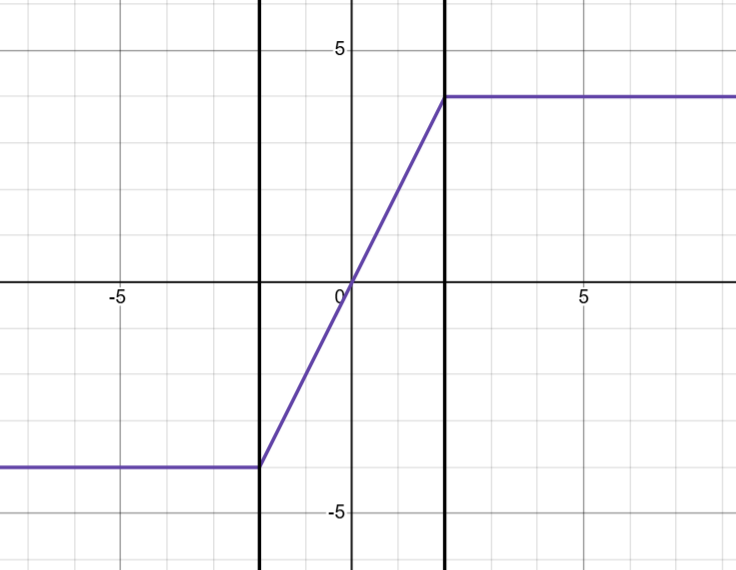
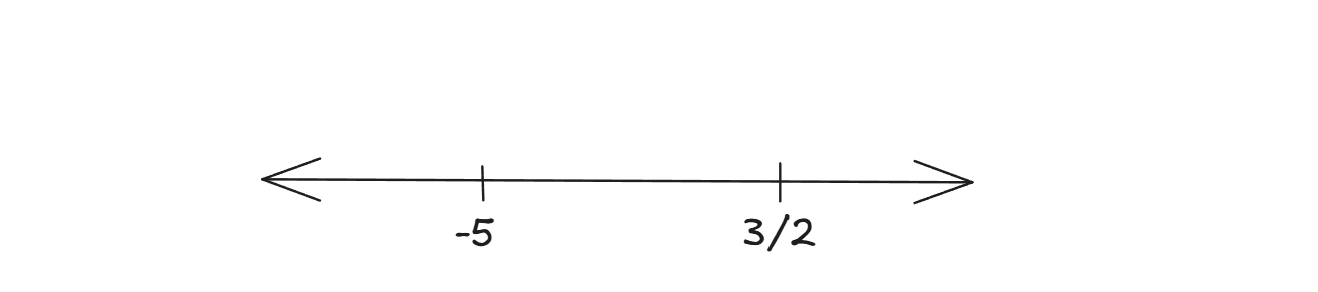
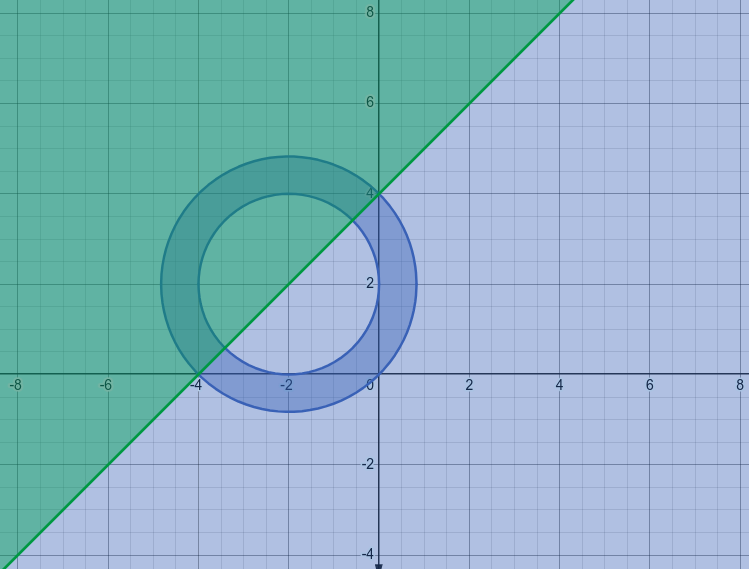

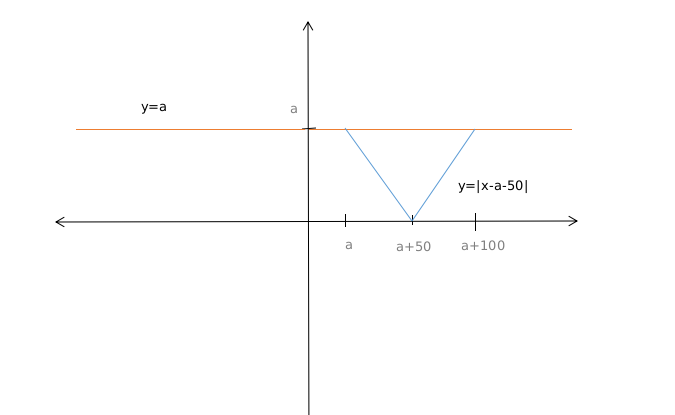
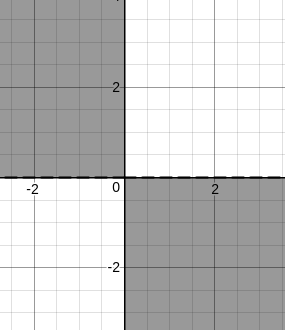
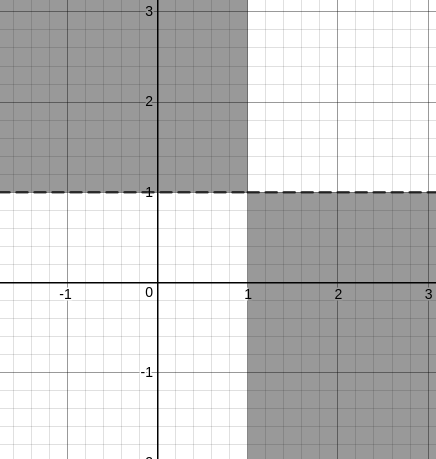
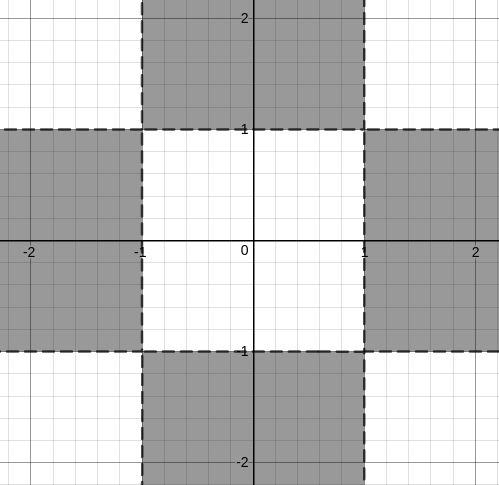
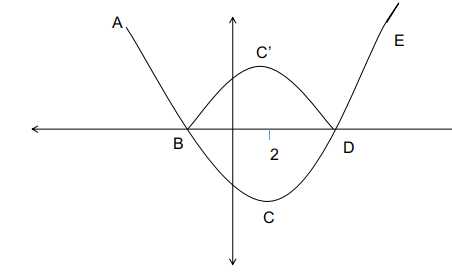
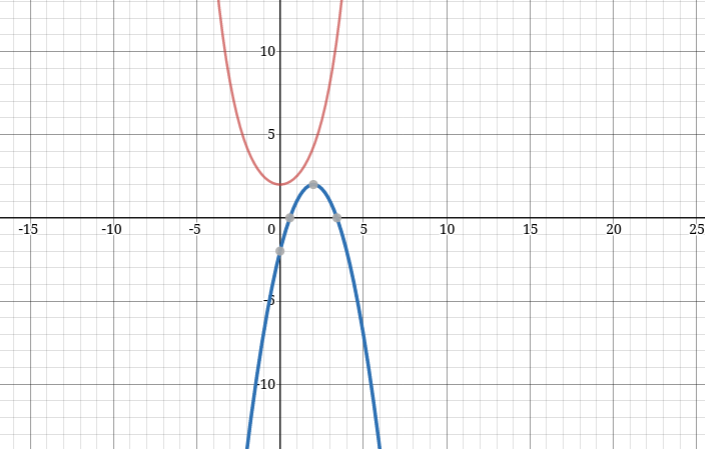
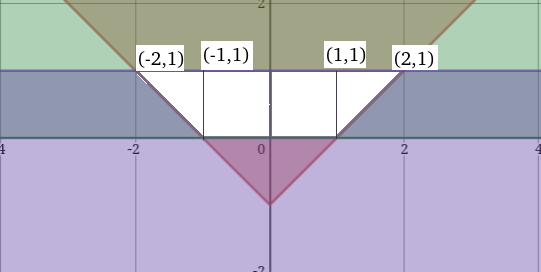
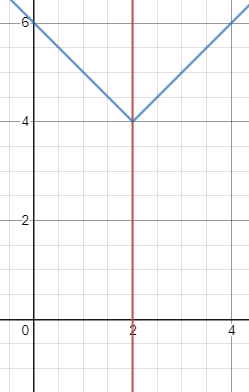
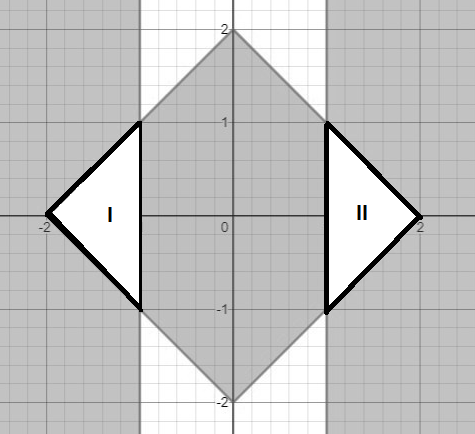
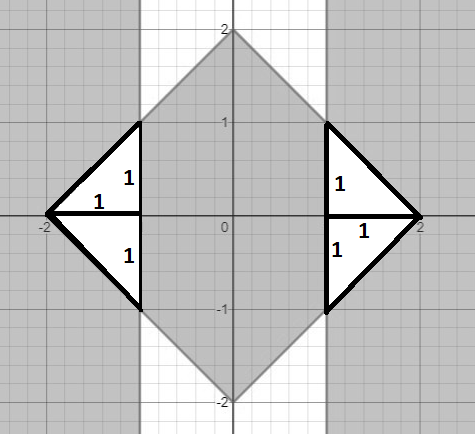
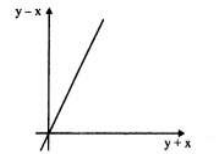
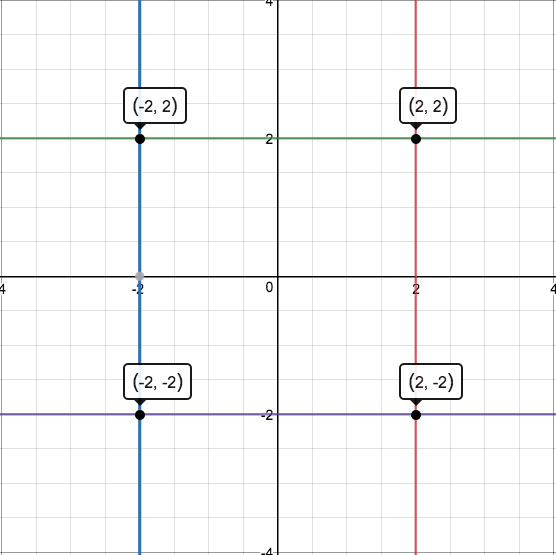


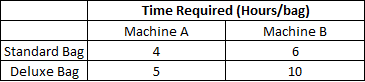
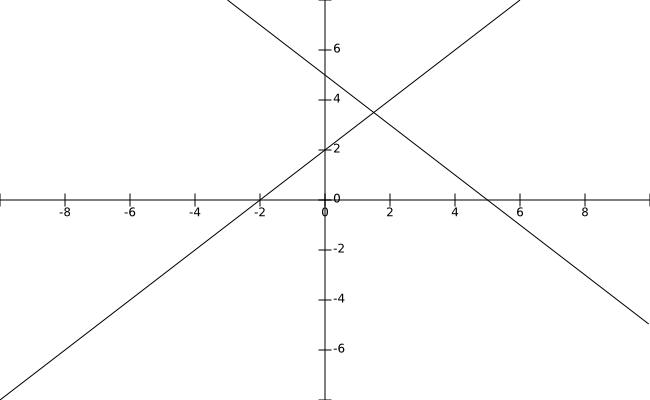
 In the above table, for suitably chosen constants a, b and c, which one of the following best describes the relation between y and x?