XAT 2026 Question Paper

For the following questions answer them individually

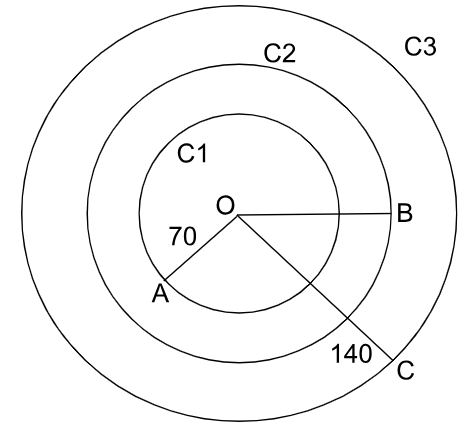
In a battle, the commander-in-chief arranges his soldiers in a formation of three concentric circles. The radii of the circles are in an arithmetic progression: the smallest radius is 70m (meters) and the largest is 140m.
If each soldier is to be separated from the adjacent soldiers standing on the same circle by 1m, how many soldiers are required to complete the formation? (Consider π = 22/7.)

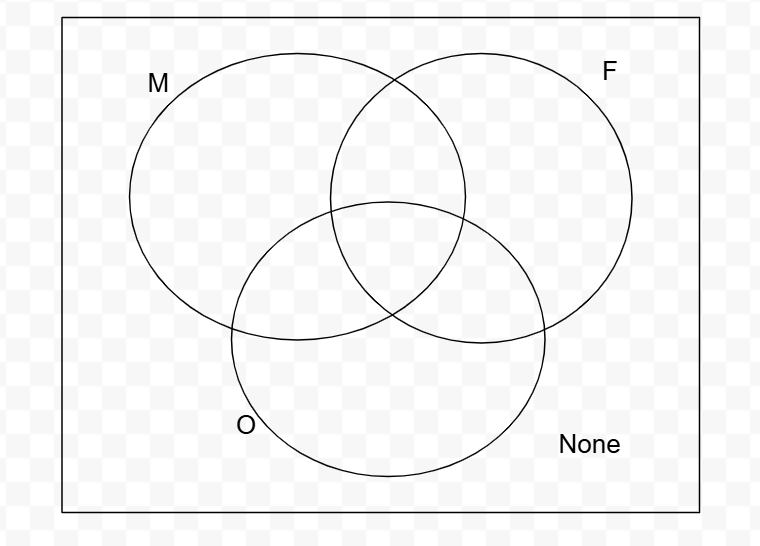
In a business school, only three specializations are offered: marketing, finance and operations. A student can opt for either one, or two, or no specializations. In the current batch of 120 students, 60 are specializing in marketing, 50 are specializing in finance and 30 are specializing in operations. During the placement process, all students specializing either in marketing or in finance are shortlisted for consulting job interviews.
If 45 students are not shortlisted for consulting job interviews, what is the MINIMUM possible number of students specializing in both marketing and finance?

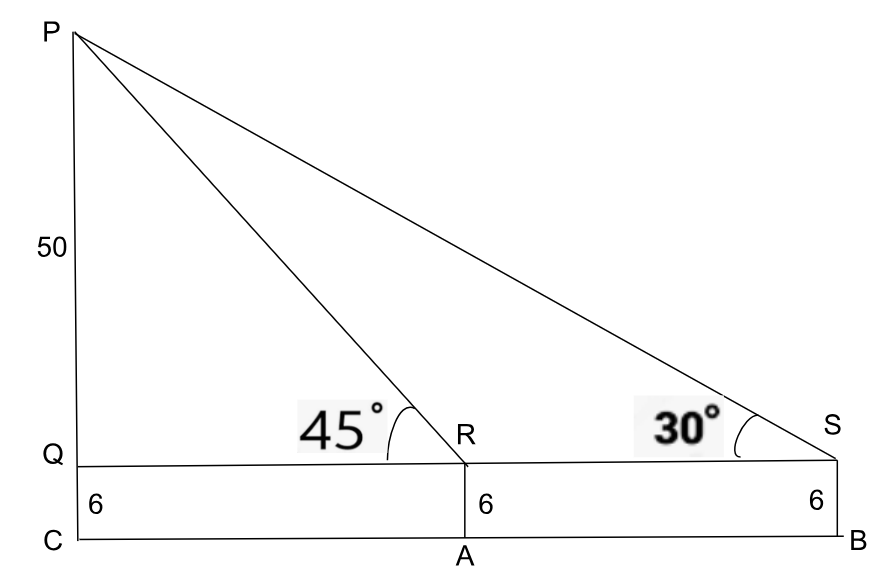
An archer, from the point A, is aiming at a target, placed on the top of a 56 feet tall tree. The base of the tree is at the point C. From the archer’s position, the angle of elevation to the target is 45° from his eye level. The archer, facing the tree, moves backwards on the straight line joining the points A and C, to a new position at the point B. From the point B, the angle of elevation from his eye level to the target becomes 30°.
How far did the archer move from A to B (in feet) if his eye level is at a height of 6 feet from the ground?

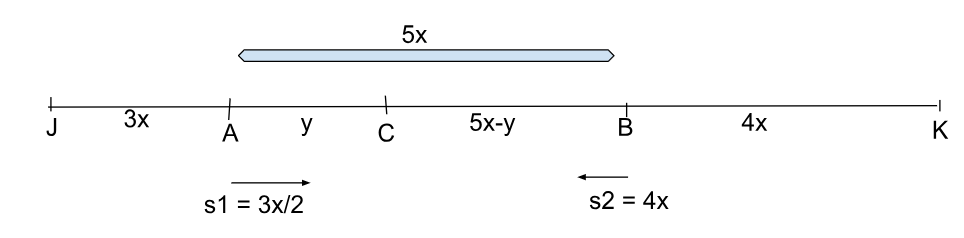
Two buses travel between Jamshedpur and Kolkata in the opposite directions, on the same road. On that road, the maximum allowed speeds are different (but constant) for the opposite directions. Usually, both buses travel at the respective maximum allowed speeds to their respective destinations: the bus from Jamshedpur to Kolkata takes 4 hours, while the bus from Kolkata to Jamshedpur takes 3 hours.
One day, the two buses start at the same time. However, one hour after starting, the bus from Jamshedpur to Kolkata reduces its speed to half of its maximum allowed speed due to congestion on the road.
If both buses do not stop anywhere in between, how many hours after starting do they meet?

Read the following scenario and answer the THREE questions that follow.

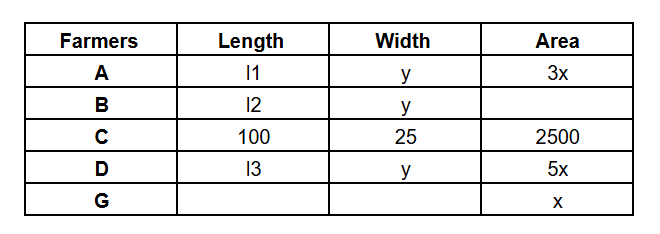
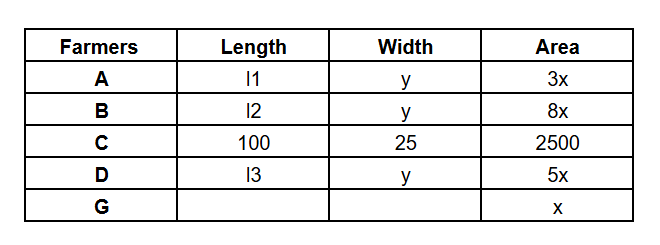
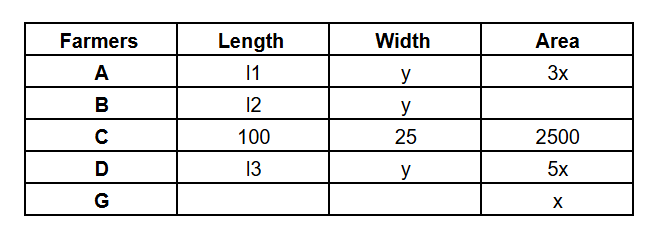
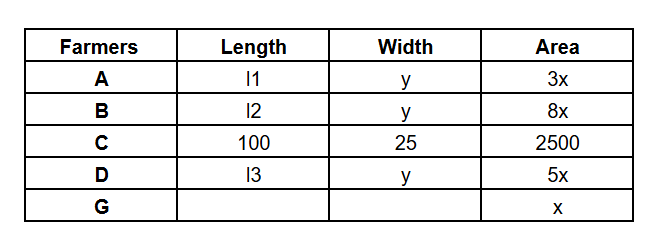
Brijbhushan, a microfinancier, lends money at the rate of Rs.10 per square meter to small farmers at a village. He charges an annual interest rate of 10%. All the farming plots in that village are rectangular, with areas varying between a minimum of 1000 square meters and a maximum of 10,000 square meters.

This year, Brijbhushan has lent money only to five farmers: Aditya, Binod, Chhuttan, Dabloo and Govind. The perimeter of Chhuttan’s plot is 250 meters, with the length and width being at a ratio of 4:1. Aditya’s plot has an area three times the area of Govind’s plot. The area of Aditya’s plot is also the average of the areas of Govind’s plot and Dabloo’s plot. The plots belonging to Aditya, Binod and Dabloo are of the same width, but of different lengths. Moreover, the length of Binod’s plot is the sum of the lengths of Aditya’s plot and Dabloo’s plot.

What is the MAXIMUM possible value of the total loan Brijbhushan has given to these five farmers?

If the width of the Aditya’s plot is 25 meters, what is the MINIMUM possible length of Binod’s plot?

For the following questions answer them individually

Consider a seven-digit number 735x6y4, divisible by 44, where the two digits x and y are unknown.
Consider the following two additional pieces of information:
I. x and y are even numbers
II. x and y are equal
To determine the values of x and y UNIQUELY, which of the above pieces of information is/are MINIMALLY SUFFICIENT?

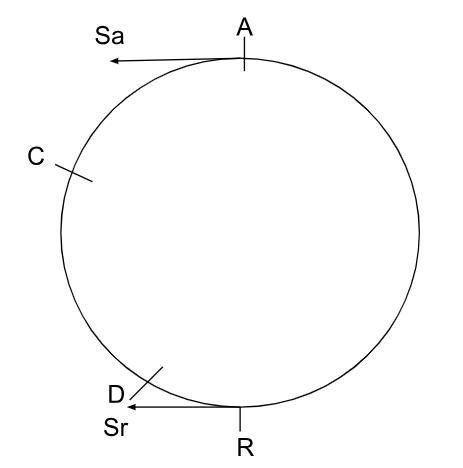
The swimming pool in an exclusive club is a circular strip. A water flow is artificially maintained in the strip, along a clockwise direction, at a constant speed of 3km/h (kilometers/hour). One morning, Ayub and Rana start swimming at the same time from two diametrically opposite points on the strip. Ayub swims in a counterclockwise direction, while Rana swims in a clockwise direction. They swim at constant, but different, speeds. When they meet for the first time, Ayub has covered 60m (meters). They meet again after Rana has covered 180m from the first meeting point.
If Rana swims at the speed of 3 km/h in still water, how long does Ayub take to complete one round of the circular strip, if he swims in the clockwise direction?

125 is multiplied by either 10 or 15. The resultant number is again multiplied by either 10 or 15. This process continues.
Which of the following CANNOT be a resultant number at any point in time?

Three categories of candidates appear for an admission test: diligent (10%), lazy (30%) and confused (60%). A diligent candidate is 10 times more likely to clear the admission test compared to a lazy candidate.
If 40% of the candidates clearing the admission test are confused, what is the MAXIMUM possible value of the probability of a confused candidate clearing the test?

In a multiple-choice examination, there are 20 questions. Each correct answer is worth 4 marks, while 2 marks are to be deducted for every wrong answer. Further, 1 mark is to be deducted for every unattempted question. One student receives a total of 46 marks in the examination. However, before releasing the marks, the professor realizes that she has, by mistake, deducted 2 marks for every unattempted question and 1 mark for every wrong answer.
After correction, how many marks will the student get?

Let $$f:R^{2}\rightarrow R$$ be a real-valued function defined as $$f\left(0, y\right)=y+1  \text{and}  f\left(x+1, y\right)=f\left(x, f\left(x, y\right)\right)+ x$$. What is the value of $$f(2, 2)$$?

Let $$a_{1}<a_{2}<.... <a_{n}$$ be the list of all prime numbers less than 25. Define $$X_{i}=\frac{b_{i}}{a_{i}}$$, where $$b_{i}$$ is the sum of all $$a_{k}$$ where k ranges from 1 to n, $$k \neq i$$. Let B be the set of all integer-valued $$X_{i}$$. What is the Smallest element of B?

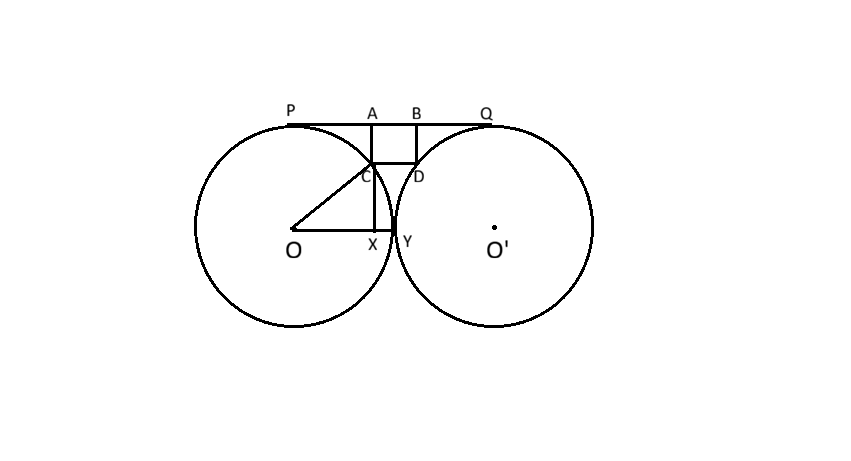
Consider two circles, each having radius of 5cm (centimeters), touching each other at a point P. A direct tangent QR is drawn touching one circle at a point Q and the other circle at a point R. Inside the region PQR inscribed by the two circles and the tangent, a square ABCD is inscribed with its base AB on the tangent and the other side touching the two circles at points D and C, respectively.
Find the area of the square ABCD.

Rajan is a fruit seller. On any day, he sells only one kind of fruit. On the first day, he buys 9 kg of blueberries. On the second day, he buys 22 kg of kiwis. On the third day, he buys 50 kg of peaches. The per kg purchase price of each fruit is an integer. Further, on each of these three days, he spends the same amount to purchase fruits. On the fourth day, he buys mangoes at Rs. 35/kg and spends Rs. 15 less than any of the previous three days.
If he then sells all the mangoes at Rs. 50/kg, what is his MINIMUM possible profit on the fourth day?

How many solutions $$\left(x, y, z\right)$$ of the equation $$x+y^{2}+z^{3}=50$$ exist, where x, y and z are positive integers?

A triangular plot is such that two of its sides, of lengths 90m (meter) and 60m, are perpendicular to each other. There is a housing complex in a rectangular region within the plot. The area of the rectangular region is 4/9th of the area of the triangular plot. Additionally, two sides of the rectangular region lie on the two perpendicular sides of the triangle, and one vertex is on the hypotenuse. The members of the housing complex want to construct a wall along the perimeter of the rectangular region.
If the cost of construction is Rs. 5000/m, what is the MINIMUM possible cost of building the wall?

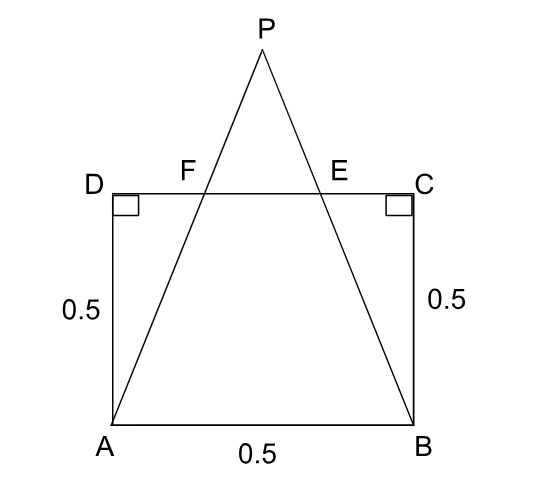
During Durga Puja, for the purpose of lighting, one puja pandal in Kolkata used many identical structures made of wooden sticks. The design of the structures was as follows: each structure was constructed with the help of six wooden sticks by combining an isosceles triangular structure, and a square structure, with the bases of both structures being the same. Let us take one such structure. Call the triangle PAB, with PA = PB, and the square ABCD, with AB being the same wooden stick as a common base for the triangle and the square. To make the structure strong, the two equal sides of the triangular structure were tied with the opposite side of square’s base, i.e., CD, at points E and F, in such a way that CE = EF = FD. The structure was hung from P.
If AB = 0.5m (meter), the total length of wooden sticks required for twenty such structures is:

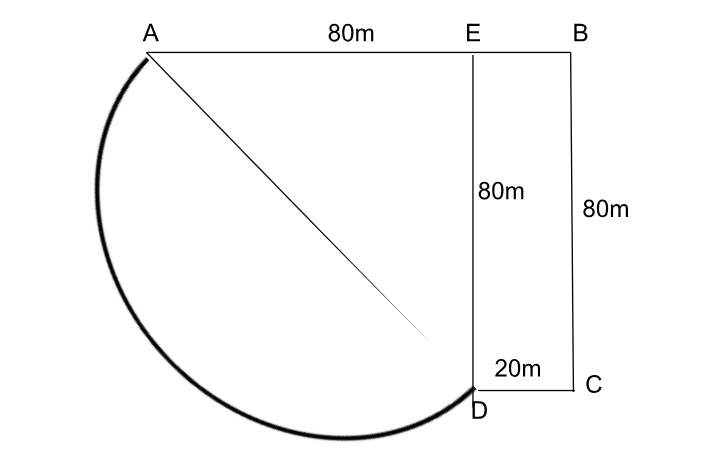
A park has two gates, Gate 1 and Gate 2. These two gates are connected via two alternate paths. If one takes the first path from Gate 1, they need to walk 80m (meters) towards east, then 80m towards south, and finally 20m towards west to arrive at Gate 2. The second path is a semi-circle connecting the two gates, where the diameter of the semi-circle is the straight-line distance between the two gates.
A person walking at a constant speed of 5 kilometers/hour enters the park through Gate 1, walks along the first path to reach Gate 2 and then takes the second path to come back to Gate 1.
Which of the following is the CLOSEST to the time the person takes, from entering the park to coming back to Gate 1, if she never stops in between?

Ronny uses a 5-digit key for a combination lock, where 5 digits need to be entered in a fixed sequence. While he remembers that the 5 digits are 9, 8, 7, 5 and 4, he has forgotten the sequence he uses. He also remembers that the sum of the first three digits is a multiple of 3, and so is the sum of the last three digits. Further, the sum of the last four digits is a multiple of 4.
Which of the following is DEFINITELY FALSE?

There are three rectangular tanks in a building. The length, width and height of the first tank are m meters each, and the length, width and height of the second tank are n meters each. However, the length, width and height of the third tank are m meters, n meters and 1 meter, respectively.Initially, the first tank is full of water, while the second and the third are empty. When the second and the third tanks are completely filled with water transferred from the first tank, 85,000 liters of water is still left in the first tank.
If both m and n are positive integers, what is the value of m? (1 meter$$^{3}$$ =1000 liters)

Read the following scenario and answer the THREE questions that follow.
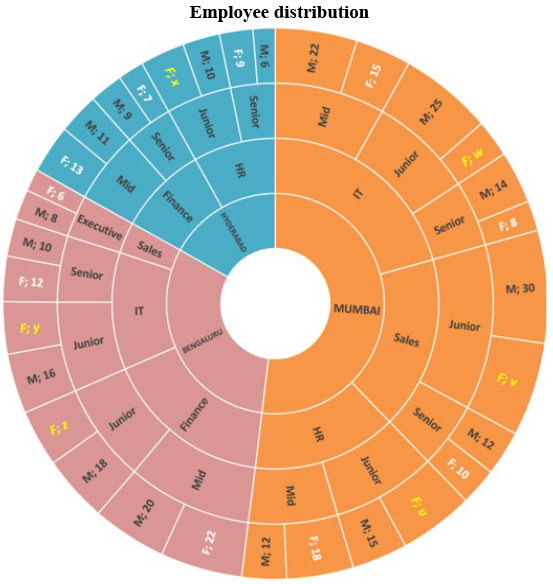
Light Chemicals is an industrial paint supplier with presence in three locations: Mumbai, Hyderabad and Bengaluru. The sunburst chart below shows the distribution of the number of employees of different departments of Light Chemicals. There are four departments: Finance, IT, HR and Sales. The employees are deployed in four ranks: junior, mid, senior and executive. The chart shows four levels: location, department, rank and gender (M: male, F: female). At every level, the number of employees at any location/department/rank/gender are proportional to the corresponding area of the region represented in the chart.
Due to some issues with the software, the data on junior female employees have gone missing. Notice that there are junior female employees in Mumbai HR, Sales and IT departments, Hyderabad HR department, and Bengaluru IT and Finance departments: the corresponding missing numbers are marked u, v, w, x, y and z in the diagram, respectively.
It is also known that:
a) Light Chemicals has a total of 210 junior employees.
b) Light Chemicals has a total of 146 employees in the IT department.
c) Light Chemicals has a total of 77 employees in the Hyderabad office.
d) In the Mumbai office, the number of junior female employees is 55.

Screenshot_1

Based on the given information and the sunburst chart, the MOST LIKELY values of u, v and w, respectively, are:

Based on the given information and the sunburst chart, which of the following has the HIGHEST number of employees?

Based on the given information and the sunburst chart, which of the following statements CANNOT BE TRUE?

Read the following scenario and answer the THREE questions that follow.
An investment company, WinLose, recruits employees to trade in the share market. For newcomers, they have a one-year probation period. During this period, the employees are given Rs. 1 lakh per month to invest the way they see fit. They are evaluated at the end of every month, using the following criteria:
1. If the total loss in any span of three consecutive months exceeds Rs. 20,000, their services are terminated at the end of that 3-month period,
2. If the total loss in any span of six consecutive months exceeds Rs. 10,000, their services are terminated at the end of that 6-month period.
Further, at the end of the 12-month probation period, if there are losses on their overall investment, their services are terminated.
Ratan, Shri, Tamal and Upanshu started working for WinLose in January. Ratan was terminated after 4 months, Shri was terminated after 7 months, Tamal was terminated after 10 months, while Upanshu was not terminated even after 12 months. The table below, partially, lists their monthly profits (In Rs. ‘000) over the 12-month period, where x, y and z are masked information.
Note:
1. A negative profit value indicates a loss.
2. The value in any cell is an integer.
Illustration: As Upanshu is continuing after March, that means his total profit during January-March (2z+2z+0) ≥ ─ Rs.20,000. Similarly, as he is continuing after June, his total profit during January-June ≥ ─ Rs.10,000, as well as his total profit during April-June ≥ ─ Rs.20,000.

image (40)

What BEST can be said about the value of x?

What BEST can be said about the value of y?

What BEST can be said about the profit generated by Upanshu at the end of his probation period?

Read the following scenario and answer the THREE questions that follow.

MultiKrack, one of the oldest FMCG companies in Eastern India, was run by the Malhotras, a traditional business family, for generations. The organization believed that key positions should be held only by family members and close friends.

But, as the organization grew in size, the top management decided to bring in fresh thinking and fill key positions from premier management institutions. The need for such a decision was also brought upon by changes in consumer preferences, which the top management felt could be best handled by recruiting premier talent from the younger generation (Gen Z).

MultiKrack drew the best talent, from premier management institutions, by offering highly attractive salaries. The first batch of Gen Z management trainees joined MultiKrack. Anindita was one of the seven management trainees recruited. She reported to Uday, a senior manager, who directly reported to the top management.

In one of the meetings, Uday was making a presentation on positioning their most popular product to make it more appealing to Gen Z. Unhappy with the discussion, Anindita candidly shared her concern regarding the assumptions Uday made about Gen Z. Uday immediately retorted: “Anindita, this is a discussion for adults. Kids, like you, should listen for a few months before sharing their opinion.” Further, he remarked, “you Gen Z have opinions about everything regardless of the subject.” Thereafter, he brushed aside any views Anindita attempted to share during the discussion. After the meeting, Anindita felt offended. However, when she discussed it with other management trainees, they did not find anything wrong with what Uday said. Even then, she decided to do something about such a treatment, since it would be seen as an approved behaviour.

Which of the following options will BEST help Anindita in taking an appropriate stand against Uday’s behaviour?

Anindita was passionate about bringing a change in her organization. Thus, she went thoroughly prepared for every meeting. However, she soon realized that her ideas were not taken up for discussions during meetings. She often felt looked down upon by Uday who dismissed her suggestions without even hearing them out. When she discussed her experience with other management trainees from other departments, she came to know that this was a common practice across MultiKrack. They wanted to do something about it; however, they were clueless about the course of action, since their seniors did not seem to be interested in listening to them.

Which of the following actions by the management trainees will be MOST effective in improving the treatment of Gen Z at MultiKrack?

A few months passed. Anindita was a valuable member of her team and the top management was impressed with her. However, the other management trainees left the organization. In their exit interviews, they shared the condescending behavior of senior management as the reason for their departure. Some even left MultiKrack to join organizations that paid lesser than what MultiKrack paid. The top management understood that the seniors belonged to a different generation; they found it difficult to appreciate the intergenerational differences. The top management felt it was high time to do something about the senior management’s behavior towards the juniors.

Which of the following actions, considered by the top management, will BEST enable change in the senior management's behavior?

Read the following scenario and answer the THREE questions that follow.

Abhishek, a student of a prestigious business school, gets interested in Payeasy, a fintech firm, after listening to a pre-placement talk by Neha Bhupati, a senior leader at the firm, and an alumna of the same business school. He joins Payeasy through campus placement. Neha plays a key role in recruiting him, seeing great potential in him.

Abhishek starts working in the digital payments vertical under Mukesh Kumar, who reports directly to Neha. Mukesh, Abhishek’s direct superior, is impressed by his performance and rates him very high in the first year. Abhishek understands that if Mukesh consistently rates him as “Excellent Performer” for the second year as well, his chances of getting promoted will improve. (The organization promotes individuals who are consistently rated as “Excellent Performer” for at least two years by their immediate superiors.)

Over time, Abhishek realizes that the learning opportunities in his current role have plateaued. Given his longstanding interest in blockchain and cryptocurrency, he starts exploring opportunities in that vertical within the company. This change is not possible without the consent of his immediate boss, Mukesh. When Abhishek brings this up with Mukesh, he acknowledges Abhishek’s curiosity and enthusiasm; however, he emphasizes how Abhishek’s competencies fit him rightly into the current vertical. Mukesh assures Abhishek of more challenging assignments in the future, provided he remains a good team player. Further, he shares his skepticism about the long-term prospects of cryptocurrency. Hence, Mukesh politely declines Abhishek’s request.

Abhishek is not happy with Mukesh’s decision. Abhishek is aware that he needs to be in the good books of Mukesh for his performance rating. However, he is passionate about cryptocurrency; hence, he considers approaching Neha directly to discuss a possible move. Neha can take such decisions independently, but Neha and Mukesh usually see eye to eye on most issues.B49

Which of the following reasons, IF TRUE, will BEST encourage Abhishek to reach out to Neha regarding his desired change to a different vertical?

Dissatisfied with Mukesh’s response, Abhishek reaches out to Neha for a vertical change. Though she listens to Abhishek, she shares her displeasure with the request. In fact, she brushes his request off, telling him to resign from Payeasy if it does not charm him anymore. Abhishek gets worried as he has a huge educational loan to pay, and such a departure will put him in a fix.

Later that day, in one of the team meetings, Abhishek feels ignored as he is cut twice while he tries to share his project progress. Thereafter, he starts believing that Mukesh is not happy with him. This fear appears to get substantiated when Mukesh assigns an important project to another team member, which Abhishek wants to work on. His fear keeps growing regarding Neha and Mukesh not being happy with him. However, when he receives his annual rating, he finds out that Mukesh has rated him as the “best performer” of the year, based on his previous year’s performance.

Abhishek wants his relationship with Mukesh to be back on track, as it was, before he reached out to Neha.

Which of the following options will BEST enable Abhishek rebuild his relationship with Mukesh?

After two years at Payeasy, Abhishek applies to a competing firm and is called for an interview. The hiring manager, Amit, is impressed with Abhishek and tells him that he will take the final decision to select Abhishek in a day or two. After the interview, Amit wants to know more about Abhishek since Abhishek will be leading a team of 15 people and his people management skills are very important for the team’s success. He calls Mukesh, Abhishek's superior. Mukesh is Amit's classmate who Amit trusts immensely. Mukesh informs Amit that though Abhishek is a good talent, he questions his superiors too often. Mukesh further shares that such a behavior makes it difficult for the superiors to manage the team.

Amit needs a good talent, but is confused if he should recruit Abhishek, given Mukesh’s assessment of Abhishek.

Which of the following data will BEST enable Amit to take a decision on Abhishek’s recruitment?

Read the following scenario and answer the THREE questions that follow.

Fine Elements Inc. is an Indian organization with a substantial presence in South and East India. The company is recruiting talent to expand in North and West India. The organization’s head of talent acquisition, Premnarayan, entrusts the interview process, a key stage in the recruitment process, to his line managers who take the responsibility of selecting candidates. Premnarayan, however, lays down stringent rules that the line managers need to follow to achieve consistent outcomes.

Joginder Mahato, a line manager, has been interviewing candidates. During the interview, Joginder realizes that one of the candidates, Animisha, called for the interview, does not satisfy the necessary condition of five years experience. Upon enquiring, he finds out that this happened due to an oversight by an inexperienced secretary who was asked to prepare the shortlist for the interview. However, as Animisha is present for the interview, he decides to conduct her interview. Joginder finds Animisha’s candidature to be the best among the candidates he has interviewed so far.

Joginder wants to recommend Animisha for selection despite her not fulfilling the experience criterion.

Which of the following reasons, IF TRUE, will BEST convince Joginder to recommend Animisha?

Joginder shares his preference for Animisha with Premnarayan, the talent acquisition head. However, while rolling out the offer, Premnarayan realizes that Animisha does not meet the eligibility criteria. Though the recommendation has come from Joginder, who is a senior, he wants to reject Animisha for the role.

Which of the following reasons will BEST help him in rejecting Animisha’s candidature?

Joginder recommends Animisha’s candidature only to be turned down by Premnarayan. However, he wants Premnarayan to reconsider his decision.

Hence, Joginder has compiled a list of reasons to persuade Premnarayan to reconsider Animisha’s selection:

A. Animisha is academically strong and a gold medalist during her graduation.
B. Animisha's experience is falling short only by a few months for the role she has applied for.
C. The number of applicants applied for the role she has applied for is very small.
D. Animisha’s college is known for producing the best business leaders for past many years.
E. Before he retired, Animisha’s maternal uncle was associated with Fine Elements Inc. for over 10 years.
F. Average industry experience for the role she has applied for is much lower than what Fine Elements Inc. has advertised.

Which of the following combination of reasons will BEST convince Premnarayan to reconsider his decision regarding Animisha’s selection for the role?

Read the following scenario and answer the THREE questions that follow.

Mr. Screwvala, a highly successful investment banker, had a career of nearly 25 years. In his circle, he was respected for his straight-shooter image and industrious behaviour. Screwvala loved travelling; he travelled extensively, both for his job and personal interests. He always wanted to share his life experiences with people at large.

He chanced upon such an opportunity when his old friend, Mr. Patel, a well-known publisher, offered Screwvala to publish a book based on his life experiences. Screwvala grabbed the opportunity; however, given his thorough nature, he took a three-year long sabbatical to finish the book.

During that period, Patel guided Screwvala at every step, reviewing every chapter personally. At the end, the book was probably as much Patel’s, as it was Screwvala’s!

On publication, the book turned out to be a bestseller, and Screwvala became famous.

Patel had a new proposal for Screwvala: he wanted Screwvala to work on a detective novel. Patel promised him good money but proposed that Screwvala would only write the final chapter of the novel, after his co-authors had completed the first nine chapters. Screwvala was surprised at the offer, since he never tried writing anything creative, and definitely not fiction. He wanted to be sure whether he could actually measure up with the co-authors who were established creative writers.

Which of the following, IF TRUE, will be the MOST compelling reason for Screwvala to accept the offer?

Patel had a new proposal for Screwvala: he wanted Screwvala to work on a detective novel. Patel proposed that Screwvala would only write the final chapter of the detective novel, after his co-authors. Screwvala accepted the offer.

Though the project started on time, a few of the authors could not manage to submit their chapters within the given timeline. Hence, it created a delay for the authors to follow.

Having to wait endlessly for the other authors to finish their chapters, with no end in sight, Screwvala started getting impatient. In the meantime, he was offered another proposal from a rival publisher to write a travelogue on a country of his choice, which would involve all-expense-paid trips. Because of his love for travel, Screwvala felt inclined to accept the offer. However, this would mean getting out of the contract of the detective novel, which could cause a serious friction with Patel.

Which of the following, IF TRUE, will be the MOST compelling reason for Screwvala to continue with the detective-novel project?

Patel had a new proposal for Screwvala: he wanted Screwvala to work on a detective novel. Patel proposed that Screwvala would only write the final chapter of the detective novel, after his co-authors. Screwvala accepted the offer by signing a contract.

While waiting for his turn to come to write his chapter for the detective novel, Screwvala started writing a travel blog. Because of his radiant style, the blog became popular. Hence, he started mulling over converting the blog articles into a book.

When Screwvala shared this idea, Patel sprung a surprise by pointing out to a clause in their contract. The clause forbade Screwvala from publishing anything else until the detective novel got published. Screwvala signed the contract without reading it as he trusted Patel as a good friend. Further, Patel offered Screwvala an extra sum of money if he would delay the publication of his travel blog articles as a book.

Screwvala felt betrayed. Which of the following will be the MOST compelling reason for Screwvala to continue with publishing his blog as a book, ignoring the contract with Patel?

Read the following scenario and answer the THREE questions that follow.

Vidya, a Bachelor of Commerce graduate, secured admission to one of India’s premier business schools (B schools) called Best-Known School of Management (BKSM). Not long after her joining BKSM, she was struck by the calibre of her experienced peers. This, in turn, made her anxious about her placement. Hence, she reached out to one of her seniors, who had also joined BKSM as a fresher, for advice.

In conversations with the senior, Vidya learned that freshers were often advised to join student committees to strengthen their curriculum vitae (CVs) for placements. Confident of making it to one, she started preparing. Despite her confidence, she could not secure a spot in the prominent committees she aspired to join.

Frustrated and angry, Vidya began believing that committee selections were biased. Since the processes were entirely student-run, with minimal administrative oversight, she felt that she had no avenue to raise her concerns. Anjali, Vidya’s roommate in BKSM, told her about Why MBA, a social media platform where students often voiced their grievances anonymously.

Impulsively, Vidya secretly recorded her next committee interview. The interview turned out to be particularly harsh. Now, she was even more determined to post the transcript of the interview on Why MBA to teach a lesson to her seniors. However, she contemplated the consequences she might face after posting the transcript.

Which of the following considerations will BEST stop her from sharing the transcript on Why MBA?

Vidya secretly recorded her next committee interview. The very next day, Vidya was selected for the same committee for which she had recorded the interview. Relieved, she decided not to post anything on Why MBA.

However, a few days later, a post went viral on Why MBA about BKSM, accusing the student committees of unfair practices, claiming that seniors selected juniors based on personal preferences rather than objective criteria. The post created a stir in BKSM, making Vidya anxious.

Vidya’s anxiety stemmed from the fact that Anjali, her confidant, knew about Vidya’s intent to publish her interview transcript on Why MBA. Hence, Vidya feared that Anjali might assume that she was behind the viral post. Worse still, if Anjali shared Vidya’s earlier intent with anyone at BKSM, her reputation and relationships could be damaged.

What BEST can Vidya do in the current situation so that she is NOT negatively impacted by the viral post?

A few committee secretaries complained to the dean of BKSM about some anonymous posts on Why MBA that they felt were unfairly targeting them. Upon visiting the forums on Why MBA, the dean felt that while most of the posts were innocuous, some indeed crossed the line. Further, she felt that such posts tarnished the image of BKSM. Conversely, she observed that such posts led those targeted to reflect, mend their ways, and become more accountable. She wondered what she could do to save the reputation of BKSM being assailed in public forums through anonymous posts; however, she did not want to do anything disproportionately harsh.

What BEST can the dean do to take a sustainable decision to dissuade students from posting their grievances in public forums, presenting the college in a bad light?

Read the following scenario and answer the THREE questions that follow.

Business schools’ (B schools) curriculums are filled with group assignments and case competitions. Even when students have just joined the B schools, corporate houses try to catch good talent early by promising them internships based on case competitions. These competitions involve comprehending the problems presented by the organizations, analyzing the challenges they currently face, and presenting solutions in a manner that convinces the organizations’ representatives who visit the B schools to evaluate various teams that present their solutions on such problems.

For students who are just joining a B school, the capability to actually solve such problems is quite limited. Because of that, the corporate houses generally are more focused on the presentations made by groups. Hence, the groups that communicate better, most often, win these competitions.

Abirami joins MBS, a B school. As a fresher, she believes she needs to learn a lot about how organizations work and wants to work with others who have joined MBS and have work experience.

The first step that Abirami wants to take is to join a group, having members with extensive work experience. Meanwhile, students with prior work experience have come together and formed groups. She reaches out to one such group. However, the group members are not interested since she is a fresher. They are unsure whether she can bring any value to case competitions that involve understanding, recommending and presenting solutions to organizational problems.

Which of the following reasons, IF TRUE, will BEST convince the group members that Abirami will be a valuable member of the group for case competitions?

Abirami cannot join groups having members with work experience; they reject her for being a fresher. Meanwhile, three of her batchmates, all freshers, are interested in forming a group with her. Abirami likes being with them as two of them are from her undergraduate college; however, Abirami fears that they may all come up with similar ideas during case discussions.

Which of the following reasons, IF TRUE, will BEST persuade Abirami to join them?

Abirami eventually joins a group, largely comprised of students with work experience. Whenever competition calls are announced, the group meets to discuss the competition. As competitions go by, Abirami observes that her views are hardly heard in meetings, though the other group members make it a point to invite her to every meeting. Since Abirami doesn’t get acknowledged for her ideas in group discussions, she starts reflecting on what she has gained so far by being a part of the group.

Which of the following pieces of information will BEST convince Abirami that being in the group is beneficial to her?

Read the following scenario and answer the THREE questions that follow.

Selvam Tutorials offers exclusive face-to-face evening classes from Monday to Friday for students who are preparing for various entrance exams. Selvam Dindigul, the owner, operates from his ancestral house, situated in the middle of the city. There are several instructors, but each teaches only one of the following courses: quantitative ability, verbal ability and decision making. Selvam usually recruits fresh graduates, or those instructors who are working with other tutorials and seeking a job change.

As Selvam Tutorials has been expanding aggressively over the past few years, managing it alone becomes challenging for Selvam. Hence, he recruits Kanmani Gunaa, his niece, who has an online MBA with specializations in Accountancy and HR, as a manager. He asks Kanmani to introduce modern HR practices at Selvam Tutorials while managing cost effectively.

Soon after Kanmani takes over, she discovers that every instructor is paid differently even though they teach for the same number of hours. Moreover, these instructors have been recruited locally, having similar educational background. As she is introducing modern HR practices, she wants to equalize the salaries of all the instructors.

Which of the following is definitely NOT an option for Kanmani?

One of the instructors meets Kanmani and urgently requests for a week-long leave because he needs to take care of his ailing father in a nearby village. Kanmani grants him leave. However, on the very next day, she is chastised by Selvam. He tells Kanmani, “while all instructors are legally eligible for leave, we cannot grant leave to instructors, given the tight schedule and continuous classes.” Selvam instructs Kanmani to ensure that, when classes are on, leaves are not granted.

Kanmani wants to allow instructors to avail leaves whenever they need them; however, she understands that there should be contingency arrangements in place so that the deliverables are not compromised.

Kanmani is contemplating the following contingency arrangements for the classes that may not be conducted due to faculty leave.

Which of the following will be the BEST contingency arrangement at the lowest possible cost without compromising on the deliverables?

Kanmani meets Selvam and requests his permission to recruit three extra instructors, who would be on the regular payroll. They will only chip in whenever the regular instructors go on leave. Selvam, having been running the tutorial for quite some time, believes that this would not be the right way to solve the problem of managing classes when instructors go on leave. He shares the following data with Kanmani to help her understand that this problem cannot be solved by recruiting more people:

a) The number of days that instructors go on leave of absence is usually two days a month on average.
b) Each instructor has a unique style of teaching that cannot be replicated by part-timers.
c) Classes are held for 5 days a week, allowing enough rest for the instructors.
d) Selvam tried with part-time instructors as back-ups previously but they were often unavailable when needed.
e) The extra instructors must be paid a monthly salary, even when they might not be teaching the entire month.

Which of the following combinations of data will BEST convince Kanmani not to recruit extra instructors on the regular payroll?

For the following questions answer them individually

Read the following sentences carefully.

1. Everybody were late.
2. I will ask you if I need help.
3. Please revert to me at the earliest possible.
4. The report that the committee submitted was well received.
5. She is accustomed to work late.

Which of the following options consists of only grammatically CORRECT sentences?

Read the following excerpt carefully.

When we encounter new situations, concepts, or problems, we make _________of them by________them onto older experience and structures. Far from being a_______ mental shortcut, analogy is a process by which humans generalize, adapt, and grow in______________.

Which of the following options BEST fills up the blanks in the above excerpt?

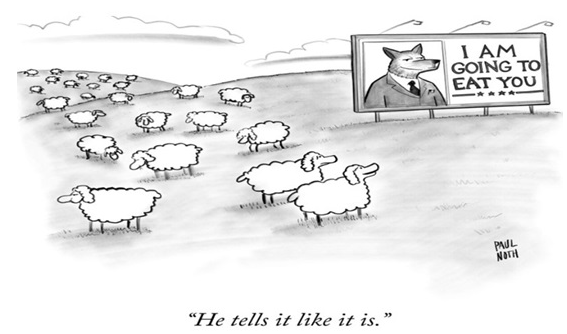
Screenshot_2

Which of the following options BEST explains the underlying message of the cartoon?

Read the following sentences carefully.

1. The hybrid workplace is failing to live up to expectations in a number of ways.
2. By one estimate, spending an average of three days each week in the office can limit encounters between any two workers by 64% compared with pre-pandemic norms.
3. Many people hanker after the socializing, camaraderie and shared experience, even if getting used to it may take time.
4. For one thing, it is no substitute for the buzz and the chatter of the pre-pandemic office.
5. Even small amount of remote work can have a big impact on the frequency of face-to-face interactions in the office.

Which of the following options BEST arranges the above sentences in a logical sequence?

Read the following sentences carefully.

1. She described about the journey.
2. We are awaiting her reply.
3. She is superior to us.
4. She requested for more time.
5. She is angry with her friend.
6. She insisted for an apology.

Which of the following options contains only grammatically INCORRECT sentences?

Read the following excerpt carefully.

Reliability is magnetic because humans are hardwired to avoid risk, so once you prove yourself trustworthy and reliable, you become the default choice for opportunities without ever asking for them.

Which of the following options, IF TRUE, will BEST CONTRADICT the idea of the excerpt?

Read the following sentences carefully.

1. Any viewer of crime dramas might think, though, that there is a better way.
2. What would really speed things up would be a means of sampling an entire habitat at one go.
3. But, these, too must first be detected and collected—and they will identify only the animal that dropped them.
4. Ecologists have thought of this, and it certainly works for things like animal droppings.
5. Just as DNA traces on an unwashed glass or a carelessly discarded cigarette butt can place a suspect as having been in a particular place, so can DNA shed by a creature as it goes about its business.

Which of the following options BEST arranges the above sentences in a logical sequence?

Read the following passage and answer the question that follows.

Of the six American winners of science Nobels this year, three were born outside the United States. In this century, the émigré fraction of U.S. Nobels in physics, chemistry and medicine now stands at 40 percent.

The nation’s long history of scientific feats, exemplified by Nobels, helped build a number of trillion-dollar companies in Silicon Valley as well as the world’s most dynamic economy and its wealth of social benefits, economists say.

Which of the following can be BEST concluded from the above passage?

Read the following passage and answer the question that follows.

When it comes to innovation and entrepreneurship, most of us now believe that failure isn’t a bad thing. In fact, it is often a necessary ingredient on the road to success. Because we know that success might come after numerous attempts, many of which might fail but eventually add up to that elusive success. Yet, when it comes to our individual careers, if there is one thing we still consider taboo, it is the dreaded pay cut.

A pay cut is still considered as a mark of personal failure. We instinctively baulk from career options, no matter how interesting they might be, the moment we realize that we must accept a salary cut.

Which of the following can be BEST concluded from the passage?

Read the following passage and answer the THREE questions that follow.

As the post-World War II generation of liberal democratic leaders forged new, highly successful domestic and international institutions and policies throughout the West, the weaknesses of liberal democracy that dominated the two decades after World War I faded from view. But they did not disappear.

First, because liberal democracy restrains majorities, it slows the achievement of goals that majorities support. This generates frustration with institutional restraints, and an unacknowledged envy of authoritarian systems that can act quickly and decisively. China can build huge cities in the time that it takes the United States to review the environmental impact of small highway projects. Liberal democracy requires more patience than many possess.

Second, liberal democracy requires tolerance for minority views and ways of life to which many citizens are deeply opposed. It is natural to feel that if we consider certain views or ways of life to be odious, we should use public power to suppress them. In many such cases, liberal democracy requires us to restrain this impulse, a psychological burden that some will find unbearable.

This leads directly to the third inherent problem of liberal democracy—the distinction it requires us to make between civic identity and personal or group identity. For example, although we may consider certain religious views false and even dangerous, we must, for civic purposes, accept those who hold these views as our equals. They may freely express these views; they may organize to promote them; they may vote, and their votes are given the same weight as ours. The same goes for race, ethnicity, gender, and all the particularities that distinguish us from one another.

This requirement often goes against the grain of natural sentiments. We want the public sphere to reflect what we find most valuable about our private commitments. Liberal democracy prevents us from fully translating our personal identities into our public lives as citizens. This too is not always easy to bear. The quest for wholeness—for a political community, or even a world, that reflects our most important commitments—is a deep yearning to which illiberal leaders can always appeal.

Nor is the fourth inherent difficulty of liberal democracy—the necessity of compromise—easy to bear. If what I want is good and true, why should I agree that public decisions must incorporate competing views? James Madison gives us the answer: in circumstances of liberty, diversity of views is inevitable, and unless those who agree with us form a majority so large as to be irresistible, the alternative to compromise is inaction, which is often more damaging, or oppression, which always is.

According to the passage, which of the following BEST explains why liberal democracy needs patience?

According to the passage, how does the second problem of liberal democracy lead to the third problem?

According to the passage, which of the following reasons BEST explains why “necessity of compromise” is a difficulty for liberal democracy?

Read the following passage and answer the THREE questions that follow.
When people who are talking don't share the same culture, knowledge, values, and assumptions, mutual understanding can be especially difficult. Such understanding is possible through the negotiation of meaning. To negotiate meaning with someone, you have to become aware of and respect both the differences in your backgrounds and when these differences are important. You need enough diversity of cultural and personal experience to be aware that divergent world views exist and what they might be like. You also need patience, a certain flexibility in world view, and a generous tolerance for mistakes, as well as a talent for finding the right metaphor to communicate the relevant parts of unshared experiences or to highlight the shared experiences while deemphasizing the others. Metaphorical imagination is a crucial skill in creating rapport and in communicating the nature of unshared experience. This skill consists, in large measure, of the ability to bend your world view and adjust the way you categorize your experience. Problems of mutual understanding are not exotic; they arise in all extended conversations where understanding is important.

When it really counts, meaning is almost never communicated according to the CONDUIT metaphor, that is, where one person transmits a fixed, clear proposition to another by means of expressions in a common language, where both parties have all the relevant common knowledge, assumptions, values, etc. When the chips are down, meaning is negotiated: you slowly figure out what you have in common, what it is safe to talk about, how you can communicate unshared experience or create a shared vision. With enough flexibility in bending your world view and with luck and skill and charity, you may achieve some mutual understanding.

Communication theories based on the CONDUIT metaphor turn from the pathetic to the evil when they are applied indiscriminately on a large scale, say, in government surveillance or computerized files. There, what is most crucial for real understanding is almost never included, and it is assumed that the words in the file have meaning in themselves—disembodied, objective, understandable meaning. When a society lives by the CONDUIT metaphor on a large scale, misunderstanding, persecution, and much worse are the likely products.

Based on the passage, which of the following reasons BEST explains why metaphorical imagination is a crucial skill?

Which of the following statements BEST conveys the premise of the passage?

Based on the passage, which of the following statements BEST explains the limitations of “CONDUIT metaphors” in communication?

Read the following passage and answer the THREE questions that follow.

Disparate as these targets might initially appear, there is a through line in the trolls’ targeting practices: the concept of exploitability. Trolls believe that nothing should be taken seriously, and therefore regard public displays of sentimentality, political conviction, and/or ideological rigidity as a call to trolling arms. In this way, lulz functions as a pushback against any and all forms of attachment, a highly ironic stance given how attached trolls are to the pursuit of lulz.

The final marker of trolling is the trolls’ insistence on and celebration of anonymity. The ability to obscure one’ s offline identity has a number of immediate behavioral implications. Most obviously, anonymity allows trolls to engage in behaviors they would never replicate in professional or otherwise public settings, either because the specific behaviors would be considered socially unacceptable, or because the trolls’ online persona would clash with their offline circumstances — for example, if the troll in question were a schoolteacher or nurse. Even if the person behind the troll avoided explicitly bigoted speech or behavior, his or her extracurricular interests would likely upset or merely baffle family members and coworkers, further reinforcing the importance, perhaps even necessity, of keeping one’ s real-life identity under wraps.

Conversely, successful trolling is often dependent on the target’s lack of anonymity, or at least their willingness to disclose real-life attachments, interests, and vulnerabilities. This, according to the troll, is grounds for immediate trolling, since in the trolls’ minds, the Internet is — at least should be — an attachment-free zone. The trolling mantra “Nothing should be taken seriously” suggests as much, and functions both as a rallying cry and post hoc justification for trollish behavior. Trolls believe that, by wearing their hearts (or political affiliations, or sexual preferences, or other aspects of identity) on their sleeves, their targets are asking to be taught a lesson. Trolling is thus framed by trolls in explicitly pedagogical terms. Maybe next time, trolls argue, the target won’ t be so stupid. Maybe next time they won’ t be such obvious trollbait. In this way, trolls are — at least in their own minds — doing their targets a favor.

Based on the passage, which of the following can be BEST inferred about the behaviour of trolls?

Based on the passage, which of the following statements BEST conveys why trolls prefer anonymity?

Based on the passage, what does the author BEST convey by the statement, “trolls are — at least in their own minds — doing their targets a favor?”

Read the following passage and answer the THREE questions that follow.

Later, I realized that reviewing the history of nuclear physics served another purpose as well: It gave the lie to the naive belief that the physicists could have come together when nuclear fission was discovered (in Nazi Germany!) and agreed to keep the discovery a secret, thereby sparing humankind the nuclear burden. No. Given the development of nuclear physics up to 1938, development that physicists throughout the world pursued in all innocence of any intention of finding the engine of a new weapon of mass destruction—only one of them, the remarkable Hungarian physicist Leo Szilard, took that possibility seriously—the discovery of nuclear fission was inevitable. To stop it, you would have had to stop physics. If German scientists hadn’t made the discovery when they did, British, French, American, Russian, Italian, or Danish scientists would have done so, almost certainly within days or weeks. They were all working at the same cutting edge, trying to understand the strange results of a simple experiment bombarding uranium with neutrons. Here was no Faustian bargain, as movie directors and other naifs still find it intellectually challenging to imagine. Here was no evil machinery that the noble scientists might have hidden from the politicians and the generals. To the contrary, here was a new insight into how the world works, an energetic reaction, older than the earth, that science had finally devised the instruments and arrangements to coax forth. “Make it seem inevitable,” Louis Pasteur used to advise his students when they prepared to write up their discoveries. But it was. To wish that it might have been ignored or suppressed is barbarous. “Knowledge,” Niels Bohr once noted, “is itself the basis for civilization.” You cannot have the one without the other; the one depends upon the other. Nor can you have only benevolent knowledge; the scientific method doesn’t filter for benevolence. Knowledge has consequences, not always intended, not always comfortable, not always welcome. The earth revolves around the sun, not the sun around the earth. “It is a profound and necessary truth,” Robert Oppenheimer would say, “that the deep things in science are not found because they are useful; they are found because it was possible to find them.”

...Bohr proposed once that the goal of science is not universal truth. Rather, he argued, the modest but relentless goal of science is “the gradual removal of prejudices.” The discovery that the earth revolves around the sun has gradually removed the prejudice that the earth is the center of the universe. The discovery of microbes is gradually removing the prejudice that disease is a punishment from God. The discovery of evolution is gradually removing the prejudice that Homo sapiens is a separate and special creation.

Based on the passage, which of the following would the author BEST agree with?

Based on the passage, which of the following statements is DEFINITELY NOT true?

Based on the passage, which of the following statements can be BEST concluded?

Read the following passage and answer the THREE questions that follow.

A crucial moderating factor in how people experience comparison is self-esteem. Individuals with high self-esteem are more likely to interpret upward comparison as informative rather than threatening. They are more resilient in the face of others’ success and more likely to believe they can improve. In contrast, people with low self-esteem are more prone to interpret comparison as judgment, reinforcing negative self-views and triggering feelings of inadequacy.

This dynamic creates a self-reinforcing loop. People who already doubt their worth are more vulnerable to upward comparison, which intensifies those doubts. Those with a secure sense of self are more likely to use comparison as a learning tool. The same external stimulus—a colleague’s achievement, a peer’s attractiveness, a friend’s popularity—can have radically different effects depending on internal stability.

Self-esteem also influences how people choose their comparison targets. Research has found that individuals often engage in “selective comparison,” seeking out those who confirm their existing beliefs about themselves. This can become a subtle form of self-sabotage. Someone who feels unworthy may unconsciously seek out targets that reinforce that sense, perpetuating a narrative of inferiority. One of the most promising antidotes to social comparison is temporal comparison—evaluating oneself not against others, but against one’s own past. This strategy has been shown to increase motivation and satisfaction, especially when individuals can see concrete progress.

Temporal comparison activates the same reward circuits as social comparison but avoids the threat systems associated with social ranking. It also reinforces agency: individuals focus on what they can control and improve rather than what others possess. In therapeutic and coaching settings, temporal comparison is often used to help clients build self-efficacy and track growth over time.

Moreover, people who focus on self-improvement rather than social dominance are less likely to fall into cycles of envy or self-pity. They can still use others as inspiration, but they do so without attaching their self-worth to the outcome. This is not to say they never compare—but that they compare with awareness and perspective.

The most skilful approach to comparison may lie not in eliminating it, but in reframing it as feedback. When we interpret comparison as information rather than a verdict, we open the door to learning. Instead of asking, “Am I better or worse?” we can ask, “What can I learn from this?” This shift turns others into teachers rather than rivals.

Psychologists emphasize that the key variable here is mindset. A fixed mindset interprets comparison as a threat. If someone else is better, it means we are worse. A growth mindset sees comparison as a map. If someone else has reached a certain level, it means the path exists. This reframing is not just a cognitive trick. It changes the emotional tone of comparison, making it more likely to inspire than to wound.

Reframing also requires emotional regulation—the ability to notice an initial pang of envy or shame without reacting impulsively. With practice, individuals can learn to pause, reflect, and reinterpret their emotional responses. Over time, this builds resilience and self-trust, allowing comparison to become a catalyst rather than a cage.

Based on the passage, which of the following options will the author BEST agree with regarding the differences between temporal and social comparison?

Based on the passage, which of the following will the author MOST agree with?

Based on the passage, which of the following is NOT true about comparison?

Read the following poem and answer the TWO questions that follow.

Beware of the old newspapers
stacked
on that little three legged stool over there.

Don’t disturb them.
I know it for a fact
that snakes have spawned in between these
sheets.

Don’t even look in that direction.
It’s not because of breeze
that their corners are fluttering.

It’s alive, that nest of newspapers.
New born snakes, coiling and uncoiling,
are turning their heads to look at you.

That white corner has spread its hood.
A forked tongue
shoots out of its mouth.

Keep your eyes closed.
Get rid of the whole goddamn pile if you
want to
in the morning.

What does the poet BEST convey about old newspapers when he says “that snakes have spawned in between these sheets?”

Which of the following BEST captures what the poet communicates when he says, “Keep your eyes closed./ Get rid of the whole goddamn pile if you/ want to/ in the morning?”

For the following questions answer them individually

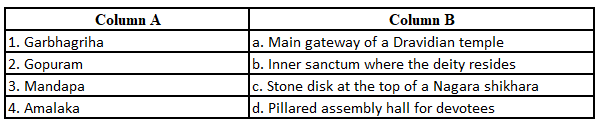
Match the temple architectural terms in Column A with their descriptions in Column B.

Screenshot_3

India recently achieved a milestone by placing its heaviest payload ever into orbit using the LVM3-M6 rocket. Which of the following is a satellite, launched as a part of this mission?

Which of the following is NOT true about octopuses?

Who won the 2025 Pulitzer Prize for Fiction for the novel "James", a reimagining of "The Adventures of Huckleberry Finn"?

Which of the following is a comet that flew very close to the Earth in December, 2025?

Which of the following is the first Asian country to host the Commonwealth Games?

Who was the RUNNER-UP in the 2025 Wimbledon Gentlemen’s Singles Championship?

Who is credited for popularizing the telephone greeting “Hello”?

Who, among the following, is credited for designing the following ad campaigns: "Kuch khaas hai...zindagi mein" (Cadbury's), "Fevicol ka mazboot jod hai, tootega nahin" (Fevicol), and "Har ghar kuch kehta hai" (Asian Paints)?

Who was the player of the tournament in the ICC Women’s World Cup 2025?

What is common among the following celebrities: Val Kilmer, Diane Keaton, Robert Redford, Dharmendra Deol and B. Saroja Devi?

Which Indian city has become home to the country’s first Semiconductor Innovation Museum?

India recently launched its first indigenous 64-bit dual-core microprocessor. What is it named?

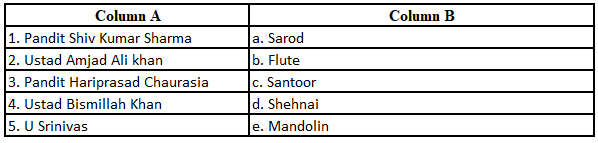
Match the legendary Indian Musician in Column A with the musical instruments they are famously associated with in Column B.

Screenshot_4

Which of the following GST slabs was abolished, during GST rationalization, in September 2025?

Which of the following is the Oxford Word of the Year 2025?

Arrange the following generations from the oldest to the youngest:
1. Generation X
2. Silent Generation
3. Generation Alpha
4. Baby Boomers
5. Millennials

Which of the following BEST describes a startup that is resilient, built for a long-term survival, and is not focused on hyped-up valuation?

What is the primary objective of “Project Suncatcher” that Google CEO Sundar Pichai announced recently?

Which major Indian infrastructure project, featuring the world's highest railway arch bridge over the Chenab River, was fully integrated into the national network in 2025?

Join CAT 2026 course by 5-Time CAT 100%iler

Crack CAT 2026 & Other Exams with Cracku!