91- 6303239042


 Group
Group


 Preferred Source

 Google Discover
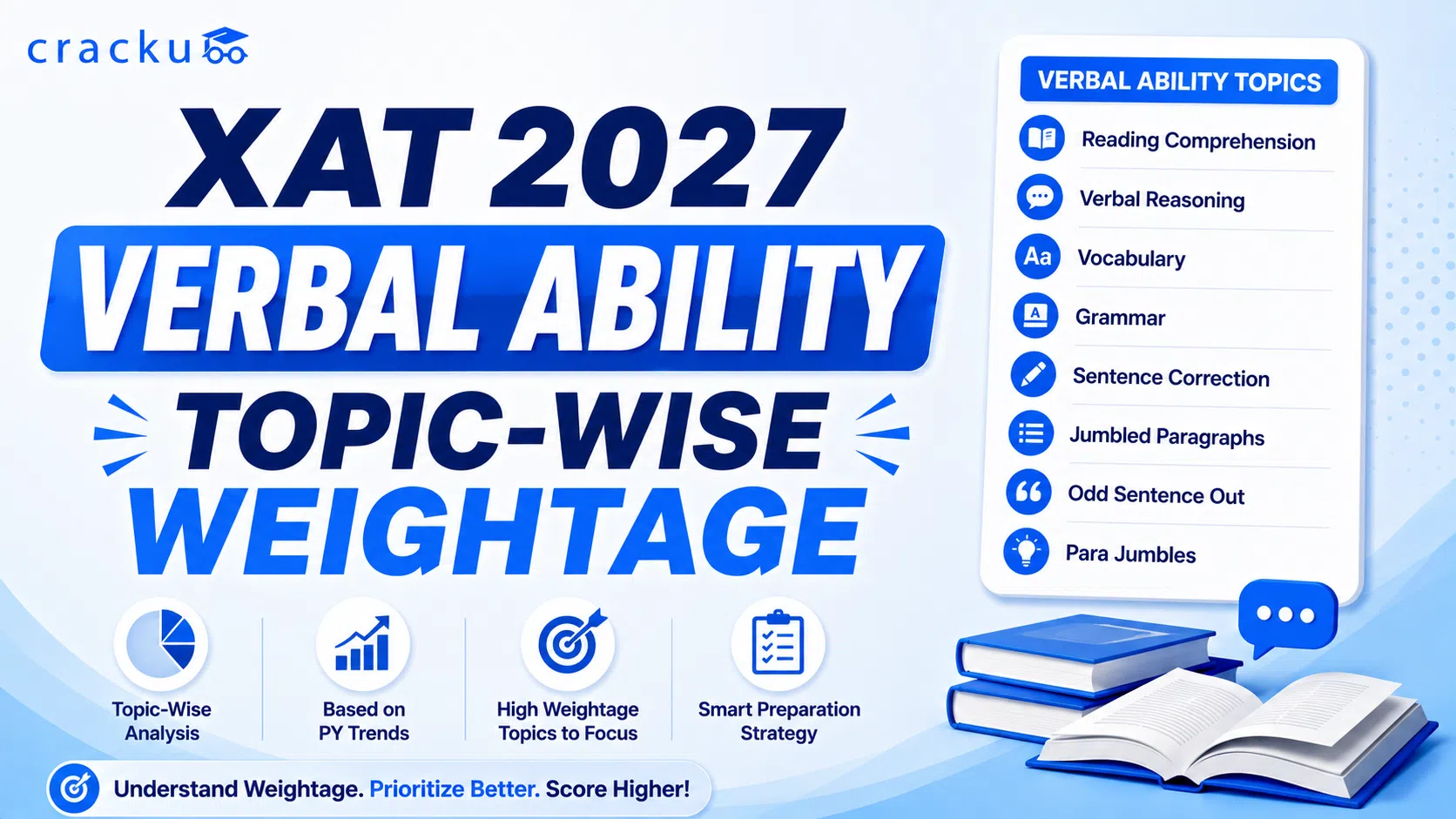
In XAT 2027, Verbal Ability is not an independent section; it is merged with Logical Reasoning. VALR contributes 26 questions out of a total of 75 questions from Part 1 of the XAT exam. Part 1 consists of 75 questions: VALR (26), Decision Making (21), and QA & DI (28). . Each question carries 1 mark, and each wrong answer deducts 0.25 marks. Uniquely, 0.10 marks will be deducted if more than 8 questions are unattempted consecutively. There are 170 minutes given to solve and complete Part 1.
XAT Verbal Ability Topic-Wise Weightage 2027
The XAT Verbal Ability & Logical Reasoning section of the XAT exam is part of Part 1. As per previous years' trends, approximately 26 questions are asked without any time limit. If logical reasoning questions are excluded, then around 9-11 questions are asked from Verbal Ability.
The XAT Verbal Ability topic‑wise weightage matters because it helps aspirants distribute preparation time strategically across topics like Reading Comprehension, Critical Reasoning, Vocabulary, and Logical Reasoning, ensuring balanced coverage of both language and reasoning skills. Candidates can prioritise high‑weightage topics like RC and CR, avoid extra preparation on topics that have low weightage, and make a XAT preparation strategy that improves accuracy, manages time effectively, and meets XAT cut‑offs that are important for admission to Top B‑schools.
XAT Verbal Ability Topic-Wise Weightage 2027 (Based on Previous Year Trend ) | |||
Topic | Expected Questions | Difficulty | Priority (Based on previous year trends) |
Reading Comprehension (RC) | 15 | Moderate‑High | Very High |
Critical Reasoning (Assumptions, Strengthen/Weaken, Inference) | 6–8 | High | Very High |
Para Jumbles & Para Completion | 3–5 | Moderate | High |
Vocabulary & Fill in the Blanks | 2–3 | Easy‑Moderate | Medium |
Logical Reasoning (Statement–Conclusion, Argument Analysis) | 9–11 | Moderate‑High | Very High |
Miscellaneous (Odd Sentence Out, Grammar, Cloze Test) | 1–2 | High | Low |
Read Also, XAT Eligibility Criteria 2027, Age Limit, Reservation Policy
Most Important Verbal Ability Topics for XAT
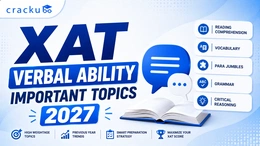
Verbal Ability is itself the second-highest weighted section after the QADI section in the XAT, with approximately 26 questions. Most of these questions are in the moderate-to-difficult category; with a proper strategy, this section can be easily conquered. The main topics that are frequently asked in this section include Reading Comprehension (RC), Critical Reasoning (Assumptions, Strengthen/Weaken, and Inference), and Vocabulary & Fill in the Blanks. These topics must be prepared thoroughly and completely. Students with limited preparation time should complete these high-scoring topics before moving towards lower-weightage topics.
Most Important Verbal Ability Topics for XAT | |
Sub‑Area | Topics Covered |
Reading Comprehension (Highest Priority) | Philosophy, Literature, Social Sciences, Abstract Essays, Inference‑based RCs |
Critical Reasoning | Assumptions, Strengthen/Weaken, Inference, Statement Evaluation, Argument Analysis |
Para Jumbles & Para Completion | Sentence Rearrangement, Logical Sequencing, Paragraph Completion |
Vocabulary & Usage | Synonyms, Antonyms, Contextual Usage, Cloze Test, Fill in the Blanks |
Logical Reasoning | Statement–Conclusion, Cause–Effect, Analytical Reasoning, Odd Sentence Out |
Miscellaneous | Grammar, Sentence Correction, Fact vs Opinion, Short Passage Questions |
XAT Verbal Ability Topic-Wise Weightage Based on Previous Years
Students can plan their preparation of the XAT Verbal Ability section by analysing previous years' question distribution topic-wise. Although the PYQ trend shows that the exact number of questions changes every year, vocabulary and para-based language questions have been asked every year.
XAT Verbal Ability Topic-Wise Weightage Based on Previous Years | |||||
Topics | 2026 | 2025 | 2024 | 2023 | 2022 |
Reading Comprehension | 12 | 17 | 15 | 13 | 12 |
Critical Reasoning | 7 | 6 | 7 | 6 | 7 |
Para Jumbles | 2 | 2 | 2 | 2 | 2 |
Para Completion | 1 | 1 | 1 | 1 | 1 |
Poem Based | 2 | 2 | 0 | 0 | 0 |
Vocabulary / Fill Blanks | 2 | 2 | 2 | 2 | 2 |
Grammar / Error Correction | 2 | 2 | 2 | 2 | 2 |
Analogies / Antonyms | 0–1 | 1 | 1 | 1 | 1 |
Total | 26 | 26 | 27 | 27 | 27 |
,Read Also, Top MBA Colleges Accepting XAT Score, Cutoffs, Placements
High-Weightage Verbal Ability Topics in XAT
Verbal Ability in XAT constantly asks multiple high-weightage topics like Reading Comprehension (RC) and Critical Reasoning (CR), which tests both conceptual clarity and question-solving speed. These RC passages are often taken from philosophy, literature, and social sciences, while CR questions test logical analysis and argument evaluation.
High-Weightage Verbal Ability Topics in XAT | |
|---|---|
Main Topic | Sub-Topics |
Reading Comprehension (Highest Priority) | Inference-based RCs, Main Idea, Author's Tone, Vocabulary in Context, Fact vs Opinion, Philosophy, Literature, Social Science & Abstract Passages |
Critical Reasoning | Assumptions, Strengthen & Weaken Arguments, Inference, Conclusions, Statement Evaluation, Cause & Effect, Argument Analysis |
Para Jumbles & Para Completion | Sentence Rearrangement, Logical Sequencing, Paragraph Completion, Identify Opening & Closing Sentence, Coherent Flow of Ideas |
Vocabulary & Usage | Synonyms, Antonyms, Fill in the Blanks, Contextual Vocabulary, Idioms & Phrases, Cloze Test, Word Usage |
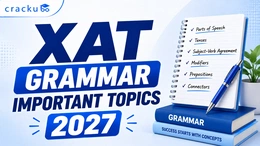
Grammar | Sentence Correction, Error Spotting, Parts of Speech, Subject-Verb Agreement, Tenses, Modifiers, Parallelism |
Verbal Logic | Statement–Conclusion, Statement–Assumption, Analogies, Syllogisms, Logical Consistency, Odd Sentence Out |
Read Also, India's #1 XAT Online Coaching 2027 By Sayali Mam(99.998%iler
Frequently Asked XAT Verbal Ability Topic Types
XAT does not repeat the same questions, but similar question types and their concepts appear every year. Understanding these patterns helps students prepare more effectively.
Category | Commonly Asked Types |
Vocabulary | Synonyms, Antonyms, Fill in the Blanks, Idioms and phrases |
Grammar | Sentence Correction, Error Spotting, Parts of Speech, Tenses |
Reading Comprehension | Inference, Main Idea, Tone of the Passage, Fact vs Opinion, Author’s Viewpoint, Vocabulary in context |
Para-based Questions | Para Jumbles, Para Completion, Odd Sentence Out, Identify opening and closing sentence |
Critical Reasoning | Assumptions, Strengthening/Weakening Arguments, Conclusion, Cause & Effect |
Verbal Logic | Analogies, Syllogisms, Statement & Assumption, Statement & Conclusion, Logical Consistency |
How Topic-Wise Weightage Helps in Verbal Ability Preparation
Making a strategy around important topics makes preparation easy and saves a lot more time than the student who studies everything written in the XAT Verbal Ability syllabus. Once the students know the high-priority/high-weightage topics, they should start their preparation from those topics and then move to low-priority/low-weightage topics if time allows them. Analysing XAT previous years' question papers helps students prioritise high-weightage topics instead of studying everything equally. In the XAT Verbal Ability section, RC and Critical Reasoning usually contribute the maximum marks.
Set Study Priorities: Topic-wise weightage helps in setting priorities for each subtopic as per their appearance in the real XAT exam.
- 40% of the overall verbal ability preparation time must be given to RC
- 25% of the overall verbal ability preparation time must be given to Vocabulary
- 20% of the overall verbal ability preparation time must be given to Grammar
- 15% of the overall verbal ability preparation time must be given to Miscellaneous topics.
Improves Mock Test Performance: This preparation methodology helps in better question selection, as students already know about the high-scoring topics, and also helps in better time management.
Helps in Revision: Topic-wise preparation helps in easy and fast revision, as students can quickly revise high‑weightage areas.
Read Also, XAT Topic-Wise Weightage 2027, Important Topics, PDF Link
Preparation Strategy for XAT Verbal Ability
The VALR section of the XAT exam can be classified as a moderate to difficult level. Success in Verbal Ability comes from daily practice rather than memorising grammar rules. Here are the XAT Verbal Ability preparation strategies to score good marks:
- Read different articles, editorials, and books daily to improve comprehension and critical thinking.
- Revise high‑frequency 15-20 words daily, practise synonyms/antonyms, and use flashcards for quick recall. Also try to learn words from examples.
- Practise past years' XAT papers to understand question patterns and improve speed.
- Take regular XAT mock tests to copy the real XAT exam conditions, improve speed, and analyse mistakes after each mock test session for better accuracy.
- Avoid common mistakes in XAT Verbal Ability like ignoring regular Reading Comprehension practice, memorising vocabulary without focusing on contextual use, ignoring grammar basics, and attempting mock tests without analysing previous mock mistakes.
XAT Verbal Ability Topic-Wise Weightage 2027: Conclusion
Verbal Ability is one of the highest-scoring sections in the XAT exam 2027 when prepared topic-wise strategically. Focus should be on topic-wise weightage, on topics like Reading Comprehension, Critical Reasoning, Vocabulary, Grammar, and Para Jumbles, consistently forming the most important section.
Candidates should prioritise high-weightage topics first; practise previous year questions from the past 8-10 years; analyse mock tests (sectional and full-length); and maintain a daily reading habit. XAT, each year, changes the types of questions, but students with strong preparation in comprehension, reasoning, and language fundamentals easily perform well regardless of the XAT exam difficulty level.