Geometry is an important and challenging topic in the CAT exam with a lot of weightage. CAT Geometry questions are asked from topics including Triangles, Circles, Quadrilaterals, Polygons and so on. To perform Geometry, one must thoroughly understand concepts, and formulas and gain problem-solving skills. Previous years' question papers are invaluable resources for CAT preparation, especially for mastering the CAT Quantitative Aptitude section.
By solving the questions from CAT's previous papers, candidates can understand the types of questions asked, the level of difficulty, and the exam pattern. Below, you can find all those Geometry questions separated year-wise, along with the video solution for each question. Keep practising free CAT mocks where you'll get a fair idea of how questions are asked, and type of questions asked of CAT Geometry Questions. Also, you can download all the below questions in a PDF format consisting of video solutions for every problem explained by the CAT experts. Click the link below to download the CAT Geometry Questions with video Solutions PDF.
Topic | 2024 | 2023 | 2022 | 2021 | 2020 | 2019 | 2018 |
Triangles | 2 | 3 | 4 | 2 | 2 | 2 | 3 |
Circles | 1 | 1 | 1 | 1 | 3 | 3 | 4 |
Quadrilaterals | 1 | 1 | 3 | 5 | 0 | 0 | 5 |
Polygons | 1 | 1 | 1 | 2 | 2 | 2 | 0 |
| Mensuration | 2 | 2 | 0 | 0 | 3 | 3 | 1 |
| Co-ordinate Geometry | 1 | 1 | 0 | 0 | 1 | 1 | 0 |
| Total | 8 | 9 | 9 | 10 | 11 | 11 | 13 |
CAT Geometry is one of the most important topics in the quantitative aptitude section, and it is vital to have a clear understanding of the formulas related to them. If you are struggling to get an understanding getting yourself enrolled in a CAT online coaching is a better way to go. To help the aspirants to ace this topic, we have made a PDF containing a comprehensive list of formulas, tips, and tricks that you can use to solve Geometry questions with ease and speed. Along with this you could also be using our other free online resources such as CAT syllabus, college brochures, etc. to maximize your preparation. Click on the below link to download the CAT Geometry formulas PDF.
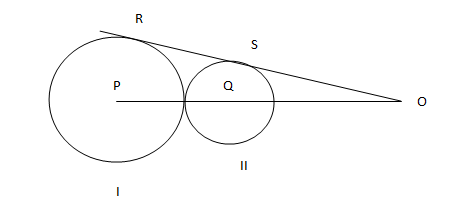
1. Tangents on a circle
Tangents:
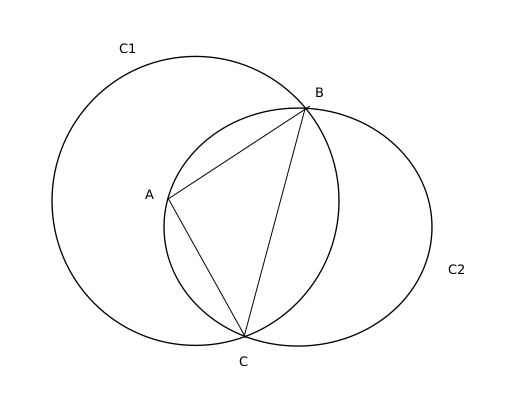
Direct common tangent: $$PQ^2=RS^2=D^2-\left(r_1-r_2\right)^2$$, where D is the distance between the centres:

Transverse common tangent: $$PQ^2=RS^2=D^2-\left(r_1+r_2\right)^2$$, where D is the distance between the centres:

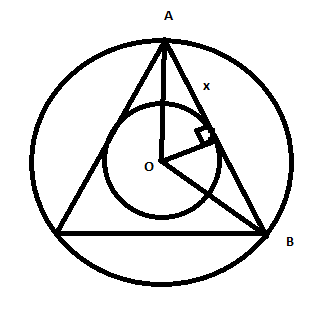
2. Area, inradius, circumradius of triangles
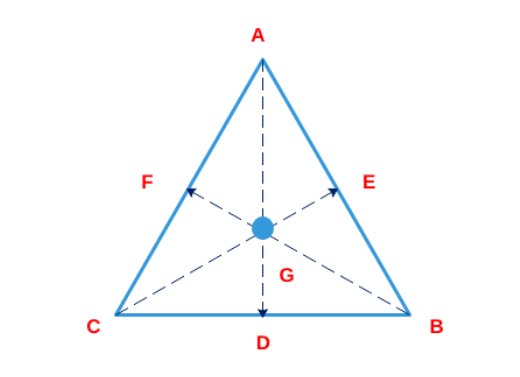
If x is the side of an equilateral triangle then the
Altitude (h) =$$\frac{\sqrt{\ 3}}{2}x$$
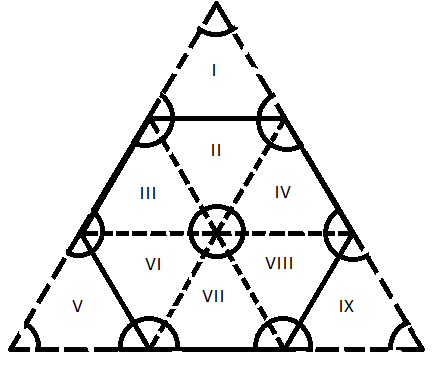
Area =$$\frac{\sqrt{\ 3}}{4}x^2$$
Inradius = $$\frac{1}{3}\times\ h$$
Circumradius = $$\frac{2}{3}\times\ h$$
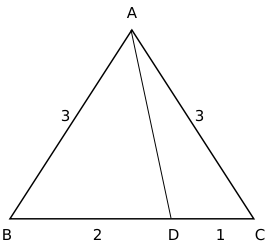
▪ Area of an isosceles triangle =$$\frac{a}{4}\sqrt{\ 4c^2-a^2}$$ (where a, b and c are the length of the sides of BC, AC and AB respectivelyand b = c)
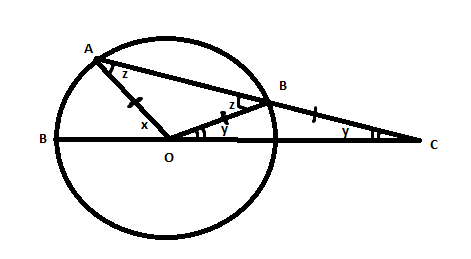
Special triangles :
30^{0}, 60^{0} and 90^{0}

45^{0}, 45^{0} and 90^{0}

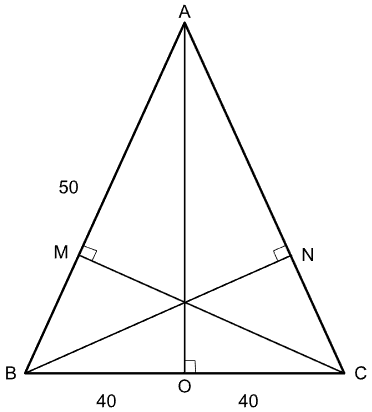
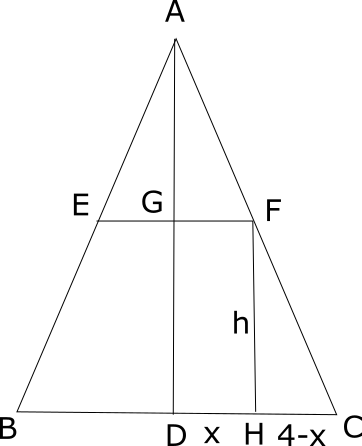
A triangle ABC is formed with AB = AC = 50 cm and BC = 80 cm. Then, the sum of the lengths, in cm, of all three altitudes of the triangle ABC is
correct answer:-126
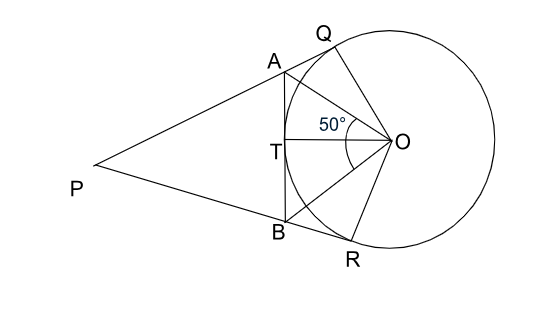
Two tangents drawn from a point p and a circle with center O at point Q and R. Point A and B lie on PQ and PR, repectively, Such that AB is also a tangent to the same circle. Ir $$\angle A0B=50^{0}$$, then $$\angle APB$$, in degrees equals
correct answer:-80
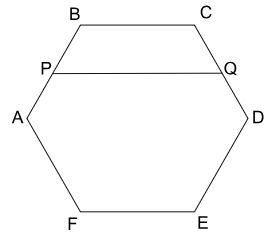
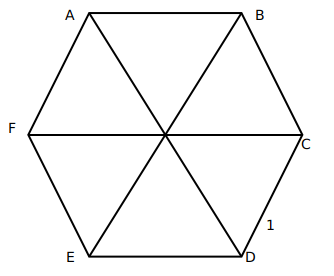
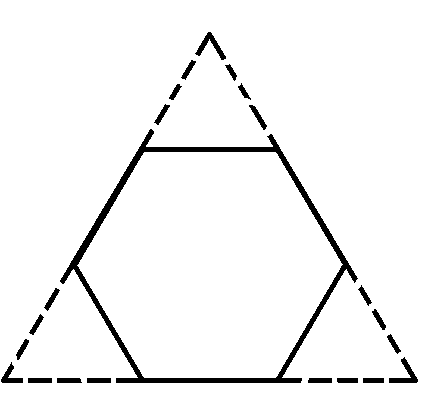
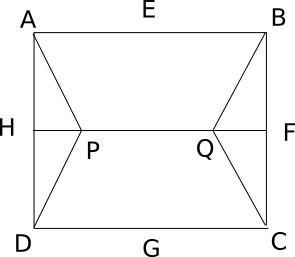
Let ABCDEF be a regular hexagon and P and Q be the midpoints of AB and CD, respectively. Then, the ratio of the areas of trapezium PBCQ and hexagon ABCDEF is
correct answer:-2
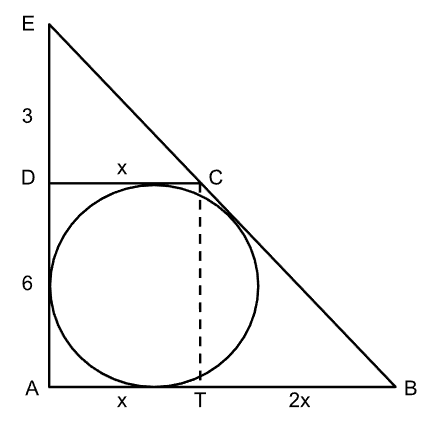
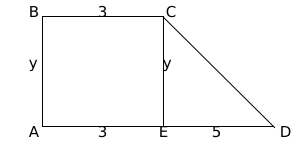
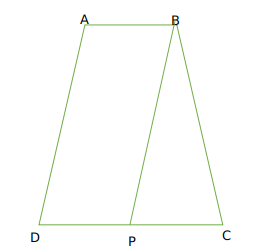
ABCD is a trapezium in which AB is parallel to DC, AD is perpendicular to AB, and AB = 3DC. If a circle inscribed in the trapezium touching all the sides has a radius of 3 cm , then the area, in sq. cm, of the trapezium is
correct answer:-1
The (x, y) coordinates of vertices P, Q and R of a parallelogram PQRS are (-3, -2), (1, -5) and (9, 1), respectively. If the diagonal SQ intersects the x-axis at (a, 0) , then the value of a is
correct answer:-4
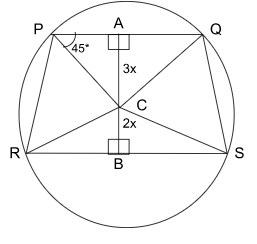
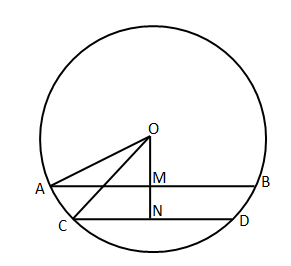
In a circle with center C and radius $$6\sqrt{2}$$ cm, PQ and SR are two parallel chords separated by one of the diameters. If $$\angle PQC=45^{0}$$, and the ratio of the perpendicular distance of $$PQ$$ and $$SR$$ from $$C$$ is $$3:2$$, then the area, in sq. cm, of the quadrilateral $$PQRS$$ is
correct answer:-3
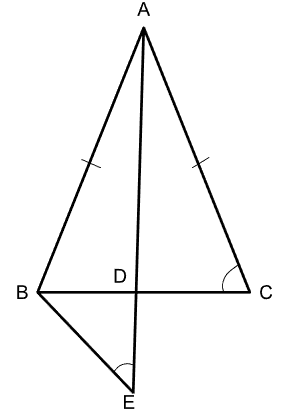
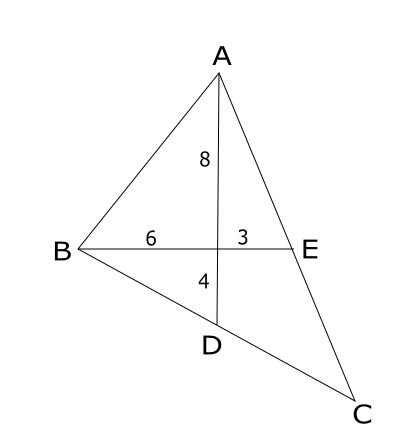
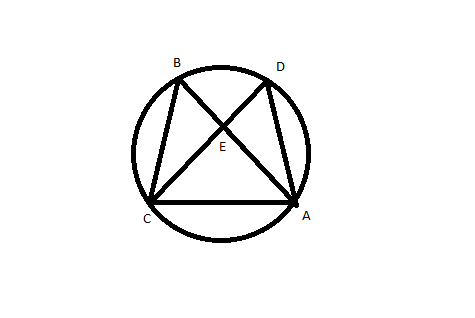
In $$\triangle ABC$$, $$AB =AC= 12$$ cm and $$D$$ is a point on side $$BC$$ such that $$AD= 8$$ cm. If $$AD$$ is extended to a point $$E$$ such that $$\angle ACB = \angle AEB$$, then the length, in cm, of $$AE$$ is
correct answer:-3
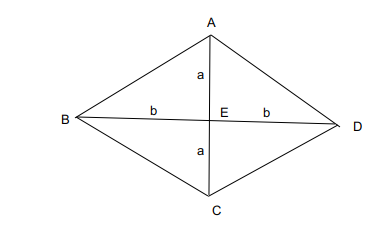
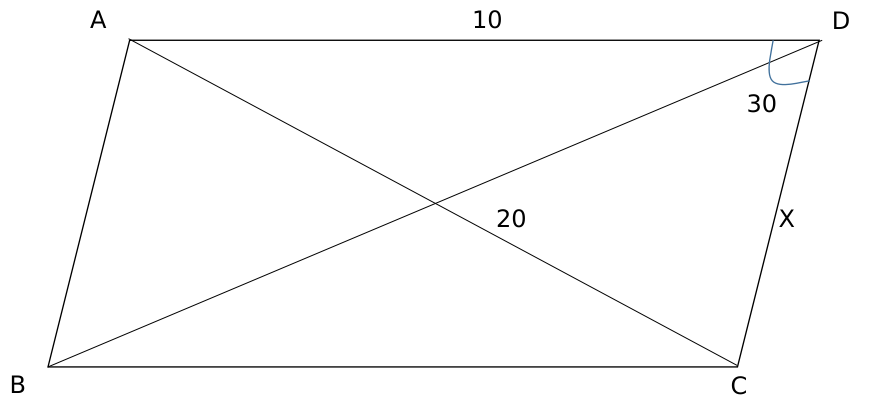
If the length of a side of a rhombus is 36 cm and the area of the rhombus is 396 sq. cm, then the absolute value of the difference between the lengths, in cm, of the diagonals of the rhombus is
correct answer:-60
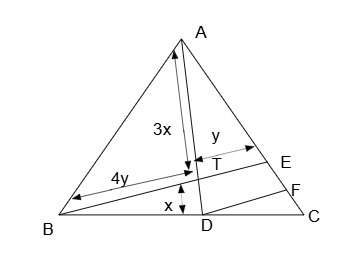
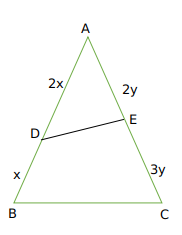
In $$\triangle ABC$$, points D and E are on the sides BC and AC, respectively. BE and AD intrested at point T such that AD:AT=4:3, and BE:BT=5:4. Point F lies on AC such that DF is parallel to BE. Then, BD:CD is
correct answer:-2
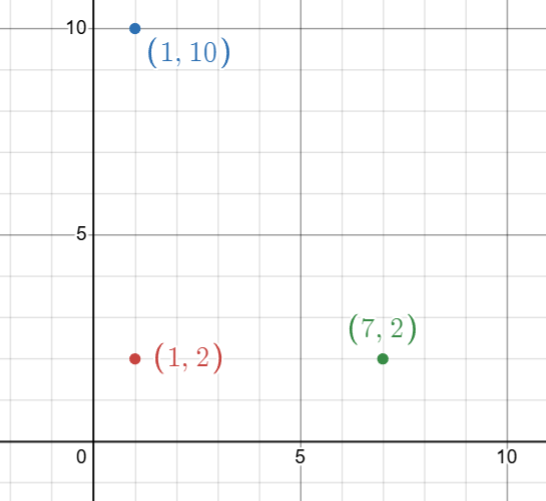
The coordinates of the three vertices of a triangle are: (1, 2), (7, 2), and (1, 10). Then the radius of the incircle of the triangle is
correct answer:-2
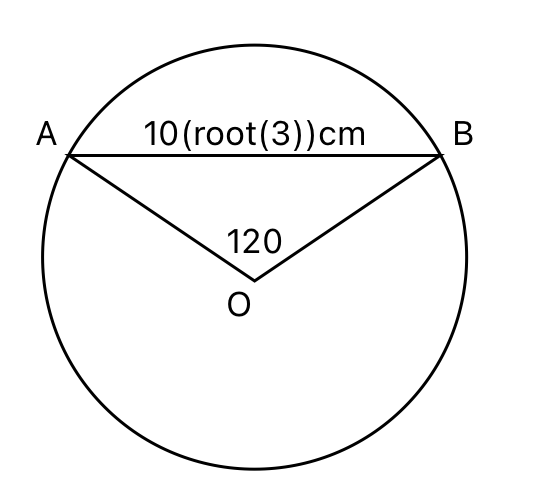
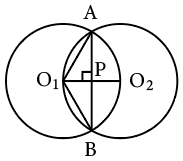
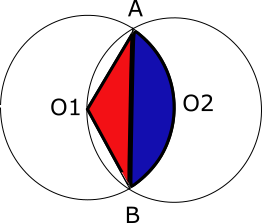
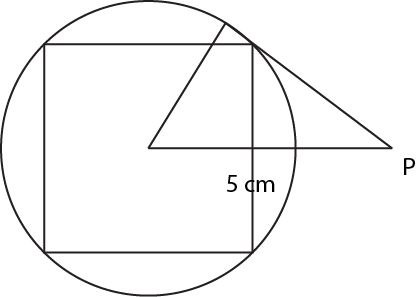
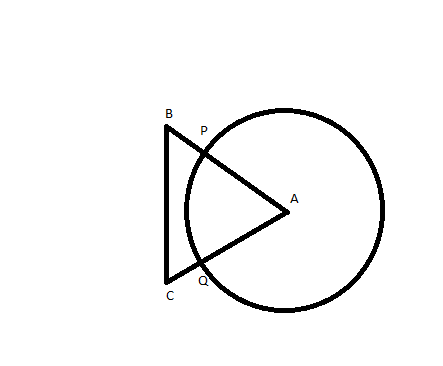
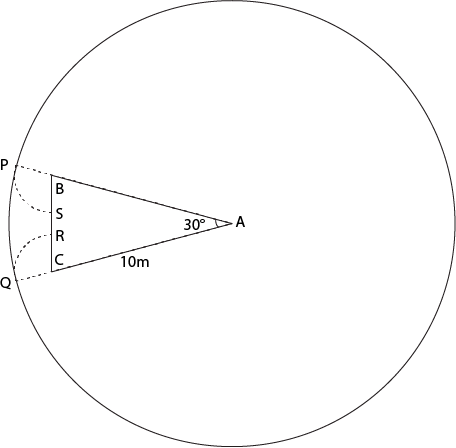
A circular plot of land is divided into two regions by a chord of length $$10\sqrt{3}$$ meters such that the chord subtends an angle of 120° at the center. Then, the area, in square meters, of the smaller region is
correct answer:-4
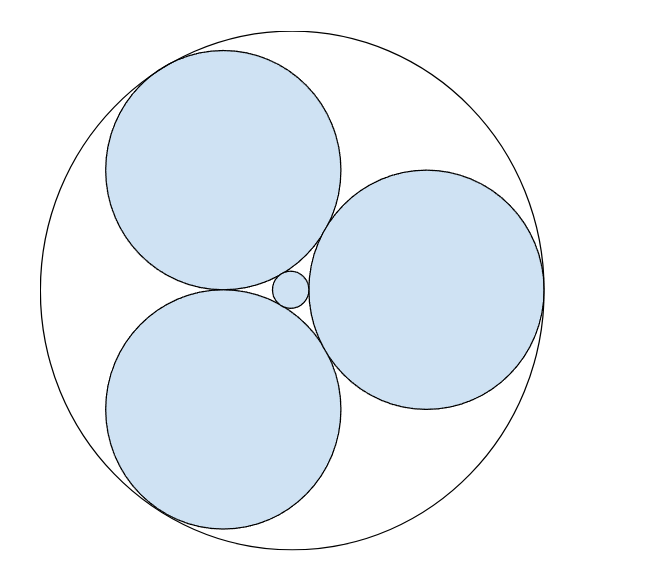
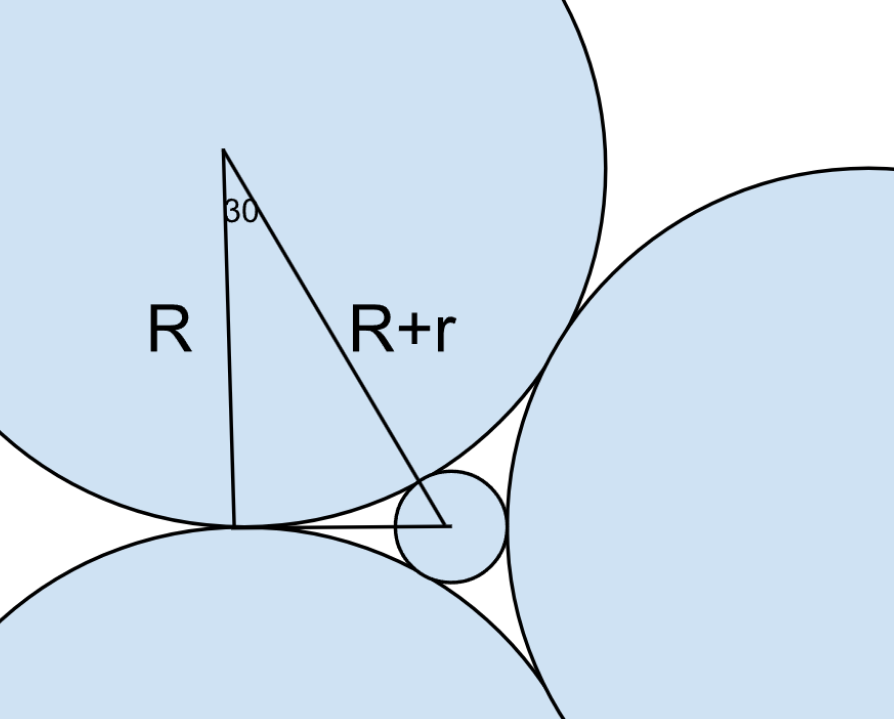
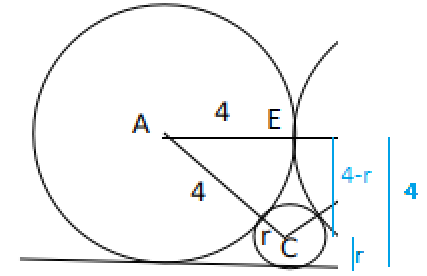
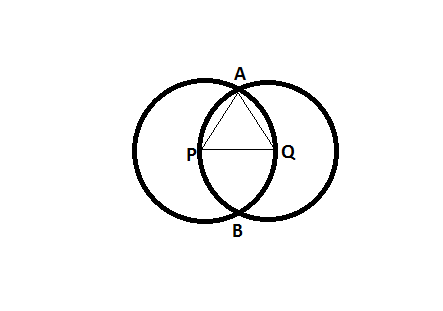
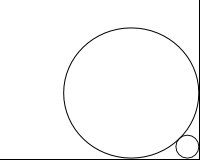
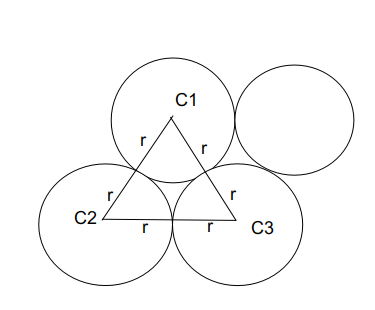
Three circles of equal radii touch (but not cross) each other externally. Two other circles, X and Y, are drawn such that both touch (but not cross) each of the three previous circles. If the radius of X is more than that of Y, the ratio of the radii of X and Y is
correct answer:-1
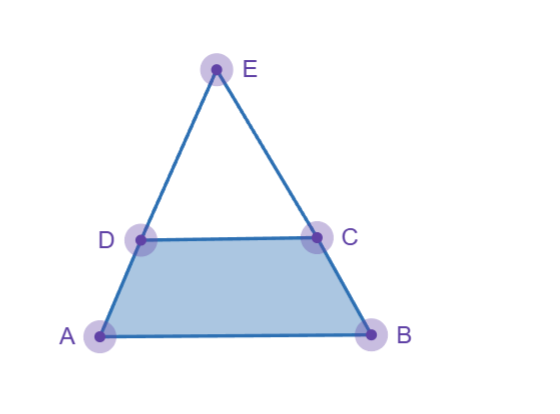
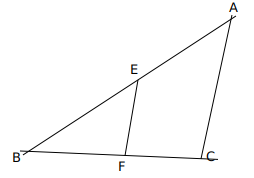
ABCD is a trapezium in which AB is parallel to CD. The sides AD and BC when extended, intersect at point E. If AB = 2 cm, CD = 1 cm, and perimeter of ABCD is 6 cm, then the perimeter, in cm, of $$\triangle AEB$$ is
correct answer:-1
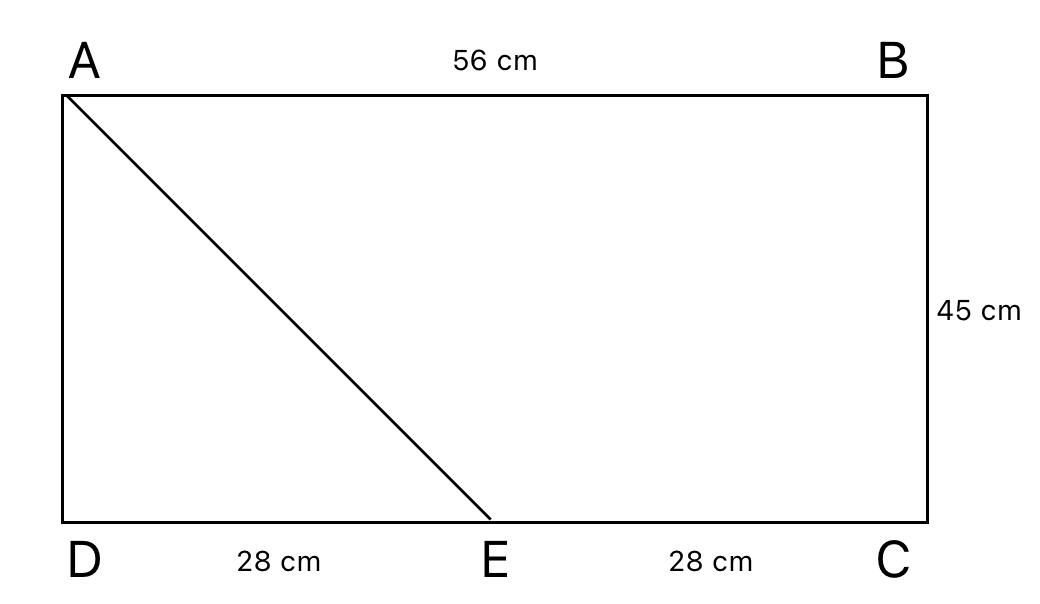
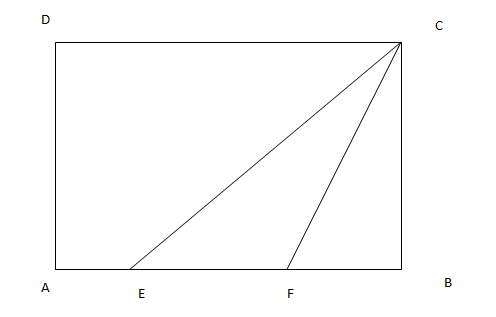
ABCD is a rectangle with sides AB = 56 cm and BC = 45 cm, and E is the midpoint of side CD. Then, the length, in cm, of radius of incircle of $$\triangle ADE$$ is
correct answer:-10
A regular octagon ABCDEFGH has sides of length 6 cm each. Then the area, in sq. cm, of the square ACEG is
correct answer:-4
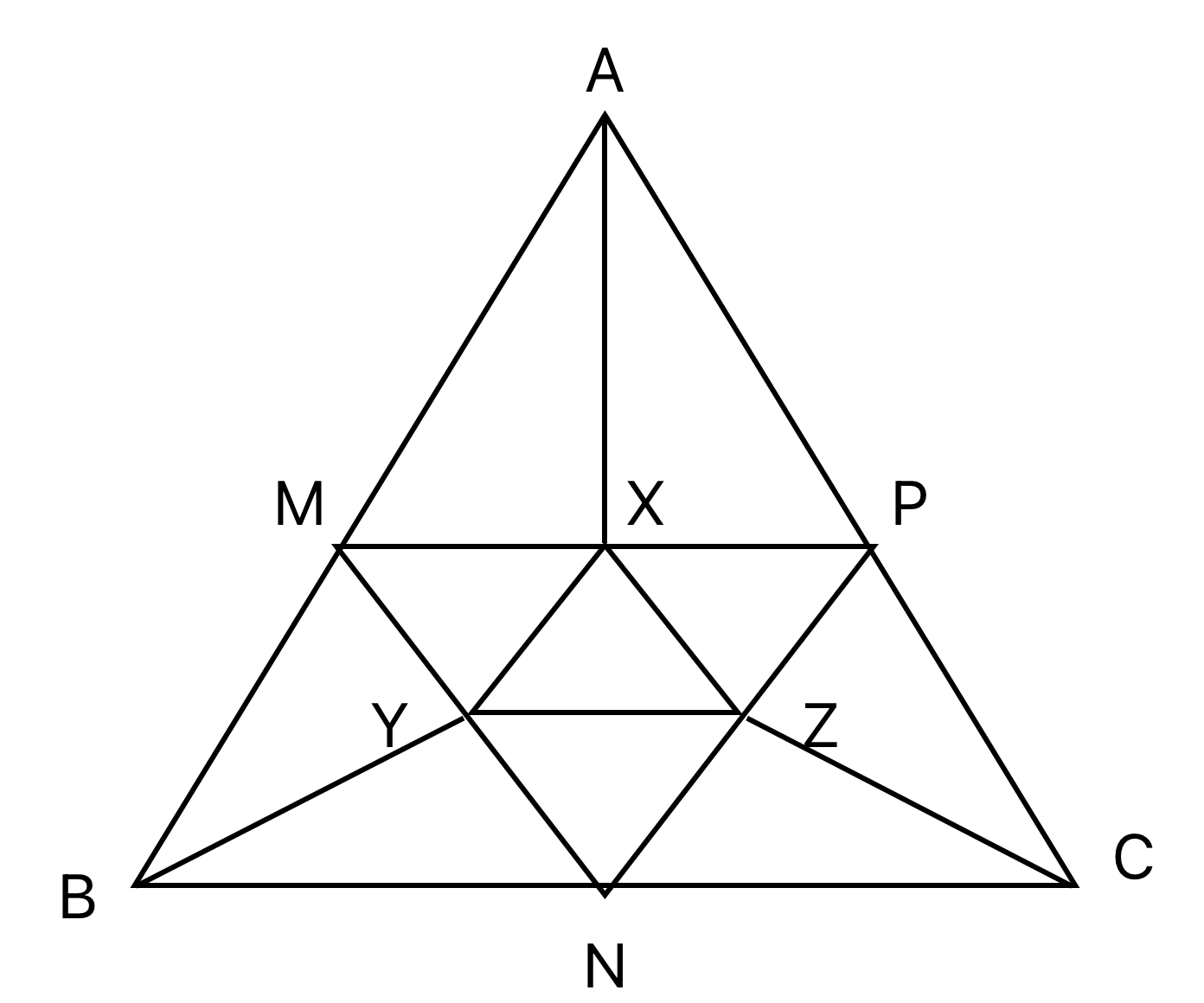
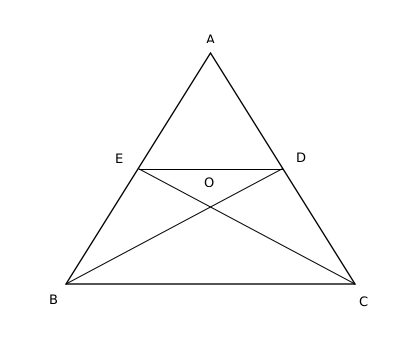
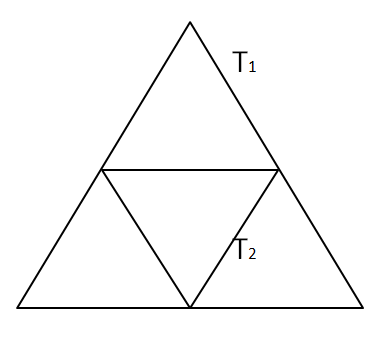
The midpoints of sides AB, BC, and AC in ΔABC are M, N, and P, respectively. The medians drawn from A, B, and C intersect the line segments MP, MN and NP at X, Y, and Z, respectively. If the area of ΔABC is 1440 sq cm, then the area, in sq cm, of $$\triangle XYZ$$ is
correct answer:-90
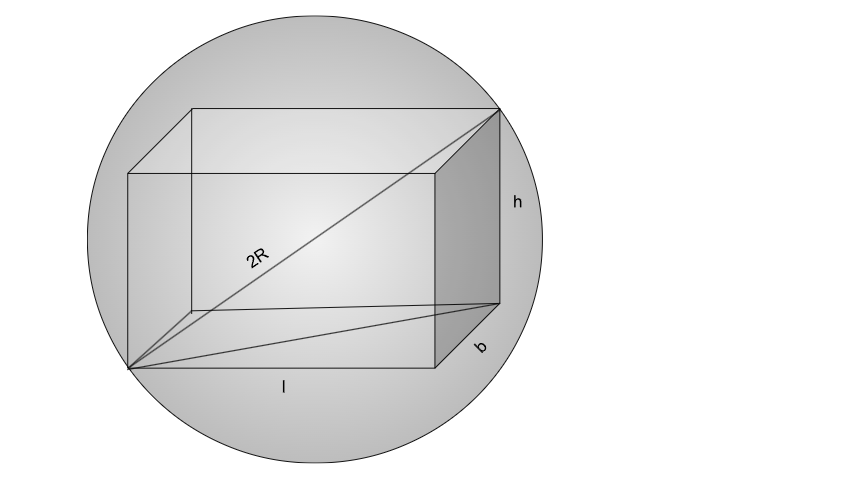
The surface area of a closed rectangular box, which is inscribed in a sphere, is 846 sq cm, and the sum of the lengths of all its edges is 144 cm. The volume, in cubic cm, of the sphere is
correct answer:-3
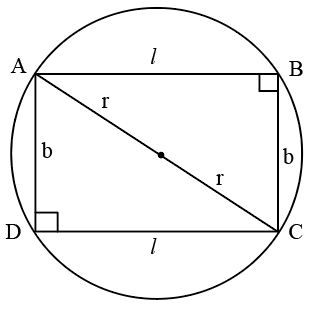
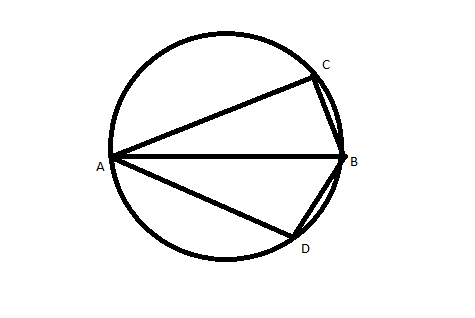
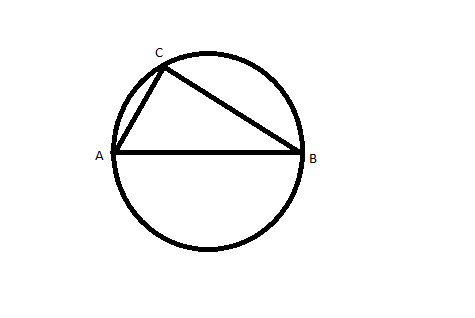
A triangle is drawn with its vertices on the circle C such that one of its sides is a diameter of C and the other two sides have their lengths in the ratio a : b. If the radius of the circle is r, then the area of the triangle is
correct answer:-2
Let C be the circle $$x^{2} + y^{2} + 4x - 6y - 3 = 0$$ and L be the locus of the point of intersection of a pair of tangents to C with the angle between the two tangents equal to $$60^{\circ}$$. Then, the point at which L touches the line $$x$$ = 6 is
correct answer:-2
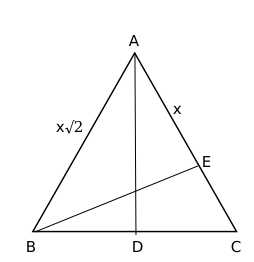
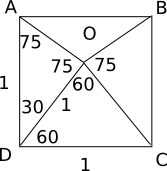
Let $$\triangle ABC$$ be an isosceles triangle such that AB and AC are of equal length. AD is the altitude from A on BC and BE is the altitude from B on AC. If AD and BE intersect at O such that $$\angle AOB = 105^\circ$$, then $$\frac{AD}{BE}$$ equals
correct answer:-3
Video solutions can be a helpful resource for candidates preparing for CAT geometry questions. They can provide a step-by-step explanation of how to solve the problem, helping candidates better understand the concept and formula.
Triangles, Circles, Quadrilaterals, Polygons, 3-D Geometry and Coordinate Geometry are the most important topics that candidates should have well understanding. They should practice a wide range of questions related to each topic to excel in the Geometry topic in the CAT quant section.