JEE WhatsApp Group


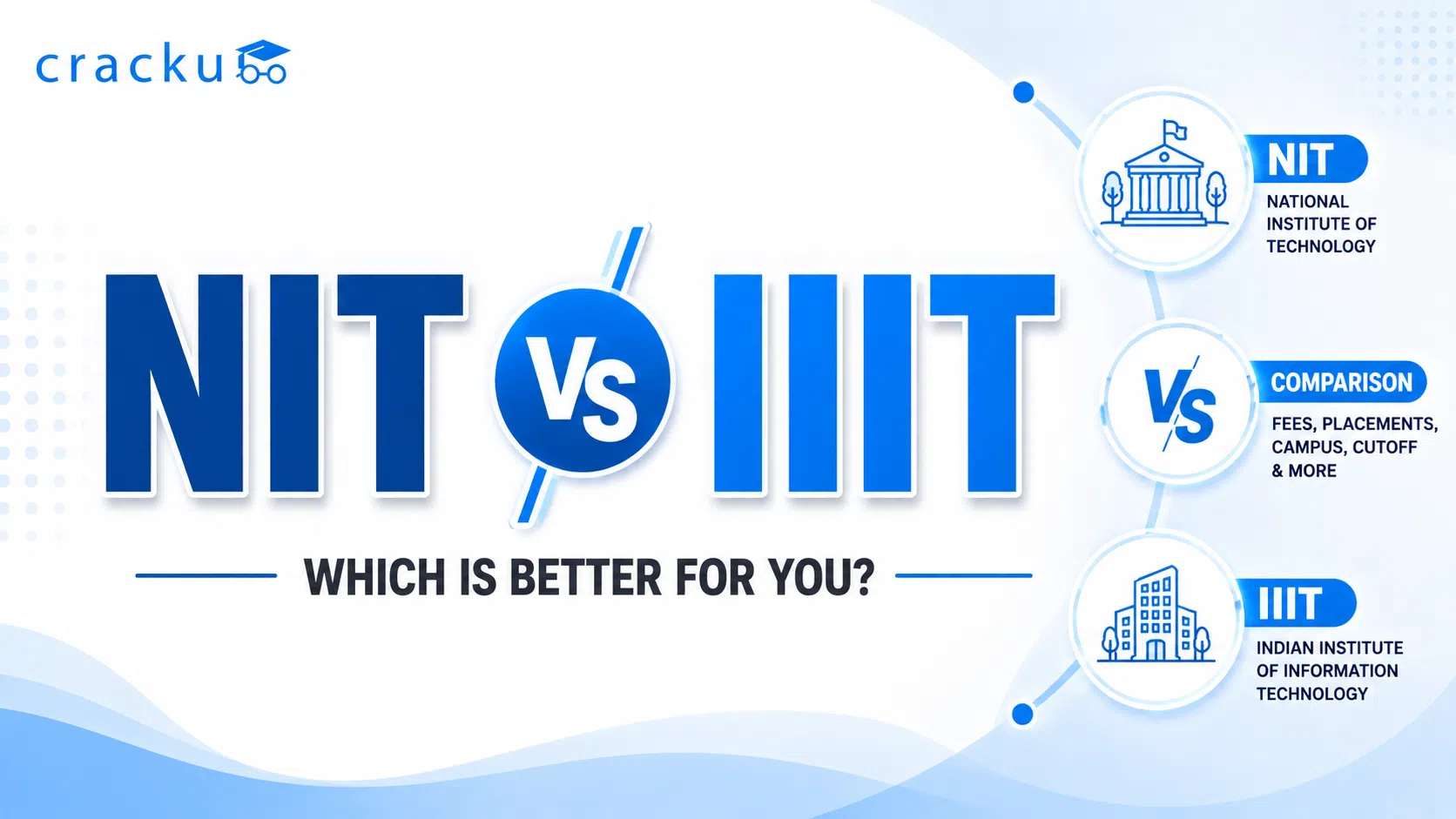
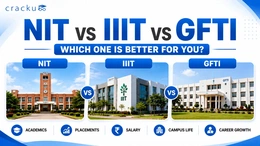
NIT vs IIIT
Choosing between NIT and IIIT after JEE Main and JEE Advanced 2026 is an important decision for engineering aspirants. National Institutes of Technology (NITs) like NIT Trichy are known for their well-rounded engineering education, covering core branches such as Mechanical, Civil, Electrical, along with Computer Science. They provide large campuses, diverse student life, and balanced placement opportunities across multiple sectors.
Indian Institutes of Information Technology (IIITs) like IIIT Hyderabad focus mainly on computer science, IT, AI, and software-related fields with a strong emphasis on coding, research, and industry exposure. Both options are excellent, but the right choice depends on whether a student prefers broad engineering exposure or a specialized tech-oriented career path.
If you are still building your JEE preparation for 2027, Cracku's JEE Main mock test is one of the most thorough practice resources available, with 100+ full-length tests and detailed performance analytics. Many top NIT and IIIT admits credit consistent mock test practice as a key part of their strategy.
Top NITs vs Top IIITs
Top NITs and Top IIITs are among the most preferred choices for JEE Main qualifiers, but they offer different academic experiences and career paths.
Feature | Top NITs | Top IIITs |
|---|---|---|
Popular Institutes | NIT Trichy, NIT Surathkal, NIT Warangal | IIIT Hyderabad, IIIT Bangalore, IIIT Allahabad |
Main Focus | Balanced engineering education across all branches | Specialized focus on CSE, IT, AI, and Electronics |
Branch Options | Wide variety including Core + Circuital branches | Mostly tech-related branches (CSE, ECE, AI & DS) |
Coding Culture | Good in top NITs | Usually stronger, intensive, and highly competitive |
Placement Strength | Strong placements in both core and software sectors | Excellent software, deep-tech, and IT placements |
Average Packages | High in CSE/ECE; decent in core branches | Generally exceptionally high for tech branches |
Campus Size | Large campuses with expansive infrastructure | Smaller, highly compact boutique tech campuses |
Campus Life | Strong cultural fests, sports, clubs, diverse hostel life | More academic, research, and coding-focused environment |
Research Opportunities | Good research facilities across departments | Extremely strong, industry-oriented technology research |
Alumni Network | Large, legacy, and well-established worldwide | Rapidly growing and dominant in tech industries |
Best For | Students wanting a comprehensive, balanced college experience | Students committed to software and tech careers |
Core Engineering | Strong opportunities in Mechanical, Civil, Electrical, etc. | Extremely limited or absent core engineering exposure |
Also Read: IIIT Cutoff 2026
NIT vs IIIT Fees
NITs generally offer more affordable education, whereas IIITs, especially top autonomous or PPP-based institutes, have higher tuition fees. However, both provide scholarships and fee waivers for eligible students based on income and category guidelines.
Factor | NITs | IIITs |
|---|---|---|
Tuition Fees | Moderate and heavily government-subsidized | Significantly higher; autonomous/PPP-based structure |
Average Annual Fees | Rs. 1.5 lakh to Rs. 2.5 lakh per year | Rs. 2.5 lakh to Rs. 6.0 lakh per year |
Hostel & Mess Charges | Rs. 50,000 to Rs. 90,000 yearly | Rs. 60,000 to Rs. 1.3 lakh yearly |
Total 4-Year Cost | Around Rs. 7 lakh to Rs. 11 lakh | Around Rs. 12 lakh to Rs. 26 lakh |
Scholarships | Extensive institutional, state, and central plans | Available via institute-specific or merit endowments |
Income-Based Waiver | Mandatory waivers for SC/ST/PwD and low-income | Varies by institute; not uniformly applicable |
ROI | Exceptionally strong due to lower fees and major placements | Excellent tech ROI at top tiers due to elite packages |
Also Read: NIT Cutoff 2026
NIT vs IIIT Admission Process
The table below outlines the key differences in the admission process between NITs and IIITs, accurately reflecting independent institutional counselling channels for the 2026 session.
Feature | NIT Admission | IIIT Admission |
|---|---|---|
Entrance Exam | JEE Main | JEE Main (plus UGEE/SPEC/Olympiads for select IIITs) |
Counselling | JoSAA and CSAB Special Rounds | JoSAA/CSAB or direct portals (IIIT-H, IIIT-B) |
Home State Quota | Strictly applicable (50% seats reserved) | Absent in Central IIITs; active in select PPP models |
Total Seats (2026) | 25,162 seats across 31 campuses | 11,518 seats across 28 campuses (JoSAA) |
Admission Basis | NTA JEE Main AIR and category status | JEE Main AIR or institutional entrance exam ranks |
Branch Availability | Comprehensive variety: core, circuital, sciences | Exclusively tech-centric (CSE, IT, ECE, DS, AI) |
Cutoff Trend | Varies widely; core branches close lower | Exceedingly high for flagship CSE/IT programs |
Also Read: JoSAA Counselling 2026
NIT vs IIIT Placements
Placements play a major role in deciding between NITs and IIITs, as both offer strong but slightly different career outcomes. The difference mainly comes from specialization and industry focus.
Feature | NIT Placements | IIIT Placements |
|---|---|---|
Placement Focus | Balanced: core engineering and software sectors | Heavily skewed toward software, AI, and IT roles |
Top Recruiters | Google, Microsoft, Amazon, Qualcomm, L&T;, Tata | Google, Microsoft, Amazon, Adobe, Apple, Nvidia, Uber |
Core Branch Opportunities | Excellent for Mechanical, Civil, Electrical, Chemical | Highly limited to non-existent core infrastructure options |
Internship Opportunities | Strong options across corporate software and industry | Predominantly tech, R&D;, and product-based internships |
Startup Culture | Robust, supported by cross-discipline incubators | Vibrant, aggressive, and deeply integrated in software/product |
Overall Advantage | Diverse industry flexibility and multi-sector pivots | Peerless early-career specialization and elite tech entry |
NIT vs IIIT Cut-off
Understanding cut-off trends is crucial as JoSAA 2026 choice filling proceeds. The table below outlines the key cut-off behavior for both NITs and IIITs.
Feature | NIT Cut-offs | IIIT Cut-offs |
|---|---|---|
Admission Basis | JEE Main Rank via JoSAA/CSAB portals | JEE Main via JoSAA/CSAB or autonomous ranking lists |
Competition Level | Very high for top-tier institutes and circuital branches | Extreme for elite tech branches; limited seats |
CSE Cut-offs | Closes within top 1,000 to 5,000 ranks at top lines | Often closes under 1,000 to 2,000 ranks at elite institutions |
Core Branch Cut-offs | Significantly lower; wider rank pools eligible | Rarely applicable; no traditional core branches |
Home State Quota Impact | Massive, statistically proven benefit to local students | Generally non-existent across central/elite choices |
Seat Availability | 25,162 seats ease lower cutoff thresholds | 11,518 JoSAA seats drive steep rank dynamics |
Should You Choose NIT or IIIT After JEE Main 2026?
Choosing between an NIT or IIIT after JEE Main 2026 depends entirely on your personal academic goals, your preference for a specific engineering branch, and your long-term career aspirations. Now that the JEE Advanced results are finalized and JoSAA choice filling is actively underway, your priority order should align perfectly with what these unique systems provide.
NITs like NIT Trichy offer a balanced engineering experience with core branches, strong campus life, and diverse opportunities. IIITs like IIIT Hyderabad focus mainly on CSE, IT, and AI and provide excellent coding culture and software placements. If you want flexibility and multiple career options, choose NIT. If you are sure about a tech and software career, IIIT is the better option.
NIT vs IIIT: Conclusion
Choosing between NIT and IIIT depends on your career goals, branch preference, and the kind of college experience you want after JEE Main 2026. NITs provide a well-rounded engineering education with a wide range of branches, strong alumni networks, vibrant campus life, and opportunities in both core and software sectors. Students looking for flexibility in career choices often prefer top NITs due to their balanced academic and extracurricular environment.
On the other hand, IIITs are ideal for students who are certain about pursuing careers in Computer Science, Artificial Intelligence, Information Technology, or software development. Their specialized curriculum, strong coding culture, industry collaborations, and excellent placement records make them highly attractive for tech-focused aspirants. Before finalizing your JoSAA choices, compare placements, fees, cutoffs, and branch preferences carefully to select the institute that best aligns with your long-term ambitions.
.webp)