JEE WhatsApp Group


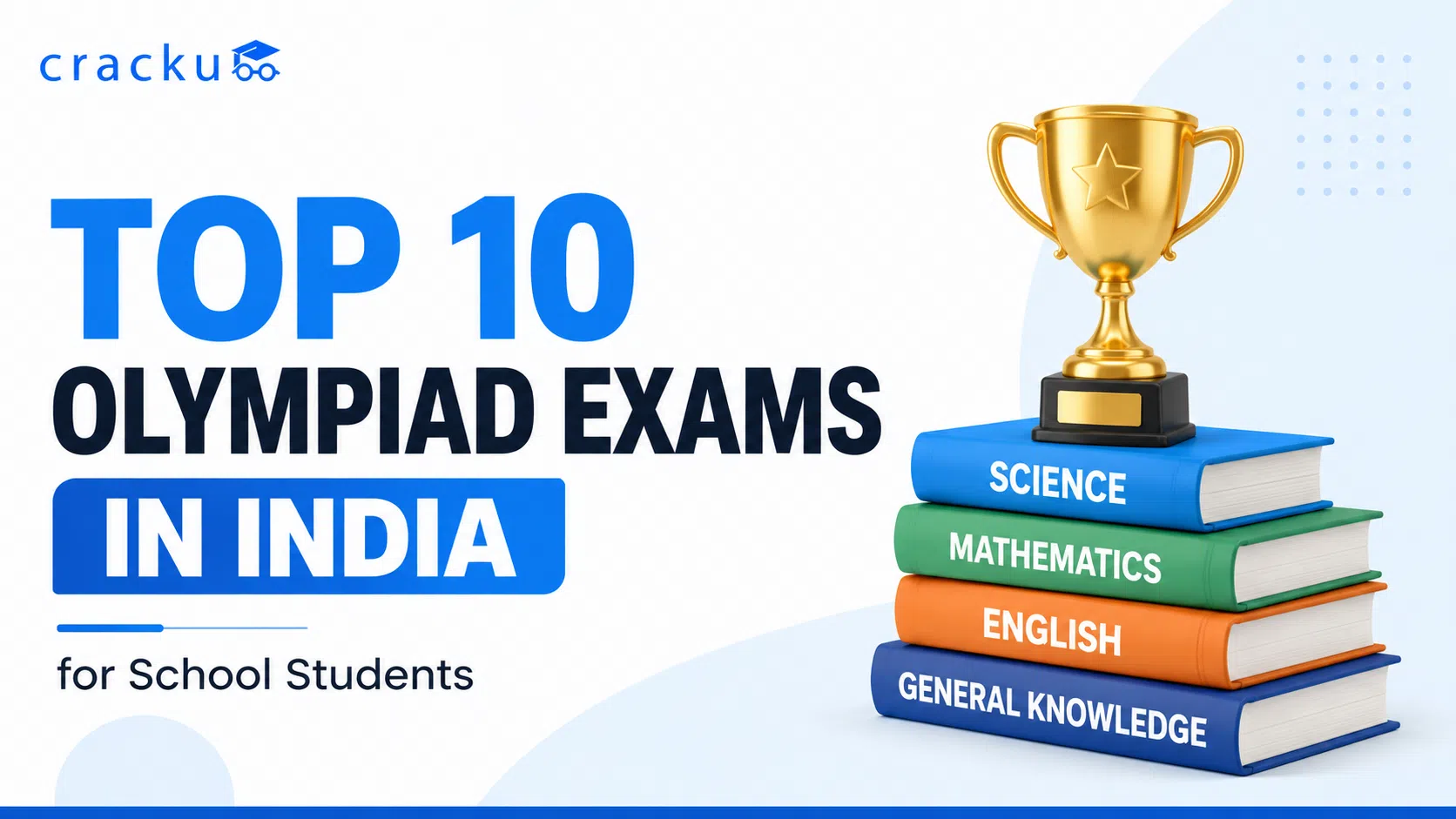
Top 10 Olympiad Exams in India for School Students
Olympiad exams are competitive assessments designed to enhance students’ conceptual understanding, problem-solving abilities, and analytical skills beyond regular classroom learning. These exams provide school students with an opportunity to test their knowledge at national and international levels while developing confidence and a competitive spirit.
In India, several reputed organisations conduct Olympiads across subjects such as Mathematics, Science, English, Computer Science, General Knowledge, and Reasoning. From primary classes to senior secondary levels, students can choose Olympiads based on their interests, academic strengths, and career goals. Popular exams like IMO, NSO, IEO, and other subject-based Olympiads help students strengthen fundamentals and prepare for future competitive examinations. This article covers the top 10 Olympiad exams.
List of Best Olympiad Exams in India
Olympiad exams help students improve problem-solving skills, logical reasoning, subject knowledge, and competitive exam preparation. Several organisations conduct Olympiads for students from primary to senior secondary classes.
| S. No. | Olympiad Exam | Conducting Organisation | Subject/Area | Classes Eligible |
|---|---|---|---|---|
| 1 | International Mathematics Olympiad (IMO) | Science Olympiad Foundation (SOF) | Mathematics and Logical Reasoning | Classes 1–12 |
| 2 | National Science Olympiad (NSO) | Science Olympiad Foundation (SOF) | Science | Classes 1–12 |
| 3 | International English Olympiad (IEO) | Science Olympiad Foundation (SOF) | English Language Skills | Classes 1–12 |
| 4 | International General Knowledge Olympiad (IGKO) | Science Olympiad Foundation (SOF) | General Awareness and Current Affairs | Classes 1–10 |
| 5 | International Computer Science Olympiad (ICSO) | Science Olympiad Foundation (SOF) | Computer Science and Technology | Classes 1–10 |
| 6 | Indian Olympiad Qualifier in Mathematics (IOQM) | Mathematics Teachers’ Association and HBCSE | Advanced Mathematics | Classes 8–12 |
| 7 | National Standard Examination in Physics (NSEP) | Indian Association of Physics Teachers (IAPT) | Physics | Classes 11–12 |
| 8 | International Olympiad of Science (IOS) | SilverZone Foundation | Science | Classes 1–12 |
| 9 | Unified International Mathematics Olympiad (UIMO) | Unified Council | Mathematics | Classes 1–10 |
| 10 | Unified Cyber Olympiad (UCO) | Unified Council | Computer Skills and Reasoning | Classes 2–10 |
Olympiad Exam Dates 2026
The Olympiad exam schedule varies depending on the conducting organisation. Below are the important dates for some of the most popular school Olympiads in India.
| S. No. | Olympiad Exam | Conducting Organisation | Exam Dates 2026 |
|---|---|---|---|
| 1 | International General Knowledge Olympiad (IGKO) | Science Olympiad Foundation (SOF) | 22 September 2026, 6 October 2026, 3 November 2026 |
| 2 | International English Olympiad (IEO) | Science Olympiad Foundation (SOF) | 30 September 2026, 27 October 2026, 17 November 2026 |
| 3 | International Mathematics Olympiad (IMO) | Science Olympiad Foundation (SOF) | 23 October 2026, 26 November 2026, 10 December 2026 |
| 4 | International Science Olympiad (ISO/NSO) | Science Olympiad Foundation (SOF) | 30 October 2026, 19 November 2026, 3 December 2026 |
| 5 | International Computer Science Olympiad (ICSO) | Science Olympiad Foundation (SOF) | 24 September 2026, 17 December 2026 |
| 6 | International Hindi Olympiad (IHO) | Science Olympiad Foundation (SOF) | 23 November 2026, 22 January 2027 |
| 7 | International Commerce Olympiad (ICO) | Science Olympiad Foundation (SOF) | 30 November 2026, 19 January 2027 |
| 8 | International Social Studies Olympiad (ISSO) | Science Olympiad Foundation (SOF) | 30 November 2026, 19 January 2027 |
Olympiad Eligibility Criteria
Olympiad exams are conducted for school students to assess their knowledge, logical thinking, and problem-solving abilities. Eligibility criteria vary depending on the organising body and the specific Olympiad.
| Olympiad Exam | Eligibility Criteria | Classes Eligible |
|---|---|---|
| International Mathematics Olympiad (IMO) | Students enrolled in recognised schools can participate. No minimum marks criterion is required. | Classes 1–12 |
| National Science Olympiad (NSO) | Open to school students studying in eligible classes. Students appear according to their respective class syllabus. | Classes 1–12 |
| International English Olympiad (IEO) | Students from recognised schools can participate through their respective schools. | Classes 1–12 |
| International General Knowledge Olympiad (IGKO) | Open to students studying in participating schools. | Classes 1–10 |
| International Computer Science Olympiad (ICSO) | Students enrolled in recognised schools are eligible. They can appear only at their respective class level. | Classes 1–10 |
| Indian Olympiad Qualifier in Mathematics (IOQM) | Eligibility depends on the age and class criteria prescribed by the organising authorities. | Primarily Classes 8–12 |
| Unified International Mathematics Olympiad (UIMO) | Open to school students studying in eligible classes. | Classes 1–10 |
| Unified Cyber Olympiad (UCO) | Students from eligible classes can participate through their schools. | Classes 2–10 |
| International Olympiad of Science (ISO) | Open to students enrolled in recognised schools. | Classes 1–12 |
| International Reasoning and Aptitude Olympiad (iRAO) | Open to school students according to the prescribed class-wise categories. | Classes 1–12 |
Also Read: How Olympiads Help in JEE Main Preparation, Check Now
How to register for Olympiad exams in 2026?
Students can register for Olympiad exams through their schools or directly through the official portals of respective Olympiad organisations (depending on the exam). The registration process may vary for each Olympiad.
Step 1: Choose the Olympiad Exam
Select the Olympiad exam you want to participate in based on your class, subject interest, and eligibility criteria.
Step 2: Check Eligibility Requirements
Review the eligibility criteria, exam pattern, syllabus, and registration deadlines for the selected Olympiad.
Step 3: Register Through School
Most Olympiad exams require students to register through their respective schools. The school coordinator collects student details and completes the registration process.
Step 4: Fill in the Registration Form
Provide required details such as student name, class, school details, parent/guardian information, and contact details.
Step 5: Pay the Registration Fee
Submit the applicable Olympiad registration fee through the school or official registration portal.
Step 6: Receive Exam Details
After successful registration, students receive important details such as roll number, exam date, and exam instructions.
Step 7: Prepare for the Olympiad Exam
Download the syllabus, practise previous year question papers, and prepare using sample papers and mock tests.
Step 8: Appear for the Exam
Attend the Olympiad exam on the scheduled date and follow the given exam guidelines.
Step 9: Check Results
Results are announced on the official website of the respective Olympiad organisation. Students can check their scores using their roll number or registration details.
Also Read: NSEJS vs NSEP: Difference, Eligibility Criteria & Exam Pattern
How to Choose the Right Olympiad Exam Based on Your Class and Subject
Choosing the right Olympiad exam helps students focus on their strengths, improve subject knowledge, and develop competitive skills. Students should consider their class level, interests, and academic goals before selecting an Olympiad.
Step-by-Step Guide to Choose the Right Olympiad Exam:
Step 1: Identify Your Favourite Subject
Start by selecting a subject you enjoy and want to explore further. Olympiads are available in various subjects such as Mathematics, Science, English, Computer Science, General Knowledge, and Reasoning.
Step 2: Check Your Class Eligibility
Different Olympiad exams have specific class-wise eligibility criteria. Choose an exam that matches your current class level and syllabus.
Step 3: Understand the Exam Syllabus
Review the Olympiad syllabus and topics covered. Select an exam that aligns with your school curriculum and helps strengthen your concepts.
Step 4: Choose Based on Your Learning Goals
Mathematics enthusiasts: Choose Mathematics Olympiads to improve problem-solving and analytical skills.
Science students: Science Olympiads help build conceptual understanding in Physics, Chemistry, and Biology.
Language learners: English Olympiads improve vocabulary, grammar, and comprehension skills.
Technology enthusiasts: Computer Olympiads develop coding and logical reasoning abilities.
Step 5: Consider Your Class Level
| Class Level | Suitable Olympiad Exams |
|---|---|
| Classes 1–5 | Mathematics, Science, English, and General Knowledge Olympiads |
| Classes 6–8 | Mathematics, Science, Computer Science, and Reasoning Olympiads |
| Classes 9–10 | Advanced Mathematics, Science, Coding, and Aptitude Olympiads |
| Classes 11–12 | Subject-based Olympiads in Mathematics, Physics, Chemistry, Biology, and Informatics |
Step 6: Check Exam Pattern and Difficulty Level
Understand the question format, marking scheme, and difficulty level before registering. Choose an Olympiad that matches your preparation level.
Step 7: Plan Your Preparation Time
Select an Olympiad that allows enough time for preparation along with regular school studies.
Also Read: Who Can Apply for SOF Olympiads? Eligibility Criteria
Top 10 Olympiad Exams in India for School Students: Conclusion
The top Olympiad exams in India provide school students with an excellent opportunity to strengthen subject knowledge, logical reasoning and analytical abilities. Exams such as IMO, NSO, IEO, IOQM, NSEP and UCO are available across different subjects and class levels. Students should compare the eligibility criteria, syllabus, exam dates and difficulty level before completing their registration.
Choosing the right Olympiad based on class, subject interest and academic goals can make preparation more effective and enjoyable. Students should practise sample papers, previous year questions and mock tests while balancing Olympiad preparation with regular school studies. Consistent practice can improve confidence, accuracy and competitive exam readiness.