Electrochemistry
Master Faraday's laws, electrode potentials, electrolytic cells, and galvanic cells for JEE.
Sign in
Please select an account to continue using cracku.in
↓ →

Join Our JEE Preparation Group
Prep with like-minded aspirants; Get access to free daily tests and study material.
Every JEE Mains or Advanced aspirant's preparation is not built in one night or one month. Most start their JEE preparation in 11th and 12th class, building on their early education fundamentals across Physics, Chemistry and Mathematics. However, not every chapter needs strong basics. Everyone has their weak topics and their share of mistakes. All you need to do is work on them. JEE Mains preparation is tough, but it's not impossible to stand at the 99th percentile. Start with JEE chapter-wise questions and then move to JEE sectional mock tests. But don’t think of taking full-length JEE mock tests only after the entire syllabus is finished. Take them ahead so that you can get familiar with the JEE exam asap.
Practice JEE Chemistry topic-wise questions with detailed solutions. Strengthen every sub-topic to maximise your percentile.
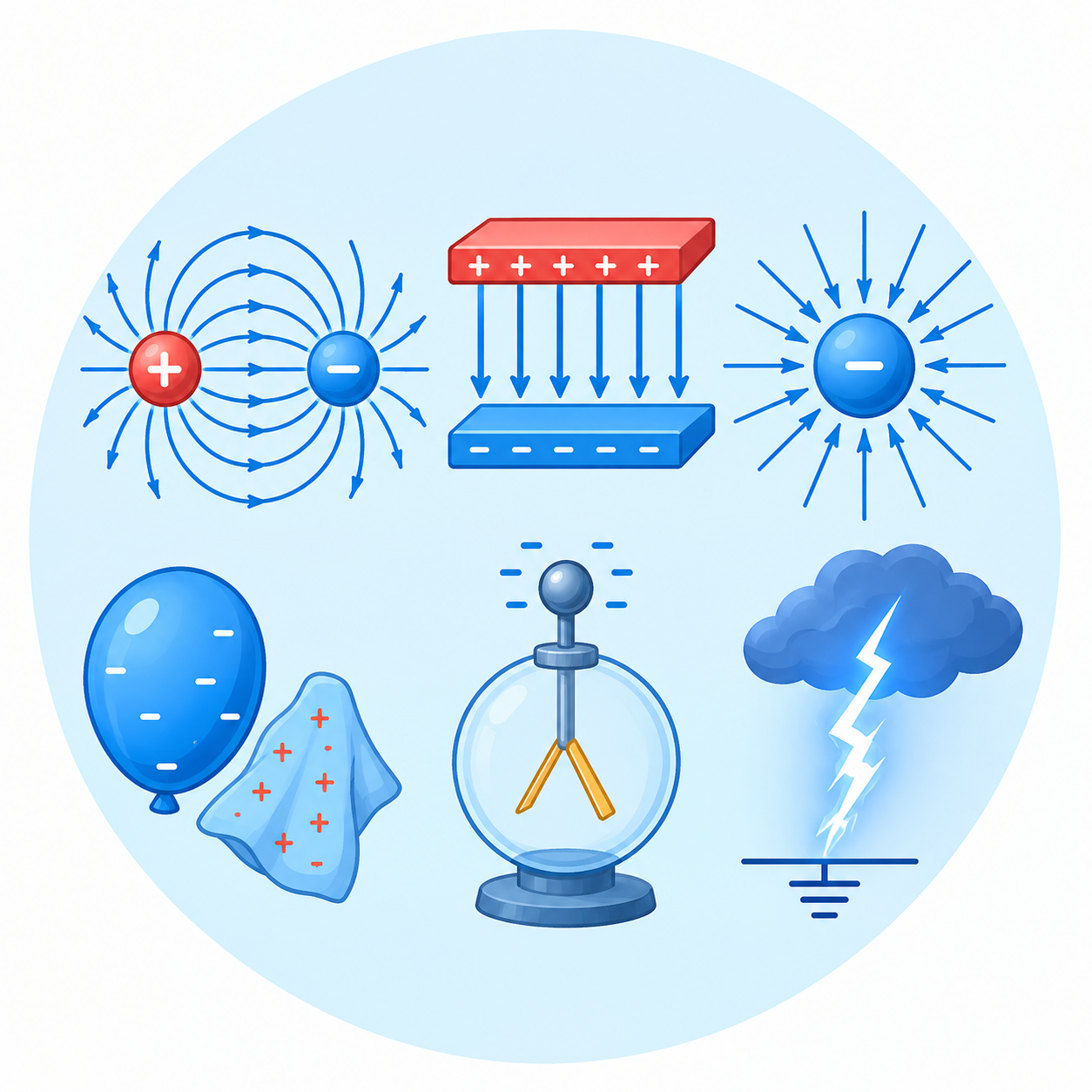
Master Faraday's laws, electrode potentials, electrolytic cells, and galvanic cells for JEE.
Practice the reactions, preparations, and properties of the oxygen-containing organic family.
Navigate nucleophilic addition, condensation reactions, and named reactions for carbonyls.
Solve quantum numbers, orbital shapes, electronic configuration, and Bohr model problems.
Strengthen mole concept, stoichiometry, empirical formula, limiting reagent, percentage yield, and concentration expressions for JEE.
Solve all previous papers at your convenience by downloading PDFs. Every question has a detailed solution.
Practice JEE Mathematics topic-wise questions with detailed solutions. Strengthen every sub-topic to maximise your percentile.
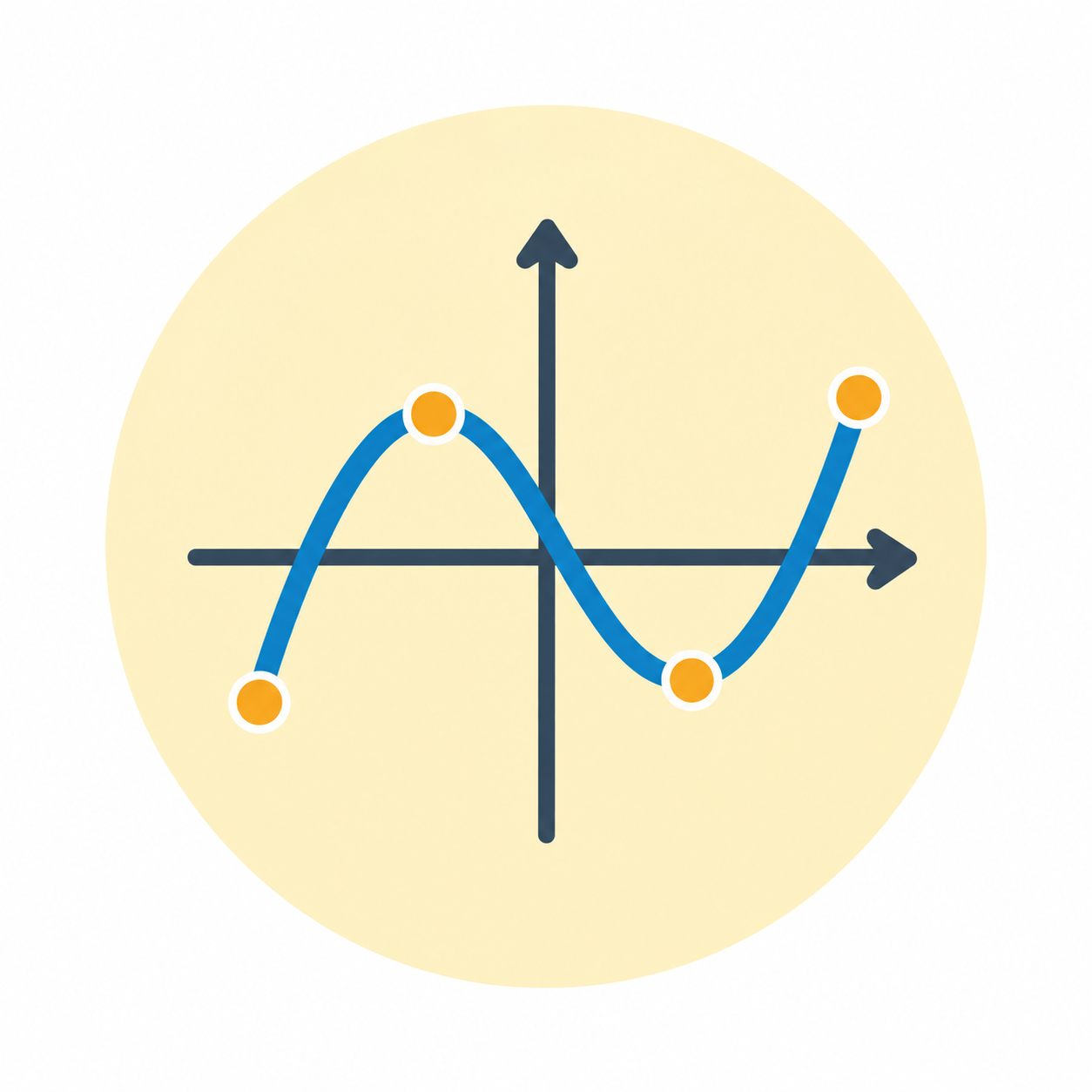
Practice domain and range, types of functions, composition, inverse, and binary relations

Solve general term, middle term, coefficient of xⁿ, and properties of binomial coefficients.
Work through continuity conditions, Rolle's theorem, LMVT, and differentiability at points.
Master definite integral properties, reduction formulae, and area under curves.

Solve first-order ODEs, linear differential equations, homogeneous equations, and their applications.
Practice JEE Physics topic-wise questions with detailed solutions. Strengthen every sub-topic to maximise your percentile.
Master energy conservation, work-energy theorem, and power calculations with JEE-level problems.

Conquer AC circuits, RLC resonance, transformers, and phasors through targeted practice.

Deepen your understanding of electric potential, capacitors, dielectrics, energy stored, and charge redistribution with JEE questions.

Master Faraday's and Lenz's laws, mutual induction, self-inductance, and eddy currents.

Cover Maxwell's displacement current, properties of EM waves, the electromagnetic spectrum, and communication applications.
Every JEE Mains or Advanced aspirant's preparation is not built in one night or one month. Most start their JEE preparation in 11th and 12th class, building on their early education fundamentals across Physics, Chemistry and Mathematics. However, not every chapter needs strong basics. Everyone has their weak topics and their share of mistakes. All you need to do is work on them. JEE Mains preparation is tough, but it's not impossible to stand at the 99th percentile. Start with JEE chapter-wise questions and then move to JEE sectional mock tests. But don’t think of taking full-length JEE mock tests only after the entire syllabus is finished. Take them ahead so that you can get familiar with the JEE exam asap.
The above are free, chapter-wise JEE practice questions that can be your Excalibur in your preparation journey. We know Physics, Chemistry, and Mathematics need separate approaches and different preparation strategies to solve questions.
Also, not every topic in them is full of differentiation formulas; some are heavily theory-based, where you can expect direct questions such as p-Block and s-Block.To be at that stage, reading alone won’t help, but practising does. Go through the NCERT Solutions first to have proper fundamentals and then shift to your JEE practice.
Subject | Useful Next Step |
Physics | Solve relevant previous-year questions |
Chemistry | Revise formulas, reactions, and important facts |
Mathematics | Move to mixed and timed practice |
Before entering the questions, take 10 to 15 minutes to go through the main points and formulas of that chapter. This can help you think about that topic. Physics becomes easier when you stop treating every problem as a completely new question. Once you solve a problem, look at why a particular equation was used while solving that JEE physics questions, whether there was a shorter way to solve it, and will that trick is valid for all similar questions or if there are any exceptions.
JEE Chemistry questions covers Physical, Organic, and Inorganic Chemistry, so your practice should follow the nature of the chapter. For Physical Chemistry, practise calculations until the formulas become familiar. In Organic Chemistry, pay attention to reaction patterns and the conditions given in the question. In Inorganic Chemistry, use questions to check whether you can recall and apply the facts you have studied.
Practise JEE Mathematics questions such as Quadratic Equations, Sequences and Series, Matrices and Determinants, Limits, Continuity, Differentiation, Integration, Coordinate Geometry, Probability, and Vectors. If you repeatedly take too long on one type of problem, mark those questions and return to them during revision.
Suppose you have just finished Electrostatics in Class 12. You understand the theory and have revised the formulas, but you are still unsure whether you can handle an actual JEE-level problem. To boost that confidence, you need to take chapter-wise practice questions.
Instead of opening a three-hour paper and finding questions from topics you have not studied yet, you can practise questions specifically from that particular chapter from the JEE syllabus PDF.
Cracku's 12000+ JEE chapter-wise questions are designed to support this approach. You can use them to:
This makes your JEE Mains preparation more manageable, especially during the first few months when the syllabus can feel much larger than it actually is.
Based on the JEE previous-year papers, the chapter-wise weightage can give you a reality check on where questions have appeared more often.
Physics usually rewards strong command over Mechanics, Electrodynamics and Modern Physics. Use the weightage as a guide to decide where your question practice needs more time.
Key Topics | Approx. Questions | Approx. Weightage |
Mechanics | 6–7 | 24–28% |
Electrostatics & Current Electricity | 4–5 | 16–20% |
Modern Physics | 3–4 | 12–16% |
Magnetism & Electromagnetic Induction | 2–3 | 8–12% |
Optics | 2–3 | 8–12% |
Thermodynamics & Kinetic Theory | 2–3 | 8–12% |
Chemistry spreads questions across Organic, Physical and Inorganic Chemistry. A chapter-wise view helps you spot recurring areas before you start drilling into JEE Chemistry Questions.
Key Topics | Approx. Questions | Approx. Weightage |
Organic Chemistry | 7–9 | 28–36% |
Chemical & Ionic Equilibrium | 2–3 | 8–12% |
Electrochemistry | 2–3 | 8–12% |
Coordination Compounds | 2–3 | 8–12% |
Chemical Bonding | 2–3 | 8–12% |
p-Block, d-Block & f-Block | 2–3 | 8–12% |
Thermodynamics & Chemical Kinetics | 2–3 | 8–12% |
Maths has a wide syllabus, but Calculus, Algebra and Coordinate Geometry consistently occupy a sizeable part of the paper. That makes them useful starting points when you are building your JEE Maths Questions practice set.
Key Topics | Approx. Questions | Approx. Weightage |
Calculus | 7–8 | 28–32% |
Algebra | 5–6 | 20–24% |
Coordinate Geometry | 4–5 | 16–20% |
Vectors & 3D Geometry | 2–3 | 8–12% |
Trigonometry | 2–3 | 8–12% |
Probability & Statistics | 1–2 | 4–8% |
Sequences, Binomial & P&C; | 1–2 | 4–8% |
Knowing the JEE Main exam pattern before you start solving JEE Questions can save you from a few surprises on exam day. The Paper 1 pattern has three subjects, 75 questions and 300 marks, with both MCQs and numerical-value questions.
Particular | JEE Main Paper 1 Details |
Subjects | Physics, Chemistry and Mathematics |
Mode of Exam | Computer-Based Test (CBT) |
Total Questions | 75 |
Questions per Subject | 25 |
Total Marks | 300 |
Section A | 20 Multiple Choice Questions (MCQs) |
Section B | 5 Numerical Value Questions |
Marks for Correct Answer | +4 |
Negative Marking | -1 for an incorrect answer in both sections |
Unattempted Question | 0 marks |
Duration | 3 hours |
Language | English, Hindi and other languages as notified by NTA |
Numerical Questions | Enter the numerical value as the answer instead of selecting an option |
You don't need to solve 100s of questions on the same concept. Work on different model questions, understand the trick behind them, and move to the next chapter, but make sure you don't leave that concept completely.
JEE Resource | When to Use It | What You Learn |
JEE Topic-wise questions | After learning a concept | Whether you understand the concept |
JEE Chapter-wise questions | After finishing a chapter | Whether you can apply the chapter |
JEE Previous-year questions | After basic practice | How JEE frames the concept |
JEE Full papers | During revision | How chapters work together |
JEE Full Mock tests | Closer to the exam | Speed, accuracy, and time management |
Taking Free JEE Mains mock test before you have enough syllabus to make the result meaningful. A low score in an early mock does not automatically mean you are weak at the JEE exam. You may simply have several chapters left to study. Use the result to identify gaps, then return to targeted practice.
Here is a simple routine you can repeat throughout Class 11 and Class 12 during your JEE preparation.
1. Finish the basic theory
Understand the formulas, definitions, reactions, graphs, and standard methods before attempting difficult problems.
2. Start with chapter-wise practice
Do not worry about speed during your first round. Your first goal is to understand how the concept works in a question.
3. Mark questions that trouble you
You can use simple labels:
These labels are much easier to revise later.
4. Study the solution properly
Getting an answer wrong is not wasted effort. The mistake tells you what needs attention. Go through the provided JEE Video solutions and compare it with your own approach. Ask yourself: “Where did my method stop working?”
5. Reattempt without looking
Close the solution and solve the question again after a short gap. This small step is often more useful than immediately moving to another problem.
6. Test yourself later
After completing a few chapters, attempt mixed questions or an online JEE sectional mock test. This checks whether you can recall the right method when the chapter name is no longer given to you.
There is no magic number that guarantees a good JEE score. If you are learning a new chapter, even 15 carefully attempted questions can be productive. If the basics are strong, you may be able to handle a larger mixed set.
Quality matters because a question has more value when you:
Solving 50 questions without reviewing your errors can leave the same weaknesses untouched.
On a busy school day, you may have less practice time. On a weekend, you may have more. Build a routine that you can actually maintain rather than following an unrealistic target for a few days and abandoning it.
Questions become much easier to manage when your supporting JEE study material is organised too. Cracku provides several free resources that can fit around your regular study schedule.
Resource | Use it for |
Practising beyond one chapter | |
Checking actual exam questions | |
JEE Mock Tests | Practising complete papers |
Quick revision before practice | |
Maintaining a regular practice routine | |
JEE Study Material | Revising concepts and supporting practice |
Suppose you solve 20 questions and get only 9 right. Those 11 mistakes are not 11 reasons to feel behind. They are 11 places where your preparation has given you specific feedback. JEE preparation can look overwhelming when you look at the entire syllabus together. It becomes much more manageable when you focus only on the chapter in front of you.
Finish the basics. Solve questions. Check your mistakes. Reattempt them. Solve previous-year questions. Then move forward. After a few months, these small chapter-level efforts start connecting. Topics begin to overlap, mixed questions become easier to recognise, and full papers stop feeling completely unfamiliar.
Cracku's JEE question resources are built to help you follow that journey, from your first chapter-wise practice session to the stage where you are solving a complete JEE test under exam conditions.
Cracku offers 12000+ free JEE topic-wise questions with step-by-step text solutions and video explanations, curated by JEE AIR 20 and IIT faculty to ensure quality and relevance for JEE 2027.
These questions are designed primarily for JEE Mains preparation. They cover the core Mains‑level concepts and problem types, with a focus on speed, accuracy, and topic‑wise clarity, so they work best if your main goal is to ace JEE Mains.
Absolutely. The questions is continuously reviewed and updated to align with the latest NTA JEE 2027 syllabus, ensuring all topics, weightages, and question patterns are current and relevant.
Cracku provides 12000+ free JEE questions across Physics, Chemistry, and Mathematics with complete step-by-step solutions and video explanations by JEE AIR 20 and IIT faculty.
Yes. All JEE questions with video solutions are fully accessible on both the Cracku website and the Cracku mobile app (rated 4.6/5 on Google Play), so you can Practice anytime, anywhere.
The core JEE questions with detailed solutions is free. Cracku also offers a premium JEE Q.Bank and structured JEE 2027 courses for aspirants who want guided preparation with additional mock tests, live classes, and mentorship.
Educational materials for JEE preparation