MAH MBA CET Sample Paper 2025
Digvijay, Gayatri, Falguni, Mahima, Tanya, Sachin, Lalit and Abhinav are lawyers who attend an interview. One interview is held on each day of the week from Monday to Saturday and two interviews are held on Sunday. The interviewer asks questions on any one of the subjects among company law, the Indian penal code, the Indian bankruptcy code, administrative law, constitutional law, jurisprudence, land laws and family law. Also, among the candidates’ two wear blazers, two wear ties, two carry files and two wear moccasins, each candidate has at least one of the above.
Additional information which has been given:
1. Digvijay who is interviewed on a Wednesday does not wear a blazer. Administrative law is asked on a Saturday.
2. The interviewer tries to schedule interviews such that the first letter of the day is the same as the candidates' initials.
3. The ones who carry files are either asked questions on land laws or on company law and are interviewed before Thursday.
4. The ones who wear blazers are interviewed on consecutive days which is not over the weekend.
5. If Mahima is asked questions on land laws then Abhinav will be asked on family law and vice-versa. There must be at least one day in between Mahima and Gayatri’s interview.
6. Gayatri does not know about the Indian bankruptcy code so she fails the interview.
7. Sachin and Abhinav wear moccasins while Lalit’s interview is the last and he is asked about Jurisprudence.
8. The one interviewed on Wednesday wears the same attire as what one of the candidates wears on Sunday.
MAH MBA CET Sample Paper 2025 - Question 21
What subject is asked to Mahima?


MAH MBA CET Sample Paper 2025 - Question 22
Which of the following subjects is asked on the weekend?
Read the below information carefully and answer the following questions.
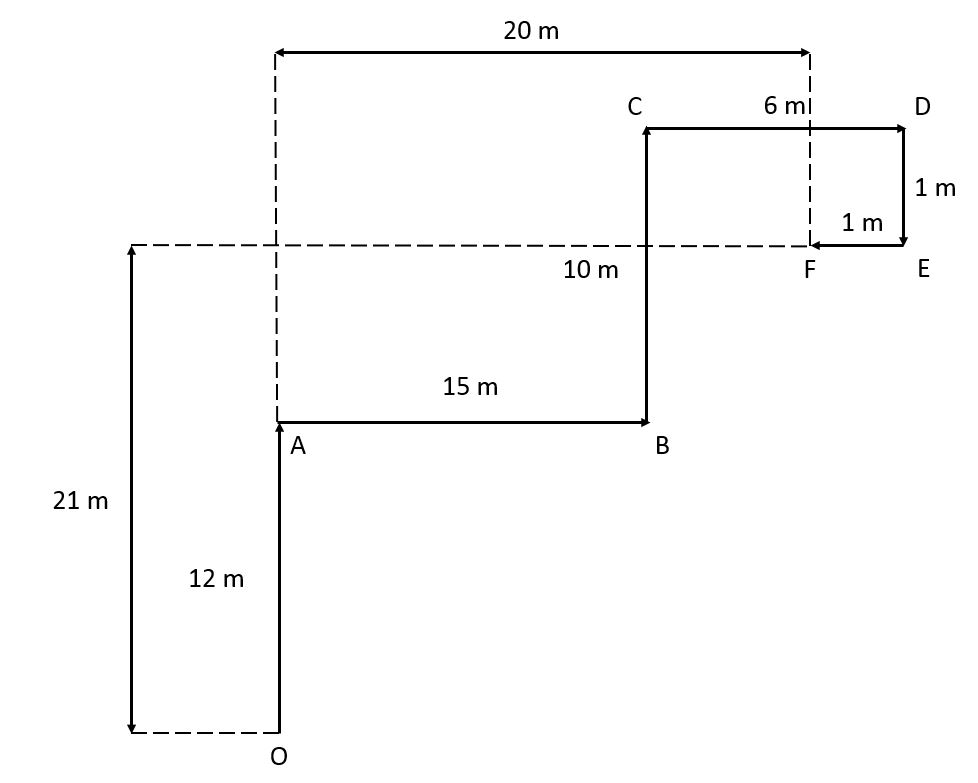
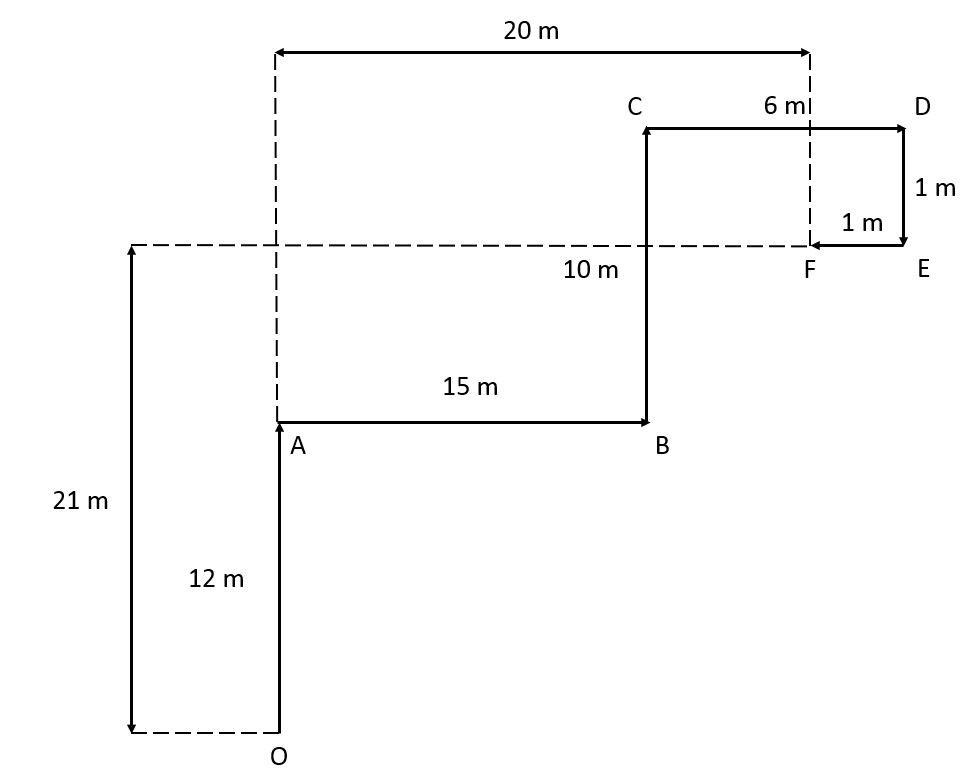
Rahul moves 12 m in North direction from a point O to reach point A. He turns right and moves 15 m to reach point B. Then he turns left and moves 10 m to reach a point C. She turns right and moves 6 m to reach a point D. He again turns right and moves 1m to reach point E. He further turns right and moves 1m to reach point F
MAH MBA CET Sample Paper 2025 - Question 23
Find the shortest distance between the initial position and final position?
MAH MBA CET Sample Paper 2025 - Question 24
If Rahul stops after reaching at point E, in which direction he should look to clearly see his initial position?
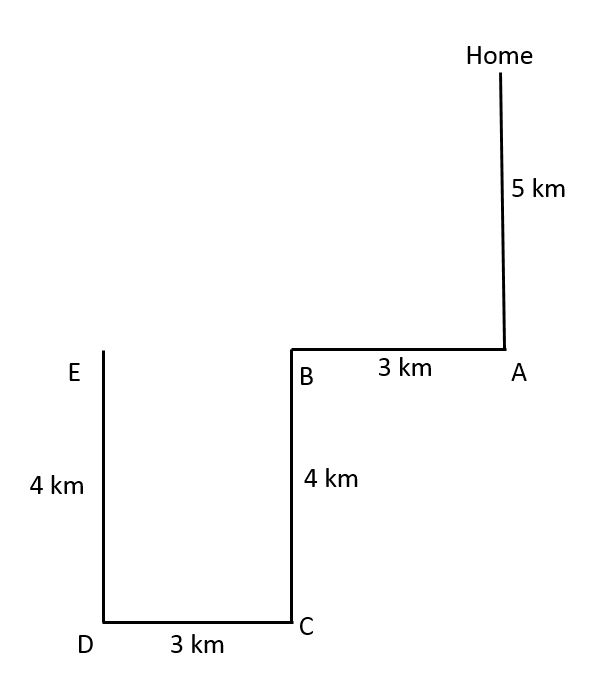
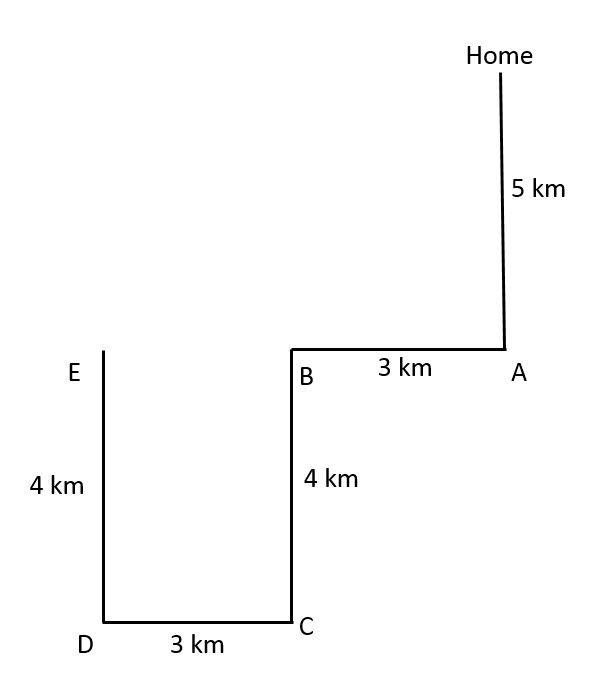
Ram starts from his home in the morning and moves towards south. He walks straight for 5 km to reach point A. He takes a right turn at A and travels for another 3 km to reach point B. He takes another left turn and walks for 4 km to reach point C. At C, Amit takes a right turn and walks for 3 more km to reach point D. At D, he takes a right turn and travels for 4 km to reach point E.
MAH MBA CET Sample Paper 2025 - Question 25
What is the shortest distance between point B and point E?
MAH MBA CET Sample Paper 2025 - Question 26
What is the shortest distance between Ram’s home and point E?
For the following questions answer them individually
MAH MBA CET Sample Paper 2025 - Question 27
Neeraj starts from his home and heads west. He travels 5 km and then takes a right turn and travels for 4 km. He takes a right turn and travels another 6 km. After this he takes a left turn and travels for another 4 km. What is shortest distance of his current position from the starting point?

MAH MBA CET Sample Paper 2025 - Question 28
Read the following information carefully and answer the question that follows.
Instead of giving the tribals the community right as requested by them, the forest department officials came up with a proposal of sanctioning individual rights of two to three cents each, which the tribal turned down.
Which of the following assumption behind the tribals’ decision to turn down the proposal?
MAH MBA CET Sample Paper 2025 - Question 29
Cause: A severe cyclonic storm swept away most of the state during the last two days.
Which of the following cannot be a possible effect of the above cause?
In each question below is given a statement followed by two conclusion numbered I and II. You have to assume everything in the statement to be true, then consider the two conclusions together and decide which of them logically follows beyond a reasonable doubt from the information given in the statements.
MAH MBA CET Sample Paper 2025 - Question 30
Statement: The population increase coupled with depleting resources is going to be the scenario of many developing countries in days to come.
Conclusion:
I. The population of developing countries will not continue to increase in fucture.
II. It will be very difficult for the governments of developing countries to provide its people decent quality of life.
