91- 6303239042



 Group
Group
 Group
Group


 Preferred Source

 Google Discover
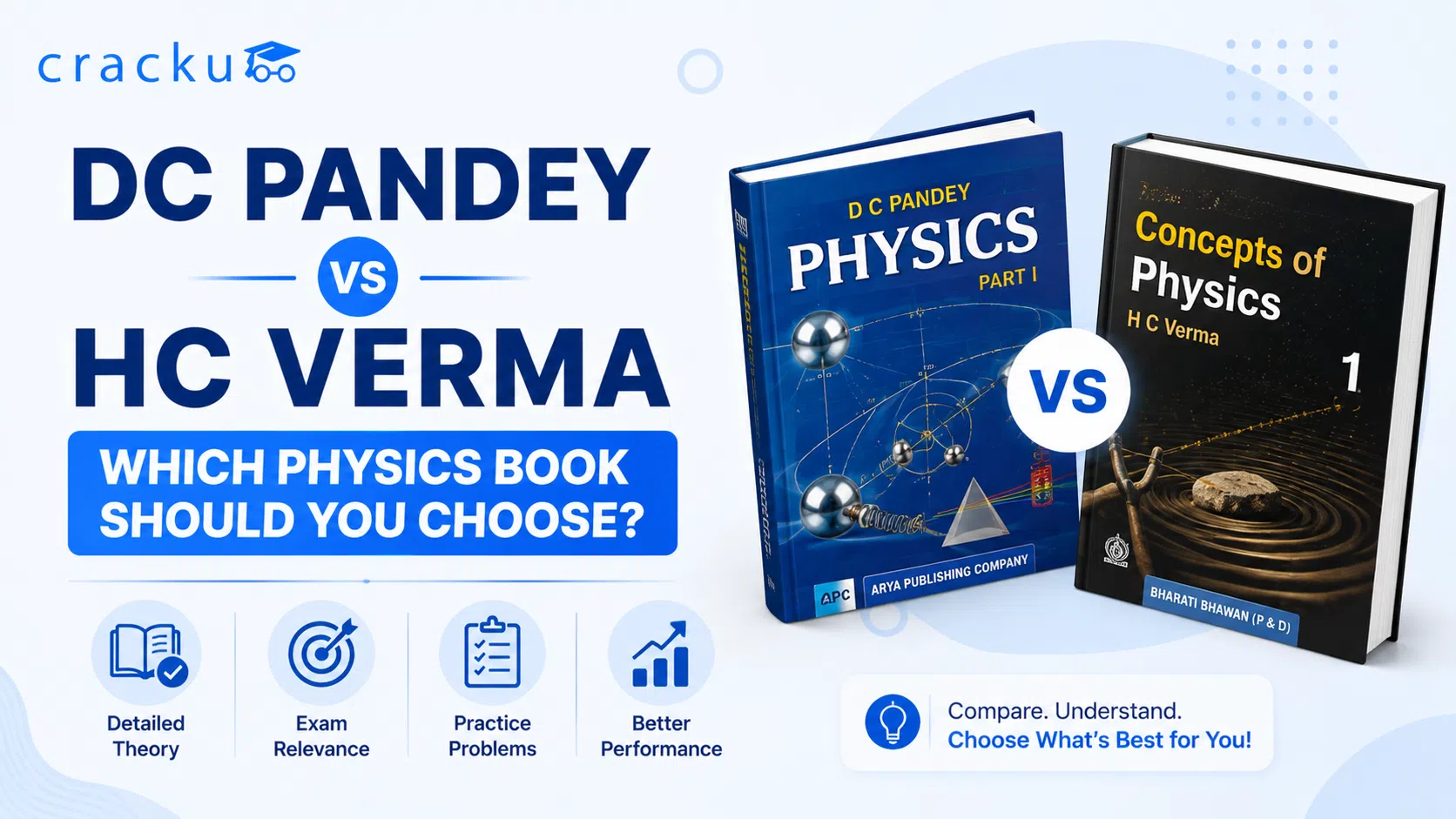
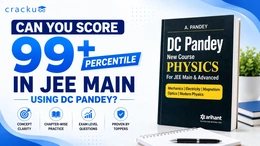
Both DC Pandey and HC Verma books are regarded among the best Physics books available for JEE preparation and are highly recommended by students and coaching institutes alike. While both books build Physics competence, they differ significantly in approach, theory style, and the type of learner they serve best. HC Verma is known for its mathematically mature, dense, and elegantly concise theory: powerful but demanding. DC Pandey, by contrast, offers exhaustive and explanatory theory with step-by-step derivations, making it highly accessible for self-study. The right choice depends on where a student currently stands in their preparation. The following is an elaborate comparison between HC Verma and DC Pandey.
DC Pandey vs HC Verma Overview
Both DC Pandey and HC Verma are widely used for Physics preparation for JEE and other competitive examinations. HC Verma demands mathematical maturity and rewards students who can read between the lines of its dense theory. DC Pandey scaffolds the learning process through exhaustive explanations, an extensive bank of solved examples, and strictly categorized problem sets. Understanding the true strengths of each book is essential before deciding how to use them.
Criteria | HC Verma | DC Pandey |
|---|---|---|
Publisher | Bharati Bhawan | Arihant Publications |
Number of Volumes | 2 | 5 |
Primary Focus | Deep Conceptual Depth | Concept + Structured Problem Practice |
Theory Coverage | Crisp, Dense, and Mathematically Elegant | Highly Detailed, Exhaustive, Step-by-Step |
Question Bank | Moderate | Extensive |
Difficulty Levels | Smoothly Mixed in a Single Continuous Exercise | Strictly Categorized (Level 1, Level 2, Matrix Match, etc.) |
Suitable for Board Exams | Yes | Yes (includes dedicated subjective sections) |
Suitable for JEE Main | Good | Excellent |
Suitable for JEE Advanced | Excellent | Very Good |
Beginner Friendly | Less Suitable (requires teacher guidance) | Yes (hand-holds with solved examples and Introductory Exercises) |
Solutions | Final Answers and Short Hints Only | Detailed Step-by-Step Solutions / Comprehensive Hints |
Also Read: JEE Physics Books 2026, Check Topic-wise Preparation Books
DC Pandey vs HC Verma: Difficulty Level Comparison
HC Verma's theory, though concise, is mathematically mature and can be challenging for absolute beginners without external guidance. Its questions begin accessibly but transition smoothly into deeply conceptual problems within a single continuous exercise: there are no explicit level demarcations. DC Pandey's questions, on the other hand, are rigorously organized into Level 1 (targeting JEE Main and Boards), Level 2 (targeting JEE Advanced), and specialized question formats including Matrix Match, Comprehension-based, and Multiple Correct types. This structure makes DC Pandey systematically scalable in difficulty.
Parameter | HC Verma | DC Pandey |
|---|---|---|
Concept Clarity | Very High (dense; rewards careful reading) | High (detailed and explicitly explained) |
Number of Questions | Moderate | Very High |
JEE Main Preparation | Good | Excellent |
JEE Advanced Preparation | Excellent | Very Good |
Advanced Question Types | Good Coverage | Extensive and Explicitly Categorized Coverage |
Numerical Questions (NAT) | Limited | Strong Coverage |
Beginner Friendly | No (mathematically demanding from the start) | Yes (Introductory Exercises + abundant solved examples) |
Also Read: JEE Books 2026, Subject-wise Books for Mains & Advanced
DC Pandey vs HC Verma: Which Book Is Better for Class 11 Students?
For Class 11 students encountering competitive Physics for the first time, DC Pandey is actually the more accessible starting point. Its detailed theory, large number of worked examples, and Introductory Exercises allow students to build confidence chapter by chapter. HC Verma, while indispensable for deep conceptual mastery, is best approached once a student has enough mathematical fluency to engage with its terse explanations productively.
Class 11 Chapter | HC Verma | DC Pandey |
|---|---|---|
Kinematics | Yes | Yes |
Laws of Motion & Friction | Yes | Yes |
Rotational Mechanics | Yes | Yes (strong; can be used as primary source) |
Work, Energy & Power | Yes | Yes |
Gravitation | Yes | Yes |
Thermodynamics | Yes | Yes |
Waves & Oscillations | Yes | Yes |
Recommended approach:
Begin with DC Pandey's theory and solved examples to build a solid working understanding of each chapter. Then read the corresponding chapter in HC Verma to deepen and stress-test your conceptual grasp. Finally, solve HC Verma's exercises alongside DC Pandey's Level 1 and Level 2 problems for comprehensive coverage. Pair this study approach with Cracku's JEE Study Material for exam-relevant notes and topic-wise coverage designed to complement your book-based preparation
Also Read: How to Choose the Right JEE Foundation Course for Your Child?
DC Pandey vs HC Verma: Which Book Is Better for Class 12 Students?
For Class 12 students, both books remain essential but serve complementary roles. HC Verma is exceptional for achieving the depth of understanding that JEE Advanced demands, particularly in chapters like Electrostatics, Optics, and Modern Physics. DC Pandey provides structured, extensive problem practice across all difficulty levels and includes dedicated subjective question sections that are directly useful for board exams: making it a more complete self-study resource for the JEE Main and Board combination.
Class 12 Chapter | HC Verma Priority | DC Pandey Priority |
|---|---|---|
Electrostatics | High: Dense theory rewards deep conceptual reading | High: Extensive problem sets across all difficulty levels |
Current Electricity | Medium: Good for foundational theory | High: Strong collection of circuit-based problems at all levels |
Magnetism & Moving Charges | High: Builds rigorous conceptual clarity | High: Comprehensive structured problem practice |
Electromagnetic Induction & AC | High: Clear and precise theoretical coverage | High: Well-categorized problem sets reinforce concepts |
Ray Optics | Medium: Covers fundamentals cleanly | High: Wide variety of JEE-level questions |
Wave Optics | High: Strong conceptual explanations for advanced treatment | Medium: Helpful for additional practice |
Modern Physics | High: Ideal for deep conceptual understanding | High: Comprehensive coverage with well-structured JEE-level questions |
For Class 12 students targeting JEE Main, DC Pandey should anchor daily practice given its structured levels and detailed solutions. HC Verma should be used for conceptual reinforcement and for chapters where deeper theoretical understanding is the differentiator at JEE Advanced level. Complement DC Pandey with Cracku's JEE Question Bank to access a wide range of topic-wise and difficulty-wise questions tailored for JEE Main and Advanced.
Also Read: Free JEE Foundation Webinar by JEE AIR 20, Register Now
DC Pandey vs HC Verma: Which Physics Book Should Beginners Choose?
Contrary to popular advice, DC Pandey is the more beginner-friendly of the two. Its theory is exhaustive and self-explanatory, its solved examples are numerous and progressively paced, and its Introductory Exercises allow beginners to validate their understanding before moving to harder problems. HC Verma's theory, by contrast, is dense and mathematically mature: it is powerful, but beginners without a teacher to bridge the gaps can find it frustrating rather than illuminating. The ideal progression for a beginner is to use DC Pandey to establish understanding first, and then use HC Verma to stress-test and deepen it.
Step | Resource | Purpose |
|---|---|---|
1 | NCERT Physics (Class 11 & 12) | Build a foundational understanding; essential for Boards and JEE basics. |
2 | DC Pandey (Theory + Solved Examples + Introductory Exercises) | Develop working understanding through detailed explanations and confidence-building practice. |
3 | HC Verma Vol. 1 & 2 | Stress-test and deepen conceptual understanding; engage with mature physics reasoning. |
4 | DC Pandey Level 1 & Level 2 Problems | Structured, difficulty-scaled problem practice for JEE Main and JEE Advanced. |
5 | JEE Previous Year Papers | Understand exam patterns, question trends, and high-priority topics. |
6 | Full-Length Mock Tests | Improve speed, accuracy, and time management under exam conditions. |
Start with DC Pandey. Read the theory carefully, study the solved examples, and complete the Introductory Exercises. Once you have a working command of each chapter, read the corresponding section in HC Verma to engage with its deeper, more demanding treatment of the same concepts. Jumping straight into HC Verma without any prior Physics foundation often leads to discouragement: its conciseness is a feature for prepared readers, not a guide for absolute beginners.
Also Read: When Should Students Join a JEE Foundation Course?
DC Pandey vs HC Verma: Which Book Do JEE Toppers Recommend?
Most JEE toppers do not treat these as competing books. They use both strategically: DC Pandey to build and practice, HC Verma to think deeply.
Student Type | Recommended Approach |
|---|---|
Beginner in Class 11 | Use DC Pandey as the primary book for theory and early problem-solving; introduce HC Verma progressively for conceptual depth once the basics are established. |
Class 12 Student Targeting JEE Main | Focus on DC Pandey Level 1 problems and NCERT; use HC Verma selectively for chapters requiring deeper understanding. |
JEE Advanced Aspirant (Top Rank Target) | Use both books equally: DC Pandey for structured, level-wise problem practice and HC Verma for the kind of deep conceptual reasoning that JEE Advanced demands. |
Student with Limited Time (Final Months) | Prioritize DC Pandey Level 1 and Level 2 exercises alongside JEE previous year papers; revisit HC Verma only for conceptually weak chapters. |
Board Exams + JEE Main Preparation | Use DC Pandey as the core resource: it includes dedicated subjective question sections suitable for Boards alongside its JEE-oriented problem sets. |
NEET Aspirant | DC Pandey has a completely separate, highly popular "Objective Physics for NEET" series designed specifically for NEET. HC Verma is used by serious NEET aspirants strictly for core conceptual depth. |
One principle nearly every topper agrees on: solving previous year JEE papers is non-negotiable. Books give you knowledge and problem-solving ability; previous year papers show you exactly how that knowledge is tested under exam conditions.
Also Read: JEE Foundation Online vs Offline Course: Which One is Better?
DC Pandey vs HC Verma: Conclusion
Both DC Pandey and HC Verma are indispensable for serious Physics preparation, but each serves a distinct purpose that the other does not fully replace. DC Pandey excels at building working knowledge through exhaustive theory, abundant solved examples, and a rigorously structured problem bank. HC Verma excels at developing the kind of deep, mathematically mature conceptual understanding that separates top JEE Advanced performers. For NEET preparation specifically, DC Pandey's dedicated "Objective Physics for NEET" series is the more appropriate choice; HC Verma remains useful for serious NEET aspirants seeking conceptual depth beyond what standard NEET resources offer.
Your Situation | Recommended Book Strategy |
|---|---|
Starting Class 11 (Beginner) | Begin with DC Pandey for theory and structured practice; use HC Verma progressively to deepen understanding. |
Class 12 (JEE Main Focus) | Focus on DC Pandey and NCERT; use HC Verma for conceptually demanding topics. |
JEE Advanced Aspirant | Use both books together: DC Pandey for level-wise problem practice, HC Verma for conceptual rigour. |
Dropper Student | Revise theory through DC Pandey's detailed explanations; practice extensively with DC Pandey Level 2 and HC Verma's toughest exercises. |
Limited Time Available | DC Pandey Level 1 and 2 for efficient, structured JEE Main practice; HC Verma for targeted conceptual revision. |
NEET Preparation | Use DC Pandey's dedicated "Objective Physics for NEET" series as the primary resource; refer to HC Verma only for deep conceptual reinforcement on challenging topics. |