
 Group
Group
 Group
Group


 Preferred Source

 Google Discover
JEE Books 2026
Are you preparing for JEE? But do you know which books are qualified and help you deal with the exact JEE Mains questions and topics? Also, don’t just randomly pick the books based on YouTube channels and any toppers' suggestions. It's good to listen, but you should know where you stand first.
Limited JEE books, strong concepts, and regular practice lead to better results. JEE preparation is not about collecting resources. It is about using the right ones properly. A focused plan always beats a random study. This guide explains the best books for JEE Main and Advanced 2026, subject-wise choices, and how to avoid common mistakes. The aim is simple. Clear doubts. Save time. Build confidence.
Best Books for JEE Mains and Advanced 2026
What kind of JEE books are needed? Concept books or Problem books? The answer is both.
Some books help in understanding theory. Others improve speed and accuracy. A balance is important.
Here is a clear overview:
| Subject | Book Name | Author | Purpose |
| Mathematics | Objective Mathematics | R D Sharma | Basics + Practice |
| Mathematics | Cengage Mathematics Set | G. Tewani | Concepts + Advanced |
| Mathematics | Advanced Problems | Vikas Gupta, Pankaj Joshi | High-Level Practice |
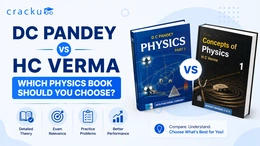
| Physics | Concepts of Physics (Vol 1 & 2) | H C Verma | Concept Clarity |
| Physics | Physics Galaxy Set | Ashish Arora | Structured Learning |
| Physics | Problems in General Physics | I E Irodov | Advanced Practice |
| Chemistry | Advanced Problems in Organic Chemistry | M S Chouhan | Advanced Practice |
| Chemistry | Physical Chemistry Problems | Narendra Avasthi | Numericals |
| Chemistry | Inorganic Chemistry | O P Tandon | Reference |
A simple rule works here. Do not use all JEE books together. Pick a few and complete them fully.
JEE Subject-Wise Books
Let’s see which book is best for each subject. But remember, just picking the best JEE books is not sufficient, practicing and understanding the concepts is a must.
JEE Mathematics Books
Why does JEE Maths feel tough? Because many students skip the basics and jump to hard questions.
Start slow. Build step by step.
Recommended Books:
| Level | Book |
| Beginner | R D Sharma |
| Intermediate | Cengage / Arihant |
| Advanced | Vikas Gupta |
Best Order to Follow: Lecture notes → Coaching material → Cengage/Arihant → Advanced problems
This order improves clarity first. Then it builds problem-solving speed.
JEE Physics Books
Physics is not about memorising formulas. It is about understanding concepts.
Still confused about where to begin?
Recommended Books:
| Level | Book |
| Beginner | Physics Galaxy |
| Intermediate | H C Verma |
| Advanced | Irodov |
Best Order to Follow: Physics Galaxy → Coaching material → H C Verma → Irodov
Why this order? Because strong basics reduce mistakes later.
JEE Chemistry Books
Is Chemistry easy or hard? It depends on the approach.
Some parts need memory. Others need practice.
Recommended Books:
| Section | Book |
| Base | NCERT Textbooks |
| Organic | M S Chouhan |
| Physical | Narendra Avasthi |
| Inorganic | O P Tandon |
Best Order to Follow: NCERT → Coaching material → Reference books
Skipping NCERT is risky. Many direct questions come from it.
Is NCERT Enough for JEE 2026?
It is true that NTA uses NCERT concepts, but you require in depth understanding to solve high level problems. So, if you think that the NCERT text books enough, then you are not in a good direction. Let’s see a simple analysis in the table below.
| Subject | Is NCERT Enough? | Reason |
| Chemistry | Yes (mostly) | Direct questions appear |
| Physics | No | Needs more problem practice |
| Mathematics | No | Requires higher-level questions |
So what should be done? Use NCERT as the base. Then move to practice books.
Many students ignore NCERT. That is a mistake. At the same time, relying only on NCERT is also not enough. Balance is the key.
How to Choose the Right Books for JEE Preparation
Still if you are confused about selecting JEE books from the above list, check the steps below
Ask these small questions:
Does this book match the current level?
Is the theory easy to understand?
Are there enough practice questions?
Can the book be completed fully?
If the answer is yes, the book is good.
Follow these practical tips:
Limit the number of books: Too many books create confusion. Start with two per subject.
Focus on completion: Half-reading five books is useless. One book done properly is enough.
Follow a fixed order: Random switching of conceptual and practice books breaks flow. Stick to one plan, believe in it, and work consistently.
Practice PYQs regularly: Previous year questions show the real exam level.
Revise again and again: Revision improves retention. Without revision, concepts fade.
A clear plan reduces stress. It also saves time. Gives better results.
Common Mistakes Students Make While Selecting JEE Books
Mistakes slow down your JEE preparation. Avoid them early and attain a good percentile.
Collecting too many books
More JEE books do not mean better preparation. It only increases confusion and takes up a lot of time.
Starting advanced books too early
Advanced problems need strong basics. Without that, progress stops, and you feel an inferiority complex, resulting in creating distress and less interest in concepts.
Ignoring NCERT
This is common in Chemistry. In general, students avoid organic chemistry because of its conceptual depth. Many easy marks are lost here.
Constantly changing resources
Switching books again and again breaks consistency.
Skipping PYQs
PYQs are one of the most important tools. They show real patterns. At least one practice per two weeks at the start is important.
Not revising
Learning new topics without revision leads to forgetting old ones. Also, analysing the mock tests, answers, or methods you use is a must. This improves your score and maintains the accuracy.
JEE Books 2026: Conclusion
Choosing the right JEE Books 2026 plays a crucial role in your preparation journey. Instead of collecting multiple resources, focusing on a few well-selected books and completing them thoroughly can lead to better understanding and improved performance. NCERT should always be your foundation, especially for Chemistry, while additional books help strengthen problem-solving skills in Physics and Mathematics.
Success in JEE preparation depends not just on the books you choose but on how effectively you use them. Regular practice, solving previous year questions, and consistent revision are key factors in achieving a good score. By following a structured plan and avoiding common mistakes, you can make your preparation more efficient and increase your chances of success.
.webp)