91- 6303239042
 CAT WhatsApp Group



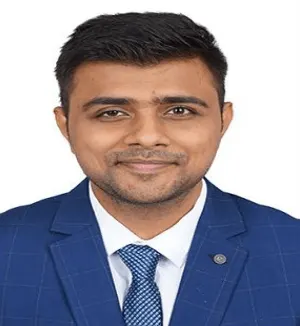
Darshin spent two years handling mergers, acquisitions, and private equity transactions at a corporate law firm in Mumbai - 12 to 14 hour days, long commutes in local trains, and barely an hour or two to study on most nights. Yet, on his third CAT attempt, he scored 99.92 percentile.
Why MBA After a Law Degree?
The question everyone asks - and Darshin has a clean, honest answer. "I do not want to do one thing for my entire life," he says simply.
The thought first came to him in his fourth year of law school, watching his brother run a startup and handle sales and marketing - things entirely outside his engineering domain. That struck a chord. Darshin didn't want to be narrowed into a niche for decades.
But he didn't rush in. He decided to first give law an honest shot - work for two years, apply what five years of law school taught him, and then make the switch. During those two years at his firm, he regularly interacted with private equity professionals and IIM alumni in leadership roles. That only confirmed the direction.
Two years of work experience is also the sweet spot for Indian MBA aspirants - enough to add value to your profile without being overqualified.
The Three-Attempt CAT Journey: From 96 to 99.92
Darshin's CAT story is one of steady, upward progression - but it wasn't without setbacks.
Year | Percentile | Preparation | Key Takeaway |
CAT 2023 | 96.28 | 2 months of sincere prep | Quant section was brutal; no math base after 7 years hurt badly |
CAT 2024 | 99.2 | No preparation | Sat just to stay in touch; easy paper led to a surprise score and a confidence boost |
CAT 2025 | 99.92 | Quit job; 3 months of focused prep | Strategic quant approach + composure delivered the best result |
Quitting the Job: A Risk He'd Already De-Risked
Leaving a well-paying corporate law job three months before CAT might sound bold. For Darshin, it was a calculated move. He already had two solid years of experience and strong relationships within his firm. If CAT hadn't gone well, he knew he could return to law without much trouble - people in his own firm would have rehired him. The exit was an option, not a gamble.
That mindset - taking a risk only after making sure the downside is manageable - is something he recommends to anyone considering a similar leap.
Quant Strategy for Non-Engineers: Attempt Less, Score More
Darshin hadn't studied mathematics formally since Class 12. Going into CAT preparation, he knew quant was his weakest area. So he built a strategy around that reality rather than ignoring it.
His approach was straightforward: cover Arithmetic and Algebra first - the topics that make up the bulk of the CAT quant section - and get those right. Then move progressively to Geometry. No spreading thin, no chasing every chapter. Just depth where it mattered most.
On exam day, his plan was to attempt 11 to 12 questions. He ended up attempting only 10 - but got all 10 correct. His raw quant score of 30 scaled up to 31.9, giving him the highest quant percentile among his three sections.
The broader principle he drew from this: "I'm not strong at quant, but I'll work so hard at quant that it will become my strength." That attitude, rather than avoidance, is what made the difference.
The Slot 3 Advantage Nobody Talks About
Darshin was in Slot 3 - the last slot of the day, often considered the toughest because candidates have been sitting with anxiety the longest. But he saw it differently. He had access to general feedback from friends who had appeared in earlier slots. The message was: Verbal is lengthy, DILR is difficult, Quant is difficult. His reaction? He became even more selective about what he'd attempt.
"Even if I miss 10 questions straight and have to attempt the 11th, I'll do it - because I know the next few might be manageable."
Knowing what was coming allowed him to calibrate his strategy in real time. For a non-engineer who was never going to brute-force quant, that kind of tactical clarity was invaluable.
Interview Season: Honest Answers Over Rehearsed Scripts
After scoring 99.92, Darshin converted IIM Bangalore, Calcutta, Kozhikode, Shillong, and Udaipur.
His interview philosophy was simple: be completely honest, so that answers stay coherent throughout. He acknowledged fumbling at points but maintained consistency because he wasn't performing - he was just telling his story.
His best interview was IIM Bangalore, where the panel was genuinely curious about his journey from Law to MBA. They smiled, nodded, and asked follow-up questions - a sign they were engaged, not evaluating on a checklist.
His toughest was FMS, where the panel asked him to list every law he knew, then picked one at random and drilled deep into it. He describes it as a luck factor - and one most aspirants will encounter at least once across their interview season.
One Mistake to Avoid, One Habit to Build.
When asked what he'd tell future CAT aspirants, Darshin didn't hesitate.
The Mistake: Chasing content from too many sources. In his first attempt, he collected questions from everywhere and ended up going wide instead of deep. His advice - if you have 500 questions, solve those 500 thoroughly before looking for 500 more. Depth beats breadth in CAT preparation.
The Habit: Stay calm during the exam. If you are calm, that is 60 to 70% of the battle won. Even if your mock scores are lower than you'd like, composure on exam day can push your percentile far beyond what practice suggests. CAT is a test of nerves, just stay calm on the D-Day and you will outperform yourself.
How Darshin Cracked CAT with 99.92%ile: Conclusion
Darshin’s journey from a corporate law firm to top IIM converts proves that CAT success is not limited to engineers or full-time aspirants. Despite long work hours and limited study time, he achieved a remarkable 99.92 percentile through smart preparation, focused practice, and exceptional composure during the exam.
His story highlights the importance of strategic preparation over random hard work. By focusing on strengths, improving weak areas steadily, and staying calm under pressure, aspirants from any background can crack CAT and secure admission into top MBA colleges successfully.