Join WhatsApp Icon JEE WhatsApp Group

JEE Electronic Devices Questions

Electronic Devices, often studied as Semiconductor Electronics, is a high-value chapter in the Modern Physics section of JEE Physics and a strong scoring area in JEE Main. It explains how semiconductors conduct, how junctions and diodes behave, how transistors amplify and switch, and how logic gates process binary signals. Because much of the chapter is conceptual and fact-based with straightforward calculations, JEE Electronic Devices questions are accessible and rewarding for well-prepared students. This chapter covers energy bands in solids, intrinsic and extrinsic semiconductors, p-n junction diodes, forward and reverse bias, rectifiers, special diodes such as the Zener and LED, the transistor and its configurations, transistor as an amplifier and switch, and digital logic gates with their truth tables. JEE Main typically tests diode behaviour, rectifiers, transistor action, and logic gates, while JEE Advanced may probe device characteristics more deeply. Practising topic-wise JEE Questions helps you fix device behaviour and logic-gate truth tables for quick, confident answers.
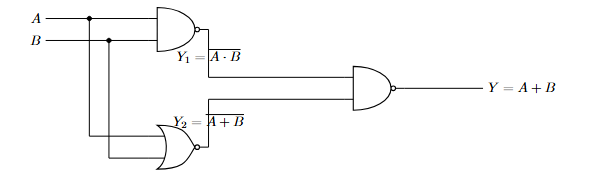
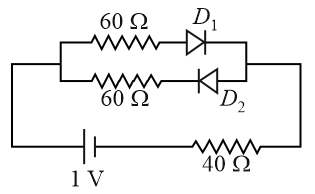
Because the chapter rewards clear understanding of how each device works rather than heavy computation, a focused study session secures its marks efficiently. It also rounds out the high-weightage Modern Physics unit, which is why careful aspirants give it dedicated attention.

Electronic Devices Topic Overview

Parameter

Details

Topic Name

Electronic Devices (Semiconductor Electronics)

Subject

Physics

JEE Main Weightage

~3–5% (1–2 questions on average)

JEE Advanced Weightage

~2–4% (often conceptual)

Difficulty Level

Easy to Moderate

Important Concepts

Semiconductors, p-n Junction, Diodes, Transistors, Logic Gates

Recommended Practice Level

High – attempt 50+ mixed problems

Why Practice JEE Electronic Devices Questions?

  • Accessible high weightage: This chapter contributes 1–2 mostly direct questions in JEE Main.
  • Concept and fact based: Device behaviour and logic gates reward understanding over heavy calculation.
  • Predictable patterns: Diode, transistor, and logic-gate questions repeat in familiar formats.
  • Quick logic-gate marks: Truth-table questions are fast and reliable to score.
  • Rounds out Modern Physics: It completes the high-weightage Modern Physics unit.
  • Efficient revision: A defined set of devices and facts covers most question types.
  • Practical relevance: The devices connect physics to real electronics.

Important Concepts and Subtopics

Concept

Importance

Difficulty Level

Frequently Asked In

Energy Bands & Semiconductors

High

Easy–Moderate

JEE Main

Intrinsic & Extrinsic Semiconductors

High

Easy–Moderate

JEE Main

p-n Junction & Biasing

Very High

Moderate

JEE Main & Advanced

Diodes & Rectifiers

Very High

Moderate

JEE Main & Advanced

Zener Diode & Special Diodes

High

Moderate

JEE Main

Transistor Action & Configurations

High

Moderate

JEE Main & Advanced

Transistor as Amplifier & Switch

Moderate

Moderate

JEE Main

Logic Gates & Truth Tables

Very High

Easy

JEE Main

Preparation Strategy for JEE Electronic Devices

Concept learning: Start with energy bands and the difference between conductors, semiconductors, and insulators, then study intrinsic and extrinsic semiconductors and doping. Master the p-n junction under forward and reverse bias, then diodes, rectifiers, transistors, and finally logic gates with their truth tables.

Formula revision: Keep diode and rectifier relations, transistor current relationships, and logic-gate truth tables together for quick review. Structured JEE Online Coaching helps you reinforce device behaviour and clear doubts on transistor action and logic problems efficiently.

Problem-solving techniques: For diode circuits, determine whether each diode is forward or reverse biased before analysing the circuit. For rectifiers, link input and output waveforms. For logic gates, build truth tables step by step and simplify combinations systematically.

Common mistakes: Misjudging diode bias direction, confusing half-wave and full-wave rectifier outputs, mixing up transistor configurations, and errors in combining logic gates.

Exam strategy: Treat logic-gate and diode questions as quick wins, answering them early, then handle transistor and characteristic-based questions that need more reasoning.

JEE Main & Advanced Weightage Analysis

Exam

Average Questions

Expected Marks

JEE Main

1–2

4–8

JEE Advanced

0–1 (often conceptual)

0–4

Electronic Devices is a steady, accessible contributor in JEE Main, mainly through diode, rectifier, transistor, and logic-gate questions. In JEE Advanced, it usually appears through conceptual device questions rather than heavy calculation.

Tips to Solve Electronic Devices Questions Faster

  • Determine each diode's bias direction before analysing a circuit.
  • Link rectifier input and output waveforms to identify half-wave versus full-wave behaviour.
  • Build logic-gate truth tables step by step, then simplify combined gates.
  • Recall the Zener diode's role in voltage regulation under reverse bias.
  • Keep transistor current relationships clear across the different configurations.
  • Memorise the standard logic-gate symbols and truth tables for instant recognition.

Reinforcing these with a timed JEE Mock Test helps you secure these accessible marks quickly and reliably.

JEE Electronic Devices Questions

Question 1

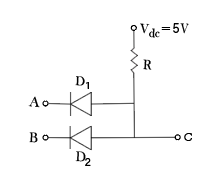
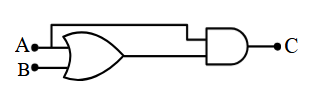
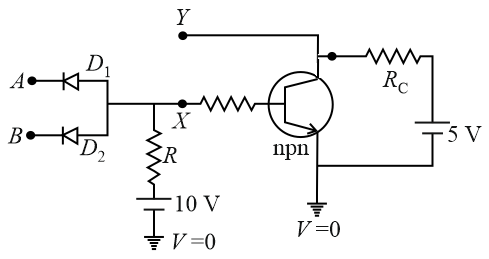
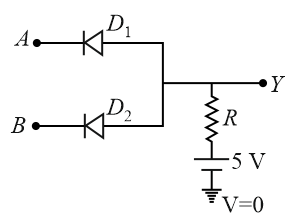
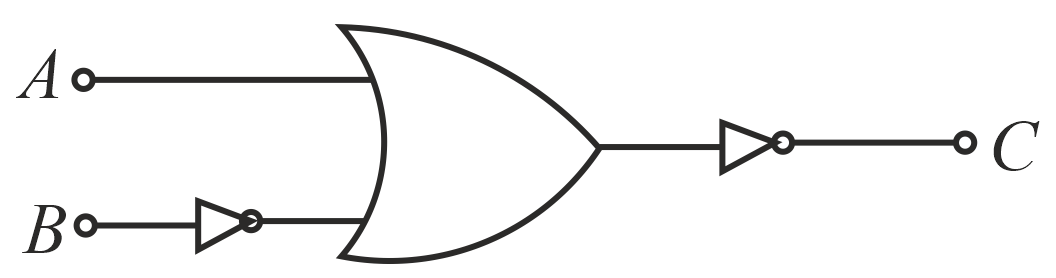
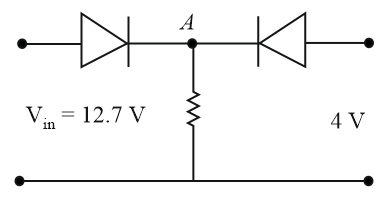
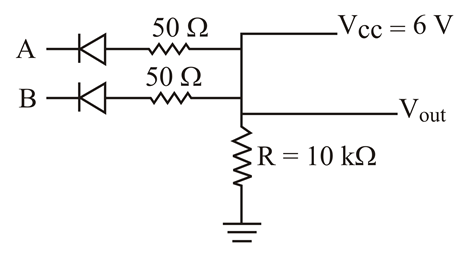
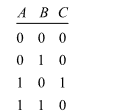
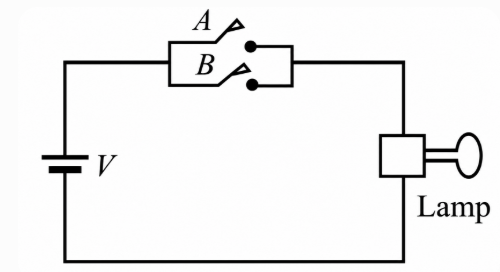
Two p-n junction diodes $$D_{1}\text{ and }D_{2}$$ are connected as shown in figure. A and B are input signals and C is the output. The given circuit will function as a________.

image
Video Solution
Question 2

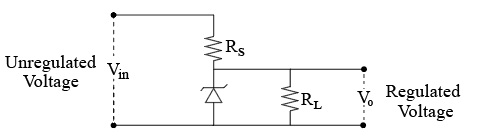
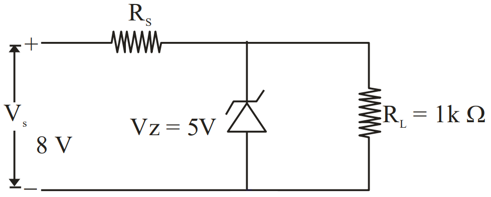
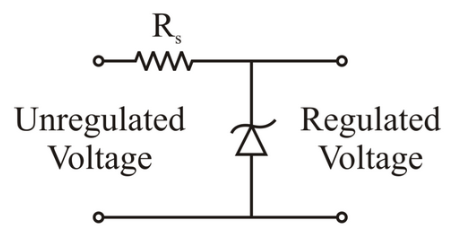
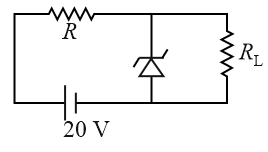
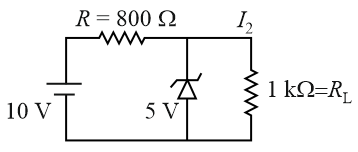
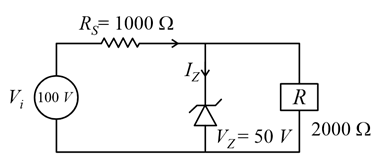
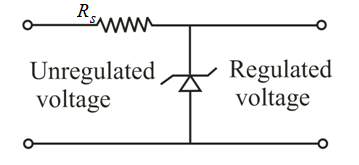
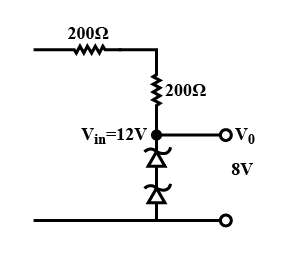
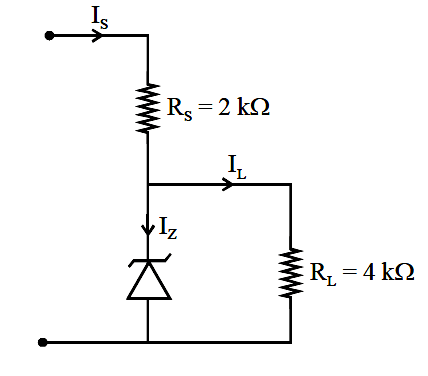
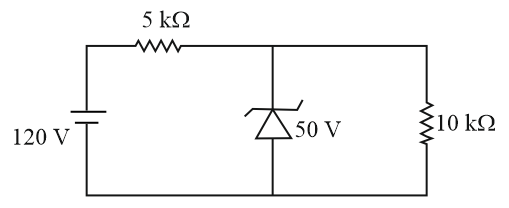
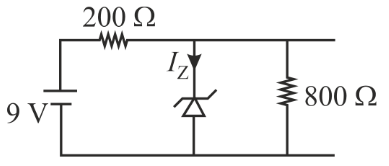
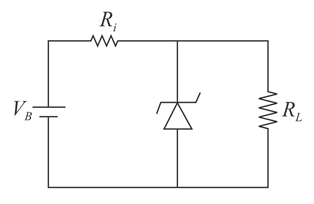
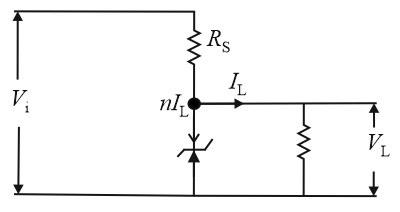
The following diagram shows a Zener diode as a voltage regulator. The Zener diode is rated at $$V_{z}=5V$$ and the desired current in load is 5 mA. The unregulated voltage source can supply upto 25 V. Considering the Zener diode can withstand four times of the load current, the value of resistor $$R_{s}$$ (shown in circuit) should be ____ Ω .

27
Question 3

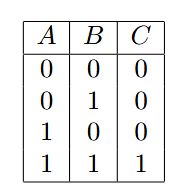
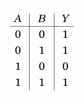
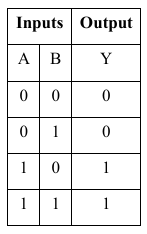
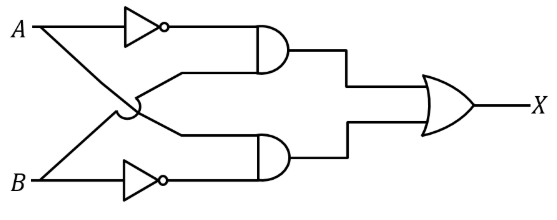
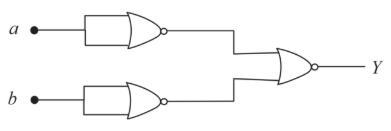
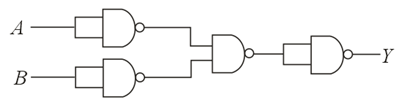
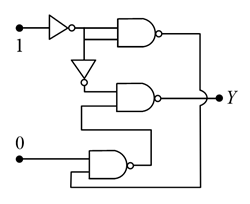
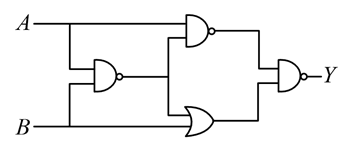
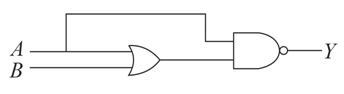
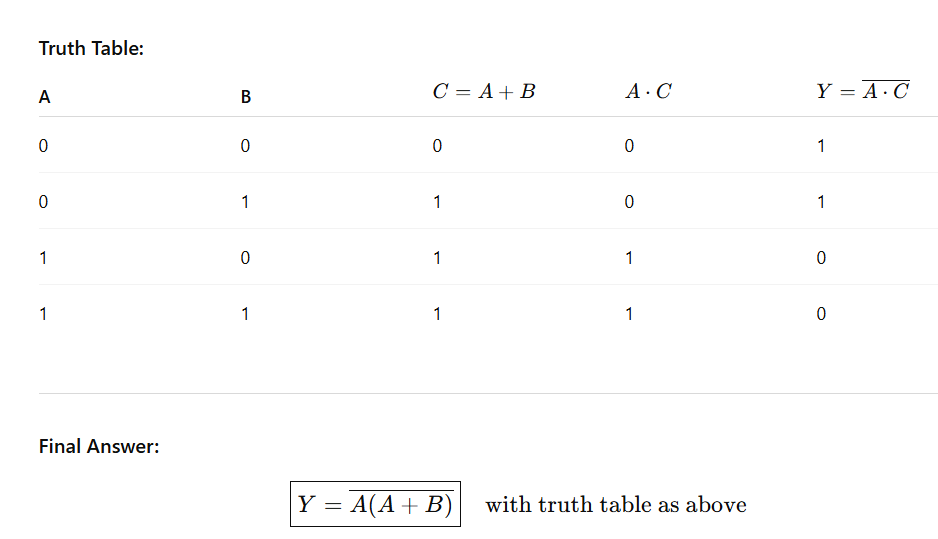
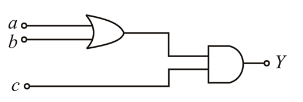
Identify the correct truth table of the given logic circuit.

image
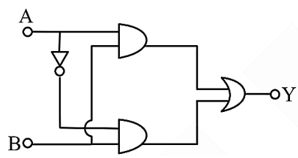
Question 4

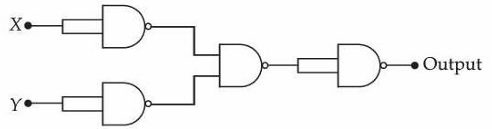
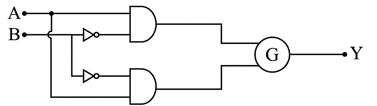
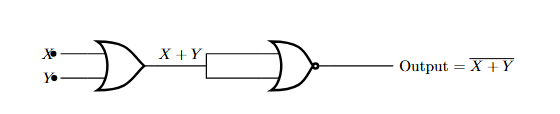
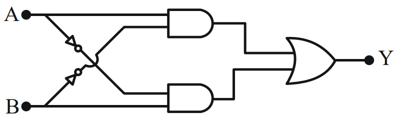
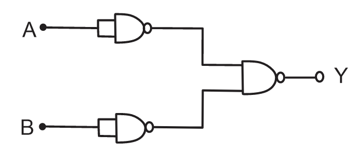
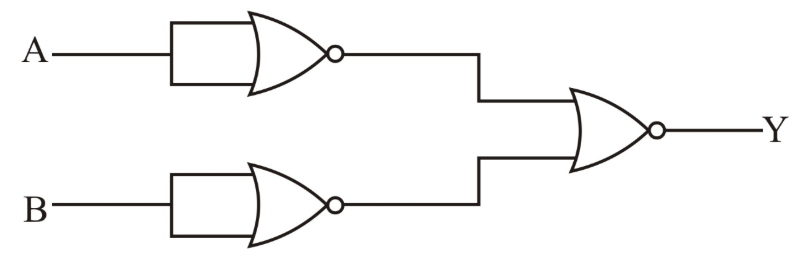
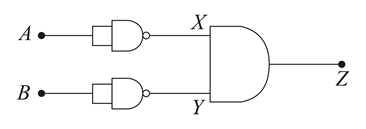
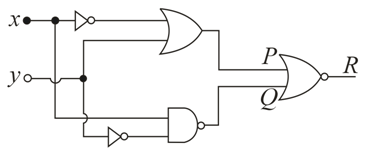
If X and Y are the inputs, the given circuit works as :

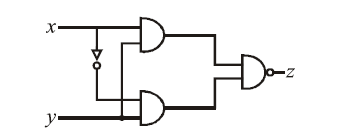
image
Video Solution
Question 5

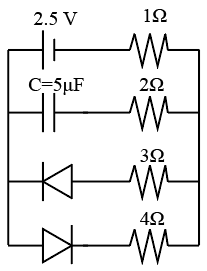
The charge stored by the capacitor C in the given circuit in the steady state is ______ $$\mu C$$.

30 Slot 2
Video Solution
Question 6

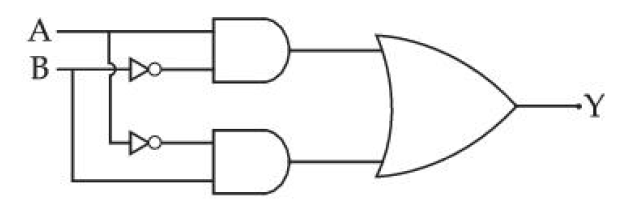
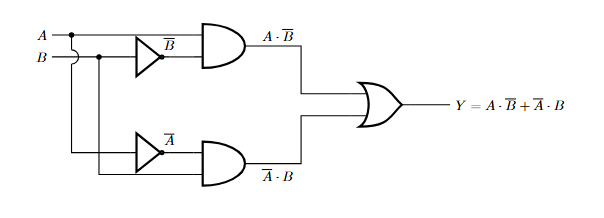
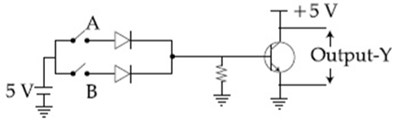
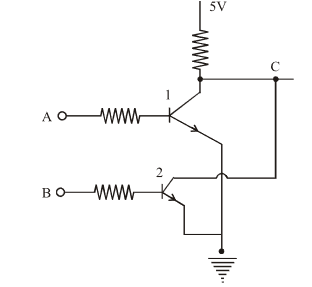
The given circuit works as:

Screenshot_3
Question 7

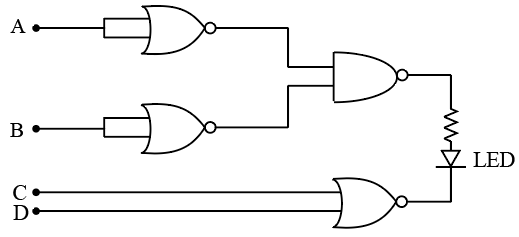
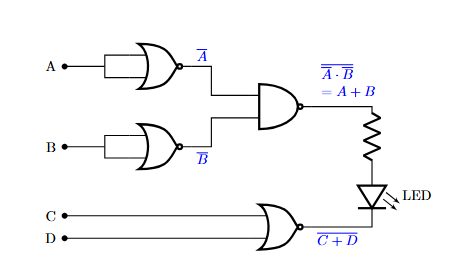
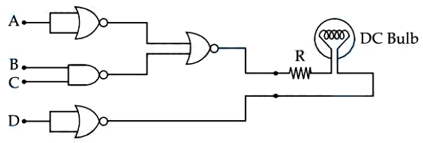
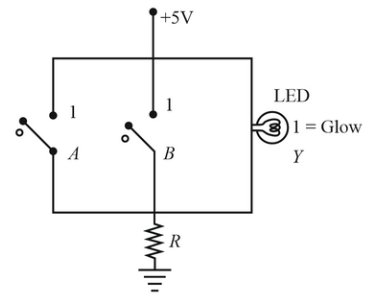
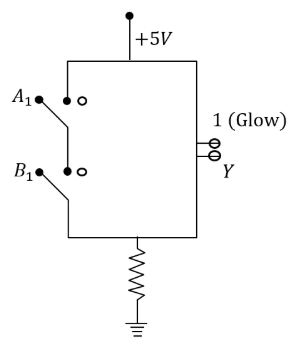
Find the correct combination of A, B, C and D inputs which can cause the LED to glow.

Screenshot_35
Question 8

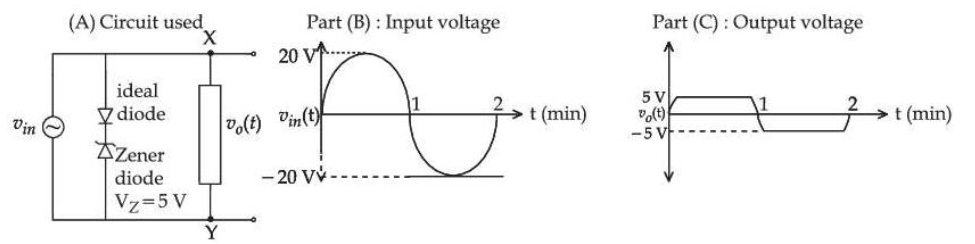
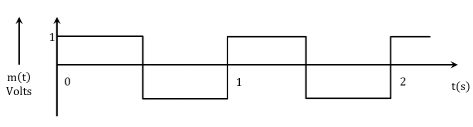
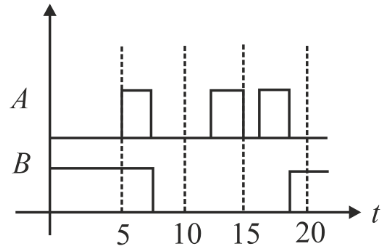
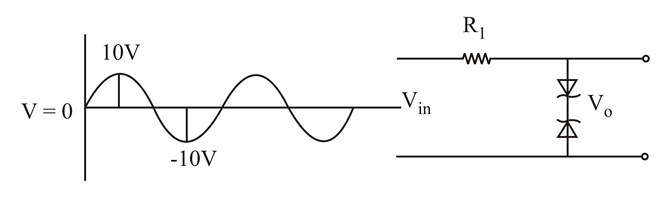
For the given circuit (shown in part (A)) the time dependent input voltage $$v_{in}(t)$$ and corresponding output $$v_o(t)$$ are shown in part (B) and part (C), respectively. Identify the components that are used in the circuit between points X and Y.

image
Question 9

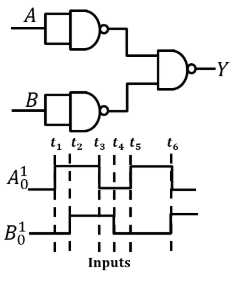
Two 4 bits binary numbers, $$A = 1101$$ and $$B = 1010$$ are given in the inputs of a logic circuit shown in figure below . The output $$(Y)$$ will be :

image
Question 10

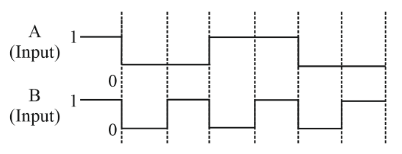
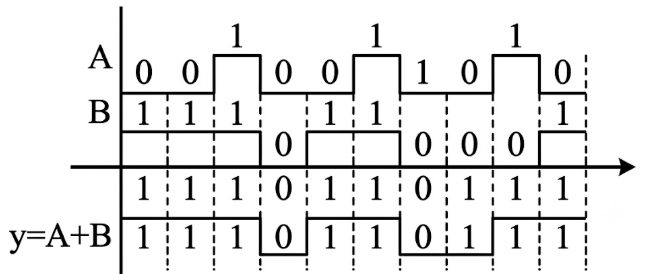
The correct truth table for the given input data of the following logic gate is:

39
Question 11

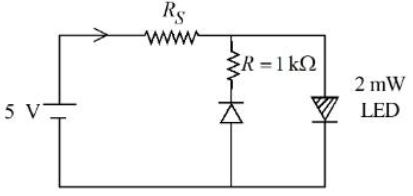
The maximum rated power of the LED is 2 mW and it is used in the circuit with input voltage of 5 V as shown in the figure below. The current through resistance $$R_S$$ is 0.5 mA.
The minimum value of the resistance of $$R_S$$, to ensure that the LED is not damaged is _______ k$$\Omega$$.

image
Question 12

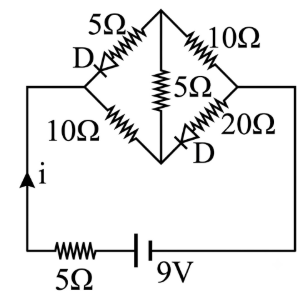
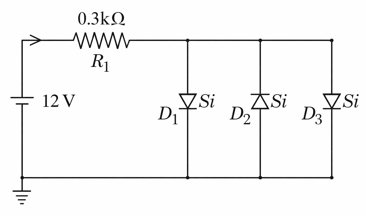
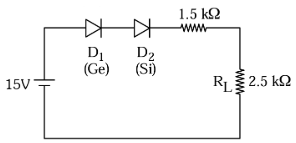
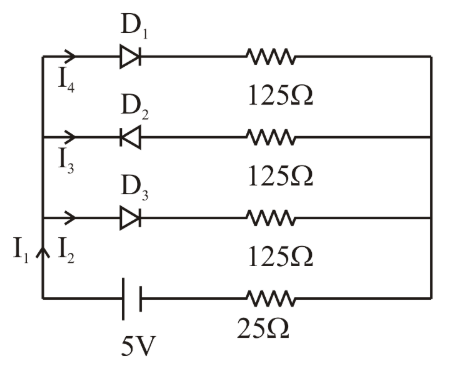
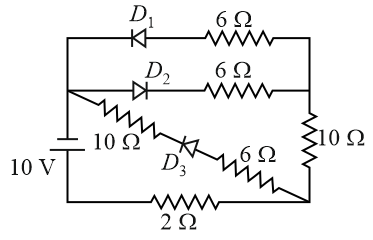
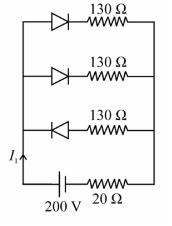
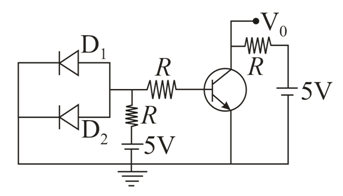
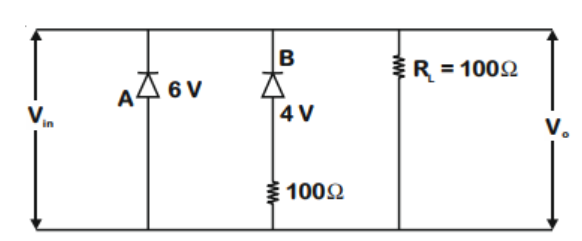
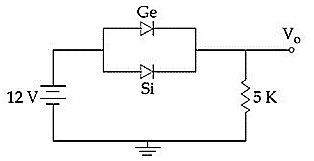
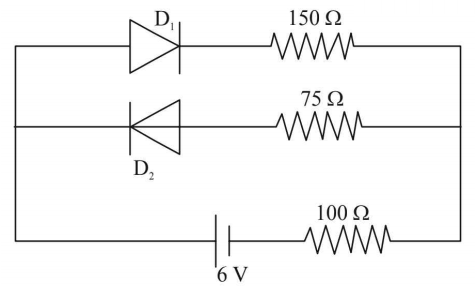
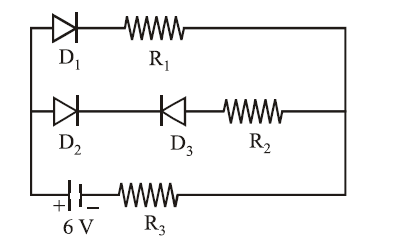
Assuming in forward bias condition there is a voltage drop of 0.7V across a silicon diode, the current through diode $$D_{1}$$ in the circuit is ___ mA.
(Assume all diodes in the given circuit are identical)

40-1
Question 13

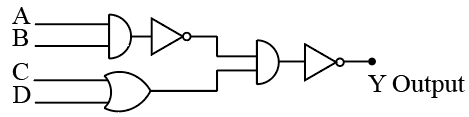
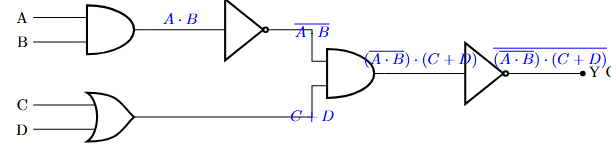
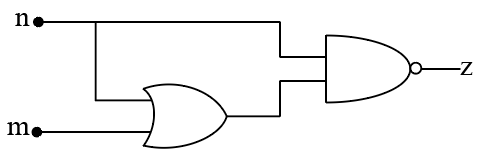
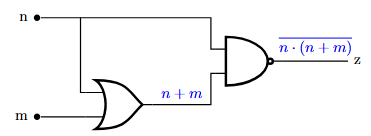
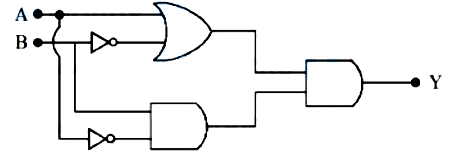
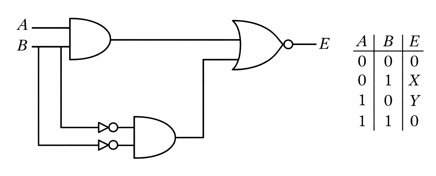
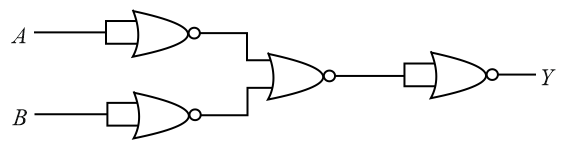
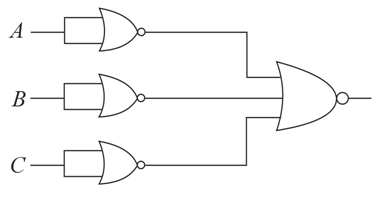
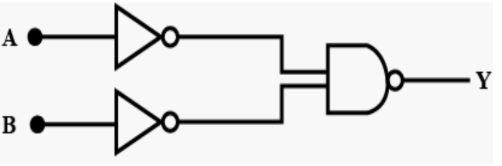
For the given logic gate circuit, which of the following is the correct truth table?

41
Question 14

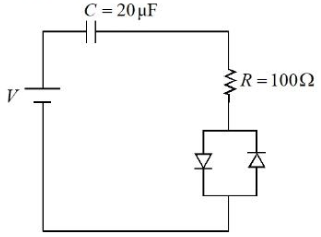
Consider a circuit consisting of a capacitor (20 $$\mu$$F), resistor (100 $$\Omega$$) and two identical diodes as shown in figure. The resistance of diode under forward biasing condition is 10 $$\Omega$$. The time constant of the circuit is $$\alpha \times 10^{-3}$$ s. The value of $$\alpha$$ is :

image
Question 15

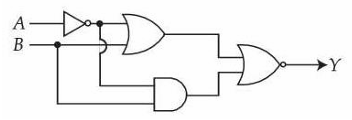
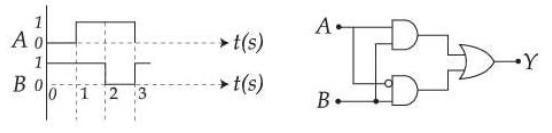
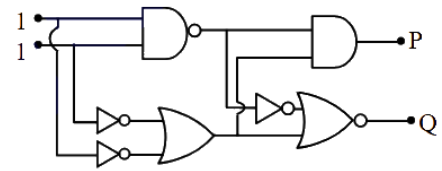
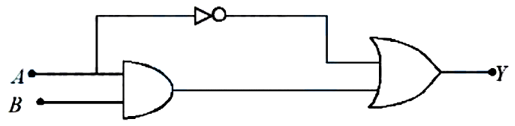
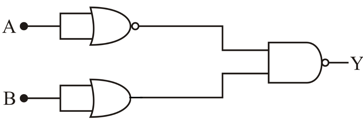
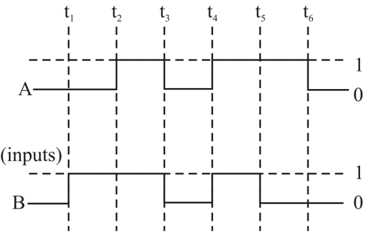
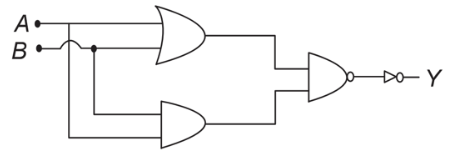
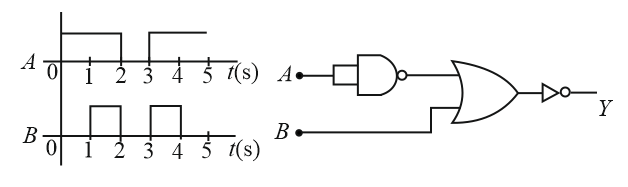
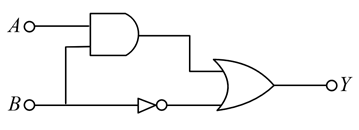
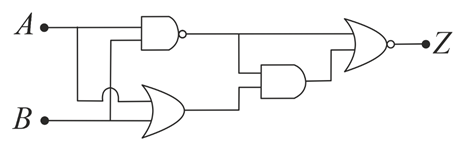
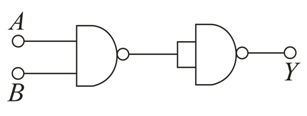
Refer to the logic circuit given below. For two inputs $$(A = 1, B = 1)$$ and $$(A = 0, B = 1)$$, output (Y) will be __________.

image
Question 16

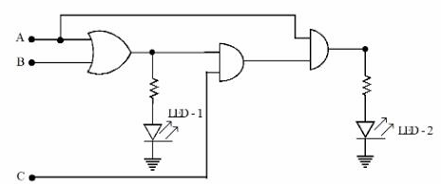
For the given logic circuit, which of the following inputs combination will make both LED-1 and LED-2 to glow?

image
Question 17

Given below are two statements: one is labelled as Assertion A and the other is labelled as Reason R

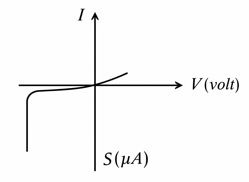
Assertion A: A diode under reverse-biased condition provides very small current which is nearly independent of voltage until a critical limit at which the current increases drastically.

Reason R: Below the critical voltage limit, only majority charge carriers flow which increases drastically above critical voltage.
Choose the correct answer from the options given below : 

Question 18

In a semiconductor p-n  diode, the doping concentrations on p-side has $$10^{15}$$ atoms/cm³ and the n-side has $$10^{18}$$ atoms/cm³respectively.  Which one of the following statements is true?

Question 19

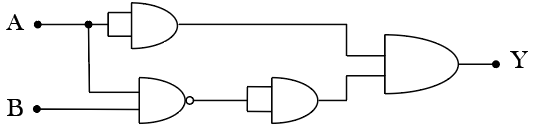
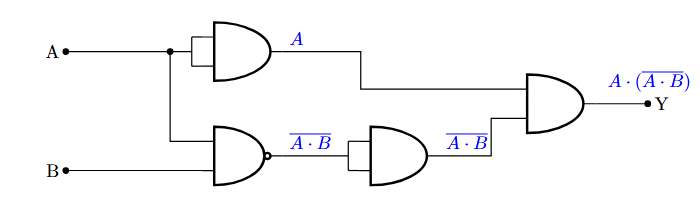
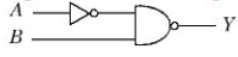
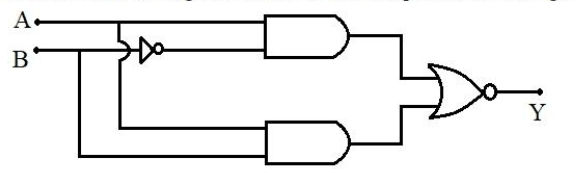
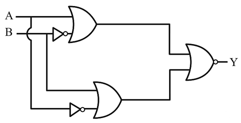
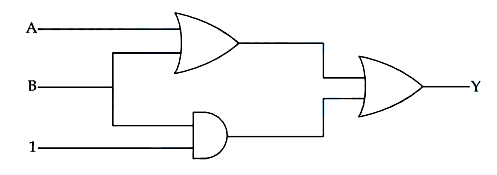
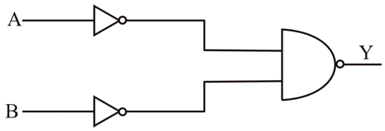
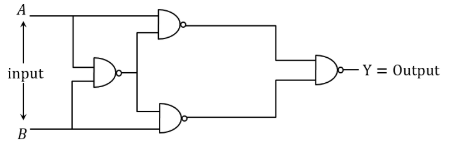
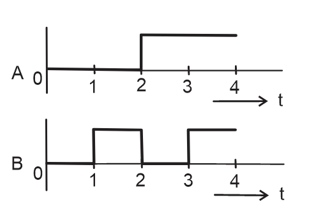
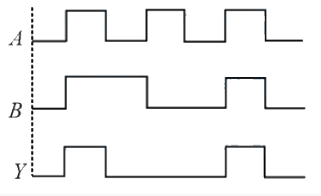
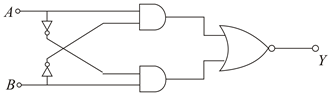
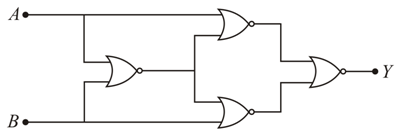
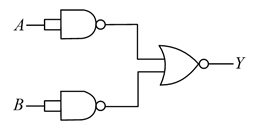
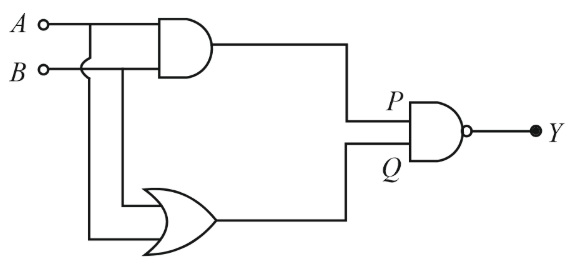
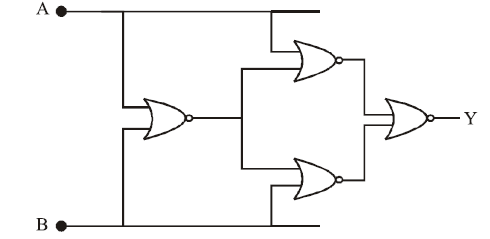
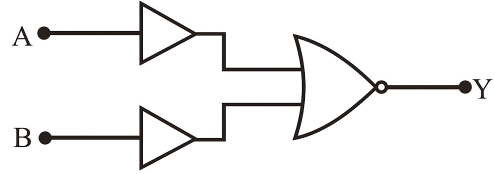
The output $$Y$$ for the given inputs $$A$$ and $$B$$ to the circuit is :

image
Question 20

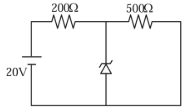
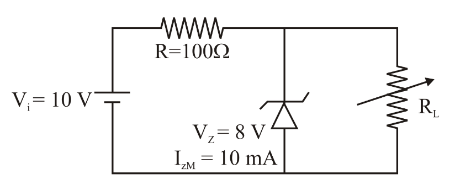
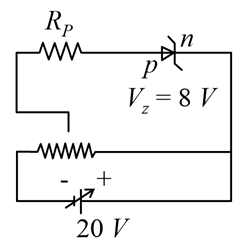
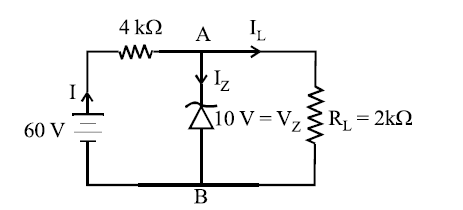
A diode has Zener voltage of 10 V and maximum power dissipation of 0.5 W, then the minimum resistance to be used in series with this diode for safety when it is connected to a 25 V power supply is ______ $$\Omega$$.

Question 21

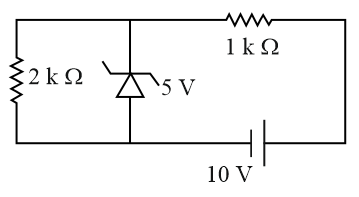
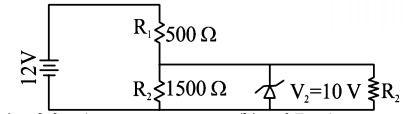
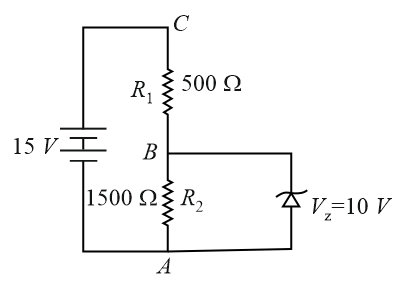
A voltage regulating circuit consisting of Zener diode, having break-down voltage of 10 V and maximum power dissipation of 0.4 W, is operated at 15 V. The approximate value of protective resistance in this circuit is ___ Ω.

Frequently Asked Questions