91- 6303239042


 Group
Group
Best Executive MBA Colleges In India 2026
Business professionals who want to catapult their careers without getting their jobs put on hold are finding Executive MBA (EMBA) a great resource. These programs are tailored for busy working professionals and offer a blend of high-level business knowledge and a very flexible schedule so that participants can enhance their leadership, strategy, and decision-making skills while acquiring new business experience and not losing contact with their job.
Since nowadays companies are in pursuit of leaders who can effectively deal with the complicated nature of business, a high-level business qualification such as an executive MBA is becoming a preferred way of getting promoted and getting ready for even top-level managerial positions.
Executive MBA Eligibility Criteria 2026
Executive MBA (EMBA) courses cater to working professionals who want to improve their managerial and leadership skills without stepping away from their careers for a while. Though the precise admission requirements vary from one college to the other, top Executive MBA colleges in India mostly have a similar set of eligibility requirements for admission in the year 2026.
Eligibility Requirement | Details |
Academic Qualification | Candidates should hold a bachelor’s degree, regardless of their field of study, from a duly recognized university. A majority of the institutes set the minimum cutoff at 50% aggregate marks. Some top institutes could require marks of 60% or more. Candidates of the Reserved category may enjoy relaxation as dictated by the institute. |
Work Experience | Executive MBA are mainly meant for working professionals with considerable experience in their field. Generally, institutes expect a work experience of 2–5 years after graduation, but there are exceptions like a minimum requirement from some of the premier B-schools, for example, a 4-year experience required by IIM-A. |
Entrance Exam Scores | Besides a valid GMAT or a GRE, one might be asked for a CAT, XAT, MAT, CMAT, or an institute-specific test. In some Executive MBA programs, admission could be purely on profile evaluation and a personal interview. |
Personal Interview | Personal interview (PI) is part of most Executive MBA selection processes. |
Employer Support (if applicable) | Applicants for full-time or part-time Executive MBA programs with some of the weekends or holidays devoted to class attendance often have to secure a No Objection Certificate (NOC) or a sponsorship letter from the present employer. |
Admission Process for Executive MBA 2026
The admission process for Executive MBA (EMBA) programmes may vary across institutes, but it generally follows these steps:
- Check Eligibility: Ensure you meet the institute's academic and work experience requirements.
- Fill Out the Application Form: Complete the online application and upload the required documents.
- Appear for an Entrance Test: Some institutes accept CAT, GMAT, GRE, Executive Assessment (EA), or conduct their own entrance test, while others shortlist candidates based on their profile.
- Personal Interview: Shortlisted candidates are invited for a Personal Interview (PI) to assess their leadership skills, work experience, career goals, and communication abilities.
- Final Selection: Institutes prepare the final merit list based on factors such as academic performance, work experience, entrance test scores (if applicable), and interview performance.
- Admission Confirmation: Selected candidates must accept the admission offer, pay the programme fee, and complete document verification to secure their seat.
Executive MBA Placements and Salary Packages
The executive MBA (EMBA) graduates quite often see a major career change post course completion such as getting promotions, taking leadership roles, or job switches. Given that almost all of the candidates have work experience, there is typically a focus on career progression rather than entry-level jobs.
After an executive MBA the average salary varies according to the organisation, sector, position, and years at work. Graduates of high profile B-schools like IIMs, ISB, XLRI, and SPJIMR typically get average salary packages in the range of ₹20 LPA to ₹40+ LPA, but it may even go over there since some courses offer higher overseas packages.
Institute | Executive MBA Programme | Average Package |
IIM Ahmedabad | MBA-PGPX | Not Disclosed |
IIM Bangalore | EPGP | ₹37.1 LPA |
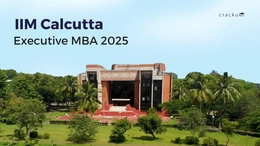
IIM Calcutta | MBAEx | ₹35.37 LPA |
IIM Lucknow | IPMX | Not Disclosed |
IIM Indore | EPGP | ₹23.5 LPA |
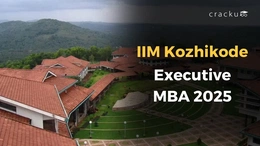
IIM Kozhikode | PGP-BL | ₹29.32 LPA |
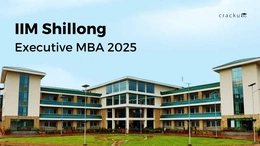
IIM Shillong | PGPEx | ₹25 LPA |
IIM Udaipur | MBA-GSCM | ₹22.42 LPA |
IIM Udaipur | MBA-DEM | ₹21.47 LPA |
XLRI Jamshedpur | PGDM-GM | ₹28.68 LPA |
SPJIMR Mumbai | PGPM | ₹24.42 LPA |
FMS Delhi | Executive MBA | ₹32.27 LPA |
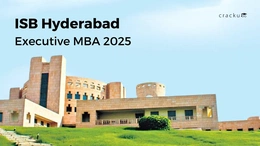
ISB Hyderabad | PGP | ₹37.29 LPA |
ISB Hyderabad | PGP PRO | Not Available |
ISB Hyderabad | PGP MAX | Not Available |
Top Recruiters for Executive MBA
Executive MBA graduates are hired across consulting, technology, finance, operations, healthcare, manufacturing and strategy roles. Recruiters typically look for experienced professionals with strong leadership ability, industry knowledge and problem-solving skills.
Some of the top recruiters for Executive MBA graduates include:
- Accenture
- Deloitte
- Amazon
- Microsoft
- EY
- KPMG
- BCG
- PwC
- HCLTech
- Infosys
Executive MBA Fees at Top Colleges
The price of an Executive MBA program is highly dependent on the school offering it, the length of the curriculum, and the way classes are conducted. The overall cost of a program in India generally lies between ₹2 lakh and ₹40 lakh, with IIMs and top private B-schools having higher price points for fees.
Institute | Executive MBA Programme | Fees |
MBA-PGPX | ₹35–37.1 Lakh | |
IIM Bangalore | EPGP | ₹32.8 Lakh |
MBAEx | ₹33.5 Lakh | |
IIM Lucknow | IPMX | ₹26 Lakh |
EPGP | ₹22 Lakh | |
IIM Kozhikode | PGP-BL | ₹22.5 Lakh |
PGPEx | ₹22 Lakh | |
IIM Udaipur | MBA-GSCM | ₹22.75 Lakh |
IIM Udaipur | MBA-DEM | ₹22.75 Lakh |
PGDM-GM | ₹25.9 Lakh | |
PGPM | ₹22.66 Lakh | |
IIT Bombay | EMBA | ₹45 lakh |
FMS Delhi | Executive MBA | ₹2.4 lakh |
PGP | ₹40 Lakh | |
ISB Hyderabad | PGP PRO | ₹39.96 Lakh |
ISB Hyderabad | PGP MAX | ₹50.98 Lakh |
Executive MBA vs Regular MBA: Key Differences
The choice between an executive MBA and a conventional MBA mainly depends on your present position in your career and your career objectives and, even more importantly, on your preferred learning environment. As both these types of program are primarily intended to equip you with managerial and leadership skills, there is quite a big difference especially in terms of requirements and conditions for the student, the content of courses, course length and extent, the anticipated work experience and the likely employment prospects of graduates of the program. This table shows a few such differences you ought to keep in mind when picking the MBA program that matches your goals and circumstances.
Feature | Executive MBA | Regular MBA |
Target Audience | Working professionals | Fresh graduates and early-career professionals |
Work Experience | 2–5+ years (varies by institute) | Usually not mandatory (except some programmes) |
Programme Duration | 1–2 years | 2 years (full-time) |
Learning Mode | Weekend, evening, online, or modular classes | Full-time, on-campus |
Entrance Exam | CAT, GMAT, GRE, EA, institute-specific test, or profile-based admission | Primarily CAT, XAT, CMAT, MAT, SNAP, etc. |
Career Goal | Leadership roles, promotions, and career advancement | Skill development, placements, and career launch |
Placements | Limited or institute-dependent; many candidates continue with their current employer | Dedicated campus placement support |
Best Executive MBA Colleges In India 2026: Conclusion
Choosing from the best Executive MBA colleges in India 2026 requires careful comparison of programme format, eligibility requirements, fees, placements, curriculum and career outcomes. Leading institutes such as the IIMs, ISB, XLRI and SPJIMR offer programmes designed to prepare experienced professionals for strategic and senior management positions.
Candidates should select a programme that matches their work experience, career objectives, preferred learning mode and financial budget. The right Executive MBA can strengthen leadership abilities, expand professional networks and create valuable opportunities for promotions, career transitions and long-term growth.