
Join Our JEE Preparation Group
Prep with like-minded aspirants; Get access to free daily tests and study material.
Sign in
Please select an account to continue using cracku.in
↓ →
Join Our JEE Preparation Group
Prep with like-minded aspirants; Get access to free daily tests and study material.
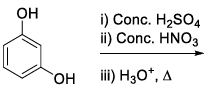
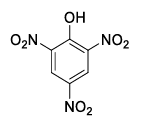
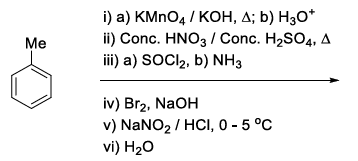
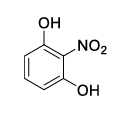
List-I contains various reaction sequences and List-II contains different phenolic compounds. Match each entry in List-I with the appropriate entry in List-II and choose the correct option.
| List-I | List-II | ||
|---|---|---|---|
| (P) |
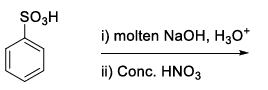
| (1) |
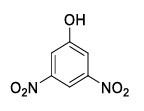
|
| (Q) |
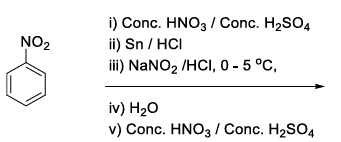
| (2) |
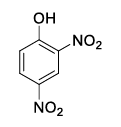
|
| (R) |
| (3) |
|
| (S) |
| (4) |
|
| (5) |
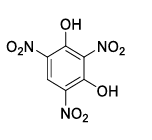
| ||
The reagents mentioned in List-I are the classical name reactions of phenolic chemistry. Before matching, recall what each reaction sequence gives:
P Dow’s process $$C_6H_5Cl \xrightarrow[\;300\;{\rm atm}\;]{NaOH,\;623\;{\rm K}}\;C_6H_5ONa \xrightarrow{H^+} C_6H_5OH$$ → product is simple phenol.
Q Kolbe-Schmitt reaction $$C_6H_5ONa \xrightarrow{CO_2,\;400\;{\rm K},\;4\!-\!7\;{\rm atm}} \;o\!-\!HO\!-\!C_6H_4COONa \xrightarrow{H^+} o\!-\!HO\!-\!C_6H_4COOH$$ → product is o-hydroxybenzoic acid (salicylic acid).
R Reimer-Tiemann reaction $$C_6H_5OH \xrightarrow{CHCl_3/NaOH,\;343\;{\rm K}} o\!-\!HO\!-\!C_6H_4CHO$$ → product is o-hydroxybenzaldehyde (salicylaldehyde).
S Nitration of phenol with conc. $$HNO_3/H_2SO_4$$ (333 K) $$C_6H_5OH \xrightarrow{conc\;HNO_3/conc\;H_2SO_4} 2,4,6\text{-trinitrophenol}$$ → product is picric acid.
Now read List-II (numbered phenolic compounds):
(1) 2,4,6-trinitrophenol (picric acid)
(2) …
(3) phenol
(4) o-hydroxybenzaldehyde (salicylaldehyde)
(5) o-hydroxybenzoic acid (salicylic acid)
Matching each entry:
P (Dow) → phenol → 3
Q (Kolbe-Schmitt) → o-hydroxybenzoic acid → 5
R (Reimer-Tiemann) → o-hydroxybenzaldehyde → 4
S (nitration) → picric acid → 1
Thus P-3, Q-5, R-4, S-1.
The option containing this combination is
Option C which is: P-3, Q-5, R-4, S-1.
Was this solution helpful?
Click on the Email ☝️ to Watch the Video Solution
Create a FREE account and get:
_1.webp)

Educational materials for JEE preparation

Ask our AI anything

AI can make mistakes. Please verify important information.
AI can make mistakes. Please verify important information.
