
Join Our JEE Preparation Group
Prep with like-minded aspirants; Get access to free daily tests and study material.
Sign in
Please select an account to continue using cracku.in
↓ →
Join Our JEE Preparation Group
Prep with like-minded aspirants; Get access to free daily tests and study material.
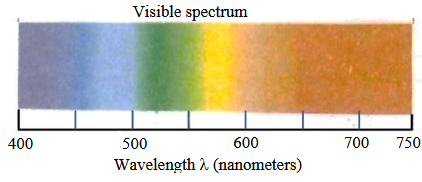
Which of the following statements are correct, if the threshold frequency of caesium is $$5.16 \times 10^{14}$$ Hz?
A. When Cs is placed inside a vacuum chamber with an ammeter connected to it and yellow light is focused on Cs the ammeter shows the presence of current.
B. When the brightness of the yellow light is dimmed, the value of the current in the ammeter is reduced.
C. When a red light is used instead to the yellow light, the current produced is higher with respect to the yellow light.
D. When a blue light is used, the ammeter shows the formation of current.
E. When a white light is used, the ammeter shows formation of current.
The emission of photo-electrons from a metal surface is governed by Einstein’s photoelectric equation
$$h\nu = h\nu_0 + K_{\text{max}}$$
where $$\nu_0$$ is the threshold frequency. Photo-current is observed only when $$\nu \ge \nu_0$$. If $$\nu = \nu_0$$, electrons are emitted with almost zero kinetic energy, while for $$\nu \gt \nu_0$$ they are emitted with finite kinetic energy. The magnitude of the photo-current is directly proportional to the intensity (brightness) of the incident light.
For caesium, the threshold frequency is given:
$$\nu_0 = 5.16 \times 10^{14}\,\text{Hz}$$.
Let us evaluate each coloured light.
Case 1: Yellow lightTypical wavelength of yellow light $$\lambda_{\text{Y}} \approx 580\,\text{nm}$$.
Frequency, $$\nu_{\text{Y}} = \dfrac{c}{\lambda_{\text{Y}}} \approx \dfrac{3.0 \times 10^{8}}{580 \times 10^{-9}} \approx 5.17 \times 10^{14}\,\text{Hz}$$.
This is practically equal to $$\nu_0$$, so photo-emission just begins and an ammeter connected in the circuit records a small current.
• Statement A is correct.
With $$\nu = \nu_0$$ fixed, lowering intensity reduces the number of incident photons per second, hence fewer electrons are emitted and the photo-current decreases.
• Statement B is correct.
Typical wavelength of red light $$\lambda_{\text{R}} \approx 650\,\text{nm}$$.
$$\nu_{\text{R}} = \dfrac{3.0 \times 10^{8}}{650 \times 10^{-9}} \approx 4.62 \times 10^{14}\,\text{Hz}$$, which is $$\lt \nu_0$$.
No photo-electrons are emitted, so the current is zero — certainly not higher than that obtained with yellow light.
• Statement C is wrong.
Typical wavelength of blue light $$\lambda_{\text{B}} \approx 450\,\text{nm}$$.
$$\nu_{\text{B}} = \dfrac{3.0 \times 10^{8}}{450 \times 10^{-9}} \approx 6.67 \times 10^{14}\,\text{Hz}$$, which is $$\gt \nu_0$$.
Electrons are emitted with appreciable kinetic energy and the ammeter shows current.
• Statement D is correct.
White light contains all visible frequencies, including those higher than $$\nu_0$$ (violet, blue, etc.). These components cause photo-emission, so current is recorded.
• Statement E is correct.
Thus the correct statements are A, B, D and E.
Option D which is: A, B, D and E Only
Create a FREE account and get:
_1.webp)

Educational materials for JEE preparation

Ask our AI anything

AI can make mistakes. Please verify important information.
AI can make mistakes. Please verify important information.


