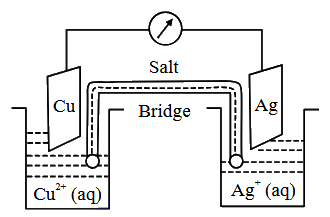
For the following questions answer them individually
$$\lim_{x \to 0^+} \frac{\tan\left(5(x)^{1/3}\right) \cdot \log_e(1+3x^2)}{\left(\tan^{-1}3\sqrt{x}\right)^2 \left(e^{5(x)^{4/3}} - 1\right)}$$ is equal to
If the shortest distance between the lines $$\frac{x-1}{2} = \frac{y-2}{3} = \frac{z-3}{4}$$ and $$\frac{x}{1} = \frac{y}{\alpha} = \frac{z-5}{1}$$ is $$\frac{5}{\sqrt{6}}$$, then the sum of all possible values of $$\alpha$$ is
Let $$x = -1$$ and $$x = 2$$ be the critical points of the function $$f(x) = x^3 + ax^2 + b \log_e|x| + 1, x \neq 0$$. Let m and M respectively be the absolute minimum and the absolute maximum values of f in the interval $$\left[-2, -\frac{1}{2}\right]$$. Then $$|M + m|$$ is equal to :
(Take $$\log_{e}2 = 0.7$$)
The remainder when $$((64)^{(64)})^{(64)}$$ is divided by 7 is equal to
Let P be the parabola, whose focus is (-2, 1) and directrix is $$2x + y + 2 = 0$$. Then the sum of the ordinates of the points on P, whose abscissa is -2, is
Let $$y = y(x)$$ be the solution curve of the differential equation $$x(x^2 + e^x) dy + (e^x(x-2)y - x^3) dx = 0$$, $$x > 0$$, passing through the point (1, 0). Then $$y(2)$$ is equal to :
From a group of 7 batsmen and 6 bowlers, 10 players are to be chosen for a team, which should include atleast 4 batsmen and atleast 4 bowlers. One batsman and one bowler who are captain and vice-captain respectively of the team should be included. Then the total number of ways such a selection can be made, is
If for $$\theta \in \left[-\frac{\pi}{3}, 0\right]$$, the points $$(x, y) = \left(3\tan\left(\theta + \frac{\pi}{3}\right), 2\tan\left(\theta + \frac{\pi}{6}\right)\right)$$ lie on $$xy + \alpha x + \beta y + \gamma = 0$$, then $$\alpha^2 + \beta^2 + \gamma^2$$ is equal to :
Let $$C_1$$ be the circle in the third quadrant of radius 3, that touches both coordinate axes. Let $$C_2$$ be the circle with centre (1, 3) that touches $$C_1$$ externally at the point $$(\alpha, \beta)$$. If $$(\beta - \alpha)^2 = \frac{m}{n}$$, gcd(m, n) = 1, then $$m + n$$ is equal to :
The integral $$\int_0^{\pi} \frac{(x+3)\sin x}{1 + 3\cos^2 x} dx$$ is equal to :