Join WhatsApp Icon JEE WhatsApp Group
Question 36

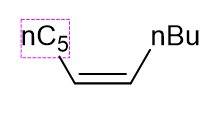
What will be the major product of following sequence of reactions?
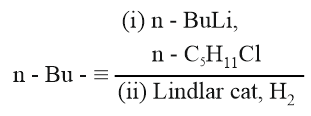
page7_img9

Step 1: Alkylation of the Terminal Alkyne

The starting material is a terminal alkyne: n-Bu-C≡CH.
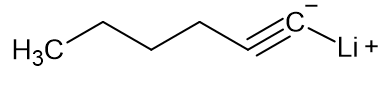
  • Reaction with n-BuLi: strong organolithium base deprotonates the terminal acetylenic proton to form a nucleophilic carbanion:
    n-Bu-C≡C- Li+
  • image

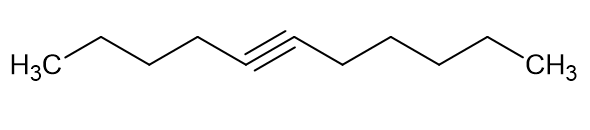
  • Reaction with n-C5H11Cl: The carbanion performs an SN2 nucleophilic substitution on the primary alkyl halide, extending the chain into an internal alkyne:
  • n-Bu-C≡C-C5H11
  • image

Step 2: Stereoselective Reduction

The internal alkyne is treated with Lindlar's Catalyst (Pd/CaCO3 poisoned with quinoline) and H2.
  • Lindlar's catalyst is a heterogeneous, deactivated catalyst that reduces alkynes selectively into alkenes without reducing them all the way to alkanes.
  • The mechanism occurs via syn-addition (both hydrogen atoms deliver to the same face of the triple bond simultaneously).
  • This stereospecific addition yields exclusively a cis-alkene (Z-alkene) geometry.
  • image
Correct Option Match:
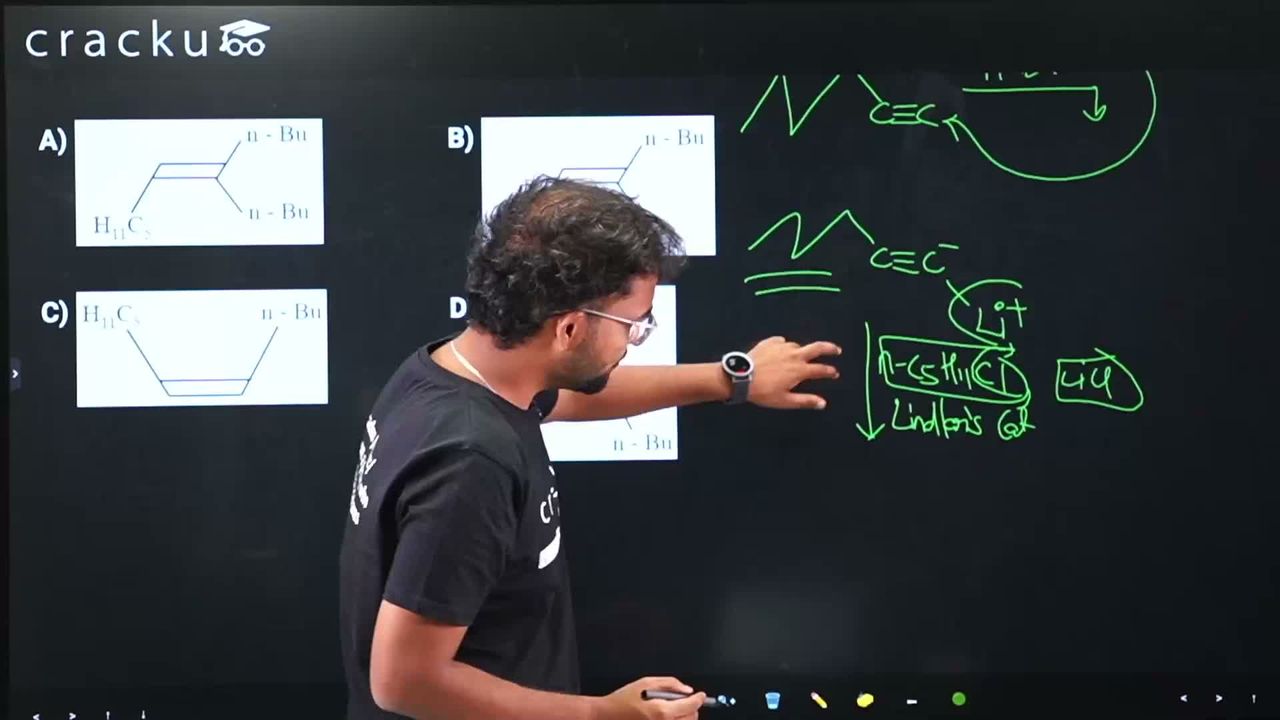
The product must contain the n-Bu and -C5H11 groups positioned on the same side of the newly formed carbon-carbon double bond carbon axis. This matches structural geometry option C.

Get AI Help

Video Solution

video

Create a FREE account and get:

  • Free JEE Mains Previous Papers PDF
  • Take JEE Mains paper tests

Free JEE Topicwise Questions

JEE Rotational MotionJEE Units & MeasurementsJEE Atomic StructureJEE GravitationJEE Periodic Table & PeriodicityJEE StatisticsJEE Inverse Trigonometric FunctionsJEE Magnetism & Magnetic MaterialsJEE Sequences & SeriesJEE MatricesJEE Alternating CurrentsJEE Carboxylic AcidsJEE Permutations & CombinationsJEE Work, Energy & PowerJEE Electromagnetic InductionJEE Electronic DevicesJEE d and f-Block ElementsJEE Chemical KineticsJEE Heat TransferJEE Three Dimensional GeometryJEE Magnetic Effects of CurrentJEE Hydrocarbons - AromaticJEE Electromagnetic WavesJEE Aldehydes & KetonesJEE Hydrocarbons - AlkanesJEE Applications of DerivativesJEE EquilibriumJEE Indefinite IntegrationJEE Chemical ThermodynamicsJEE ElectrochemistryJEE ProbabilityJEE BiomoleculesJEE Continuity & DifferentiabilityJEE Kinetic Theory of GasesJEE Vector AlgebraJEE Hydrocarbons - AlkynesJEE Differential EquationsJEE Current & ResistanceJEE Straight LinesJEE WavesJEE Redox ReactionsJEE Hydrocarbons - AlkenesJEE DeterminantsJEE SolutionsJEE Ray OpticsJEE Dual Nature of Matter & RadiationJEE Chemical Bonding & Molecular StructureJEE Complex NumbersJEE Sets, Relations & FunctionsJEE Electric Charges & FieldsJEE Laws of MotionJEE Fluid MechanicsJEE Basic Concepts in ChemistryJEE Trigonometric FunctionsJEE LimitsJEE Laws of ThermodynamicsJEE Kinematics - 2D MotionJEE p-Block Elements (Groups 13-18)JEE Simple Harmonic MotionJEE Electric Potential & CapacitanceJEE Coordination CompoundsJEE JEE 2D GeometryJEE CirclesJEE Definite IntegrationJEE EMF & Circuit AnalysisJEE Surface TensionJEE Atoms & NucleiJEE Laboratory Experiments - XIJEE Number SystemJEE Basic Principles of Organic ChemistryJEE Wave OpticsJEE Quadratic EquationsJEE Alcohols, Phenols & EthersJEE Organic Compounds with HalogensJEE DifferentiationJEE Conic SectionsJEE Nitrogen-Containing CompoundsJEE ElasticityJEE Practical Organic ChemistryJEE Kinematics - 1D MotionJEE Purification & CharacterisationJEE Binomial Theorem
Ask AI