JEE WhatsApp Group


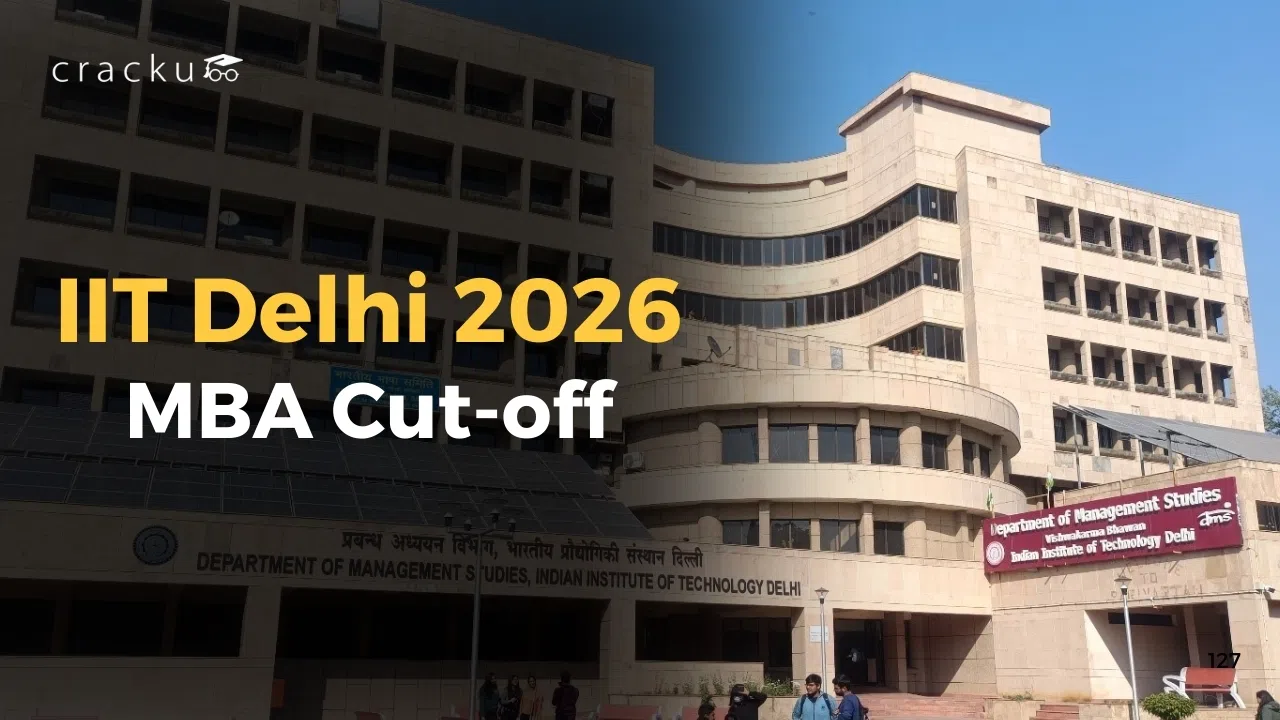
IIT Delhi MBA Cut-off 2026: IIT Delhi examines the program for the Department of Management Studies (DMS). It is a prestigious college to take admission for MBA courses. The IIT Delhi MBA cut off 2026 is expected to follow the previous year's trends. However, for the general category, the IIT Delhi cutoff is to be around 97-98 percentile, while for NC-OBC candidates, it may go around 90 percentile.
For SC/ST/PwD categories, the IIT Delhi MBA minimum qualifying cutoff is expected to be around 60 percentile. However, admission to the prestigious college also follows final interview calls and actual admission conversions, especially for the General and OBC categories.
The Department of IIT Delhi sometimes officially does not specify a section wise cutoff publicly. The listed figures and trends in the article are followed by the previous year's trends and overall analysis.
IIT Delhi MBA Cut-off 2026
The IIT Delhi MBA cutoff for 2026 is quite high because the institute is very popular and offers good quality education with strong placement opportunities. Admission to the MBA program at the Department of Management Studies (DMS), IIT Delhi, mainly depends on a candidate’s CAT score. IIT Delhi also fixes minimum CAT percentile requirements for different categories. Only candidates who meet these cutoffs are shortlisted for the interview round.
IIT Delhi MBA Category Wise Cut-offs
Here is the IIT Delhi MBA category wise cutoff list mentioned below. However, these are expected qualifying cutoffs, final interview class and actual admission lists for general and OBC candidates are generally high due to good competition.
The minimum percentile of the candidate for Stage 1 shortlist in 2025 is given in the table below:
Category | Male | Female |
General | 90.44 | 88.77 |
EWS | 80.59 | 79.74 |
OBC | 76.44 | 63.13 |
SC | 77.39 | 66.16 |
ST | 48.45 | 52.29 |
PwD | 50.70 | 51.16 |
*The above data was taken from an RTI filed by Cracku.
Also Read, IIT Delhi Form Last Date 2026, Eligibility, Documents, Fees
IIT Delhi MBA Sectional Cut-off 2026
There are NO sectional cutoffs for IIT Delhi DMS admissions process.
The overall IIT Delhi MBA cut off 2026 percentile expected for DMS IIT Delhi is typically higher for actual interview calls, often around 98+ percentile for the General category based on recent trends.
The highest and lowest percentile at which someone got the final admission offer from IIT Delhi MBA program:
Category | Male (Lowest) | Female (Lowest) | Male (Highest) | Female (Highest) | Male (Average) | Female (Average) |
General | 95.13 | 91.09 | 99.97 | 99.89 | 99.01 | 97.41 |
EWS | 87.96 | 86.54 | 99.75 | 98.74 | 97.14 | 94.00 |
OBC | 76.44 | 83.70 | 99.96 | 97.65 | 95.94 | 92.22 |
SC | 79.54 | 66.16 | 98.24 | 99.66 | 92.12 | 85.63 |
ST | 54.88 | 59.90 | 98.21 | 96.93 | 85.08 | 77.56 |
PwD | 71.57 | 58.85 | 96.34 | 97.10 | 88.69 | 84.66 |
*The above data was taken from an RTI filed by Cracku.
Also Read, IIT Delhi MBA Form 2026 Out, Last Date, Steps To Apply, Fees
Expected IIT Delhi MBA Cut-off 2026
The expected IIT Delhi MBA Cut Off 2026 is based on previous years’ trends and the level of competition in CAT. Below is the expected IIT Delhi MBA 2026 category-wise CAT cut-off.
IIT Delhi doesn’t release the official cutoffs so we cannot comment on the cutoffs of IIT Delhi. But, filed an RTI to get the minimum percentile required for final admission. Based on that data below is the minimum percentile that one should target.
Category | Male | Female |
General | 96+ | 92+ |
EWS | 88+ | 87+ |
OBC | 77+ | 84+ |
SC | 80+ | 67+ |
ST | 55+ | 61+ |
PwD | 72+ | 60+ |
IIT Delhi MBA Previous Year Cut-off Trends
A proper analysis of cut-offs also highlights patterns in category-wise variations and gives a sense of the overall admission landscape at IIT Delhi. Check out the table to know and understand the IIT Delhi MBA Previous Year Cut Off Trends
Category | 2025 Intake (CAT 2024) | 2024 Intake (CAT 2023) | 2023 Intake (CAT 2022) | 2022 Intake (CAT 2021) |
General (Male) | 90.44 | 94.52 | 98.04 | 98.04 |
General (Female) | 88.77 | 88.14 | 97.61* | 97.50* |
NC-OBC | 76.44 | 72.97 | 90.00 | 88.00 |
EWS | 80.59 | 78.35 | 90.00 | 87.00 |
SC | 77.39 | 59.11 | 75.00 | 72.00 |
ST | 48.45 | 24.49 | 60.00 | 58.00 |
How is the IIT Delhi MBA Cut-off decided??
The IIT Delhi MBA cut-off is decided through a structured process that considers more than just the CAT score. While CAT performance remains the most important factor, IIT Delhi also evaluates a candidate’s academic background, work experience, diversity, and overall competition in a given year. These elements together determine both the qualifying cut-off for interview calls and the final admission cut-off.
- CAT performance is the most important factor, carrying 65% weightage for interview shortlisting and 40% weightage in final selection. Higher percentiles strongly improve selection chances.
- Academic record is considered through marks in Class 10 (6%), Class 12 (5%), and graduation (5%).
- Work experience adds value, with candidates having around 25–36 months of experience receiving up to 7% weightage.
- Diversity and background are rewarded through extra points for non-male candidates (6%) and graduates from institutes of national importance (6%).
- Applicant volume and competition also affect the cut-off. Higher competition in a given year leads to a higher cut-off.
IIT Delhi MBA Cut-off 2026: Conclusion
The IIT Delhi MBA Cut-Off 2026 is likely to stay competitive because of the institute’s strong academic reputation, industry exposure, and consistent placement records. Although the minimum qualifying CAT percentiles may seem modest, actual interview shortlists and final admissions generally demand much higher scores, particularly for General and OBC category candidates.
Candidates aiming for DMS IIT Delhi MBA admission should target a 98+ CAT percentile, supported by a solid academic background and strong interview performance. A clear understanding of previous year cut-off trends and the selection process can help aspirants plan better, set realistic goals, and significantly improve their chances of conversion.