
Join Our JEE Preparation Group
Prep with like-minded aspirants; Get access to free daily tests and study material.
Sign in
Please select an account to continue using cracku.in
↓ →
Join Our JEE Preparation Group
Prep with like-minded aspirants; Get access to free daily tests and study material.
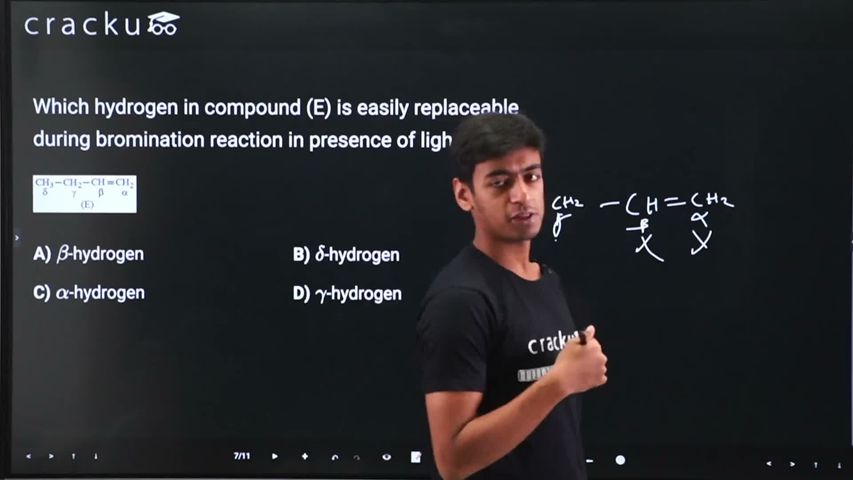
Which hydrogen in compound (E) is easily replaceable during bromination reaction in presence of light?
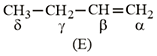
When an alkene like but-1-ene (compound E) reacts with bromine (Br2) in the presence of light (hv), it undergoes a free radical substitution reaction rather than electrophilic addition.
The ease of replacing a hydrogen atom depends entirely on the stability of the free radical intermediate formed after the hydrogen is abstracted:
Let's look at the types of hydrogens attached to each labeled position in CH3(delta)-CH2(gamma)-CH(beta)=CH2(alpha):
Was this solution helpful?
Click on the Email ☝️ to Watch the Video Solution
Create a FREE account and get:
_1.webp)

Educational materials for JEE preparation

Ask our AI anything

AI can make mistakes. Please verify important information.
AI can make mistakes. Please verify important information.
