
Join Our JEE Preparation Group
Prep with like-minded aspirants; Get access to free daily tests and study material.
Sign in
Please select an account to continue using cracku.in
↓ →
Join Our JEE Preparation Group
Prep with like-minded aspirants; Get access to free daily tests and study material.
The correct order of increasing acid strength of the compounds is (a) $$CH_3CO_2H$$ (b) $$MeOCH_2CO_2H$$ (c) $$CF_3CO_2H$$
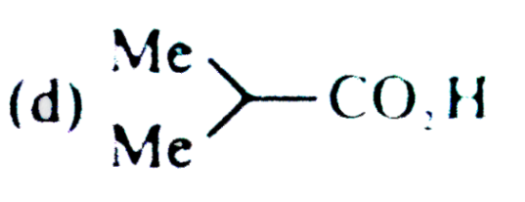
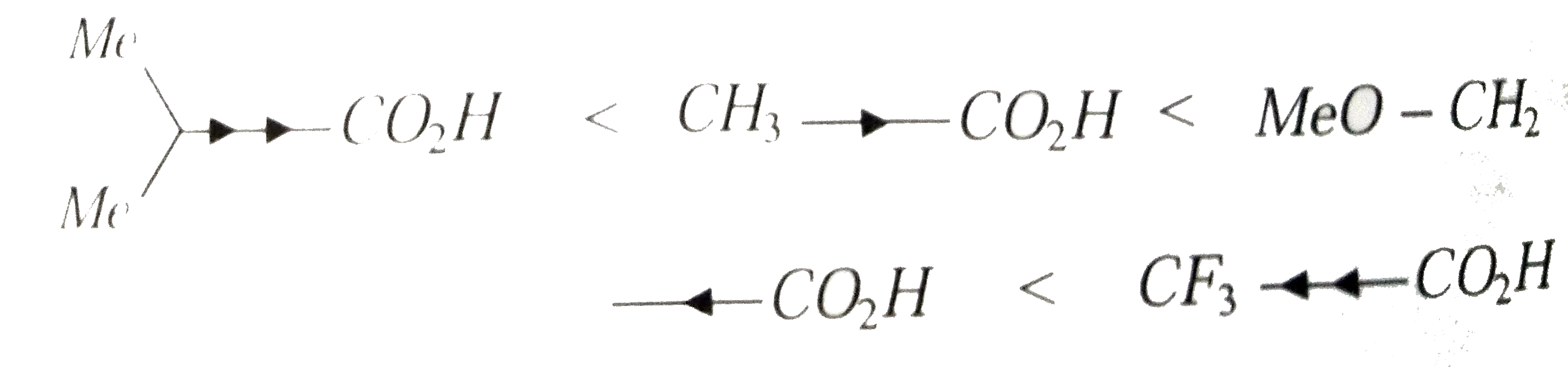
The acid strength of a carboxylic acid depends on the stability of its conjugate base (carboxylate anion):
Arranging the compounds from weakest to strongest acid gives the increasing order:
$$\text{Isobutyric acid (d)} < \text{Acetic acid (a)} < \text{Methoxyacetic acid (b)} < \text{Trifluoroacetic acid (c)}$$
$$\mathbf{d < a < b < c}$$
Answer: Option C — d < a < b < c
Was this solution helpful?
Create a FREE account and get:
_1.webp)

Educational materials for JEE preparation

Ask our AI anything

AI can make mistakes. Please verify important information.
AI can make mistakes. Please verify important information.
