Sign in
Please select an account to continue using cracku.in
↓ →
 CAT WhatsApp Group
For any positive real number, x+$$\frac{1}{x} \geq$$ 2
For any real number x > 1, 2 < $$(1+\frac{1}{x})^{x}$$ < 2.8.
As x increases, the function tends to an irrational number called 'e' which is approximately equal to 2.718.
The topic Inequalities is one of the few sections in the quantitative part which can throw up tricky questions. The questions are often asked in conjunction with other sections like ratio and proportion, progressions etc. The theory involved in Inequalities is very limited and students should be comfortable with the basics involving addition, multiplication and changing of signs of the inequalities. The scope for making an error is high in this section as a minor mistake in calculation (like forgetting the sign) can lead to a completely different answer.

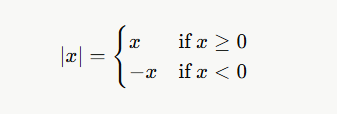
|a|+|b| ≥ |a+b|
|a|-|b| ≤ |a-b|
|a.b| = |a| |b|
For any three real numbers X, Y and Z; if X > Y then X+Z > Y+Z
If X > Y and
Prerequisites
The logarithm $$\log_a x$$ is defined only when $$x > 0$$, $$a > 0$$ and $$a \neq 1$$.
Before solving any logarithmic inequality, find the domain of every logarithmic expression first. Solve the inequality, then take the intersection of the solution with the domain.
Monotonicity: The core idea
The direction of a logarithmic inequality depends entirely on the base.
If $$a > 1$$, then $$\log_a x$$ is an increasing function:
$$x_1 < x_2 \iff \log_a x_1 < \log_a x_2$$
The inequality sign is preserved.
If $$0 < a < 1$$, then $$\log_a x$$ is a decreasing function:
$$x_1 < x_2 \iff \log_a x_1 > \log_a x_2$$
The inequality sign is reversed.
Relationship between AM, GM and HM for two numbers a and b,
Structured learning for focused CAT Quant preparation.

Educational materials for CAT preparation
 91- 6303239042
