
Join Our JEE Preparation Group
Prep with like-minded aspirants; Get access to free daily tests and study material.
Sign in
Please select an account to continue using cracku.in
↓ →
Join Our JEE Preparation Group
Prep with like-minded aspirants; Get access to free daily tests and study material.
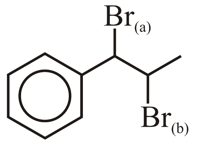
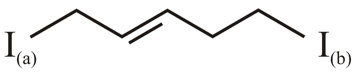
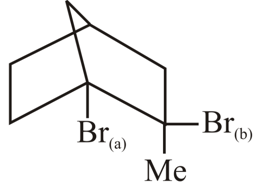
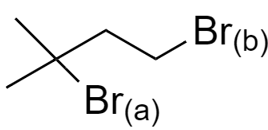
Choose the halogen which is most reactive towards SN1 reaction in the given compounds (A, B, C & D)
A.
B.
C.
D.
The rate of an SN1 reaction depends entirely on the stability of the carbocation intermediate formed during the rate-determining step after the leaving group departs.
Compound A contains two bromine atoms labeled as Br(a) and Br(b):
Therefore, for Compound A, Br(a) is significantly more reactive towards an SN1 pathway.
By applying the same structural principles across all four standard system variants:
Was this solution helpful?
Create a FREE account and get:
_1.webp)

Educational materials for JEE preparation

Ask our AI anything

AI can make mistakes. Please verify important information.
AI can make mistakes. Please verify important information.
