
Join Our JEE Preparation Group
Prep with like-minded aspirants; Get access to free daily tests and study material.
Sign in
Please select an account to continue using cracku.in
↓ →
Join Our JEE Preparation Group
Prep with like-minded aspirants; Get access to free daily tests and study material.
Photochemical smog is formed when nitrogen oxides (NO₂) and volatile organic compounds (hydrocarbons) react in the presence of sunlight to produce secondary pollutants like ozone, PAN (peroxyacetyl nitrate), and other irritants.
The key requirements for photochemical smog formation are:
1. Nitrogen oxides (from automobile exhaust and industrial emissions)
2. Hydrocarbons (from incomplete combustion of fuels)
3. Sunlight (for photochemical reactions)
4. Warm, stagnant air conditions
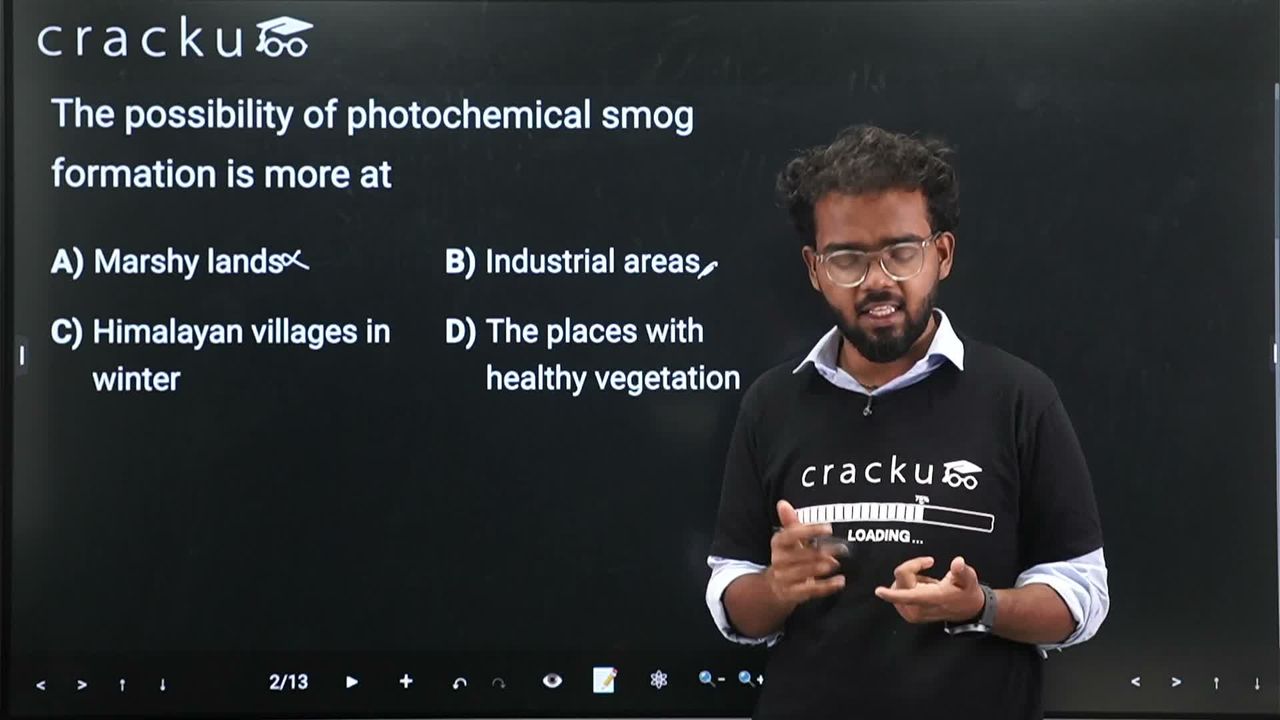
Industrial areas have high concentrations of both nitrogen oxides and hydrocarbons from factories, vehicles, and other sources. Combined with sunlight, these areas have the highest possibility of photochemical smog formation.
The correct answer is Industrial areas.
Was this solution helpful?
Click on the Email ☝️ to Watch the Video Solution
Create a FREE account and get:
_1.webp)

Educational materials for JEE preparation

Ask our AI anything

AI can make mistakes. Please verify important information.
AI can make mistakes. Please verify important information.
