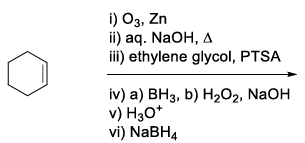
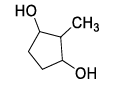
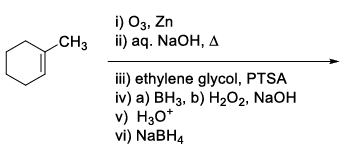
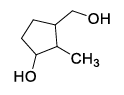
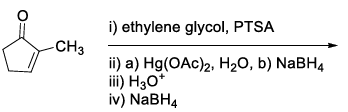
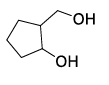
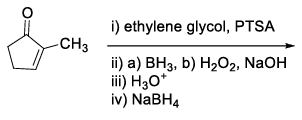
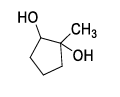
For the following questions answer them individually
A group of 9 students, $$s_1, s_2, \ldots, s_9$$, is to be divided to form three teams $$X$$, $$Y$$ and $$Z$$ of sizes 2, 3, and 4, respectively. Suppose that $$s_1$$ cannot be selected for the team $$X$$, and $$s_2$$ cannot be selected for the team $$Y$$. Then the number of ways to form such teams is ________.
Let $$\overrightarrow{OP} = \frac{\alpha - 1}{\alpha}\hat{i} + \hat{j} + \hat{k}$$, $$\overrightarrow{OQ} = \hat{i} + \frac{\beta - 1}{\beta}\hat{j} + \hat{k}$$ and $$\overrightarrow{OR} = \hat{i} + \hat{j} + \frac{1}{2}\hat{k}$$ be three vectors, where $$\alpha, \beta \in \mathbb{R} - \{0\}$$ and $$O$$ denotes the origin. If $$(\overrightarrow{OP} \times \overrightarrow{OQ}) \cdot \overrightarrow{OR} = 0$$ and the point $$(\alpha, \beta, 2)$$ lies on the plane $$3x + 3y - z + l = 0$$, then the value of $$l$$ is ________.
Let $$X$$ be a random variable, and let $$P(X = x)$$ denote the probability that $$X$$ takes the value $$x$$. Suppose that the points $$(x, P(X = x))$$, $$x = 0, 1, 2, 3, 4$$, lie on a fixed straight line in the $$xy$$-plane, and $$P(X = x) = 0$$ for all $$x \in \mathbb{R} - \{0, 1, 2, 3, 4\}$$. If the mean of $$X$$ is $$\frac{5}{2}$$, and the variance of $$X$$ is $$\alpha$$, then the value of $$24\alpha$$ is ________.
Let $$\alpha$$ and $$\beta$$ be the distinct roots of the equation $$x^2 + x - 1 = 0$$. Consider the set $$T = \{1, \alpha, \beta\}$$. For a $$3 \times 3$$ matrix $$M = (a_{ij})_{3 \times 3}$$, define $$R_i = a_{i1} + a_{i2} + a_{i3}$$ and $$C_j = a_{1j} + a_{2j} + a_{3j}$$ for $$i = 1, 2, 3$$ and $$j = 1, 2, 3$$.
Match each entry in List-I to the correct entry in List-II.
| List-I | List-II | ||
|---|---|---|---|
| (P) | The number of matrices $$M = (a_{ij})_{3 \times 3}$$ with all entries in $$T$$ such that $$R_i = C_j = 0$$ for all $$i, j$$ is | (1) | 1 |
| (Q) | The number of symmetric matrices $$M = (a_{ij})_{3 \times 3}$$ with all entries in $$T$$ such that $$C_j = 0$$ for all $$j$$ is | (2) | 12 |
| (R) | Let $$M = (a_{ij})_{3 \times 3}$$ be a skew symmetric matrix such that $$a_{ij} \in T$$ for $$i \gt j$$. Then the number of elements in the set $$\left\{\begin{pmatrix} x \\ y \\ z \end{pmatrix} : x, y, z \in R, M\begin{pmatrix} x \\ y \\ z \end{pmatrix} = \begin{pmatrix} a_{12} \\ 0 \\ -a_{23} \end{pmatrix}\right\}$$ is | (3) | Infinite |
| (S) | Let $$M = (a_{ij})_{3 \times 3}$$ be a matrix with all entries in $$T$$ such that $$R_i = 0$$ for all $$i$$. Then the absolute value of the determinant of $$M$$ is | (4) | 6 |
| (5) | 0 |
Let the straight line $$y = 2x$$ touch a circle with center $$(0, \alpha)$$, $$\alpha \gt 0$$, and radius $$r$$ at a point $$A_1$$. Let $$B_1$$ be the point on the circle such that the line segment $$A_1B_1$$ is a diameter of the circle. Let $$\alpha + r = 5 + \sqrt{5}$$.
Match each entry in List-I to the correct entry in List-II.
| List-I | List-II | ||
|---|---|---|---|
| (P) | $$\alpha$$ equals | (1) | $$(-2, 4)$$ |
| (Q) | $$r$$ equals | (2) | $$\sqrt{5}$$ |
| (R) | $$A_1$$ equals | (3) | $$(-2, 6)$$ |
| (S) | $$B_1$$ equals | (4) | 5 |
| (5) | $$(2, 4)$$ |
Let $$\gamma \in \mathbb{R}$$ be such that the lines $$L_1 : \frac{x+11}{1} = \frac{y+21}{2} = \frac{z+29}{3}$$ and $$L_2 : \frac{x+16}{3} = \frac{y+11}{2} = \frac{z+4}{\gamma}$$ intersect. Let $$R_1$$ be the point of intersection of $$L_1$$ and $$L_2$$. Let $$O = (0, 0, 0)$$, and $$\hat{n}$$ denote a unit normal vector to the plane containing both the lines $$L_1$$ and $$L_2$$.
Match each entry in List-I to the correct entry in List-II.
| List-I | List-II | ||
|---|---|---|---|
| (P) | $$\gamma$$ equals | (1) | $$-\hat{i} - \hat{j} + \hat{k}$$ |
| (Q) | A possible choice for $$\hat{n}$$ is | (2) | $$\sqrt{\frac{3}{2}}$$ |
| (R) | $$\overrightarrow{OR_1}$$ equals | (3) | 1 |
| (S) | A possible value of $$\overrightarrow{OR_1} \cdot \hat{n}$$ is | (4) | $$\frac{1}{\sqrt{6}}\hat{i} - \frac{2}{\sqrt{6}}\hat{j} + \frac{1}{\sqrt{6}}\hat{k}$$ |
| (5) | $$\sqrt{\frac{2}{3}}$$ |
Let $$f : \mathbb{R} \to \mathbb{R}$$ and $$g : \mathbb{R} \to \mathbb{R}$$ be functions defined by $$f(x) = \begin{cases} x|x|\sin\left(\frac{1}{x}\right), & x \neq 0, \\ 0, & x = 0, \end{cases}$$ and $$g(x) = \begin{cases} 1 - 2x, & 0 \leq x \leq \frac{1}{2}, \\ 0, & \text{otherwise}. \end{cases}$$
Let $$a, b, c, d \in \mathbb{R}$$. Define the function $$h : \mathbb{R} \to \mathbb{R}$$ by $$h(x) = af(x) + b\left(g(x) + g\left(\frac{1}{2} - x\right)\right) + c(x - g(x)) + d \cdot g(x)$$, $$x \in \mathbb{R}$$.
Match each entry in List-I to the correct entry in List-II.
| List-I | List-II | ||
|---|---|---|---|
| (P) | If $$a = 0, b = 1, c = 0$$ and $$d = 0$$, then | (1) | $$h$$ is one-one |
| (Q) | If $$a = 1, b = 0, c = 0$$ and $$d = 0$$, then | (2) | $$h$$ is onto |
| (R) | If $$a = 0, b = 0, c = 1$$ and $$d = 0$$, then | (3) | $$h$$ is differentiable on $$\mathbb{R}$$ |
| (S) | If $$a = 0, b = 0, c = 0$$ and $$d = 1$$, then | (4) | the range of $$h$$ is $$[0, 1]$$ |
| (5) | the range of $$h$$ is $$\{0, 1\}$$ |
A dimensionless quantity is constructed in terms of electronic charge $$e$$, permittivity of free space $$\varepsilon_0$$, Planck's constant $$h$$, and speed of light $$c$$. If the dimensionless quantity is written as $$e^{\alpha} \varepsilon_0^{\beta} h^{\gamma} c^{\delta}$$ and $$n$$ is a non-zero integer, then $$(\alpha, \beta, \gamma, \delta)$$ is given by
An infinitely long wire, located on the z-axis, carries a current $$I$$ along the $$+z$$-direction and produces the magnetic field $$\vec{B}$$. The magnitude of the line integral $$\int \vec{B} \cdot d\vec{l}$$ along a straight line from the point $$(-\sqrt{3}a, a, 0)$$ to $$(a, a, 0)$$ is given by
[$$\mu_0$$ is the magnetic permeability of free space.]
Two beads, each with charge $$q$$ and mass $$m$$, are on a horizontal, frictionless, non-conducting, circular hoop of radius $$R$$. One of the beads is glued to the hoop at some point, while the other one performs small oscillations about its equilibrium position along the hoop. The square of the angular frequency of the small oscillations is given by

[$$\varepsilon_0$$ is the permittivity of free space.]