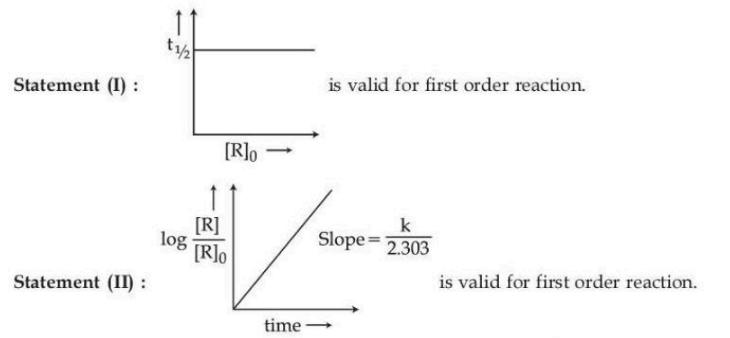
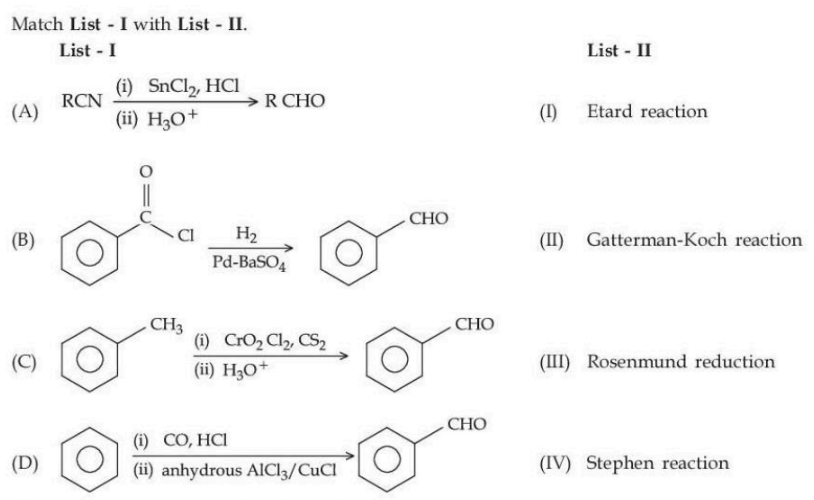
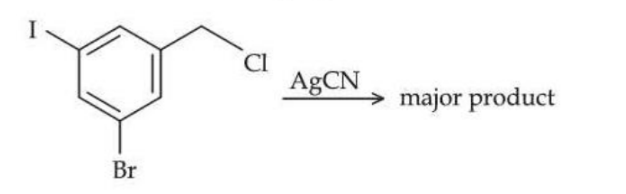
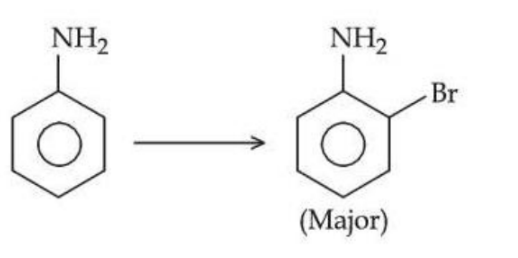
For the following questions answer them individually
Group A consists of 7 boys and 3 girls, while group B consists of 6 boys and 5 girls. The number of ways, 4 boys and 4 girls can be invited for a picnic if 5 of them must be from group A and the remaining 3 from group B, is equal to :
If the system of equations $$\begin{aligned}x + 2y - 3z &= 2, \\2x + \lambda y + 5z &= 5, \\14x + 3y + \mu z &= 33\end{aligned}$$ has infinitely many solutions, then $$\lambda + \mu \text{ is equal to:} $$
$$\text{Let }A=\left\{x\in(0,\pi) -\left\{\frac{\pi}{2}\right\} :\log_{(2/\pi)}|\sin x| + \log_{(2/\pi)}|\cos x| = 2 \right\}\text{and }B=\left\{x\geq0 : \sqrt{x}(\sqrt{x}-4) - 3|\sqrt{x}-2| + 6 = 0 \right\}.\text{ Then } n(A\cup B) \text{ is equal to:}$$
The area of the region enclosed by the curves $$y=e^x,\; y=|e^x-1|$$ and the $$y$$ -axis is:
The equation of the chord of the ellipse $$\frac{x^2}{25} + \frac{y^2}{16} = 1,$$ whose mid-point is $$(3,1)$$ is:
Let the points $$\left(\frac{11}{2},\alpha\right)$$ lie on or inside the triangle with sides $$x+y=11,\; x+2y=16$$ and $$2x+3y=29.$$ Then the product of the smallest and the largest values of $$\alpha$$ is equal to:
Let $$f:(0,\infty)\to R$$ be a function which is differentiable at all points of its domain and satisfies the condition $$x^2 f'(x) = 2x f(x) + 3,$$ with $$f(1)=4.$$ Then $$2f(2)$$ is equal to:
$$\text{If }7 = 5 + \frac{1}{7}(5+\alpha) + \frac{1}{7^2}(5+2\alpha)+ \frac{1}{7^3}(5+3\alpha) + \cdots + \infty,\text{ then the value of } \alpha \text{ is:}$$
Let $$[x]$$ denote the greatest integer function, and let $$m$$ and $$n$$ respectively be the numbers of the points where the function $$f(x) = [x] + |x-2|, -2 < x < 3,$$ is not continuous and not differentiable. Then $$m+n$$ is equal to:
Let $$A=[a_{ij}]$$ be a square matrix of order 2 with entries either 0 or 1. Let $$E$$ be the event that $$A$$ is an invertible matrix. Then the probability $$P(E)$$ is: