
Join Our JEE Preparation Group
Prep with like-minded aspirants; Get access to free daily tests and study material.
Sign in
Please select an account to continue using cracku.in
↓ →
Join Our JEE Preparation Group
Prep with like-minded aspirants; Get access to free daily tests and study material.
Consider the following reaction :
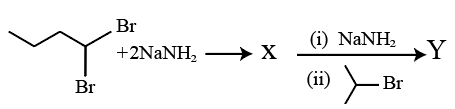
The product Y formed is :
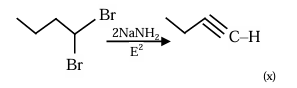
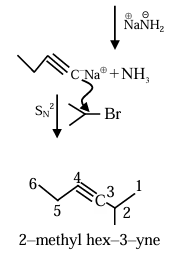
The starting material is 1,1-dibromobutane. When treated with 2 equivalents of sodamide ($$\text{NaNH}_2$$), it undergoes a double dehydrohalogenation.
Terminal alkynes are acidic. This step involves two sub-steps:
Was this solution helpful?
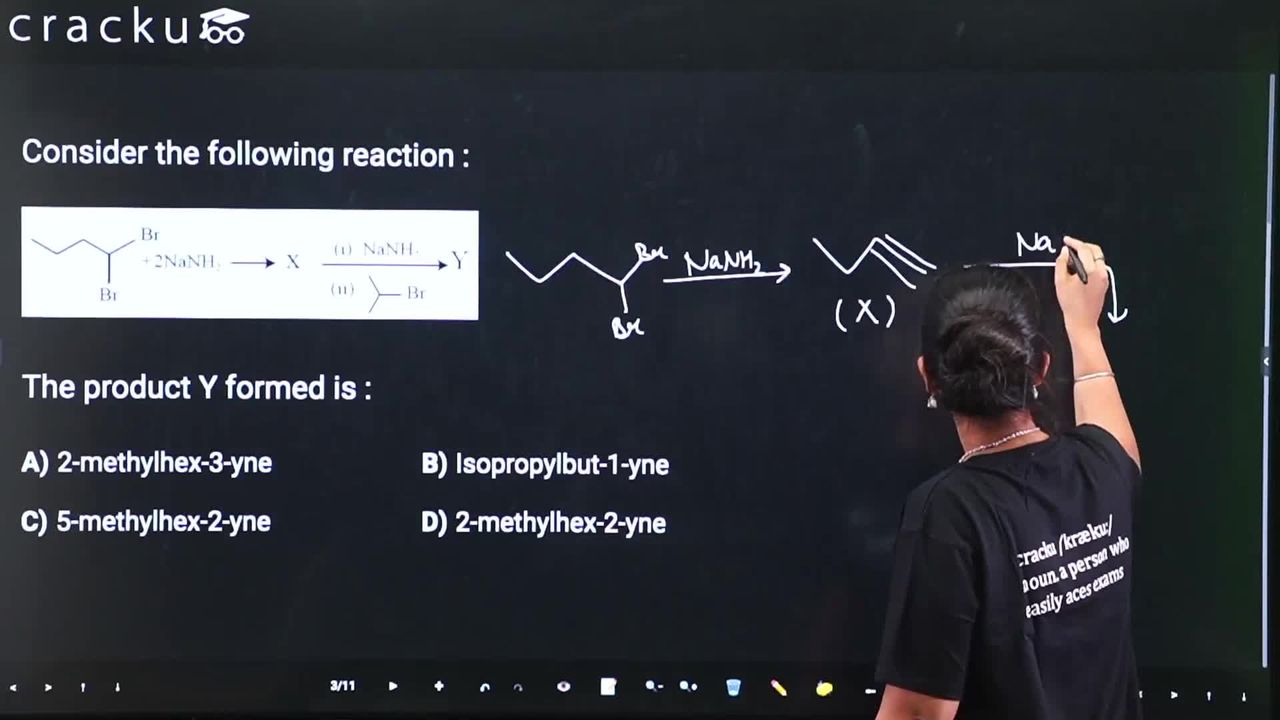
Click on the Email ☝️ to Watch the Video Solution
Create a FREE account and get:
_1.webp)

Educational materials for JEE preparation

Ask our AI anything

AI can make mistakes. Please verify important information.
AI can make mistakes. Please verify important information.
