91- 6303239042


 Group
Group


 Preferred Source

 Google Discover
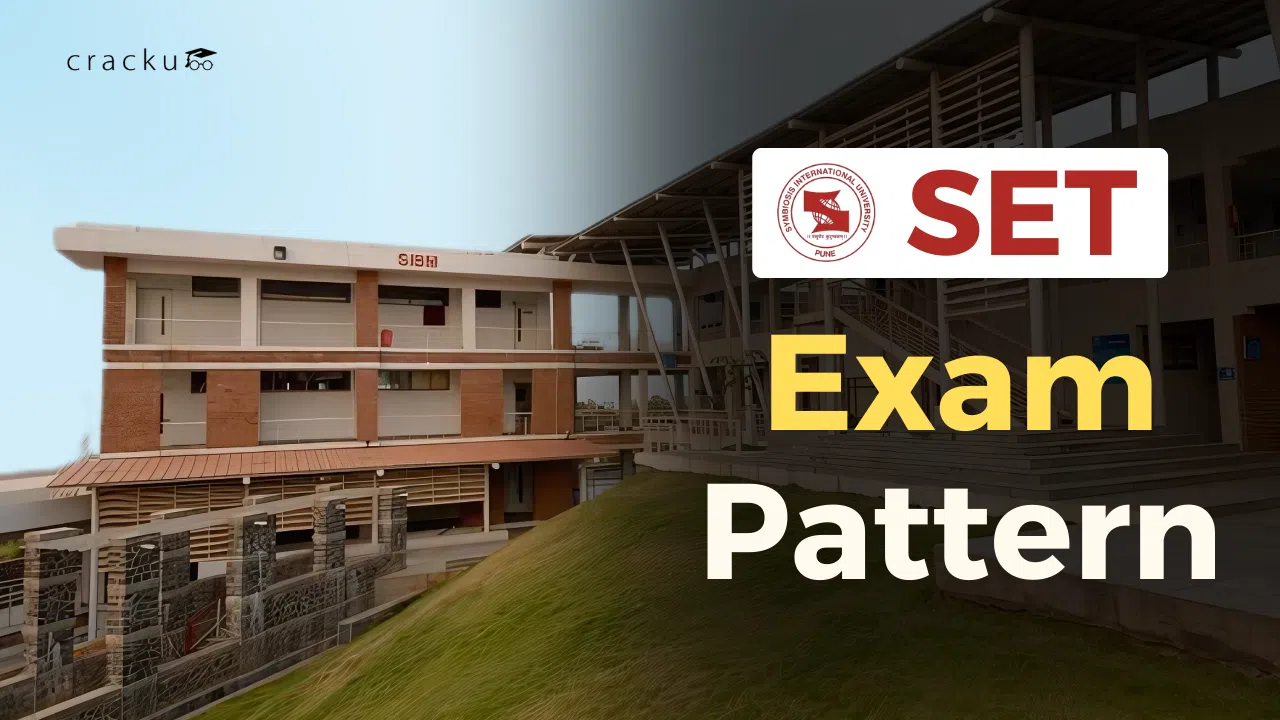
SET Exam Pattern 2026
The SET Exam Pattern 2026 follows a computer-based format. The total length of the exam is one hour. You need to attend 60 questions. A test of pure speed. It evaluates students across four areas. These include English, mathematics, general knowledge, and logic. Every question is a multiple-choice type. You get four options for each. One mark is given for every right answer. There is no penalty for mistakes.
The goal? Accuracy under pressure. It is like a mental sprint. You do not need complex theories. You need quick thinking. Because there is no negative marking, you should answer every question. A blank space is a missed point. Understanding this structure is the first step toward a top college seat.
SET Exam Structure 2026
The SET structure for 2026 is built on four core subjects designed to test basic aptitude. These sections are General English, Quantitative Aptitude, General Awareness, and Analytical and Logical Reasoning. The test is conducted entirely in English. It is an online exam taken at official centers. You can bring a pen, and rough paper will be provided in the hall.
The first three sections carry 16 questions each. The logic section is slightly smaller with 12 questions. This balance ensures you are tested on diverse skills. No single subject carries too much power, so you need a balance between all the sections. You move from words to numbers in seconds. Practice with the SET mock tests to understand the exam pattern and difficulty.
Section-wise Content Breakdown:
- General English: This part checks your grammar and reading skills. You will find short stories or passages. Questions focus on synonyms and antonyms. Error spotting is also a big part of this section.
- Quantitative Aptitude: This section contains algebra, arithmetic, geometry, and data interpretation. It tests how fast you calculate. Expect things like profit and loss or simple interest.
- General Awareness: This is the fastest part. It covers current news and static facts. You should know about awards, books, and sports. No math here. Just facts.
- Analytical and Logical Reasoning: This checks your ability to find patterns. You might solve blood relation problems or series completion. It is about finding the logic behind the data.
Specific Focus Areas:
- Mathematics: Algebra, arithmetic, geometry, percentages, and data interpretation.
- English: Vocabulary, grammar, and sentence correction.
- Reasoning: Puzzles, coding, and diagrams.
- GK: Famous founders, sports events, and global news.
SET Exam Duration 2026
The SET exam duration for 2026 is exactly 60 minutes for the entire test. There are no sectional timers. This means you can start with any subject. You can skip a hard question and come back later. This freedom is a massive advantage. You can finish the easy GK part first. Then you have more time for long math problems.
Managing 60 questions in 60 minutes needs practice and concentration. If you get stuck on a puzzle, move on. Do not let one question ruin your score. Every second matters. The digital clock on your screen will keep ticking. Once the hour ends, the system saves your work.
Sectional Time Suggestions:
- General Awareness: 7 to 8 minutes.
- General English: 10 to 11 minutes.
- Analytical Reasoning: 12 to 13 minutes.
- Quantitative Aptitude: 22 to 25 minutes.
Timing Characteristics:
Duration Detail | Specific Rule |
Total Time | 60 Minutes |
Time per Question | 1 Minute |
Sectional Limits | None |
Movement | Free between sections |
Read More: Free SET Sample Paper 2026 with Practice Tests, Attempt Now
SET Marking Scheme 2026
The SET 2026 marking scheme awards +1 mark for every correct response. The best news? There is zero negative marking. You do not lose points for wrong guesses. This makes the exam very student-friendly. It encourages you to take risks. If you are not sure about an answer, do not leave it blank. Pick the best option and move forward.
Your final score is just the total count of your right answers. This total mark is used to rank you for the next round. Top scores lead to interview calls. Because there is no penalty, the competition is high. Every mark counts. A single point can change your rank by hundreds of spots.
Marking Details Table:
Action | Marks Awarded |
Correct Answer | +1 |
Incorrect Answer | 0 |
Unattempted | 0 |
Total Marks | 60 |
You can take the test on two different dates. If you do this, the university looks at both scores. They take the higher one for your final rank. This gives you a second chance if the first test goes poorly. It is like having a second chance. No normalization is used. The raw marks are what matter most.
How Many Questions in SET Exam?
The SET exam has a total of 60 questions. All are multiple-choice items with four options each. The paper is balanced. It does not let one subject take over the whole test. English, Math, and GK have equal weight. Logic has slightly fewer items.
Each section tests a different skill. The questions are direct. They do not use complex language. The goal is to see how you handle pressure. You need to read fast. You need to solve even faster.
Subject Question Count:
Subject | Question Count |
General English | 16 |
Quantitative Aptitude | 16 |
General Awareness | 16 |
Analytical and Logical Reasoning | 12 |
Total | 60 |
Is There Any Change in SET Exam Pattern?
There is no official change in the SET exam pattern for 2026. The university is keeping the 60-60 rule. This means 60 questions in 60 minutes. The structure has stayed the same for the last few years. This consistency is great for your preparation. You can use old mock tests. You can solve past papers with confidence.
The university has confirmed these details for the 2026 cycle. No new sections have been added. No negative marking has been introduced. The test remains digital. It stays objective. This stability helps you focus on your speed and accuracy.
Unchanged Features:
- Mode: Computer-Based Test (CBT).
- Duration: 60 minutes.
- Total Marks: 60 marks.
- Section Count: Four.
SET Exam Year-wise Comparison Table
The SET exam has seen many changes over the decades. It used to be a long, paper-pencil test with over a hundred questions. Now, it is a sleek, digital exam. The table below shows how the test has transformed over the years.
The most important trend is the reduction in total time. Previously, students had more than two hours. Today, the focus is on extreme speed. Understanding this shift helps one realize that practice is more important than just learning concepts. One must be fast. One must be accurate.
Year | Questions | Time in minutes | Negative Marking | Marking Scheme |
2019 | 150 | 150 | No | +1 per right |
2020 | 75 | 105 | No | +1 per right |
2021 | 60 | 60 | No | +1 per right |
2022 | 60 | 60 | No | +1 per right |
2023 | 60 | 60 | No | +1 per right |
2024 | 60 | 60 | No | +1 per right |
2025 | 60 | 60 | No | +1 per right |
2026 | 60 | 60 | No | +1 per right |
The stability since 2021 is a good sign. It means the university is happy with the current format. The 60-question model tests every major skill without boring the student. It is a modern way to find the best talent. The result of this consistency? Better preparation for all students. Practice hard. Stay fast. The seat is yours.
The 2026 cycle will follow this established path. Focus on improving your mental math. Build your vocabulary daily. Read the newspaper for the latest news. Solve logic puzzles every morning. These small steps will lead to a great score. The pattern is clear. The rules are simple.
SET Exam Pattern 2026: Conclusion
The SET Exam Pattern 2026 is easy to understand. The exam has 60 questions to be completed in 60 minutes. There is no negative marking, which means you do not lose marks for wrong answers. This makes time management very important. Since there are no sectional time limits, you can move between sections freely and attempt questions in any order. Knowing the section-wise question distribution and marking scheme helps you plan better and score higher.
The exam pattern has not changed in recent years, which makes preparation simpler. You can practice mock tests and previous year papers without worrying about surprises. If you improve your basic math speed, vocabulary, reasoning skills, and current affairs knowledge, you can perform well in SET 2026. Practice regularly, stay focused, and use your time wisely to secure a good score.