The atomic number of the element unnilennium is:

Join Our JEE Preparation Group
Prep with like-minded aspirants; Get access to free daily tests and study material.
Sign in
Please select an account to continue using cracku.in
↓ →
Join Our JEE Preparation Group
Prep with like-minded aspirants; Get access to free daily tests and study material.
The atomic number of the element unnilennium is:
Login to view the detailed solution.
If the boiling point of $$H_2O$$ is 373 K, and the boiling point of $$H_2S$$ will be:
Loading solution...
Of the species, NO, NO$$^+$$, NO$$^{2+}$$ and NO$$^-$$, the one with minimum bond strength is:
Loading solution...
.webp)
An acidic buffer is obtained on mixing:
Loading solution...
Which one of the following compounds possesses the most acidic hydrogen?
Loading solution...
Glycerol is separated in soap industries by:
Loading solution...
.webp)
The Kjeldahl method of Nitrogen estimation fails for which of the following reaction products?

Loading solution...
Which of the following compounds produces an optically inactive compound on hydrogenation?
Loading solution...
Thermal power plants can lead to:
Loading solution...
.webp)
Henry's constant (in kbar) for four gases $$\alpha$$, $$\beta$$, $$\gamma$$ and $$\delta$$ in water at 298 K is given below:
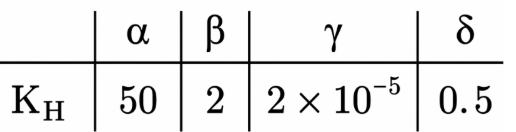
(density of water = 10$$^3$$ kg m$$^{-3}$$ at 298 K) This table implies that:
Loading solution...
Let $$C_{NaCl}$$ and $$C_{BaSO_4}$$, be the conductances (in S) measured for saturated aqueous solutions of NaCl and $$BaSO_4$$ respectively, at a temperature T. Which of the following is false?
Loading solution...
It is true that:
Loading solution...
.webp)
Tyndall effect is observed when:
Loading solution...
Aqua regia is used for dissolving noble metals (Au, Pt, etc.). The gas evolved in this process is
Loading solution...
In a molecule of pyrophosphoric acid, the number of P - O - H, P = O and P - O - P bonds/moiety(ies) respectively are:
Loading solution...

The electronic spectrum of $$\left[Ti(H_2O)_6\right]^{3+}$$ shows a single broad peak with a maximum at 20,300 cm$$^{-1}$$. The crystal field stabilization energy (CFSE) of the complex ion, in kJ mol$$^{-1}$$, is: (1 kJ mol$$^{-1}$$ = 83.7 cm$$^{-1}$$)
Loading solution...
The complex that can show optical activity is:
Loading solution...
The mechanism of Sn1 reaction is given as:
$$R - X \rightarrow R^\oplus X^\ominus \rightarrow R^\oplus \| X^\ominus \xrightarrow{Y^\ominus} R - Y + X^\ominus$$
Ion pair Solvent separated ion pair
A student writes general characteristics based on the given mechanism as:
(a) The reaction is favoured by weak nucleophiles.
(b) $$R^\oplus$$ would be easily formed if the substituents are bulky
(c) The reaction is accompanied by racemization
(d) The reaction is favoured by non-polar solvents.
Which observations are correct?
Loading solution...
_1.webp)
An organic compound [A], molecular formula $$C_{10}H_{20}O_2$$ was hydrolyzed with dilute sulphuric acid to give a carboxylic acid [B] and an alcohol [C]. Oxidation of [C] with $$CrO_3 - H_2SO_4$$ produced [B]. Which of the following structures are not possible for [A]?
P)
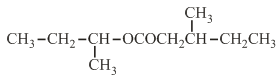
Q)
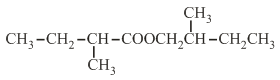
R) $$CH_3CH_2CH_2COOCH_2CH_2CH_2CH_3$$
S) $$(CH_3)_3 - C - COOCH_2C(CH_3)_3$$
Loading solution...
The antifertility drug "Novestrol" can react with:
Loading solution...
The mole fraction of glucose ($$C_6H_{12}O_6$$) in an aqueous binary solution is 0.1. The mass percentage of water in it, to the nearest integer, is .........
Loading solution...
The volume strength of 8.9 M $$H_2O_2$$ solution calculated at 273 K and 1 atm is ......... ($$R = 0.0821$$ L atm K$$^{-1}$$ mol$$^{-1}$$) (rounded off to the nearest integer)
Loading solution...
The total number of monohalogenated organic products in the following (including stereoisomers) reaction is
A (Simplest optically active alkene) $$\xrightarrow[(ii) X_2/\Delta]{(i) H_2/Ni/\Delta}$$
Loading solution...
An element with molar mass $$2.7 \times 10^{-2}$$ kg mol$$^{-1}$$ forms a cubic unit cell with edge length 405 pm. If its density is $$2.7 \times 10^3$$ kg m$$^{-3}$$, the radius of the element is approximately ......... $$\times 10^{-12}$$ m (to the nearest integer)
Loading solution...
The photoelectric current from Na (work function, $$w_0 = 2.3$$ eV) is stopped by the output voltage of the cell
Pt(s)|H$$_2$$(g, 1 bar)|HCl(aq, pH = 1)|AgCl(s)|Ag(s)
The pH of aq. HCl required to stop the photoelectric current from K($$w_0 = 2.25$$ eV), all other conditions remaining the same, is ......... $$\times 10^{-2}$$ (to the nearest integer).
Given $$2.303\frac{RT}{F} = 0.06$$ V; $$E^0_{AgCl/Ag/Cl} = 0.22$$ V
Loading solution...
Educational materials for JEE preparation
 Share
Share