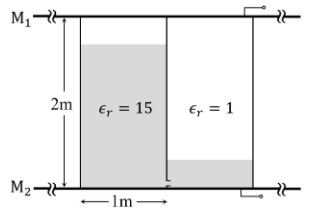
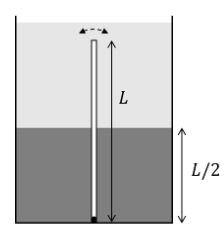
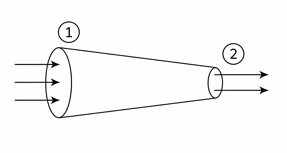
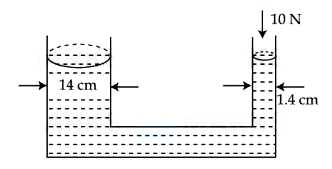
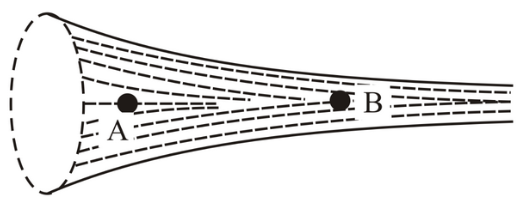
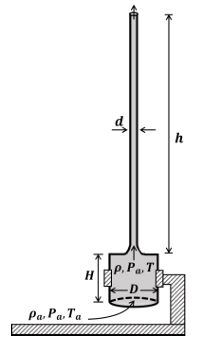
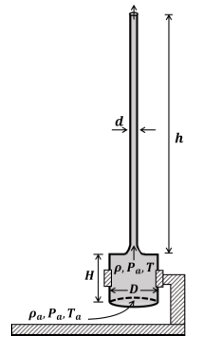
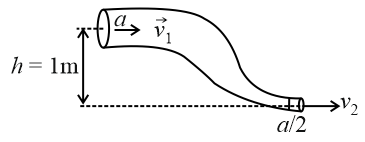
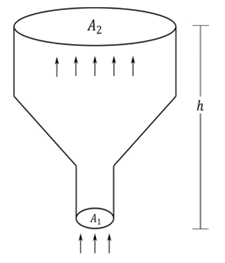
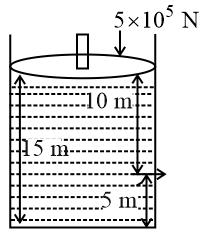
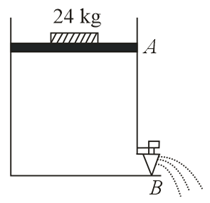
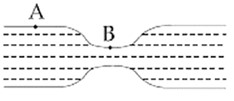
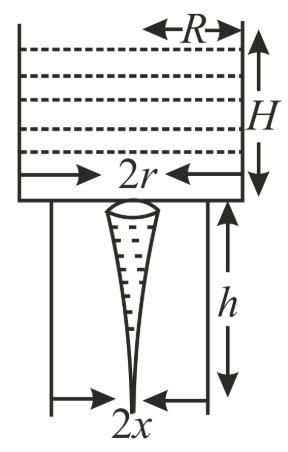
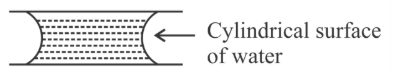
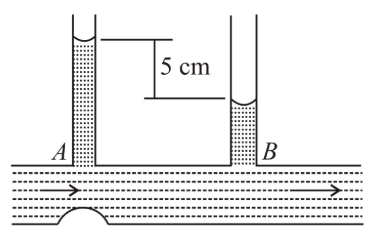
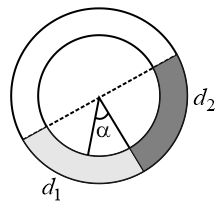
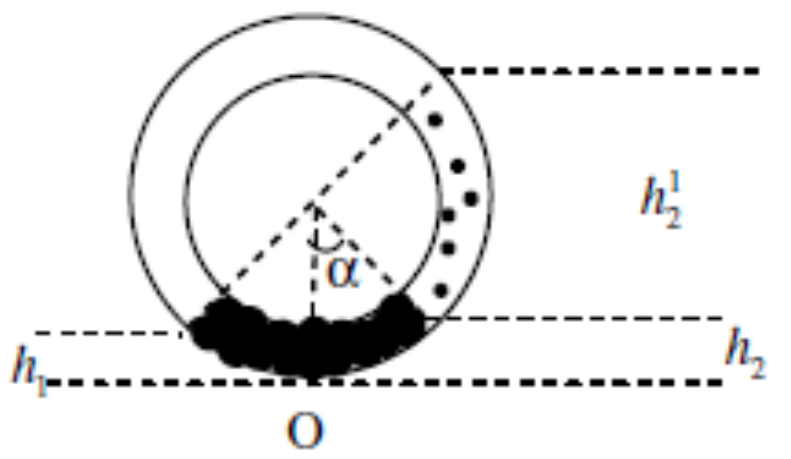
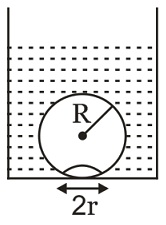
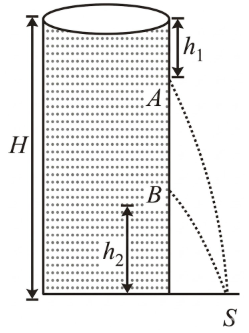
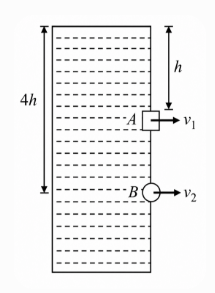
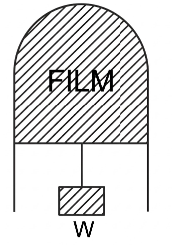
Students can attempt the questions independently before checking the detailed explanations. This helps them identify whether an error occurred while understanding the physical situation, selecting the right equation, applying a condition, or performing the calculation.
| Resource | What It Provides |
|---|
| JEE Fluid Mechanics Questions | Conceptual and numerical practice from the chapter |
| Question PDF | Focused chapter-wise practice |
| Video Solutions | Detailed step-by-step explanations |
| IITian Explanations | Clear reasoning and problem-solving methods |
| Concept Coverage | Important applications from Fluid Mechanics |
| Exam Preparation | Useful for JEE Main and JEE Advanced |
The PDF can be used after completing the basic concepts and can also be combined with previous year questions, formula revision, and mock-test practice.
Important Fluid Mechanics Topics for JEE
Fluid Mechanics contains several concepts that are connected through pressure, force, density, velocity, and energy. Students should understand these relationships before moving to advanced problems.
The important areas to study include:
| Fluid Mechanics Topic | What to Practise |
|---|
| Pressure in Fluids | Pressure variation with depth |
| Pascal's Law | Transmission of pressure in enclosed fluids |
| Atmospheric Pressure | Barometers and pressure calculations |
| Buoyancy | Buoyant force and displaced fluid |
| Archimedes' Principle | Floating and immersed bodies |
| Relative Density | Density comparisons and specific gravity |
| Surface Tension | Surface energy, bubbles, and drops |
| Capillarity | Rise and fall of liquids in tubes |
| Viscosity | Viscous force and coefficient of viscosity |
| Stokes' Law | Motion of small spheres through fluids |
| Terminal Velocity | Forces acting on falling bodies in fluids |
| Equation of Continuity | Flow rate and changing cross-section |
| Bernoulli's Theorem | Pressure, velocity, and height relationships |
| Fluid Flow | Streamlines and basic flow conditions |
Many JEE Questions from this chapter are based on understanding what happens when one physical quantity changes. For example, a change in the cross-sectional area of a pipe affects the speed of an incompressible fluid, while a change in depth affects pressure.
Problems involving buoyancy require careful identification of the volume of fluid displaced. Similarly, surface-tension questions may involve excess pressure inside drops or bubbles and need attention to the number of surfaces involved.
A good JEE Study material collection should therefore include fundamental concepts, diagrams, formulas, solved examples, and sufficient numerical practice. Students should avoid memorising isolated results without understanding the conditions under which they apply.
JEE Main & Advanced Fluid Mechanics Weightage Analysis
The exact number of Fluid Mechanics questions is not fixed in every JEE Main shift or JEE Advanced paper. The distribution can vary between years, shifts, and individual papers. Therefore, chapter-wise trends should be used as a preparation reference rather than assuming a fixed number of questions.
Fluid Mechanics can be tested through direct questions as well as mixed problems involving pressure, buoyancy, flow, work-energy, and mechanical principles.
| Area | Common Question Applications |
|---|
| Fluid Pressure | Pressure at different depths |
| Buoyancy | Apparent weight and floating conditions |
| Archimedes' Principle | Immersed and floating bodies |
| Surface Tension | Drops, bubbles, and capillary rise |
| Viscosity | Drag force and terminal velocity |
| Continuity Equation | Velocity changes in pipes |
| Bernoulli's Theorem | Pressure and speed of flowing fluids |
| Mixed Applications | Combination of pressure, energy, and fluid flow |
For JEE Main, students should first become comfortable with direct numerical and conceptual problems involving pressure, buoyancy, surface tension, viscosity, and fluid flow. Solving questions from JEE Mains Previous papers can help you understand how these concepts are presented in actual examination conditions.
For JEE Advanced, practise problems that require multiple steps, involve changing flow conditions, or combine Fluid Mechanics with other areas of Physics. Pay particular attention to assumptions such as incompressible flow, streamline flow, and negligible viscosity when they are stated or implied.
Using expected weightage only to decide what to study can leave gaps in preparation. A better approach is to understand the complete chapter and then use question practice to identify areas that require additional revision.
Why Practice JEE Fluid Mechanics Questions?
Fluid Mechanics problems often appear straightforward because the basic formulas are familiar. However, the real challenge is understanding the physical situation and choosing the correct principle.
Regular practice helps students:
- Understand pressure and buoyancy in different situations.
- Apply Archimedes' principle correctly.
- Recognise when surface tension or viscosity is involved.
- Use the continuity equation effectively.
- Apply Bernoulli's theorem under the appropriate conditions.
- Improve speed and accuracy in numerical calculations.
A useful approach is to first identify the system being considered, then list the known quantities, determine the relevant physical law, and only after that begin the calculation.
For instance, a buoyancy problem may be solved using force balance, while a flowing-fluid problem may require continuity or Bernoulli's theorem. Learning to distinguish these situations quickly can save considerable time during the examination.
Students can use these questions after completing the relevant theory in their preparation schedule. They are also useful for revision before attempting a JEE Main mock test, because chapter-wise practice can reveal specific weak areas before a full-length test.
The detailed IITian video solutions should be used as a learning tool rather than only as an answer key. Compare your force diagram, assumptions, equation selection, and calculation with the explained method to understand exactly where your approach differed.
Tips to Solve Fluid Mechanics Questions Faster
Fluid Mechanics questions become easier when you identify the governing principle before starting the calculation. Use the following strategies during practice.
1. Understand the physical situation
First determine whether the question involves a fluid at rest, a floating body, surface tension, viscous motion, or a flowing fluid. This immediately helps narrow down the possible methods.
2. Draw a simple diagram
Mark the liquid level, depth, cross-sectional area, velocity, body position, and forces wherever necessary. A clear diagram can make pressure and buoyancy problems much easier to analyse.
3. Revise the core formulas
Keep the important equations in your revision notes and JEE Physics Formula Sheet.
Concept | Formula |
|---|
Pressure at Depth | $$(P=P_0+\rho gh)$$ |
Buoyant Force | $$(F_B=\rho Vg)$$ |
Continuity Equation | $$(A_1v_1=A_2v_2)$$ |
Bernoulli's Equation | $$(P+\frac{1}{2}\rho v^2+\rho gh=\text{constant})$$ |
Stokes' Law | $$(F=6\pi\eta rv)$$ |
Capillary Rise | $$(h=\frac{2T\cos\theta}{\rho gr})$$ |
Excess Pressure in a Liquid Drop | $$(\Delta P=\frac{2T}{r})$$ |
Excess Pressure in a Soap Bubble | $$(\Delta P=\frac{4T}{r})$$ |
4. Check the assumptions
Before using Bernoulli's theorem or the continuity equation, check the conditions given in the problem. Whether the fluid is incompressible, whether the flow is steady, and whether viscosity can be neglected may affect the correct approach.
5. Use force balance for buoyancy problems
For floating and immersed objects, clearly identify weight, buoyant force, and any additional forces. The volume of displaced fluid should also be determined carefully.
6. Distinguish similar-looking formulas
Surface tension problems involving liquid drops and soap bubbles do not always use the same excess-pressure expression. Similarly, do not confuse pressure due to depth with the pressure difference between two points.
7. Practise previous year questions
After completing the chapter, solve Fluid Mechanics questions from actual JEE examinations. This helps you become familiar with different question formats and improves your ability to identify the governing concept quickly.